
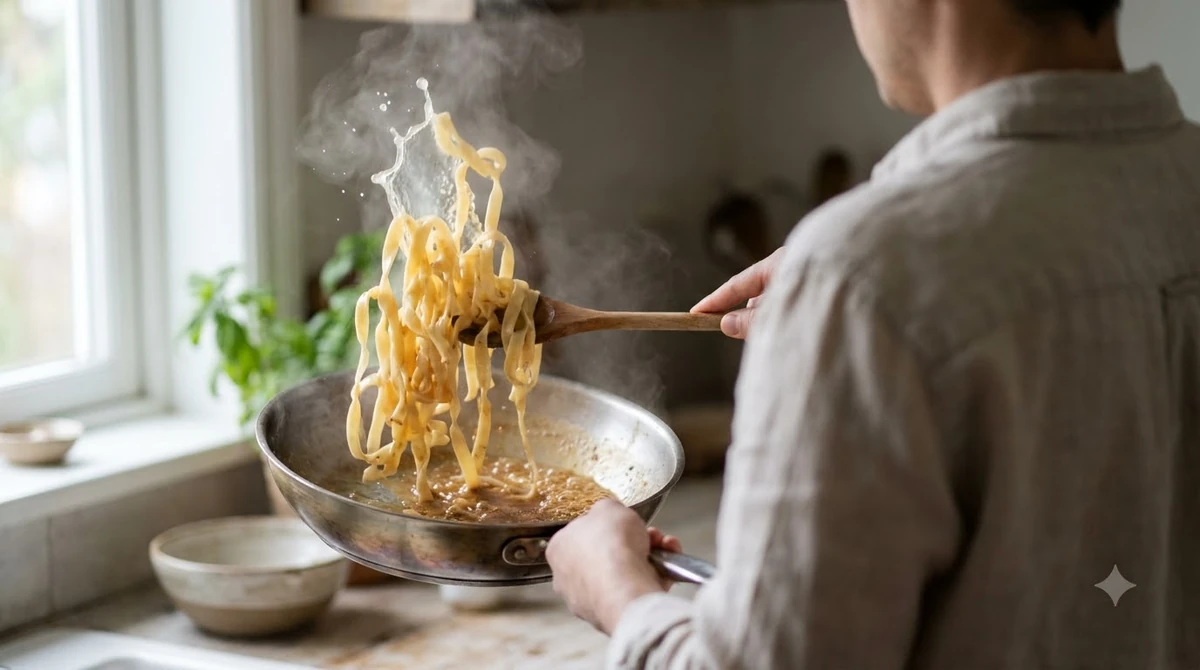

A spaghetti all assassina recipe cooks the pasta directly in a tomato broth in a hot pan, so the bottom toasts and turns crisp while the strands soften. The dish comes from Bari in Apulia and is known for its heat. The result is dry, spicy and slightly charred, not saucy like a typical pasta. If you want another spicy tomato pasta to compare, try our arrabbiata sauce recipe.
What is spaghetti all’assassina?
Spaghetti all’assassina is a Bari dish that is usually traced to 1967, when chef Enzo Francavilla reportedly created it at the restaurant Al Sorso Preferito in the city center. Two customers from northern Italy asked for something hearty, and the chef made spaghetti with tomato and plenty of chili. The name is a joke about the heat: the diners called the chef an “assassino,” and the dish took its name from that word.
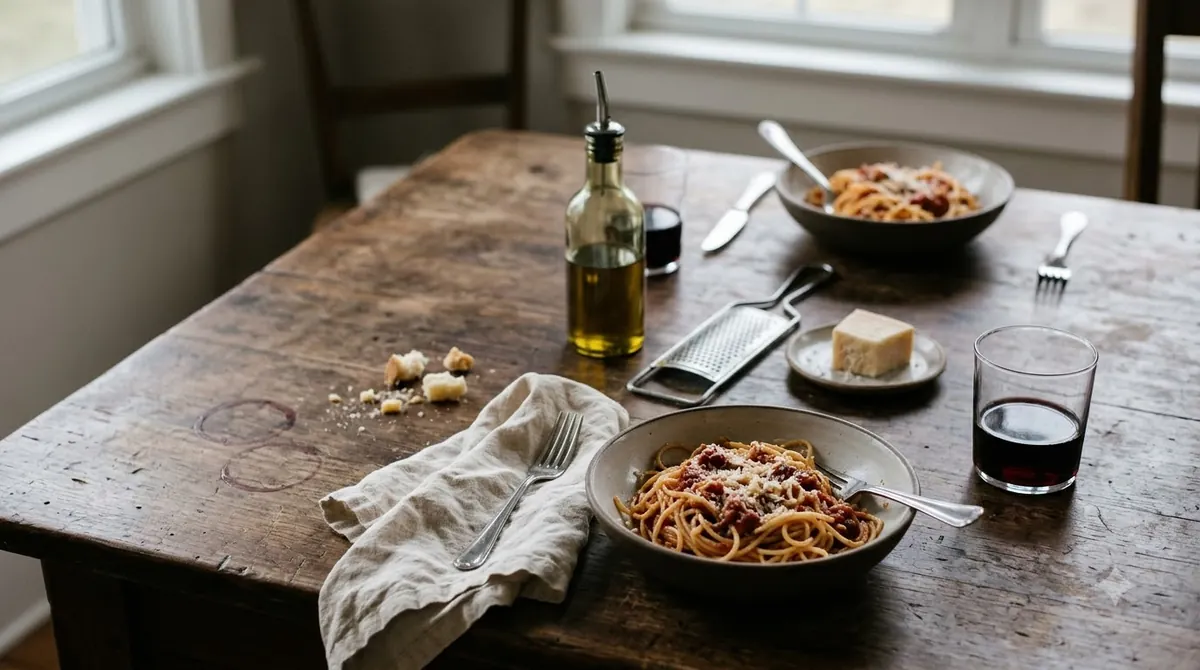
Some accounts give the origin of the spaghetti all assassina recipe to the Marc’Aurelio restaurant, which later closed. Historian Felice Giovine credits Al Sorso Preferito, and the Accademia dell’Assassina, founded in Bari in 2013, follows the same version. The dish also goes by spaghetti bruciati, or “burnt spaghetti,” which describes the crisp, toasted strands that define it. You can read the full background in the Wikipedia entry on the dish.
The dish was popular in the late 1960s and early 1970s, declined in the 1980s and was revived after 2013. Its crisp texture is the reason people still seek it out, and home cooks often try a spaghetti all assassina recipe to recreate the bottom layer that restaurants serve.
Spaghetti all assassina recipe ingredients and what to buy
A four-serving spaghetti all assassina recipe uses about 11 ounces of spaghetti, 14 ounces of tomato passata (see our best tomato passata picks), a little tomato paste, garlic, chili, olive oil and salt. Most of the passata goes into the broth, and the rest goes straight into the pan to form the sauce base.
| Ingredient | Amount (4 servings) | Role |
|---|---|---|
| Spaghetti or vermicelli | 11 oz (about 310 g) | The base; fine strands work best |
| Tomato passata | 14 oz (about 400 g) | Two-thirds for the broth, one-third for the pan sauce |
| Tomato paste | 1 to 2 tablespoons | Deepens the broth |
| Extra virgin olive oil | About 1/2 cup | Fries the garlic and chili |
| Garlic | 2 to 3 cloves | One left whole, the rest chopped |
| Chili | 1 fresh peperoncino or 1/2 tablespoon flakes | Sets the heat; adjust to taste |
| Sugar (optional) | 1 to 2 teaspoons | Softens the acidity of the tomato |
If you blend fresh tomatoes instead of using passata, use less water, because Wikipedia notes that less water is needed when fresh tomatoes are blended in a food processor. The Pasta Project’s version of the recipe lists these quantities and gives a 10-minute prep and 25-minute cook time. Pick a fine spaghetti pasta or vermicelli. Bronze-cut pasta (see what is bronze cut pasta) is generally not recommended, because it releases more starch and can get in the way of browning. A cast iron pan large enough to lay the spaghetti flat is the best tool for the job.
Two methods you will see online
Recipes disagree on one step. Some versions cook the pasta only in the pan, with hot broth added bit by bit, like risotto. Others boil the spaghetti for about a minute first, then drain it into the sauce. Both produce a dish that is spicy and toasted, but the texture differs.
- Pan-only method: the spaghetti is never boiled. The broth does all the cooking, and the pasta absorbs it as it toasts.
- Brief boil method: the spaghetti is boiled in salted water for about one minute, drained into the tomato sauce, then finished in the pan. GialloZafferano lists about 15 to 20 minutes total.
This spaghetti all assassina recipe follows the pan-only method, because it gives the most even crisp bottom layer. If you prefer a softer result, the brief boil is a reasonable shortcut.
Spaghetti all assassina recipe: step-by-step
In this spaghetti all assassina recipe, make a hot tomato broth in one pot and a garlic and chili base in the iron pan. Lay the spaghetti flat over the sauce, let the underside caramelize, then add hot broth one ladle at a time around the sides of the pan.
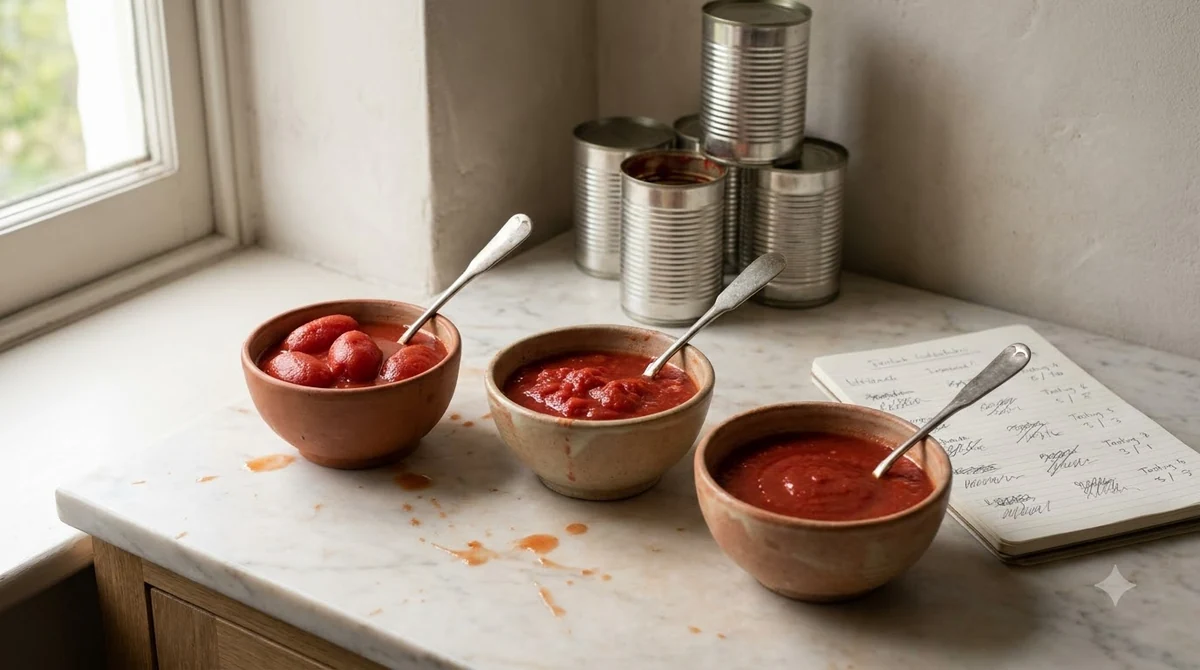
- Make the broth. Combine water, two-thirds of the passata, the tomato paste and salt in a pot. The water-to-passata ratio is about 1 to 1. Bring it to a boil, then simmer until it is bright red and still liquid. It must be hot when it goes into the pan.
- Start the base. Heat the olive oil in the cast iron pan with two garlic cloves, one whole and one chopped, and the chili. Cook over high heat until the garlic turns golden, then remove the whole clove.
- Add the sauce. Pour in the remaining one-third of passata and the sugar if you use it. The passata can spit when it hits the hot oil, so pour carefully. Spread it with a wooden spoon and let it reduce slightly.
- Lay the spaghetti. Arrange the uncooked strands flat over the sauce so they lie in an even layer.
- Crisp the underside. Wait until the bottom begins to caramelize. Turn the pasta carefully a little at a time with a spatula, and let the other side crisp slightly.
- Add broth. Pour one ladle of hot broth around the sides of the pan, not over the spaghetti. This keeps the strands crisp.
- Stir and repeat. When the pasta softens enough to move, loosen any strands stuck to the pan and let the broth spread and reduce. When the pasta sticks again, add another ladle. Repeat until the spaghetti is al dente (our how to cook pasta al dente guide explains the bite). Add a little water if the broth runs out.
- Serve at once. The finished dish should be dry and crisp, not saucy. Top with grated Parmigiano, stracciatella or nothing.
Keep the broth hot throughout a spaghetti all assassina recipe. Cold broth lowers the cooking temperature of the pan, which slows the browning and can leave the pasta soft.

Common mistakes and fixes
Most problems in a spaghetti all assassina recipe come from broth temperature, too much liquid at once or a pan that is not hot enough. The table below lists the usual symptoms and the fix for each.
| Problem | Likely cause | Fix |
|---|---|---|
| Soft, not crisp | Broth is cold or too much liquid was added at once | Keep broth hot and add one ladle at a time to the sides |
| Pasta sticks to the pan | Strands were not stirred once they softened | Loosen gently with a spatula, then add broth |
| Bitter, burnt flavor | Heat was too high for too long, or garlic was over-browned | Lower the heat and remove the whole garlic clove when golden |
| Too bland | Not enough chili, garlic or salt | Add chili to taste and season the broth before using it |
| Passata spits in the oil | Wet sauce hits very hot oil | Pour carefully and stand back while it settles |
Pasta shape also matters in this spaghetti all assassina recipe. Bronze-cut spaghetti releases more starch, which can interfere with browning, so choose a smooth, fine strand. If you use a non-stick pan, the Pasta Project author notes that it does not change the flavor or texture.
Serving, storing and reheating
Serve this spaghetti all assassina recipe straight from the pan, while the bottom is still crisp. The Pasta Project suggests Parmigiano, stracciatella or nothing at all for a vegan version.
Parmigiano uses animal rennet, so choose a vegetarian cheese if you are cooking for vegetarians. Leftovers from this spaghetti all assassina recipe keep sealed in the fridge for two to three days according to The Pasta Project, so check current USDA guidance for safe storage. Reheat them in a skillet with a little olive oil and a splash of water so the strands loosen before they warm through, as covered in how to reheat pasta.
Frequently Asked Questions
Is a spaghetti all assassina recipe boiled first?
It depends on the recipe. The pan-only method cooks the spaghetti in the broth without boiling, while some versions boil it for about one minute and drain it into the sauce before finishing it in the pan.
Can I make a spaghetti all assassina recipe without a cast iron pan?
Yes. GialloZafferano says a Lyonnaise or non-stick pan can replace the iron pan, so this spaghetti all assassina recipe still works without one. A large skillet that lets you lay the spaghetti flat is the key requirement.
How spicy should it be?
Start with one fresh peperoncino or about half a tablespoon of flakes, then adjust. Removing the seeds from a fresh chili reduces the heat, which is useful if you cook for people who dislike strong spice.
Can I make it vegetarian?
Yes. Skip the Parmigiano, since it contains animal rennet, or use a vegetarian hard cheese. The dish itself uses only tomato, garlic, chili, oil and pasta.
Does the pasta shape matter?
The traditional choice is spaghetti or vermicelli. Fine strands lie flat in the pan and crisp evenly. Bronze-cut pasta is generally not recommended for this dish.
A spaghetti all assassina recipe rewards patience at the pan. Keep the broth hot, add it a ladle at a time to the sides, and stop when the strands are al dente and dry. Start with less chili than you think you need and add more at the end if you want it hotter.
 10 min readLearnCalabrese Pizza Recipe: Spicy Salami and Calabrian Chile PasteUpdated Nov 11, 2026
 9 min readLearnPizza Dough with All Purpose Flour: A Home Recipe That WorksUpdated Nov 11, 2026
 6 min readLearnHow to Make Bucatini All’Amatriciana: Step-by-Step Roman RecipeUpdated Nov 13, 2026
 9 min readLearnArrabbiata Sauce Recipe: How to Make Spicy Roman Tomato SauceUpdated Nov 10, 2026
 9 min readLearnDiavola Pizza Recipe: A Spicy Home Version That WorksUpdated Nov 10, 2026
 10 min readLearnSheet Pan Pizza Recipe: Three Doughs, Exact Amounts and Bake TimesUpdated Nov 11, 2026