
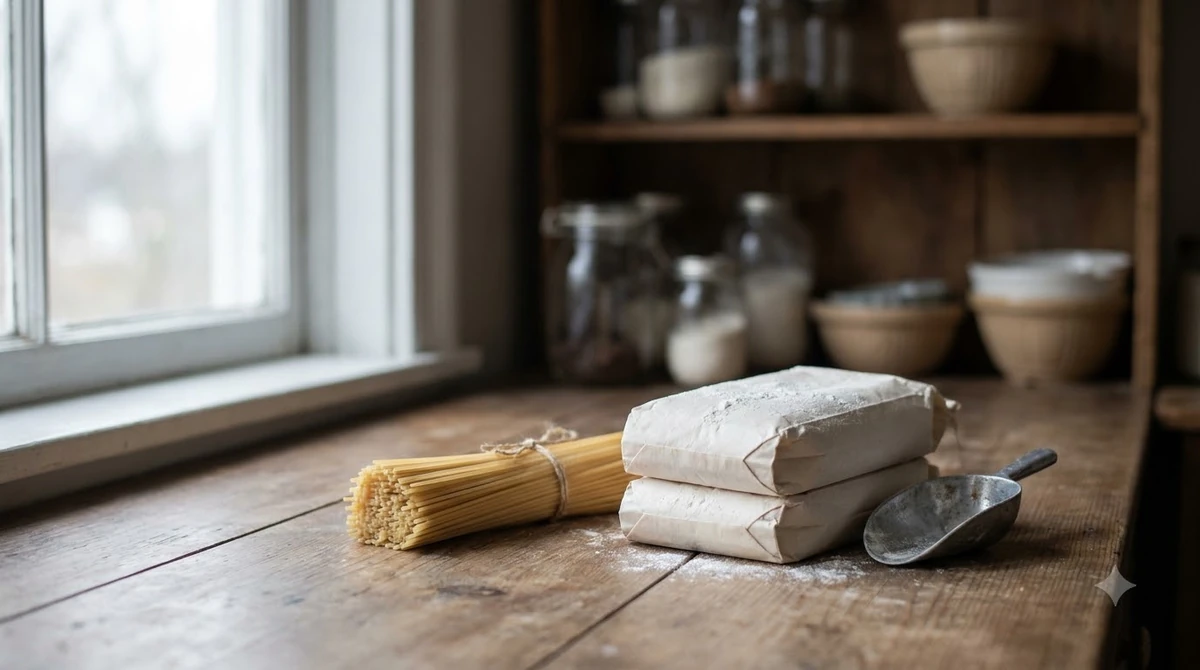

Vermicelli pasta is a thin, cord-shaped pasta, no more than 0.06 inch in diameter under US federal rules. The name comes from Italian and means “little worms.” It is typically made from semolina, and its strands are thinner than spaghetti. Vermicelli is easy to confuse with spaghetti and with rice noodles, so the size rule and the package label matter when you shop.
How Thin Vermicelli Pasta Is Compared With Spaghetti
Under US federal standards, vermicelli is cord-shaped and not more than 0.06 inch in diameter, while spaghetti runs from more than 0.06 inch to not more than 0.11 inch. The rule is set out in the federal macaroni product definition at 21 CFR 139.110.
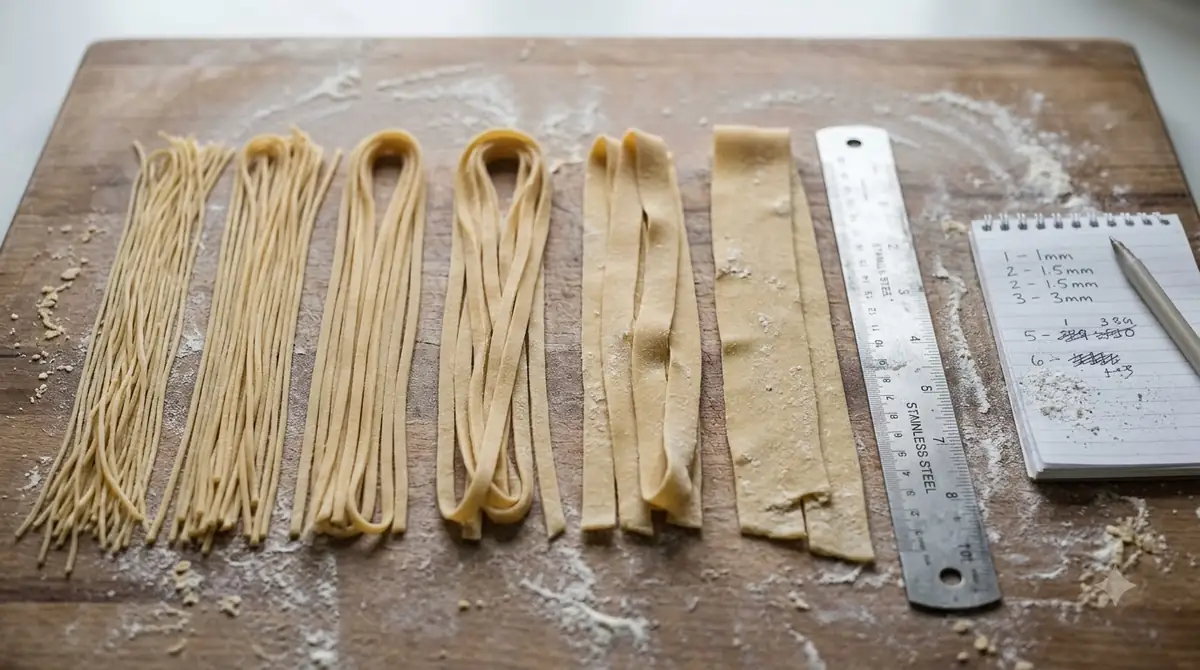
The regulation covers macaroni products sold in the United States. It says vermicelli units must be cord-shaped and not tubular. That shape rule is what separates vermicelli from tube shapes such as penne, even when the two are close in width.
| Pasta | US diameter rule | Shape rule |
|---|---|---|
| Vermicelli | Not more than 0.06 inch | Cord-shaped, not tubular |
| Spaghetti | More than 0.06 inch, not more than 0.11 inch | Tube or cord-shaped |
In practice, the gap between the two is small. A strand that measures close to 0.06 inch can sit on either side of the line, so a label that says “vermicelli” is the more reliable guide than width alone.
Where the Name Vermicelli Comes From
The word vermicelli comes from Italian, where it means “little worms,” a diminutive of the word for worm that traces back to the Latin vermis. The name describes the shape: long, thin strands that look like small worms when they are dried or piled on a plate.
The term is old in Italian cooking. According to the entry on vermicelli on Wikipedia, Italian definitions place the pasta slightly thicker than spaghetti, which is the reverse of how many English speakers picture it. In English-speaking markets, the pasta is generally sold as the thinner of the two.
That difference is why a dictionary definition alone does not settle the question. The US rule gives a measurable size, while the Italian usage describes a family of shapes. Both agree that vermicelli is a long, cord-shaped strand.
Wikipedia’s vermicelli article lists Italian diameters side by side. Vermicelli measures 2.08 to 2.14 mm, spaghetti 1.92 to 2.00 mm, vermicellini (thin vermicelli) 1.75 to 1.80 mm, fedelini 1.37 to 1.47 mm, and capellini or angel hair 0.8 to 0.9 mm. The US rule caps vermicelli at 0.06 inch, about 1.5 mm, which is closer to the Italian fedelini range than to Italian vermicelli. The same article says the US National Pasta Association lists vermicelli as a thinner type of spaghetti, so a US box and an Italian box can describe different strands under the same name.
Vermicelli pasta has a long history. Wikipedia names Campania as the Italian region of origin, says the English word has been used since the late Middle Ages, and says vermicelli-like pasta likely existed by the 13th century in Al-Andalus and North Africa. An early Italian cookbook by Martino da Como noted that sun-dried vermicelli could last two or three years, which shows why dried strands became a pantry staple. For the closest relatives, see our guides to spaghetti pasta and angel hair pasta.
Wheat Vermicelli Pasta and Rice Vermicelli Are Different Products
Rice vermicelli is a thin rice noodle made mainly from rice, and it is a different product from wheat vermicelli pasta. The two can look alike once dry, which is why the ingredient line on the package matters.
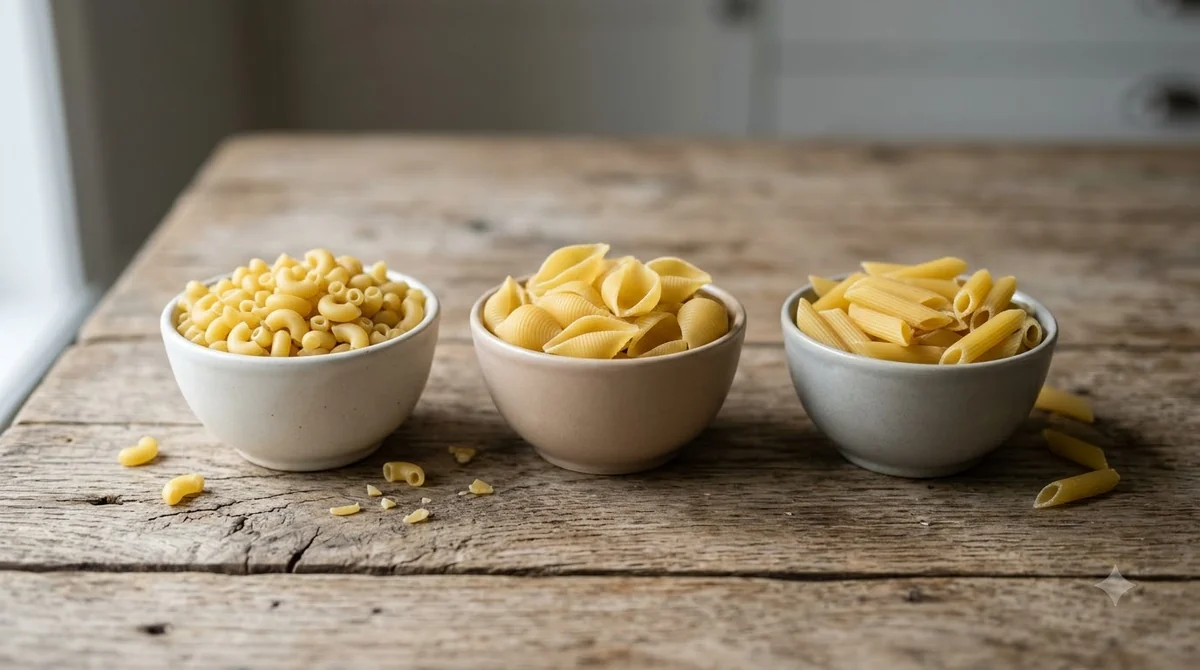
Rice vermicelli appears across Asian cooking. Common examples include the Vietnamese noodle dish bun, the Filipino dish pancit bihon, and the Malaysian laksa, according to the rice vermicelli entry on Wikipedia. The same source warns that rice vermicelli should not be confused with cellophane noodles, which are made from mung bean or other starches.
- Wheat vermicelli pasta: made from semolina, sold as Italian-style pasta.
- Rice vermicelli: a thin rice noodle, used in soups, stir-fries and salads.
- Cellophane noodles: a separate starch noodle, not the same as either one.
The source we read does not say whether rice vermicelli is gluten-free, so do not assume it is. Read the claim on the package before you buy for a gluten-free diet.
How to Cook and Serve Vermicelli Pasta
Vermicelli pasta cooks quickly, so treat the time printed on the package as the starting point, not the finish line. Start checking the strands well before that time, because thin pasta moves from firm to soft in a short window.
- Bring a large pot of water to a full boil and add salt.
- Add the pasta and stir during the first minute so the strands do not stick together.
- Begin tasting at the earliest time on the package, then check every minute or so.
- Drain and toss the pasta straight into the sauce, because thin strands dry out and clump if they wait.
Sauce choice matters more with thin strands. Olive oil with garlic, butter with grated cheese, or a light tomato sauce coats each strand well. Chunky meat sauces and heavy cream sauces tend to slide off a fine strand and pool at the bottom of the bowl.
The package time is the most useful number you have. Cooking times depend on the brand, the thickness of the strand and how the pasta was dried, and the source we read gives no fixed cooking time for vermicelli. Our guide on how to cook pasta al dente explains how to test the bite.
Vermicelli is used differently outside Italy. In the Arab world, where it is called sha’riyya, Wikipedia says it is toasted in butter and added to rice, often in pilafs. In the Indian subcontinent, pheni vermicelli is served with milk during fasts such as Karva Chauth and Ramadan. These uses show that the same strand suits both light sauces and rice dishes. In Spanish and Mexican cooking, thin vermicelli is broken, browned and simmered in soup, which is the idea behind fideo pasta.
How to Read a Vermicelli Pasta Label
The package is the fastest way to tell wheat vermicelli pasta from rice noodles, and to check the cooking time. Three lines do most of the work.
- Ingredients: look for durum wheat semolina or wheat flour for pasta, or rice for rice vermicelli.
- Product name: “vermicelli” alone does not tell you the base, so read the ingredient line too.
- Cooking time: use the printed range as your first test point.
- Allergen or gluten claims: check them directly, since rice and wheat products can differ.
Who Should Pick Vermicelli Pasta
Vermicelli pasta suits light sauces, quick dinners and brothy dishes. It is a weaker choice for heavy ragù or chunky sauces, which need a wider surface to cling to.
- Pick it for olive oil, garlic, butter or thin tomato sauces.
- Pick it for soups where a fine strand should not overpower the broth; for tiny soup shapes, see our pastina pasta guide.
- Skip it for thick meat sauces, baked dishes and recipes that call for a sturdy shape.
- Do not swap it for angel hair or spaghettini without checking the package, since each name describes a different size. Our spaghettini pasta guide covers how that strand differs.
Frequently Asked Questions
Is vermicelli pasta the same as angel hair?
Not exactly. Angel hair is a separate strand pasta with its own size, and both are thin. Check the package name and the cooking time before you swap one for the other in a recipe.
Can I use vermicelli pasta in soup?
Yes. Thin strands work well in brothy soups because they add texture without filling the bowl. Break long strands into shorter lengths first, and add them near the end of cooking so they stay tender.
Is vermicelli pasta the same as rice vermicelli?
No. Wheat vermicelli pasta is typically made from semolina, while rice vermicelli is a thin rice noodle. They can look similar when dry, so read the ingredient line before you cook.
What size is vermicelli under US rules?
Under the federal definition at 21 CFR 139.110, vermicelli is cord-shaped and not more than 0.06 inch in diameter. Spaghetti is wider, from more than 0.06 inch up to 0.11 inch.
Does vermicelli pasta have one set cooking time?
No single time applies to every package. Brand, strand thickness and drying method all change the result, so follow the printed time and begin testing early.
Choose vermicelli pasta when you want a fine strand for light sauces, soups or a quick weeknight meal. Read the ingredient line to confirm whether you are buying wheat pasta or rice noodles, then follow the package time and test early.
 8 min readLearnWhat Is Vermicelli? A Simple Guide to This Thin PastaUpdated Nov 7, 2026
 8 min readLearnHow Thin to Roll Pasta by Shape and Machine SettingUpdated Nov 7, 2026
 6 min readLearnCapellini Substitute: Angel Hair and 3 Other Thin PastasUpdated Nov 13, 2026
 7 min readLearnTagliolini Pasta: Thin Ribbons, Sauces and How to Cook ThemUpdated Nov 10, 2026
 8 min readLearnChicago Tavern Style Pizza Recipe: Thin, Crisp and Cut in SquaresUpdated Nov 11, 2026
 8 min readLearnWhat Is Tavern Style Pizza? A Thin, Square-Cut Chicago ClassicUpdated Nov 6, 2026