
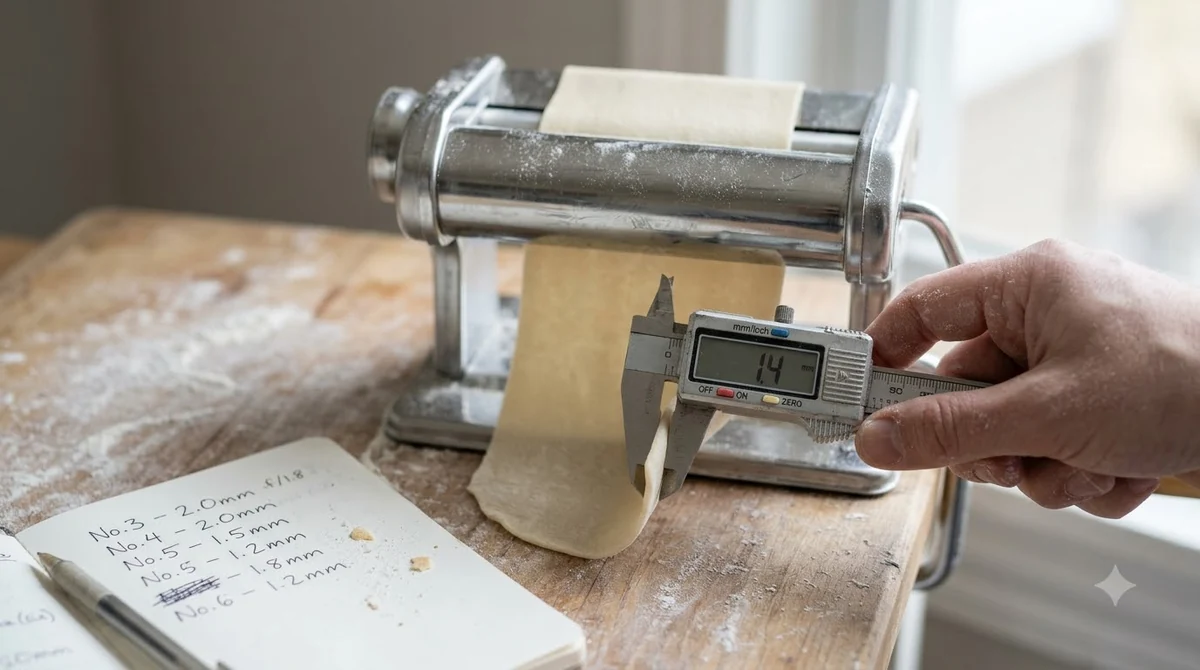

Knowing how thin to roll pasta depends on the shape you are making. Sturdy noodles stay on thicker settings, while filled pastas such as ravioli and lasagne need dough rolled until it is nearly transparent. The method is the same for every shape: start on the widest setting, then step down one notch at a time until the sheet matches the shape.
Why the Shape Decides the Thickness
Each pasta shape needs a specific sheet thickness, so the answer to how thin to roll pasta changes with the shape you cook. Sturdy, chewy noodles call for thicker sheets, delicate pastas with light sauces need very thin dough, and filled pastas need nearly transparent sheets.
Rustico Cooking’s pasta machine guide gives setting numbers for an Atlas 150 machine. It suggests setting #4 or #5 for sturdy noodles, #8 or #9 for delicate pastas with light sauces, and #9 for ravioli, lasagne and cannelloni. The guide also says each pasta shape requires a specific thickness, and that each of its recipes names the correct one.
Those numbers belong to that one model. Use them as a pattern for how thin to roll pasta by shape, not as a rule for every machine, because other brands number their dials differently.
Reading Your Machine’s Thickness Settings
Settings are not the same across machines, so the chart printed on your own machine is the most reliable guide to how thin to roll pasta. Thickness ranges and setting counts differ from one model to the next.
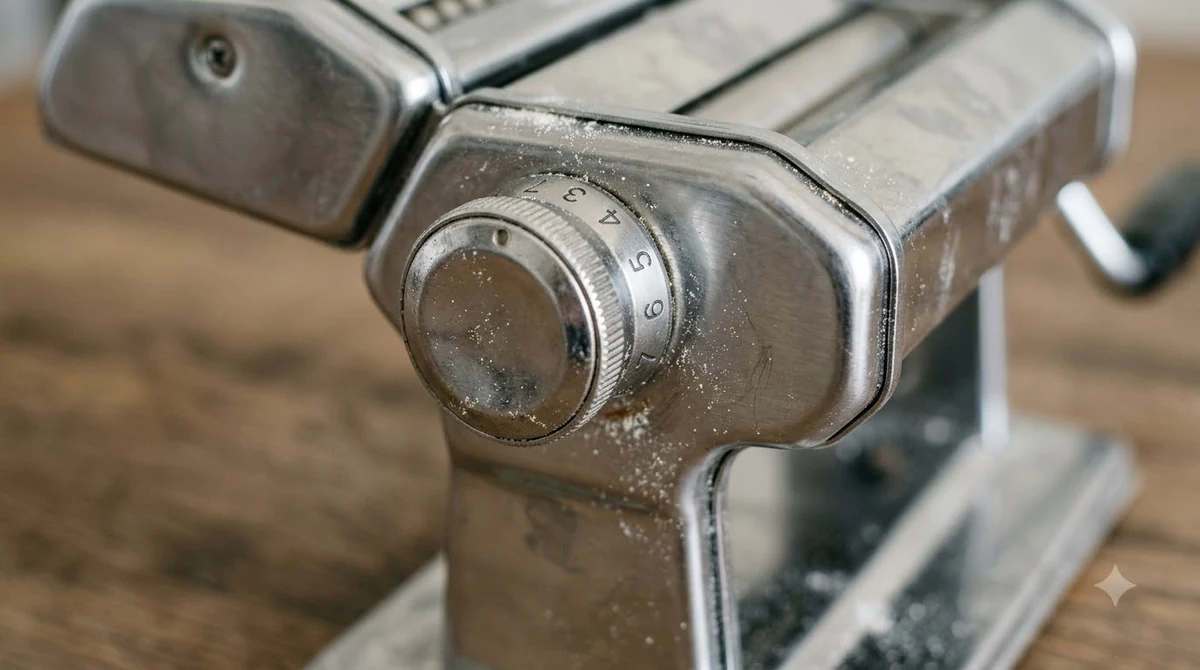
America’s Test Kitchen lists the full thickness range of several manual machines in one review. The Marcato Atlas 150 and Atlas 180 run from 0.24 inch to 0.02 inch across 10 settings. The Fox Run runs from 0.2 inch to 0.08 inch across 7 settings, the Weston from 0.17 inch to 0.04 inch across 7 settings, and the Imperia from 0.2 inch to 0.03 inch across 6 settings. If you own the Imperia, our guide to using an Imperia pasta machine covers its dial.
Converted to metric, 0.02 inch is about 0.5 mm and 0.24 inch is about 6.1 mm. Those are the top and bottom of the Atlas range as the review lists it, so the thinnest setting on that machine is about half a millimeter.
A retailer page for the Marcato Ampia 150 quotes the manufacturer’s chart with 10 levels, from setting 0 at about 4.8 mm down to setting 9 at about 0.5 mm. The retailer says that machine is meant for lasagne, fettuccine and tagliolini.
| Setting | Approximate thickness |
|---|---|
| 0 (thickest) | about 4.8 mm |
| 3 | about 2.4 mm |
| 5 | about 1.5 mm |
| 6 | about 1.0 mm |
| 9 (thinnest) | about 0.5 mm |
On this chart, as on the Atlas numbering in the Rustico guide, the higher the number, the thinner the sheet. Check the chart on your own machine before you apply any number from an article. Stand-mixer owners can read how to use a KitchenAid pasta roller for that attachment.
Step Down to the Right Thickness
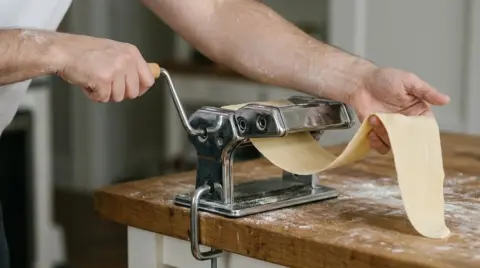
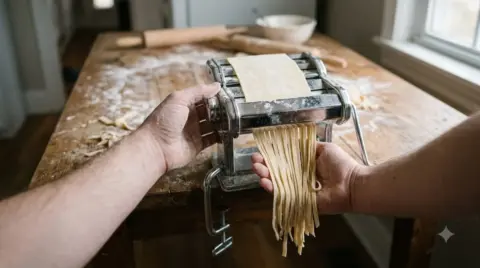
Start on the widest setting, then step down one notch at a time without folding, until the sheet reaches the thickness your shape needs. Learning how thin to roll pasta is mostly a matter of stepping down slowly. Folding comes first, while the dough is still thick, and stops once you begin thinning.
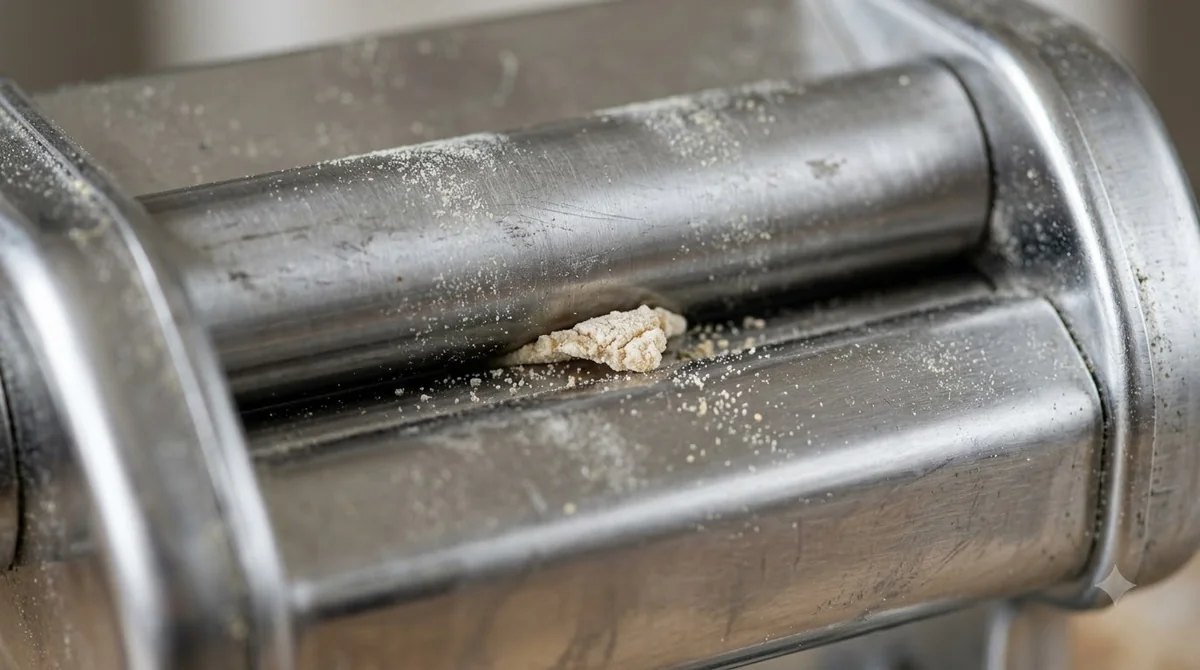
The Rustico guide begins by flattening the dough into a rectangle and rolling it through the widest setting. It then folds the sheet in thirds and rolls it through the same setting three times in total, which kneads the dough until it is smooth. For a full walkthrough, see how to use a pasta machine.
- Roll the flattened dough through the widest setting.
- Fold the sheet in thirds, dust it with flour, and roll it through the same setting again, three passes in total.
- Move to the next-thinner setting, dust the sheet, and roll it through without folding it over itself.
- Repeat on each thinner setting until you reach how thin to roll pasta for your shape.
Kitchen Stories describes the same stepping method: lower the setting by one, reload the sheet, and crank again until the pasta is at the desired thickness. A Kitchen Stories guide to rolling pasta dough walks through the same sequence.
A UK cooking guide from The Happy Foodie also says to decrease the setting each time, and it suggests pressing the edges of a sheet together to form a loop. The loop makes it easier to reach how thin to roll pasta without re-feeding each sheet from scratch.
How Thin to Roll Pasta for Common Shapes
Sturdy noodles stop at a thicker setting, delicate pastas go thinner, and filled pastas and lasagne go to the thinnest sheets the machine can make. The table below lists the guidance from each source, so you can see how thin to roll pasta for each shape at a glance.
| Shape | Setting guidance | Source |
|---|---|---|
| Sturdy, chewy noodles | #4 or #5 on an Atlas 150 | Rustico Cooking guide |
| Delicate pasta with light sauce | #8 or #9 on an Atlas 150 | Rustico Cooking guide |
| Ravioli and cannelloni | #9 on an Atlas 150, nearly transparent | Rustico Cooking guide |
| Lasagne sheets | The thinnest setting | University of Maryland pasta page |
| Noodles, one cook’s rule | One setting thicker than the thinnest | University of Maryland pasta page |
The University of Maryland pasta page says lasagne is rolled through the machine to the thinnest setting, and that the same thin sheets are used for filled pastas. The noodle rule on that page is one cook’s habit rather than a standard, so treat it as a starting point and adjust by feel and by your recipe. If you roll with a KitchenAid attachment instead of a hand-crank machine, KitchenAid roller lasagna steps apply the same thin-sheet idea to layers.
Mistakes to Avoid When Rolling Pasta Thin
The most common mistake is assuming the thinnest setting always answers how thin to roll pasta, because the thinnest setting on some machines is still too thick for ravioli. America’s Test Kitchen found that the thinnest setting on a Fox Run machine might be a tad thick for ravioli or wonton skins.
The same review notes that rollers set very close together can produce ultrathin sheets for ravioli. In practice, a machine that goes thinner gives you more options for filled pasta, but knowing how thin to roll pasta still means checking the sheet against the shape.
Keep folding for the kneading passes only. Once you move to the next-thinner setting, pass the sheet through without folding it over itself, as the Rustico guide advises.
Dust the sheets lightly as you work so they do not stick. The Rustico guide dusts with semolina flour (compare semolina pasta vs egg pasta), and it keeps the pieces you are not rolling covered while you work on one.
This section covers sheets rolled through a hand-cranked machine. Extruders shape dough through dies rather than rollers, so the thickness rules here do not apply to them.
Frequently Asked Questions
Is there one thickness that works for all pasta?
No. The Rustico Cooking guide says each pasta shape requires a specific thickness, and each of its recipes names the correct one. Knowing how thin to roll pasta means matching the sheet to the shape in your recipe rather than rolling every batch to the same setting.
How thin should lasagne sheets be?
For lasagne, how thin to roll pasta means the thinnest setting, according to the University of Maryland pasta page. Filled shapes such as ravioli also use thin sheets, and the Rustico guide describes them as nearly transparent.
Why do setting numbers differ between machines?
Each brand builds its rollers and dial differently. The America’s Test Kitchen review lists different ranges for each machine, from 0.24 inch to 0.02 inch on the Marcato Atlas 150, and from 0.2 inch to 0.08 inch on the Fox Run, so the chart on your machine is the reliable guide to how thin to roll pasta.
Can I use the thinnest setting for ravioli?
Not always. America’s Test Kitchen found the thinnest setting on a Fox Run machine might be a tad thick for ravioli or wonton skins. Check how thin the sheet is in your own machine before you fill it.
Should I keep folding the dough after I start thinning?
No. The Rustico guide says that after the kneading passes, you move to the next-thinner setting and roll the sheet through without folding it over itself.
Choose the setting your shape needs, not the thinnest one on the dial, and read the chart on your own machine before you decide how thin to roll pasta. Begin wide, step down one notch at a time, and stop when the sheet matches the recipe. If a recipe names a setting, follow that setting first. Once the sheets are cut, how to store fresh pasta explains how to keep them.
 6 min readLearnFix Sticky Pasta Dough: Flour, Rest and RollUpdated Nov 13, 2026
 9 min readLearnHow to Use a Pasta Machine: A Simple Step-by-Step GuideUpdated Nov 7, 2026
 9 min readLearnHow to Make Pasta Without a MachineUpdated Nov 10, 2026
 5 min readLearnHow to Make Pasta by Hand Without a MachineUpdated Nov 13, 2026
 6 min readLearnHow to Make Pappardelle by Hand Without a Pasta MachineUpdated Nov 13, 2026
 8 min readLearnHomemade Pizza Rolls: An Easy Recipe for Home CooksUpdated Nov 12, 2026