
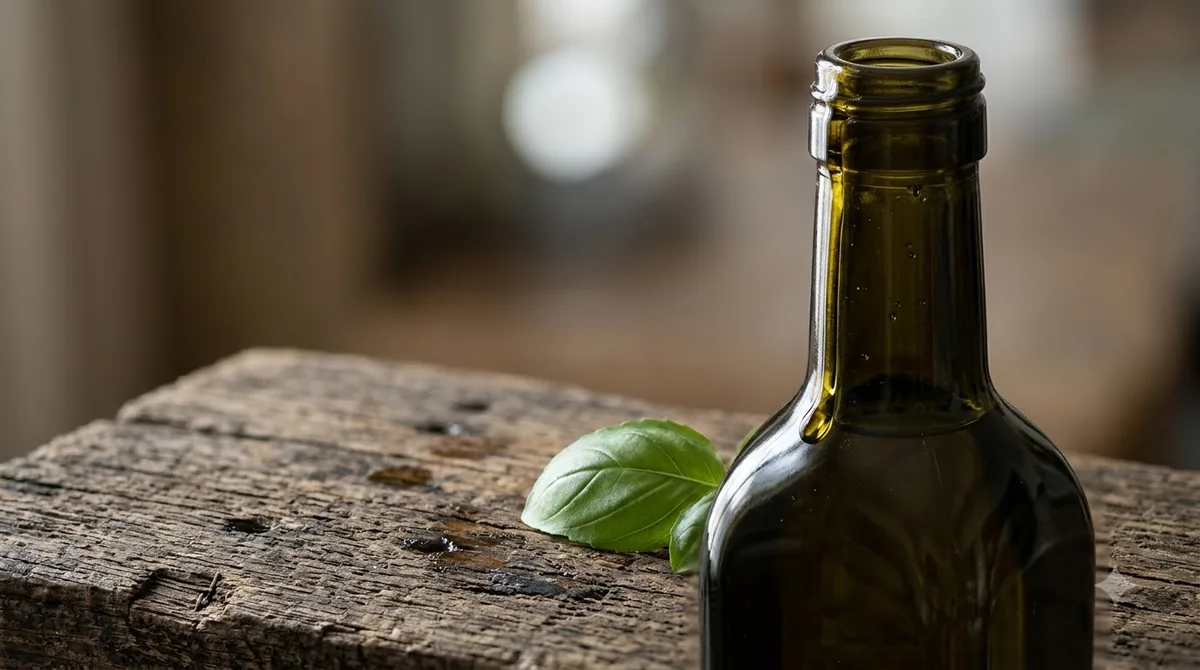

The answer to what is saba is simple: it is fresh grape must cooked slowly into a thick, sweet Italian syrup. Its high sugar content makes it very sweet, and it keeps well, so a small spoonful goes a long way.
Despite the name, saba is not a vinegar. It is the cooked grape syrup that traditional balsamic vinegar starts from, and home cooks mostly use it as a finishing drizzle. Knowing what is saba before you shop helps you avoid a common swap.
What is saba, exactly?
Saba is a concentrated grape syrup made from fresh grape must, reduced until it is about one third of its original quantity.
According to Wikipedia’s saba entry, the condiment is made from fresh must of white or red grapes. The word saba comes from the Latin sàpor, and the same syrup goes by other names in Italy, including sapa, mosto cotto, vino cotto and miele d’uva.
If you are trying to picture what is saba on the table, think of a thick syrup that tastes of cooked grapes. It is closer to a sweet grape reduction than to any sour, sharp vinegar, and that difference shapes how you should use it.
How saba is made
Saba is made by boiling fresh grape must slowly until it is reduced to one third of its original quantity.
- Fresh grape must, from white or red grapes, is poured into a pot.
- Traditionally the pot is copper, and whole walnuts are added so they turn during the boil and keep the must from sticking to the bottom.
- The must is kept at a slow boil until it has reduced to one third of its starting quantity.
- The result is a thick syrup that is very sweet, and its sugar content is what helps it keep well.
Because the must loses about two thirds of its volume, the finished syrup is far smaller than the pot you started with. To understand what is saba made of, start with grapes, then picture that volume shrinking as the sugar concentrates.
The reduction level is not the same across every product. Italian reference material on mosto cotto describes cooking the must for several hours until it reaches one quarter of its starting volume, and it gives no precise temperature. Because of that gap, check the producer’s page or the label before you assume the exact method.
Saba vs balsamic vinegar
Saba is not vinegar, but it is the cooked must that traditional balsamic vinegar begins with, before fermentation and aging.
Traditional balsamic vinegar of Modena starts with freshly pressed white grapes, typically Trebbiano, boiled down to a minimum sugar concentration of 30 percent brix. According to Wikipedia’s balsamic vinegar entry, that reduced syrup, called sapa or saba, is then fermented.
| Attribute | Saba | Traditional balsamic vinegar of Modena |
|---|---|---|
| Starting point | Fresh grape must, cooked down | Freshly pressed white grapes, typically Trebbiano, cooked down |
| Cooking target | Reduced to one third of original quantity | Minimum sugar concentration of 30 percent brix in the must |
| Fermentation | Stops at the syrup stage | The reduced syrup is fermented |
| Minimum aging | No minimum given in the sources reviewed | 12 years in a series of wooden casks |
| Label cues | Names such as sapa, mosto cotto or vino cotto | White cap for at least 12 years, gold cap for 25 years or more |
The aging process explains the gap. Balsamic vinegar ages in casks of successively smaller sizes, made from woods such as chestnut, oak, cherry, mulberry, ash and juniper. Each year a portion is drawn from the smallest cask and the casks are topped up from the next larger one, so the vinegar carries traces of older batches.
If you are asking what is saba compared with balsamic, the main gap is fermentation and aging. Because saba stops before fermentation, it tastes sweet and grapey rather than sour. Treat it as a sweet syrup and balsamic as a vinegar (our guide to the best aged balsamic vinegar shows what a long-aged bottle looks like), and your seasoning will be far more predictable.
How Italians use saba
Saba is used on sweets and polenta, as a dip for piadina and gnocco fritto, and as a salad dressing. For a quick answer to what is saba good for in the kitchen, these are the traditional uses reported by the encyclopedia entry.
- Sweets and simple dishes such as polenta
- A dipping sauce for piadina and gnocco fritto
- A salad dressing (many cooks pair it with a good finishing olive oil), and a sauce for cream and ice cream
- A summer drink, mixed with water
- Soaking sabadoni and apple or quince ravioli
- Keeping Modena’s Christmas bread soft
Knowing what is saba used for makes shopping easier, because most traditional uses are sweet or dairy-based. A simple start is a spoonful over ice cream or fruit, or a few drops stirred into a glass of water for the summer drink the sources describe.
Regional sweets also depend on it. Cavallucci in Marche, panpepato in Terni and several Apulian confections use it as an ingredient, and in Assisi it is used to season roasts.
A similar syrup, pekmez from Turkey, is made from grape, fig or other juices and is often served with tahini. That comparison helps explain saba: it is a sweet fruit syrup meant to be spooned, drizzled or stirred in, not used as a base for a sharp sauce.
Where saba comes from
Saba is traditional to Emilia, Romagna, Marche, Umbria, Abruzzo, Apulia and Sardinia, according to the same encyclopedia entry on the condiment.
The name is older than the modern product, and that history matters when you ask what is saba in a regional kitchen. It derives from the Latin sàpor, and the word sapa is used for the same condiment in several regions. Regional names differ, so the same bottle can appear under different labels depending on where it was made.
Modena is the place most readers connect with grape must, because the balsamic vinegar from that city begins with it. Saba itself is not limited to one city, and cooks across the central and southern regions have their own uses for it.
How to choose and store saba at home
When you read a saba label, look for grape must first, then confirm the storage instructions before you buy.
- Read the ingredient list and look for grape must with nothing else added
- Look for the names saba, mosto cotto, vino cotto or sapa, since they vary by region
- Follow the storage instructions printed on the bottle, because the sources reviewed give no storage temperature
- Check the package for any stated reduction level or aging period
The high sugar content is why saba keeps well, but a sealed bottle still needs the producer’s guidance.
Common mistakes with saba
Most mistakes come from not knowing what is saba before cooking. The most common one is treating it as a vinegar, when it is a sweet syrup that behaves very differently in a dish.
- Using it in a sharp vinaigrette, where its sweetness takes over the dressing
- Assuming every cooked grape must is reduced the same amount, since sources give one third for saba and one quarter for mosto cotto
- Swapping in balsamic vinegar for saba on a dessert (see balsamic glaze vs balsamic vinegar for how those two differ), which adds sourness the recipe did not plan for
Taste a small amount of saba first, then adjust. A little saba goes a long way on desserts, cheese and polenta. If you want another sweet finishing drizzle for cheese or pizza, compare it with the best hot honey.
Frequently Asked Questions
Is saba the same as balsamic vinegar?
No. Saba is cooked grape must, not vinegar. Traditional balsamic vinegar of Modena starts from cooked must, which is then fermented and aged for at least 12 years in wooden casks. Balsamic is the product you will usually find in the vinegar aisle, while saba is sold as a syrup.
What does saba taste like?
If you wonder what is saba in flavor terms, it is very sweet and tastes of cooked grapes, and it works best as a finishing drizzle rather than a base ingredient. Its sugar content is what makes it sweet and keeps it well. Specific flavor notes vary by product, so read the producer’s tasting description before relying on one.
Can you cook with saba?
Yes. It works as a salad dressing, a dip for piadina and gnocco fritto, and a sauce for cream and ice cream. Knowing how sweet saba is helps you decide how much to use. Use it sparingly on sweets and polenta, because its sweetness can overpower a simple dish quickly.
What is mosto cotto?
Mosto cotto is the Italian name for cooked grape must, and it is close to saba, so the two names often overlap. Italian reference material describes reducing it to one quarter of its starting volume, while the English entry on saba gives one third. Check the label, because the reduction level depends on the producer.
What other names does saba go by?
Saba is also called sapa, vino cotto or miele d’uva, depending on the region and the producer. Because the names overlap, read the ingredient list rather than relying on the name alone when you shop.
Where does saba come from?
Saba is traditional to Emilia, Romagna, Marche, Umbria, Abruzzo, Apulia and Sardinia, according to Wikipedia. Knowing those regions helps you read labels, because the same product on one bottle may be called vino cotto or sapa on another.
Now that you know what is saba, use it as a sweet grape finish for desserts, polenta or a simple salad, not as balsamic vinegar. Buy a product with grape must as the main ingredient, and check the label for the reduction and storage instructions before you cook with it.
 6 min readLearnItalian Beef Sandwich Recipe: Slow-Cooked Chuck and JusUpdated Nov 13, 2026
 9 min readLearnHow Long Does Cooked Pasta Last in the Fridge?Updated Nov 12, 2026
 6 min readLearnHomemade Ziti: How the Tube Is Made, Cooked and ServedUpdated Nov 13, 2026
 8 min readLearnCan You Freeze Cooked Pasta? Storage Times and Reheating TipsUpdated Nov 10, 2026
 8 min readLearnWhat Is Gnocchi? Ingredients, Types and How They Are CookedUpdated Nov 6, 2026
 8 min readLearnWhat Is Lardo? An Italian Cured Pork Fat ExplainedUpdated Nov 11, 2026