
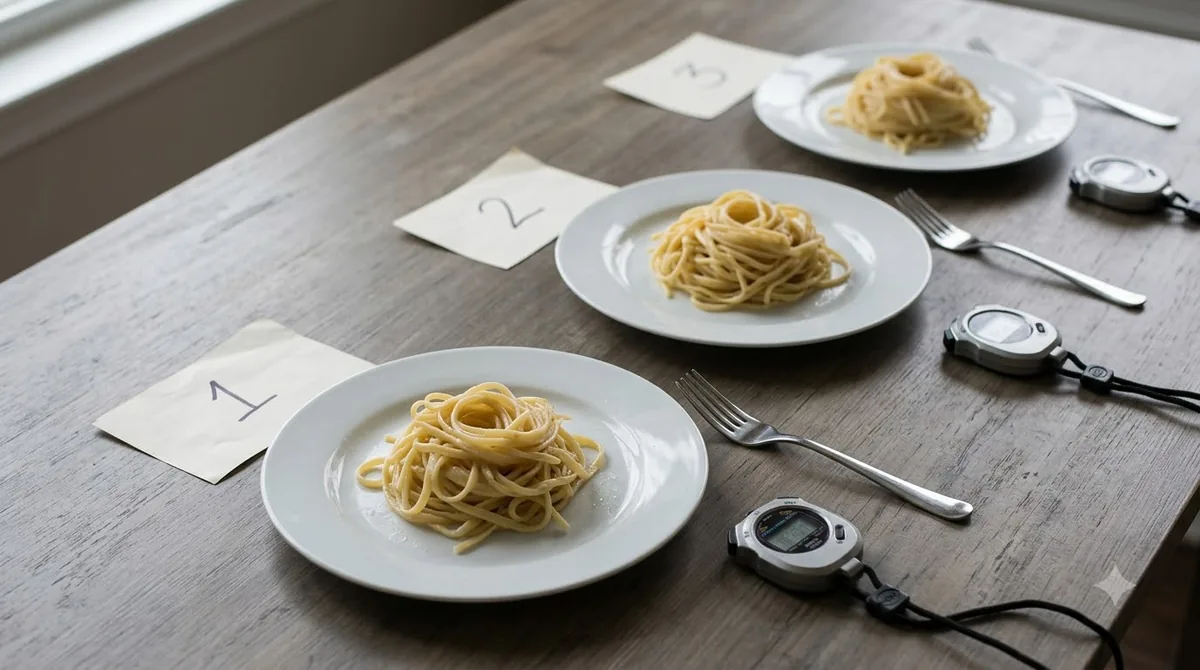

If you are asking why is my fresh pasta gummy, the usual causes are cooking time, dough that was handled too much or too little, and pasta that sat too long before cooking. Cook fresh pasta for only a few minutes, check it early, and keep the dough and the pot in balance. Most gummy results come from one of those three things.
Fresh pasta cooks much faster than dried pasta, so the window between tender and mushy is small. A short look at the cook time, the dough method and the storage step will usually show where the texture went wrong.
Why Is My Fresh Pasta Gummy After Cooking?
Gummy pasta is usually overcooked, or cooked from a dough that is tighter or wetter than it should be. Gummy and mushy are close cousins: both describe pasta that has gone past the point of pleasant chew.
King Arthur Baking describes the goal as tender, not mushy, with a pleasant chew. That is the standard to aim for, and it is a narrow one with fresh pasta.
How Long Should Fresh Pasta Cook?
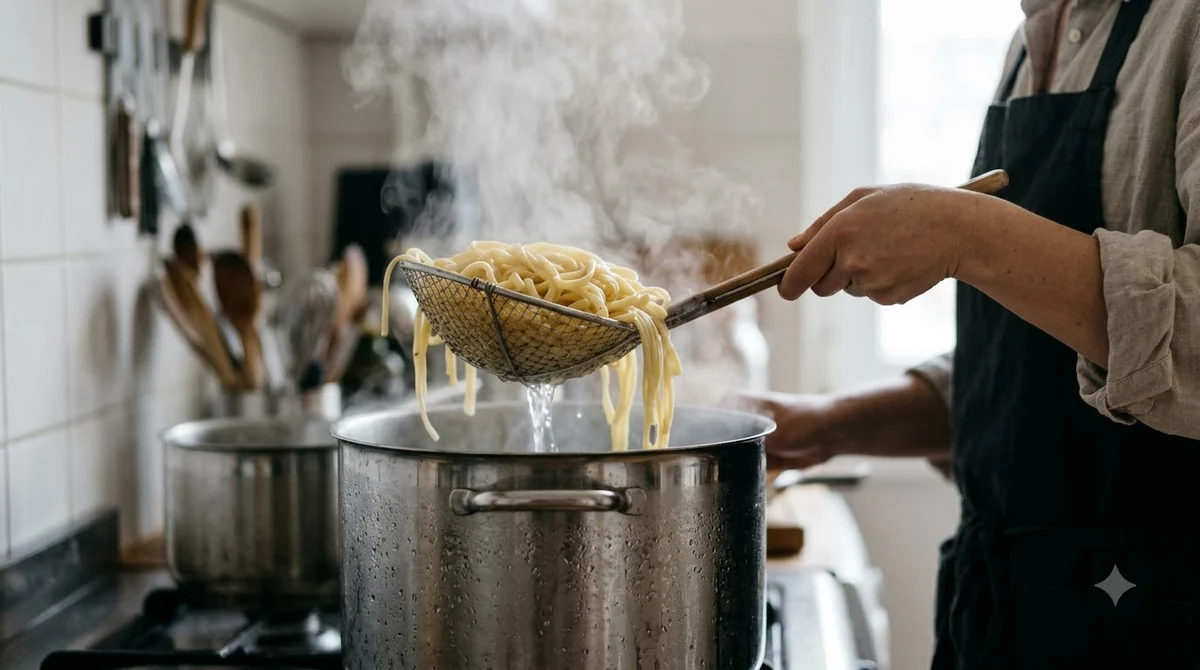
Fresh pasta usually cooks in two to five minutes, depending on the shape and thickness. King Arthur gives about two minutes for flat ribbons like tagliatelle, three to five minutes for chubby shapes like cavatelli, and two and a half to four minutes at a gentle boil for stuffed pasta.
Dolceterra’s step-by-step guide says fresh pasta is ready in three to five minutes, when it starts to float. Use the float as a cue, then taste a piece before you drain it, because a pot that is still boiling hard keeps cooking the pasta after you remove it.
- Set a timer for the low end of the range for your shape, not the high end.
- Start tasting at the first sign the pasta floats, and fish out one piece to check the bite.
- Drain as soon as the bite is tender with a slight chew, and do not leave the pasta sitting in the colander.
If the pasta is going into a sauce, pull it a little early. King Arthur notes it cooks for about one more minute in the sauce, so pasta cooked fully in the pot and then simmered again will turn soft.
How Does Dough Handling Affect Fresh Pasta Texture?
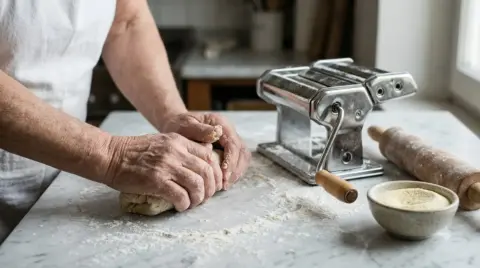
The dough method sets up the texture before the pot ever boils. A common egg-dough method from PBS Food calls for 5 to 10 minutes of constant kneading and at least one hour of rest at room temperature. Kneading builds structure, and the rest lets the gluten relax so the sheets roll out evenly.
If the dough feels too dry, the KitchenAid guidance is to add water one tablespoon at a time. Add water only when the dough is genuinely crumbly, because a dough that is too wet and handled heavily can turn out sticky and dense, which then shows up as a gummy bite.
Could Overkneading Make Fresh Pasta Gummy?
Extra kneading is one possible cause. The PBS method sets a 5 to 10 minute range, so kneading far beyond that without a clear reason is worth avoiding. Check the dough by feel: it should be smooth and elastic, not tight and fighting back every time you roll it.
What Storage Mistakes Cause Gummy Fresh Pasta?
Pasta that sits uncovered or sticks to itself before cooking can turn gummy in the pot. Keep cut strands separated, dust them lightly with semolina or flour and cook them soon after cutting.
Pasta Evangelists, one of the sources for the freezing method, suggests spreading cut pasta on a tray for a short time before bagging it. Cooked pasta that is stored wet and packed together will also clump and feel gummy when reheated.
Can I Cook Frozen Fresh Pasta Without Gummy Results?
Yes. King Arthur says not to thaw frozen fresh pasta before cooking, and to add about one minute to the usual time. Thawing first makes the strands soft and sticky, which is a common route to gummy pasta.
How Can You Stop Fresh Pasta Sticking in the Pot?
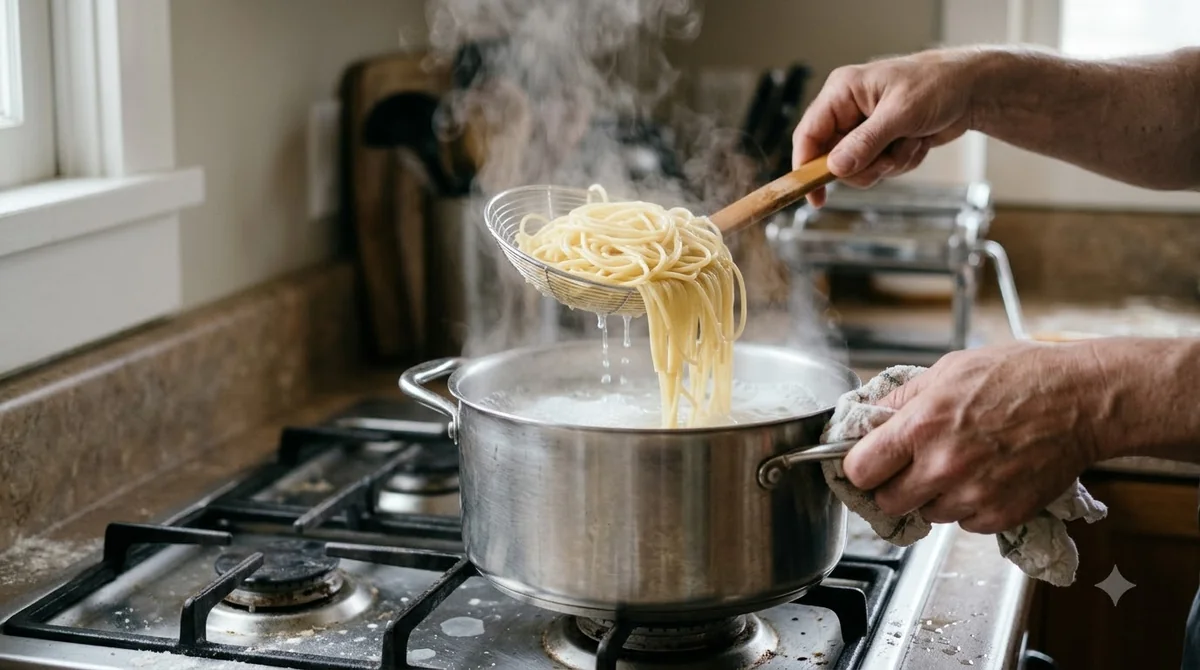
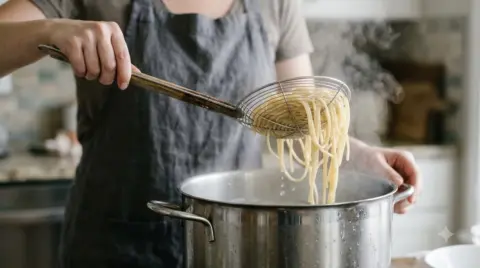
Sticking is closely linked to gummy texture, because strands that clump together cook unevenly. Use a large pot with plenty of boiling water, season it generously with salt, and stir the pasta gently right after it goes in.
Dolceterra suggests a drizzle of olive oil in the water to reduce sticking, stirred gently so the pasta keeps its shape. Oil does not replace good stirring, but it helps when the strands are delicate.
How Do You Fix Gummy Fresh Pasta Next Time?
Fix the cause you can control. Shorten the cook time to the low end of the range, check the dough by feel before shaping, and avoid thawing or storing the pasta in a way that lets it clump.
Keep a note of what you changed each time. A simple log of dough weight, kneading time, cook time and shape makes it easy to see which change made the difference.
Is Gummy Pasta Safe to Eat?
Gummy pasta is a texture problem, not usually a safety one, provided the pasta was stored and cooked properly. If pasta has been left out for a long time or has an off smell, throw it out rather than tasting it.
Frequently Asked Questions
Why is my homemade pasta gummy but store-bought is fine?
Homemade pasta is more sensitive to cook time and dough handling. Store-bought fresh pasta has been made to a set formula and may be thinner or drier. Shorten your cook time and check the bite earlier when you use homemade dough.
How long should I cook fresh egg pasta?
Most fresh egg pasta cooks in two to five minutes, depending on the shape. Flat ribbons like tagliatelle need about two minutes, while stuffed pasta needs about two and a half to four minutes at a gentle boil.
Should I rinse fresh pasta after cooking?
Rinsing removes surface starch, which can help if the pasta is going into a cold salad. For pasta going straight into a hot sauce, skip the rinse so the sauce clings to the strands.
Can I fix pasta that is already gummy?
Usually not. Gummy texture does not reverse once the pasta is cooked. Use the gummy pasta in a baked dish, a soup or a sauce with plenty of liquid, where the texture matters less.
Gummy fresh pasta is almost always fixable. Watch the cook time closely, handle the dough with a light hand and dry the strands well before they go in the pot. Once the texture is right, a few small changes each batch will keep it there.
 10 min readLearnWhy Is My Pizza Crust Gummy? Causes and FixesUpdated Nov 10, 2026
 6 min readLearnWhy Is My Pasta Dough Crumbly? Causes and Easy FixesUpdated Nov 13, 2026
 9 min readLearnWhy Is My Pasta Sticky? Causes and Easy FixesUpdated Nov 10, 2026
 6 min readLearnWhy Is My Pizza Greasy? Causes and Easy FixesUpdated Nov 13, 2026
 9 min readLearnWhy Is My Pizza Dough Tough? Causes and Easy FixesUpdated Nov 12, 2026
 6 min readLearnWhy Is My Pizza Soggy in the Middle? Causes and FixesUpdated Nov 13, 2026