
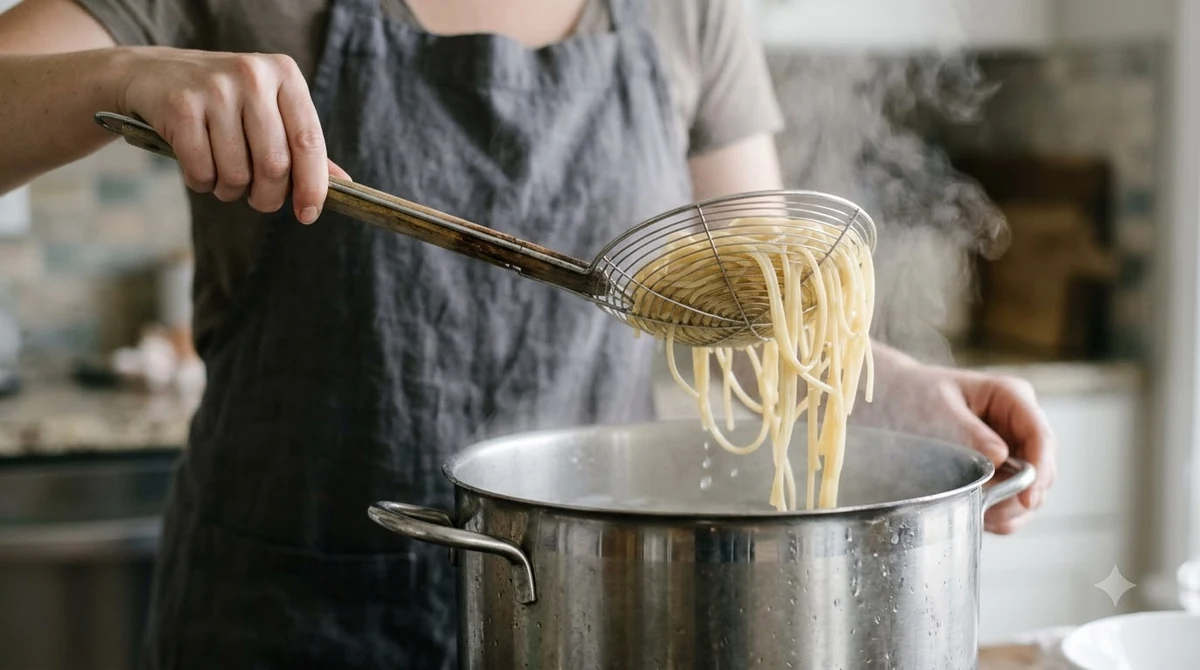

The answer to why is my pasta sticky is starch: noodles release starch into the cooking water, and that starch glues them together when the water is too thin, the pasta sits too long, or nobody stirs it. Most fixes are simple. This guide explains what happens in the pot and what to change.
Use enough water, add the pasta only when the water is boiling, stir early, and sauce the noodles right after draining. Those fixes cover most cases of why is my pasta sticky, and leftover pasta needs a separate approach, covered below. For the full prevention routine, see how to keep pasta from sticking.
Why is my pasta sticky? Starch is the cause
Starch gelatinization is the major change that happens when pasta cooks in boiling water, and the starch released from the surface is what makes the noodles tacky.
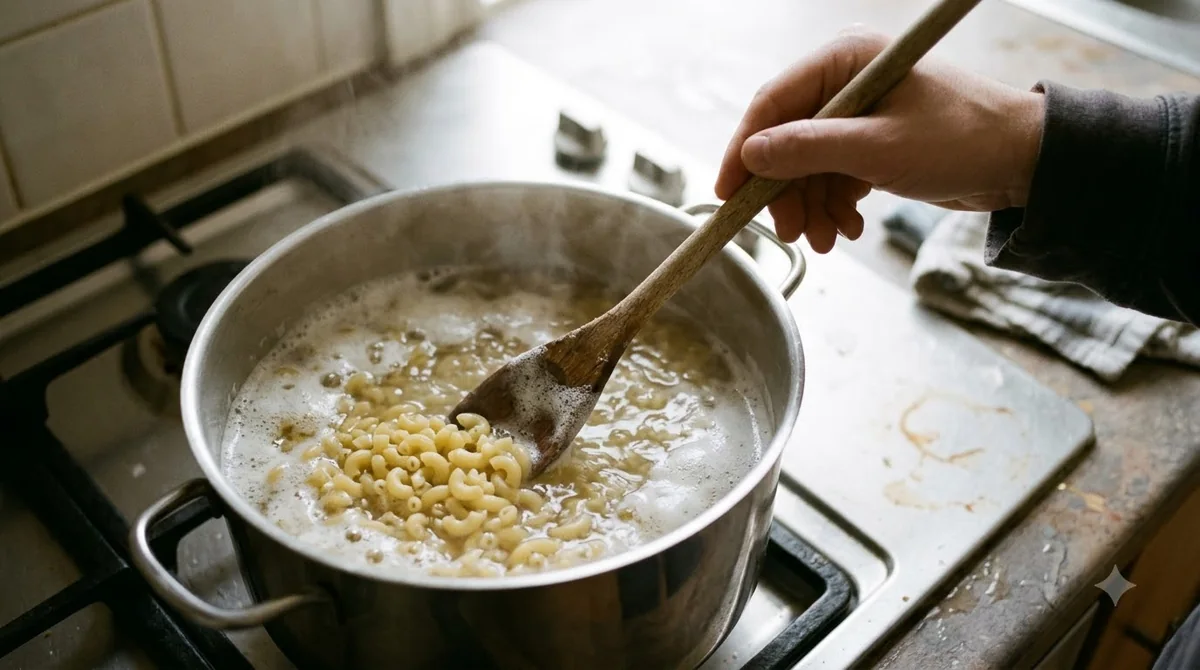
The Wikipedia article on pasta describes starch gelatinization as the main change when pasta is cooked in boiling water. In plain terms, the starch on each noodle turns sticky, and that sticky layer grabs whatever noodle it touches.
Starch is not a defect. It is part of what helps sauce cling to pasta, and it is the answer to the question of why is my pasta sticky in the first place. The goal is not to remove it but to keep the noodles apart while they cook and to sauce them before the surface gets too tacky.
The same article notes that lower temperatures require more stirring to avoid sticking. When a big batch of cold pasta drops the water temperature, the noodles need more attention until the pot returns to a full boil.
Use plenty of water
Use about 3 to 4 quarts of water for each pound of pasta, because too little water leaves the noodles sticky. That ratio comes from Taste of Home’s pasta tips.
Pasta releases starch as it cooks, and that is a common answer to why is my pasta sticky when the pot is small. A small volume of water cannot dilute that starch, so it builds up on the surface and bonds neighboring noodles wherever they touch. A larger volume of water spreads the starch out and gives the noodles room to move.
The same tips say the pot should be large enough that the water does not boil over. For a pound of spaghetti, that usually means a pot that holds several quarts of water with space left at the top, so the water can keep a steady boil when the pasta goes in.
If you cook small amounts of pasta in a big pot, the water ratio is usually not the problem. The trouble starts when a large quantity goes into a small pot, because the water temperature and starch concentration both shift at once.
Add pasta only to boiling water and stir early
Add pasta only after the water reaches a full boil, then stir right away, because noodles dropped into water that is not boiling tend to stick together.
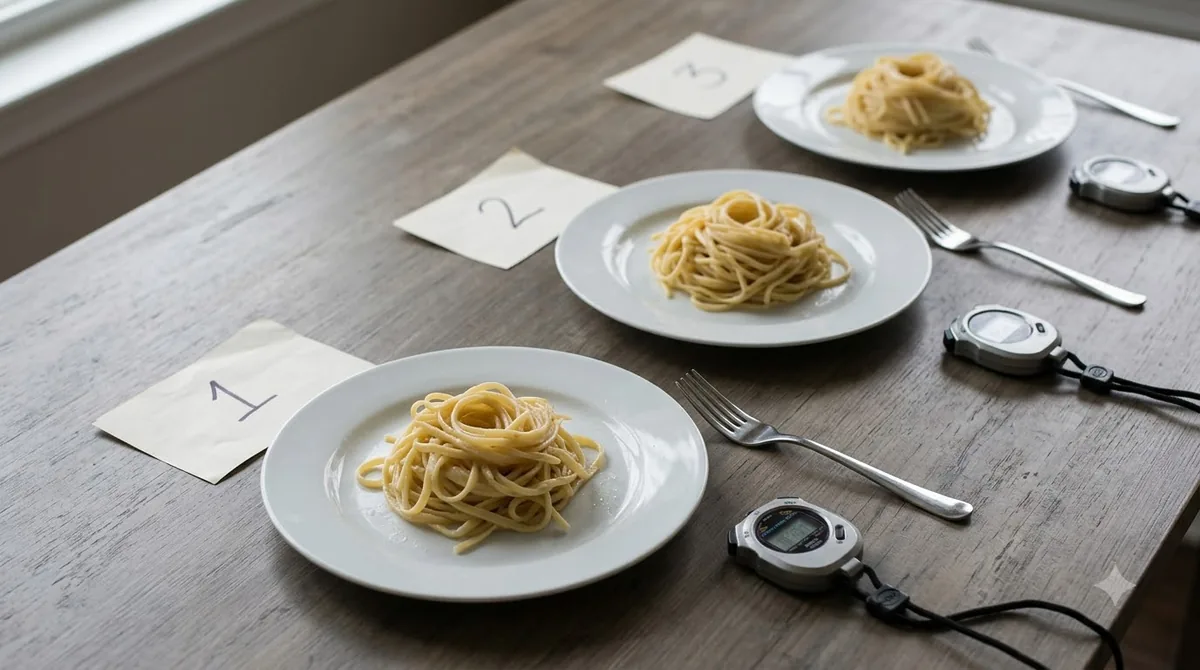
- Bring the water to a full boil before the pasta goes in.
- Stir as soon as the pasta hits the water so the noodles separate.
- Stir again in the middle of cooking and toward the end, when the noodles are close to done.
Taste of Home recommends stirring at those three points. The early stir matters most, because the first minutes are when the surface starch is released fastest and the noodles are most likely to glue together. If you keep asking why is my pasta sticky after a good start, the middle stir is the one most often skipped.
If the water drops to a simmer after the pasta goes in, keep stirring until it returns to a boil, because a pot that falls off the boil is another reason for why is my pasta sticky. The Wikipedia pasta article’s point about lower temperatures needing more stirring applies here.
Quick fixes compared
Plenty of water and early stirring do most of the work, while oil in the cooking water and rinsing hot pasta usually make sauce cling worse. Each fix answers a different part of the question, why is my pasta sticky, so the table below compares them side by side.
| Fix | What it does | Effect on sticking | Verdict |
|---|---|---|---|
| 3 to 4 quarts of water per pound | Dilutes the released starch | Reduces sticking | Do it |
| Stirring at the start, middle and end | Keeps noodles apart while they cook | Reduces sticking | Do it |
| Adding pasta to boiling water only | Stops noodles gluing in cool water | Reduces sticking | Do it |
| Salt in the cooking water | Seasons the pasta, about 1½ tablespoons per pound | Does not prevent sticking | Season for flavor only |
| Oil in the cooking water | Keeps sauce from clinging to the noodles | Does not prevent sticking | Skip it if you will sauce the pasta |
| Rinsing hot pasta | Washes away the surface starch | Interferes with sauce adhesion | Only for cold dishes |
Salt is the fix most people try first when they ask why is my pasta sticky, and it does not stop sticking. Here is more on salting pasta water. Taste of Home says it will not prevent clumping, but it still recommends about 1½ tablespoons of salt per pound of pasta for flavor.
Oil is the other common myth behind why is my pasta sticky. Adding it to the water may feel like it stops sticking, but it stops the sauce from clinging to the noodles instead. Keep the oil for the sauce pan, not the pot, as explained in do you put oil in pasta water.
Sauce it right away
Noodles left sitting in a colander keep clumping, so toss them with sauce as soon as they drain.
Taste of Home advises timing the cook so the noodles go straight from the water into the sauce. Pasta left in a colander will stick, and oiling it or rinsing it in cold water both get in the way of the sauce.
If you are cooking for a group, drain the pasta just before the sauce is ready, not earlier. Finish the sauce first, then cook the pasta to the package time and combine the two in the pot or in a warm pan.
A common answer to why is my pasta sticky at the table is draining the pasta and then waiting while the rest of the meal is plated. Every minute in the colander is a minute for the surface starch to set, so the pasta is at its best when it goes straight from the pot into the sauce.
Fresh pasta and sticky noodles
Fresh pasta releases moisture as it sits, so it clumps unless you dust the sheets and the cut noodles with flour or semolina. Homemade noodles raise the same question, why is my pasta sticky, but the cause is moisture rather than the cooking water.
Taste of Home says to dust the dough sheets before cutting, and to dust the cut noodles again before portioning. The same tips note that fresh pasta releases moisture as it sits, and that moisture is what makes the noodles clump.
- Dust the dough sheet with flour or semolina before you cut it.
- Dust the cut noodles again before you portion or nest them.
- Cook the noodles soon after cutting, because they clump the longer they sit.
The same rule from dried pasta applies here: the noodles should go from the water to the sauce without a long pause. Fresh pasta has less structure than dried pasta, so the problem behind why is my pasta sticky shows up faster: it clumps if it sits out. The full method is in how to cook fresh pasta.
Leftover pasta that clumps in the fridge
Leftover pasta raises its own question: why is my pasta sticky once it has cooled? The answer is starch and moisture, and the pasta article suggests a couple teaspoons of oil to keep stored food from sticking to itself and its container.
- Drain the pasta and let it cool just until it can be handled, without leaving it in the colander.
- Toss it with a couple teaspoons of oil before it goes into the container.
- Store it in a sealed container so the noodles stay apart and do not dry out.
Cooked pasta keeps releasing starch and moisture as it cools, which answers why is my pasta sticky in the fridge, so the clumps usually get harder the longer the pasta sits. Sealing it quickly after cooling keeps that process from going too far.
For how long cooked pasta can stay in the fridge, check the food safety guidance from your local health authority. This article does not give a number for storage time, so do not rely on memory for it.
Frequently Asked Questions
Does salt stop pasta from sticking?
No, salt is not the answer to why is my pasta sticky. Salt adds flavor, and Taste of Home notes it will not prevent sticking. It recommends about 1½ tablespoons of salt per pound of pasta for seasoning.
Why is my pasta sticky even when I use enough water?
Usually because the water was not boiling when the pasta went in, or because the noodles sat in the colander too long. Taste of Home lists both as common causes, so check those first before changing the water amount.
Does oil in the cooking water help?
Not if you will toss the pasta with sauce. Oil keeps sauce from clinging to the noodles, so the tips advise against it in the cooking water, and reserve it for leftovers.
Should I rinse pasta after cooking?
Only for a cold dish such as a pasta salad; the full trade-offs are in rinsing pasta after cooking. Rinsing hot pasta washes away the surface starch that helps sauce cling, so skip the rinse when the pasta is headed for a warm sauce.
How much pasta per person?
Taste of Home suggests about 1 heaping cup of dry small pasta per person, or about 2 ounces per person by weight for long noodles.
Why does pasta stick together in the fridge?
Cooked pasta keeps releasing starch and moisture as it cools, so the noodles clump. A couple teaspoons of oil and a sealed container help keep the noodles separate.
Start with the three big fixes: enough water, a full boil before the pasta goes in, and early stirring. Then sauce the pasta right after draining. Those steps prevent most sticky pasta, and the leftover tips cover the rest. If you still wonder why is my pasta sticky after all of that, look at the pot size and how long the noodles waited before they reached the sauce.
 6 min readLearnWhy Is My Pasta Dough Crumbly? Causes and Easy FixesUpdated Nov 13, 2026
 6 min readLearnWhy Is My Fresh Pasta Gummy? Causes and Easy FixesUpdated Nov 13, 2026
 9 min readLearnWhy Is My Pizza Dough Tough? Causes and Easy FixesUpdated Nov 12, 2026
 6 min readLearnWhy Is My Pizza Greasy? Causes and Easy FixesUpdated Nov 13, 2026
 10 min readLearnWhy Is My Pizza Crust Gummy? Causes and FixesUpdated Nov 10, 2026
 5 min readLearnWhy Is My Pizza Cheese Rubbery? Causes and FixesUpdated Nov 13, 2026