
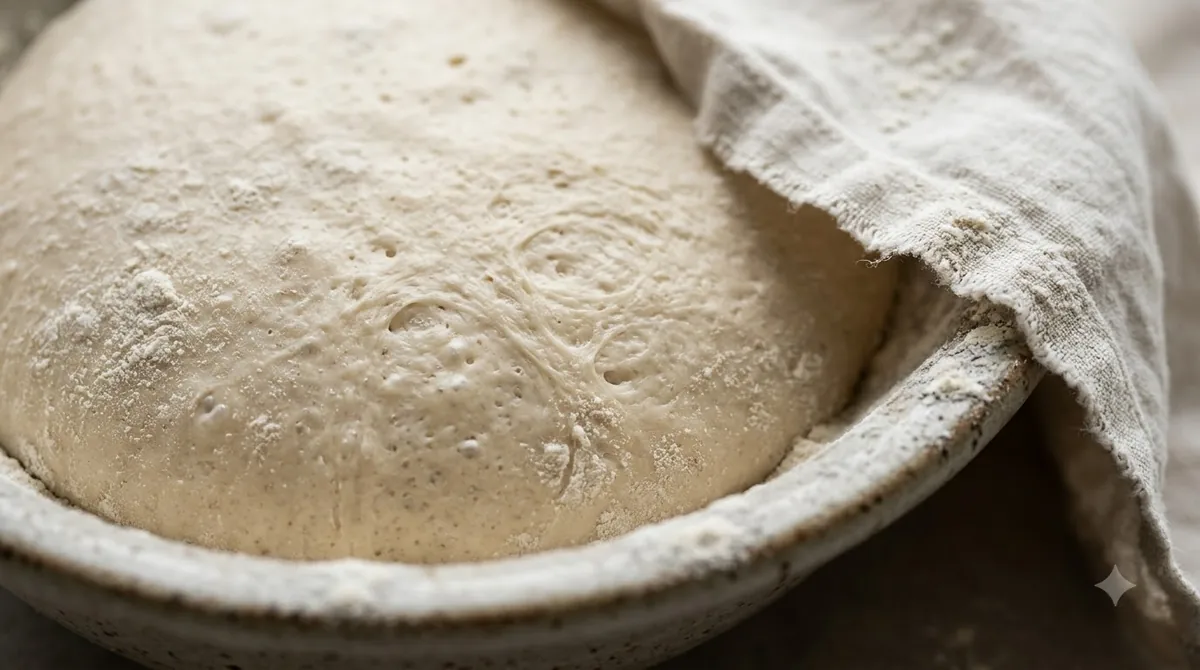

When you ask why is my pizza dough tough, the usual answer is gluten that has been pushed too far by too much kneading, too much added flour, or too little rest. Each of these causes leaves clear signs in the dough, and each one has a practical fix you can try on your next batch.
Tough dough is not the same as dry dough. Tough dough snaps back hard when you stretch it and feels rubbery, which points to gluten. Dry dough tears or cracks because it lacks water, and it is covered in our guide to pizza dough that is too dry.
Why Is My Pizza Dough Tough at the Gluten Level
Pizza dough turns tough when gluten strands cross-link too much, which makes the dough elastic and resistant to stretching. Gluten forms when proteins in flour meet water and get worked.
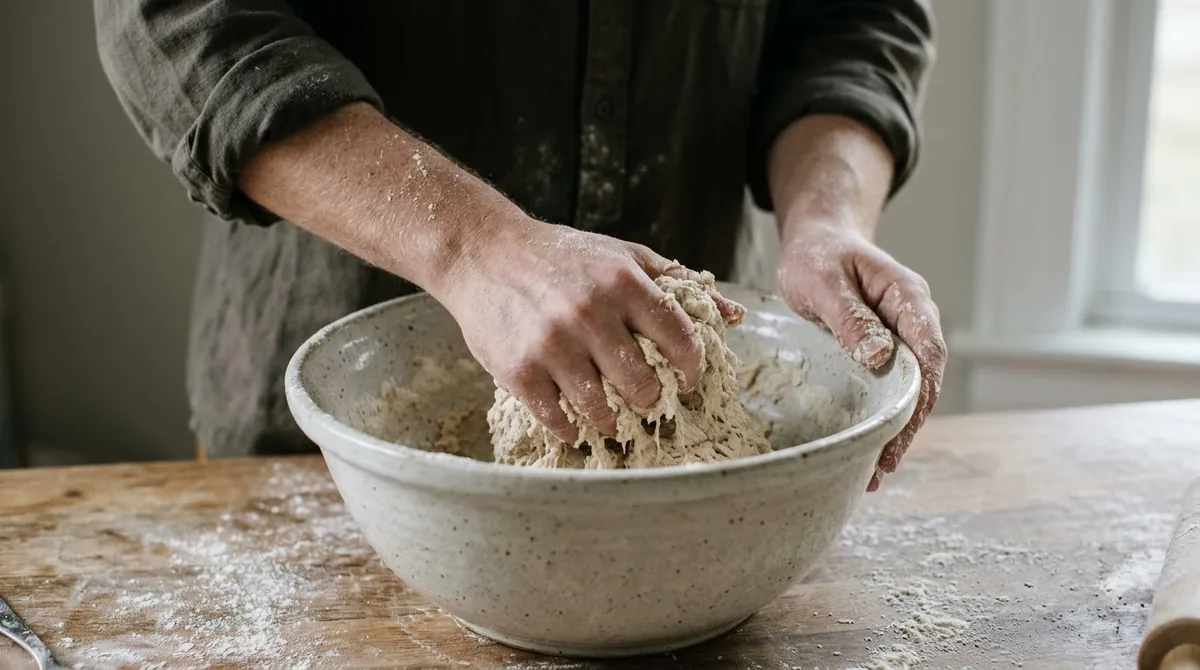
According to the Wikipedia entry on gluten, glutenin molecules cross-link through disulfide bonds to form the network, and kneading promotes the formation of gluten strands and cross-links. That is why longer kneading gives a chewier, less crumbly result in baked goods.
Some elasticity is useful, because it lets the dough hold gas and keep its shape. The problem starts when the network becomes so tight that the dough cannot relax. At that point, every stretch pulls back, and the baked crust comes out dense and chewy rather than light.
How Overkneading Makes Pizza Dough Tough
Kneading past the point where the dough comes together keeps building gluten, and that leaves a rubbery, tough dough. Most of the time the cause is simple: the dough was worked longer than it needed to be.
The King Arthur pizza crust recipe gives a clear limit for a stand mixer: knead for 4 to 5 minutes on second speed. The dough should barely clean the sides of the bowl. The same recipe warns against over-kneading. For more on timing, see our guide on how long to knead pizza dough.
Rough-looking dough is not a failure, so do not keep kneading just to make it look smooth. Watch for these signs that the dough has had enough work:
- It pulls back hard when you try to stretch it into a round.
- It keeps springing back to a smaller size after you shape it.
- It feels firm and elastic even after a short rest.
- It looks glossy and tight, with no visible give when you press it.
If you see two or more of these after mixing, stop kneading and move on to the rest step. Kneading more will not make the dough softer.
How Extra Flour Makes Pizza Dough Tough
Adding flour to sticky dough makes it tougher, because the extra flour lowers hydration and adds more gluten-forming material. Many cooks reach for the flour bag as soon as dough feels wet, and that habit is a common route to a tough result.
In a Chowhound explainer, Houston pizzeria owner Nicole Bean says home cooks often add too much flour after the dough is already mixed. She says that if the dough feels too wet, adding extra flour is only going to make it tougher. She also notes that added flour can raise gluten levels, which has an effect similar to overworking the dough.
Heavy dusting on the work surface does the same job. Bean says a thick layer of flour while handling sticky dough can produce a tough, chewy crust that is more likely to burn. A light hand with flour keeps the dough workable without changing its texture.
Better ways to handle sticky dough include these steps:
- Lightly oil your hands or the counter instead of reaching for flour.
- Use a bench scraper to lift and fold the dough without adding more flour, and see our guide to pizza dough that is too sticky for more fixes.
- Cover the dough and let it rest, so the flour hydrates and the dough becomes easier to handle.
- Add water in small amounts only when the dough is clearly too dry, not when it is merely soft.
Quick Diagnosis Table: Why Is My Pizza Dough Tough and How to Fix It
To answer why is my pizza dough tough in your own kitchen, match what you see in the dough to the most likely cause, then try the first fix before changing the whole recipe.
| Symptom | Most likely cause | First fix |
|---|---|---|
| Dough snaps back when stretched | Overkneaded or not rested | Rest covered for at least 15 minutes, then stretch again |
| Dough feels heavy and firm after mixing | Flour added after mixing | Weigh flour and adjust water in small amounts next time |
| Crust bakes hard and chewy | Heavy dusting flour or overworked dough | Dust lightly and handle the dough less |
| Dough shrinks back when pressed into the pan | Gluten has not relaxed | Rest covered for 15 minutes, then press again |
The table is a starting point, not a diagnosis. The King Arthur recipe does not say how much extra flour changes texture, so weigh your flour and compare it with the amounts in your own recipe.

Step-by-Step Fix for Tough Pizza Dough
To rescue tough dough, cover it, let it rest for at least 15 minutes, and stretch it again instead of kneading harder. When you wonder why is my pizza dough tough after mixing, start with the rest step, because resting gives the gluten time to relax so the dough can be shaped.
- Cover the dough and rest it for 15 minutes. King Arthur uses this shaping rest in its recipe.
- Shape the dough into a rough oval or circle without patting it flat.
- Press it toward the edges. If it shrinks back, rest it covered for another 15 minutes, then stretch again.
- Give it a final rise until it is noticeably puffy: about 90 minutes at room temperature, or 2 to 2 1/2 hours if it was refrigerated.
- Preheat the oven to 450°F near the end of the rise.
Bake according to the thickness you want. In the King Arthur recipe, a thin crust bakes about 8 minutes on the lower rack before toppings. After toppings go on, the pizza bakes 10 to 15 minutes more on the upper rack until the crust is browned and the cheese is melted.
Mixing and Rest Habits That Prevent Tough Dough
Weigh the flour, adjust the water to the season, and give the dough a long enough rest before shaping. Most answers to why is my pizza dough tough come down to these three habits, and they prevent most of the causes covered above.
The King Arthur recipe uses 3 cups, or 360 grams, of all-purpose flour, and its water range is 198 to 255 grams of lukewarm water, with less water for summer or humid weather.
- Weigh the flour rather than scooping it, so you do not add extra flour by accident.
- Start with the lower water amount in humid weather and add the rest only if the dough feels stiff.
- Stop kneading when the dough barely cleans the bowl, even if it looks rough.
- For make-later dough, refrigerate it for 4 to 24 hours after the first rise.
If you refrigerate the dough, the King Arthur recipe allows a final rise of 2 to 2 1/2 hours afterward instead of 90 minutes at room temperature. A longer rest gives the gluten more time to relax, so the dough is easier to stretch (see our guide to how to stretch pizza dough).
What the Sources Do Not Confirm
Not every threshold for tough dough has a published number, so some checks have to be made in your own recipe. The King Arthur page gives exact flour and water amounts, but it does not say how much extra flour changes the texture of the dough.
Two claims in this guide are not confirmed by the sources read for it. The first is that a low oven always dries the crust into a chewy texture. The second is that steam from a hot pizza always softens the crust. Check the oven temperature in your manual and compare the bake time with your own recipe before changing either setting.
Frequently Asked Questions
Can you save pizza dough that has already gone tough?
Yes, in most cases. Cover the dough, let it rest for at least 15 minutes, and then reshape it. If it still springs back, rest it covered for another 15 minutes instead of kneading harder.
Does kneading longer always make pizza dough tough?
Not always, but kneading builds gluten strands and cross-links, and longer kneading gives a chewier baked result. The King Arthur recipe calls for 4 to 5 minutes on second speed in a stand mixer, then stopping when the dough barely cleans the bowl.
Why is my pizza dough tough after adding flour?
It can. Nicole Bean, quoted by Chowhound, says that adding too much flour after mixing, especially when the dough is already too wet, makes the dough tougher. Weigh your flour and add water only in small amounts.
How long should pizza dough rest?
Use a 15-minute covered rest after shaping, and again if the dough shrinks back. For a make-later dough, the King Arthur recipe refrigerates it for 4 to 24 hours after the first rise.
Does tough dough mean the crust will be tough too?
Dough that has been overworked or given too much flour can bake into a tougher, chewier crust, according to the Chowhound explainer. Fix the dough first, then check the bake time and oven temperature in your recipe. If the baked crust is the problem, see our guide to why a pizza crust turns hard.
If you still ask why is my pizza dough tough after these steps, change one thing at a time. Weigh the flour, mix only until the dough comes together, and give it a real rest before you decide the recipe is the problem.
 6 min readLearnWhy Is My Pasta Dough Crumbly? Causes and Easy FixesUpdated Nov 13, 2026
 6 min readLearnWhy Is My Pizza Greasy? Causes and Easy FixesUpdated Nov 13, 2026
 6 min readLearnWhy Is My Fresh Pasta Gummy? Causes and Easy FixesUpdated Nov 13, 2026
 9 min readLearnWhy Is My Pasta Sticky? Causes and Easy FixesUpdated Nov 10, 2026
 5 min readLearnWhy Is My Pizza Cheese Rubbery? Causes and FixesUpdated Nov 13, 2026
 6 min readLearnWhy Is My Pizza Soggy in the Middle? Causes and FixesUpdated Nov 13, 2026