
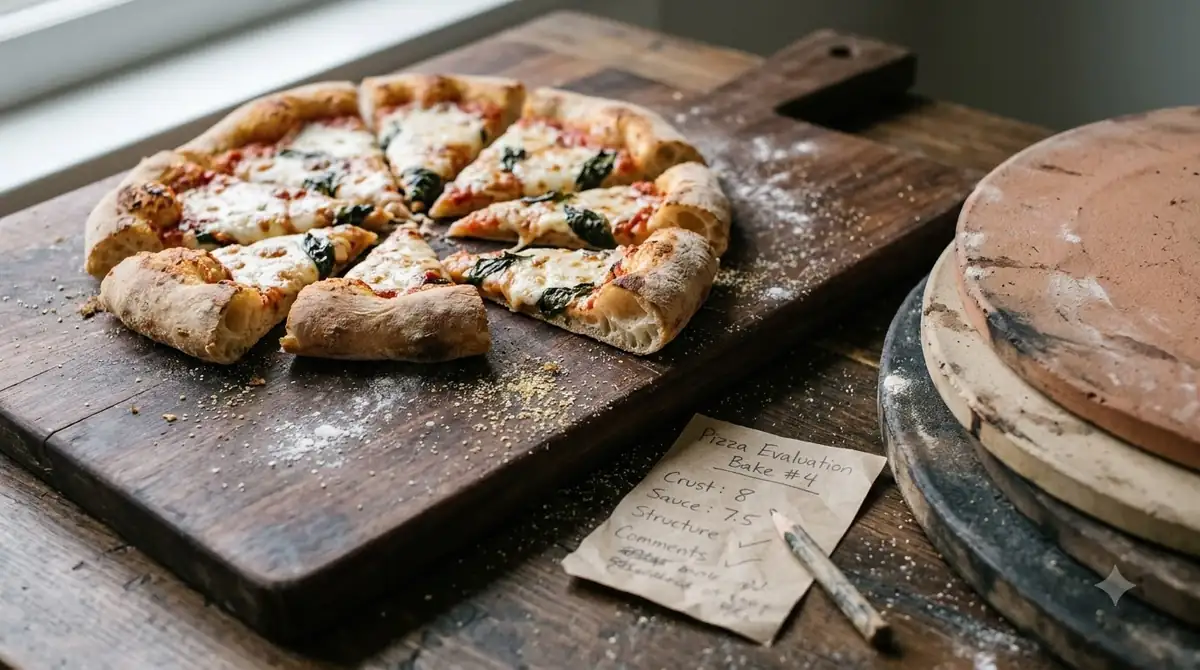

Why is my pizza greasy? Most of the time the oil comes from fatty toppings such as pepperoni and sausage, from a heavy layer of cheese, or from a dough that is too wet to hold the grease. A bake that is not hot enough lets that fat pool on top instead of cooking off. Fixing it usually means blotting the toppings, using less cheese, and baking hotter.
What Makes Homemade Pizza Greasy?
Grease on a pizza is fat that has not been held inside the cheese or the dough. Cheese and fatty meats release oil as they heat, and that oil spreads across the surface unless something stops it. The Dough Academy’s guide on greasy pizza lists the main causes as fatty toppings, fatty cheese, wet dough, too much sauce, too much oil in the dough, and baking at too low a temperature.
Greasy toppings are the first thing to look at. Pepperoni and sausage release a lot of oil, and watery vegetables such as mushrooms help spread it. The same guide notes that mushrooms are about 90 percent water, so they carry grease across the pizza when they bake.
How Cheese and Toppings Add Extra Oil
Cheese holds water and fat, and as it melts, both can run across the pizza. Lower-fat or low-moisture mozzarella melts with less oil. Cooking Chops suggests trying a low-moisture or part-skim cheese, and points out that lower-fat cheese can change flavour and melting, so test a few options before you commit.
Pepperoni can be precooked to remove some of the fat. Cooking Chops suggests either a quick microwave on a paper towel or a pan over medium heat, followed by blotting each slice dry before it goes on the pizza. Pre-grated cheese usually holds less water than a block, so it can release less oil in the oven.
- Blot pepperoni and sausage on paper towels before you add them.
- Use a thinner layer of sauce, since heavy sauce gives the grease more room to spread.
- Choose a lower-fat or low-moisture cheese, and test a few brands.
- Let shredded cheese rest on paper towels for a few minutes before you top the pizza.
If your pizza is still greasy after these changes, run a simple test. Make two pizzas with the same dough and oven setting, one with the full topping load and one with half the cheese and no fatty meat. Compare how much oil sits on the surface after the same bake time. Changing one thing at a time shows whether the cheese, the toppings or the oven is the real cause in your kitchen.
Does Dough Hydration and Oil Make It Greasy?
Wet dough soaks up grease and lets it spread. The Dough Academy suggests aiming for about 60 percent hydration, which means 60 grams of water for every 100 grams of flour. A wetter dough is harder to shape and tends to let oil move across the base.
Oil in the dough adds to the problem. The same guide recommends no more than one tablespoon of olive oil in the dough, and using as little oil as possible when you grease the bowl and stretch it. Dust the work surface with flour instead of oil. A thicker crust also absorbs more grease than a thin, stretched base, so avoid stretching homemade dough too thin.
Why Oven Heat and Timing Matter Most
A hot oven cooks off the fat before it pools. Cooking Chops suggests baking at 500 to 550 degrees Fahrenheit, and says that at 500 degrees a pizza should take around 10 minutes or less. A preheated stone or pan holds heat and helps the base set quickly. Home ovens often top out at 450 to 500 degrees, so use the highest setting your oven allows.
Timing also matters. The Dough Academy notes that dough which sits with toppings on it for ten minutes or more soaks up grease before it bakes. Five minutes is fine, but bake pizzas one at a time so each one goes into the oven soon after it is topped.
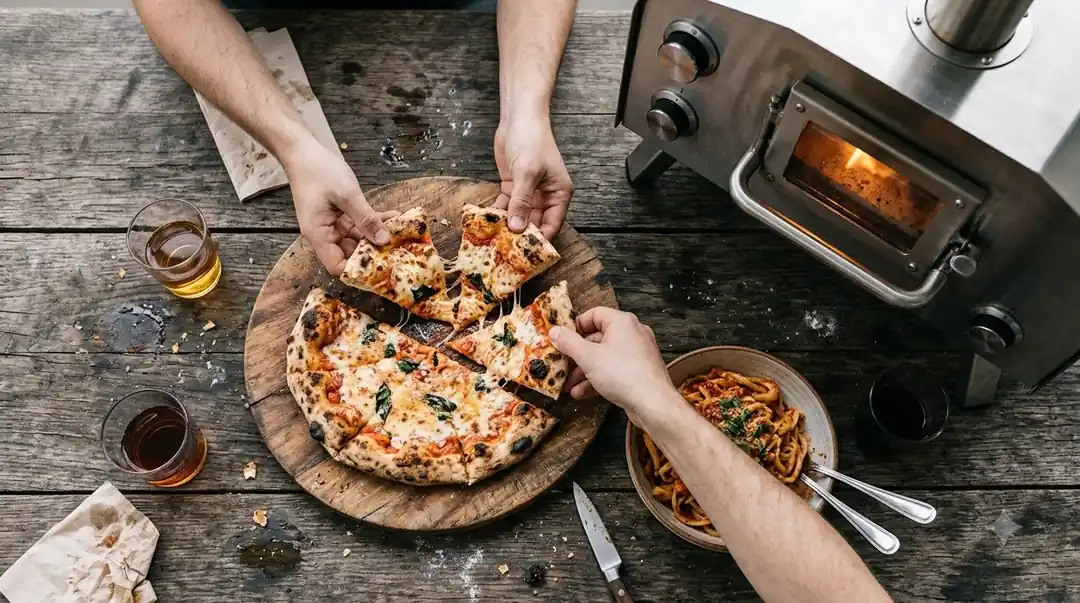
The table below lists the usual causes and the change that fixes each one.
| Cause | Fix |
|---|---|
| Pepperoni or sausage | Precook and blot dry before topping |
| Heavy or fatty cheese | Use less cheese or a low-moisture type |
| Wet dough | Aim for about 60 percent hydration |
| Oil in the dough | Keep it to no more than one tablespoon of olive oil |
| Oven too cool | Preheat fully and bake at the highest setting |
| Pizza sitting before baking | Top and bake one pizza at a time |
Serving and Reheating a Greasy Pizza
Once the pizza is out of the oven, let it sit on a cutting board or a clean pan for a couple of minutes. Cooking Chops notes that this gives the oils time to thicken and the toppings time to settle, so the slice holds together better.
Leftover slices tend to get greasier in the microwave, because the heat softens the crust and makes the cheese release more oil. Reheat slices in a hot oven or a skillet for a firmer base.
Frequently Asked Questions
Why is my pizza greasy even when I use less cheese?
Fatty toppings such as pepperoni or sausage can still release oil, and a wet dough or a cool oven can make grease pool even with a light layer of cheese. Blot the toppings and check the oven temperature.
Does part-skim mozzarella make a pizza less greasy?
Lower-fat or low-moisture mozzarella usually releases less oil. It can change the flavour and melt, so test a few brands before you decide.
Should I drain pepperoni before putting it on pizza?
Yes. Cook it briefly in a pan or on a paper towel, then blot each slice dry. This removes some of the fat that would otherwise spread across the pizza.
What oven temperature stops pizza from getting greasy?
Bake as hot as your oven allows, and preheat a stone or pan for the base. Cooking Chops suggests 500 to 550 degrees Fahrenheit, and The Dough Academy notes that home ovens usually reach 450 to 500 degrees.
A greasy pizza is usually fixable without changing your recipe. Blot the toppings, use less cheese, keep the dough dry and bake hotter. Change one thing at a time and you will see which fix makes the difference in your oven.
 9 min readLearnWhy Is My Pizza Dough Tough? Causes and Easy FixesUpdated Nov 12, 2026
 6 min readLearnWhy Is My Pasta Dough Crumbly? Causes and Easy FixesUpdated Nov 13, 2026
 6 min readLearnWhy Is My Fresh Pasta Gummy? Causes and Easy FixesUpdated Nov 13, 2026
 9 min readLearnWhy Is My Pasta Sticky? Causes and Easy FixesUpdated Nov 10, 2026
 5 min readLearnWhy Is My Pizza Cheese Rubbery? Causes and FixesUpdated Nov 13, 2026
 6 min readLearnWhy Is My Pizza Soggy in the Middle? Causes and FixesUpdated Nov 13, 2026