
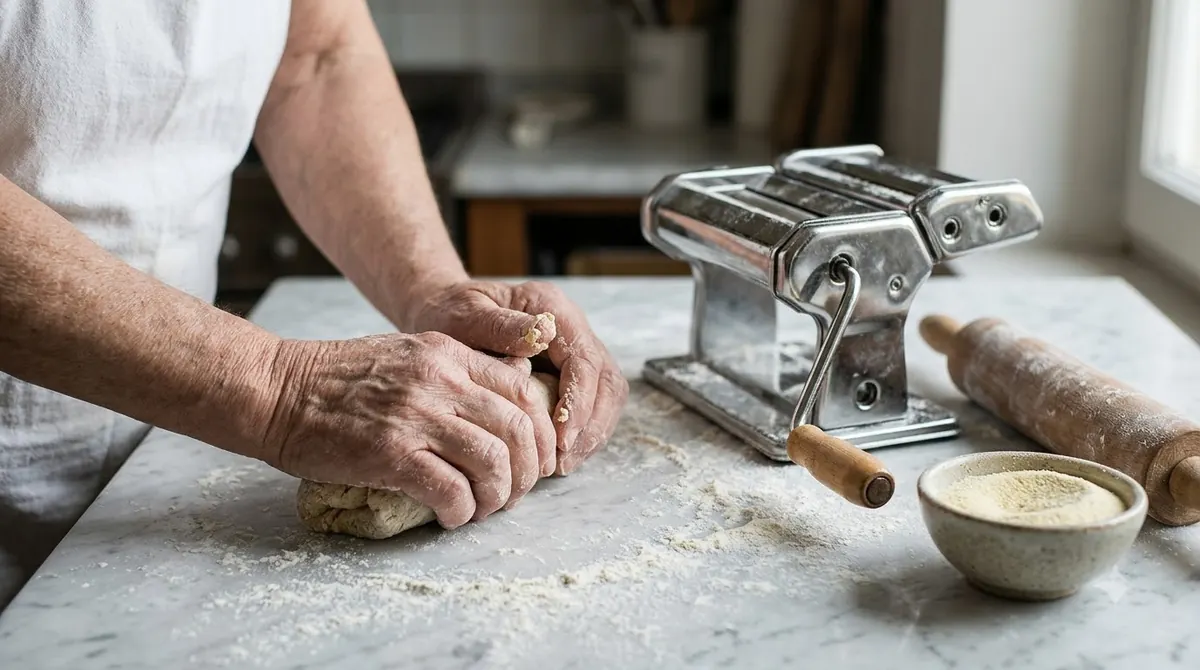

Why is my pasta dough crumbly? Usually because it is short on moisture, not because the recipe is wrong. Flour that has not fully absorbed the eggs stays shaggy and dry, and a few more minutes of kneading or a small splash of water often brings it together. Add liquid slowly, because it is easy to overshoot from too dry to too wet.
Is Crumbly Dough Normal at the Start?
Yes. Fresh pasta dough is normally shaggy and dry in the first minutes, and it only becomes smooth after the flour has taken in the egg.
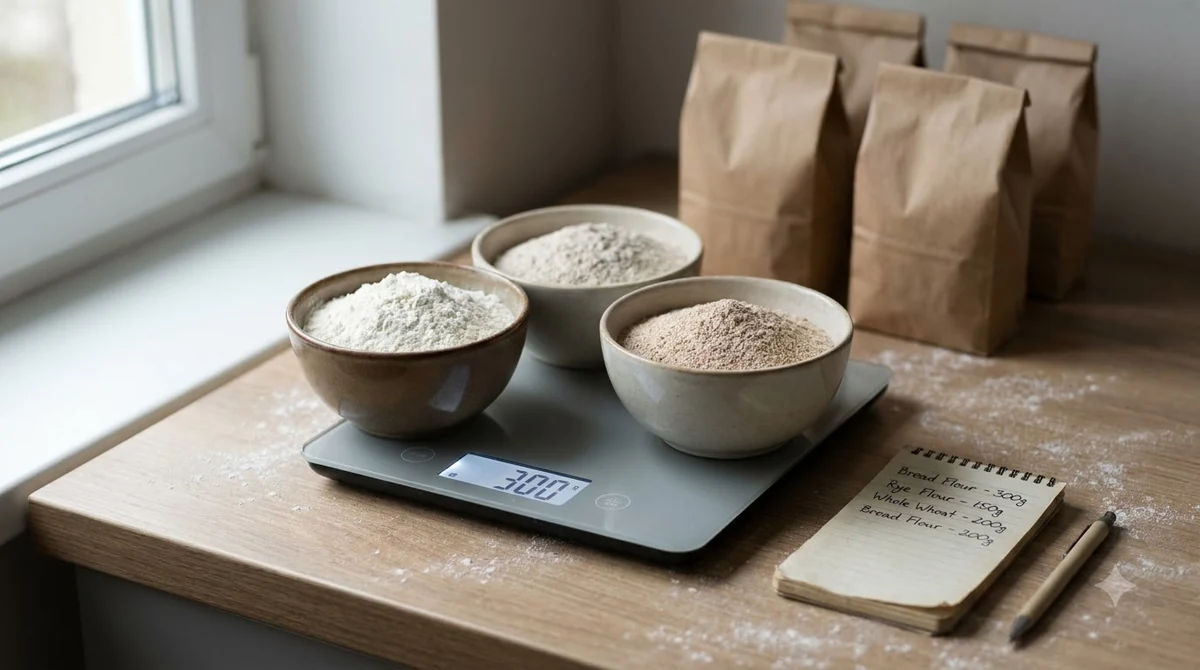
The Takeout guide to fixing dry pasta dough makes the same point: the dough looks dry at the start, and adding water too soon is what turns it wet. Judging the dough in the first two minutes is unreliable, so keep kneading before you decide it needs help.
Measurement can also leave a dough short on moisture. Small eggs, or flour scooped loosely from a bag so that a cup holds less than expected, can push the ratio dry. Weighing the flour and eggs makes the dough more predictable from one batch to the next.
How Much Kneading Does Crumbly Dough Need?
Knead for about three minutes before you add any water, because many crumbly doughs come together with more work alone.
Under-kneaded dough can look dry because the flour has not been worked into the egg. The Takeout guide suggests kneading longer first and adding water only if the dough still will not come together after about three minutes. Folding the dough over itself and pressing it down with the heel of your hand spreads the moisture through the mass.
Keep kneading on a clean, lightly floured surface, and scrape up any loose crumbs as you go. Those crumbs are often the easiest flour to re-absorb if you give them time.
How Do You Add Water to Dry Pasta Dough?
Add water in very small amounts, either by misting the dough or by kneading with wet hands, and stop as soon as the dough holds together.
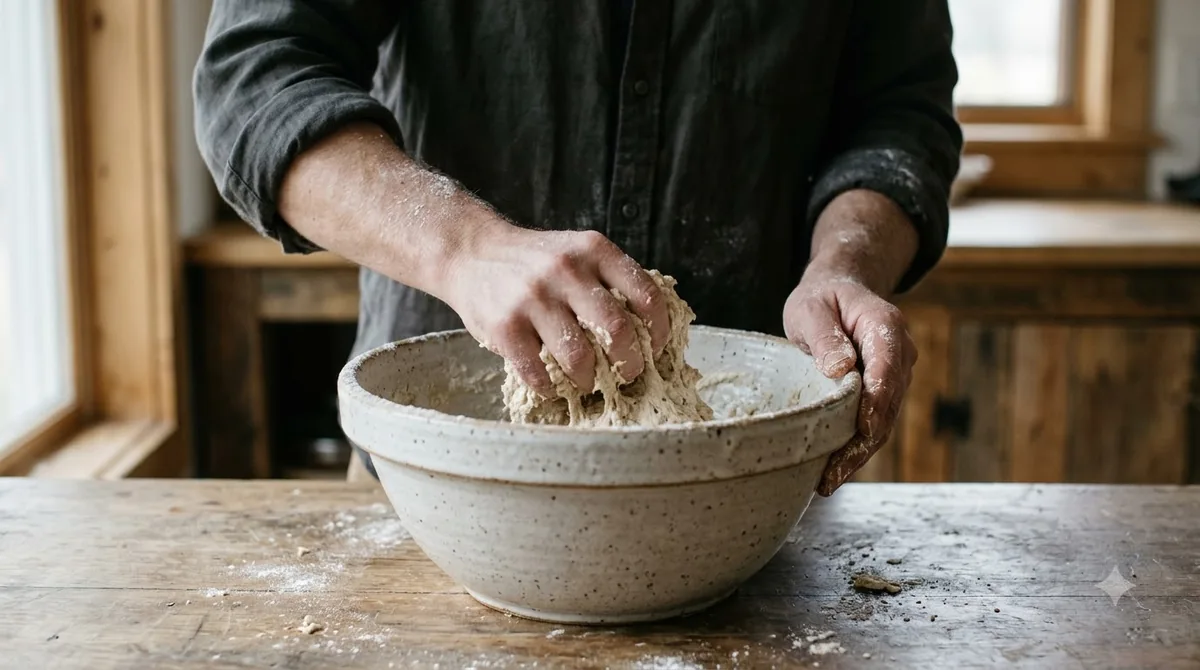
The Takeout method is to mist the dough from a spray bottle, knead for about 30 seconds, then check it again. Repeat until the dough holds together. Without a spray bottle, dip your fingers in water and knead with damp hands instead. No total amount of water is specified, which is why small steps matter.
- Knead for about three minutes and check whether the dough holds its shape.
- If it is still crumbly, mist it once and knead for 30 seconds.
- Check again. If it is still shaggy, repeat with another light mist.
- Stop as soon as the dough forms a cohesive ball with no dry flour left on the counter.
In a food processor, the PBS fresh egg pasta recipe approach is to add a very small amount of warm water through the feed tube while the machine runs. A stand mixer works in the same way: add more water about 1 tablespoon at a time, rather than pouring it in all at once.
Will Resting the Dough Fix a Crumbly Texture?
Often, yes. Resting gives the flour time to take in the moisture already in the dough, so a dough that looked crumbly can become smooth and elastic.
The Takeout guide notes that dough hydrates further and becomes more elastic after resting, although it does not give a set time. The Caputo classic fresh egg pasta dough, which uses 300 g of 00 flour and 3 large eggs, rests for 30 minutes at room temperature and can rest up to 6 hours. Wrap the dough well so the surface does not dry out during the rest.
After resting, knead the dough briefly, then check the texture again before you add any more liquid. Many doughs that looked hopeless at the start are fine after a rest.
What Happens If You Add Too Much Water?
Too much water makes the dough sticky and slack, and the fix is to add flour in small amounts rather than to keep adding water.
The Takeout guide warns that pasta dough can go from too dry to too wet just as quickly, so stop adding liquid at the right moment. Caputo’s guidance for a dough that is too wet is to add flour, not water. Dust a little flour onto the counter and your hands, knead it in, and check again before adding anything else.
If the dough sticks to the machine when rolling, dust the sheet with flour each time you pass it through. That is a rolling fix, not a dough fix, and it does not change the dough’s hydration.
What Texture Should Pasta Dough Have Before Rolling?
The dough should be smooth and firm with a gentle bounce back, and no loose flour should remain in the bowl or on the counter.
The Takeout guide describes the target as elastic but firm, similar to Play-Doh. When you press it with a finger, it should spring back slowly. If it cracks at the edges, it is too dry, and if it sticks to your fingers and leaves a film, it has too much moisture.
Once the dough reaches this texture, wrap it and rest it before rolling. A dough that is correct at the start of the rest is often slightly more pliable after the rest.
Frequently Asked Questions
Why is my pasta dough crumbly after kneading?
The dough may need more kneading or a small amount of water. Knead for about three minutes first, then mist it lightly and check again.
How much water should you add to crumbly pasta dough?
Add it in very small amounts, such as a light mist or about 1 tablespoon at a time, and stop as soon as the dough holds together.
Can you fix pasta dough by letting it rest?
Often, yes. Resting lets the flour absorb moisture, so the dough becomes smoother and more elastic. Wrap it so it does not dry out.
What if my pasta dough is too wet after adding water?
Add flour in small amounts, not more water, and knead it in before checking the texture again.
Crumbly pasta dough is usually a sign to knead a little longer, add water in tiny steps and let the dough rest. Work slowly, check the texture often and fix moisture gradually, and the dough will come together into a smooth, elastic ball ready for rolling.
 9 min readLearnWhy Is My Pizza Dough Tough? Causes and Easy FixesUpdated Nov 12, 2026
 6 min readLearnWhy Is My Fresh Pasta Gummy? Causes and Easy FixesUpdated Nov 13, 2026
 9 min readLearnWhy Is My Pasta Sticky? Causes and Easy FixesUpdated Nov 10, 2026
 6 min readLearnWhy Is My Pizza Greasy? Causes and Easy FixesUpdated Nov 13, 2026
 5 min readLearnWhy Is My Pizza Cheese Rubbery? Causes and FixesUpdated Nov 13, 2026
 6 min readLearnWhy Is My Pizza Soggy in the Middle? Causes and FixesUpdated Nov 13, 2026