
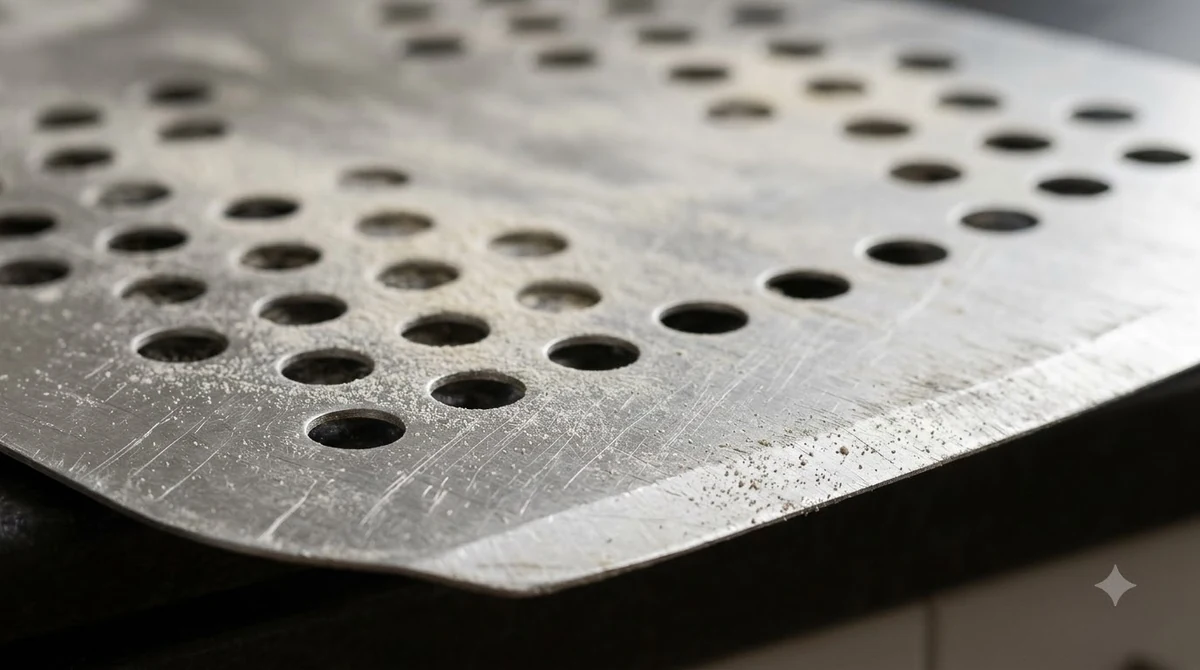

The best aluminum pizza peel is a thin, solid or perforated metal blade on a sturdy handle that matches your oven. Aluminum is usually lighter than wood and slides under a pizza more easily. The right model depends on blade style, handle length and how you plan to clean it.
Shop for an aluminum pizza peel by the features below first. Brand choice comes second, once you know the blade type and handle length your oven needs.
| Pick type | Best for | Trade-off |
|---|---|---|
| Solid aluminum blade | Loading and serving pizza with a continuous surface | Extra flour stays on the blade and can burn |
| Perforated aluminum blade | Turning and removing pizza with a lot of flour | Small holes can catch dough edges |
| Anodized aluminum blade | Better resistance to corrosion and wear | Does not make the blade stronger |

ooni 12' Aluminium Metal Pizza Peel
Pros & ConsViewHide
Reasons to buy
- 12 in aluminum peel, the size Ooni says the Karu and Koda 12 accept
- 85% of ratings are 5-star
- Lightweight with a long handle
Reasons to avoid
- Aluminum does not double as a serving board
- Priced higher than generic peels

Gozney 14" Balance Pizza Placement Peel
Pros & ConsViewHide
Reasons to buy
- Perforated aluminum blade for placing 14 in pizzas
- 84% of Amazon ratings are 5-star
- Gozney-branded for its ovens
Reasons to avoid
- 14 in size is large for small ovens
- Costs more than basic peels

Chicago Brick Oven 12 x 14 Aluminum Pizza Peel
Pros & ConsViewHide
Reasons to buy
- 12 x 14 inch aluminum blade with a detachable 21 inch wooden handle
- Listing gives 35.5 inch total length to keep hands away from heat
- 79% of about 1.5K Amazon ratings are 5-star
Reasons to avoid
- Listing describes a turning peel, so check it suits your launch style
- Long handle takes more storage space even when detached

12 x 14 Inch Perforated Aluminum Pizza Peel
Pros & ConsViewHide
Reasons to buy
- Perforated 12 x 14 inch aluminum blade lets extra flour fall away
- Listing mentions an anodic protective film against oxidation and wear
- Tapered front edge listed for sliding under dough
Reasons to avoid
- 65% of about 140 Amazon ratings are 5-star, weaker than the leaders
- Holes can catch soft dough edges
What an aluminum pizza peel does best
An aluminum pizza peel is a flat metal carrying surface attached to a handle, which is the same basic design as a metal peel with a wooden handle. Wikipedia’s pizza peel entry describes this construction, with the sheet metal carrying the baked good and the handle extending from one side.
The main advantage of an aluminum pizza peel is its thin edge. Metal peels are thinner than wooden ones, so they slide under the dough and back out again with less disturbance. La Academie also describes them as often more lightweight than wooden ones. If you want to compare other metal options, our guide to metal pizza peels covers aluminum and stainless blades together.
The trade-off is sticking. Bare metal on an aluminum pizza peel gives raw dough little to grip, so the dough can cling to the blade if you load it without preparation.
Which aluminum peel type to buy
A solid blade suits you if you mostly load and serve pizza, while a perforated blade suits you if you turn pizza often with heavy flour. The holes let extra flour fall through during launch and turning.
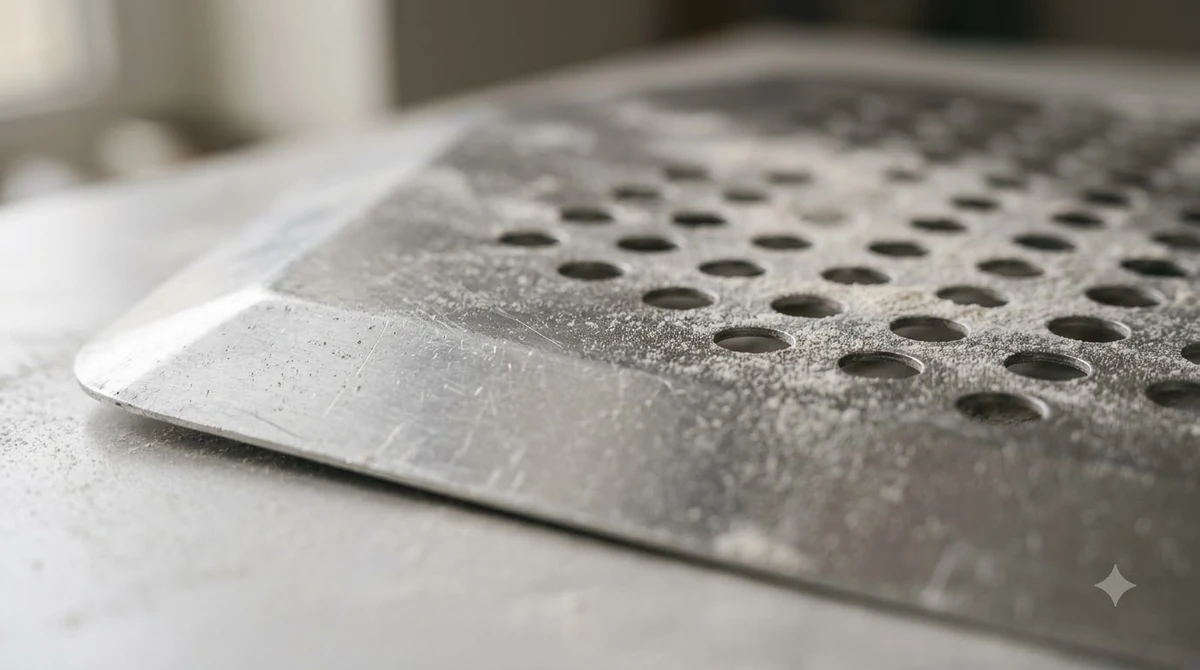
Solid blades on an aluminum pizza peel give the cleanest surface for moving a pizza onto a stone or steel. Because nothing falls through, extra flour stays on the blade, and that can scorch the bottom of the crust if you use a lot.
Perforated blades are a practical choice for turning inside a hot oven. Excess flour drops away, which keeps the crust cleaner. Some bakers keep two peels, one solid for loading and one perforated for turning, and our roundup of the best pizza turning peels focuses on that second job.
- Choose solid if you load and serve from the same peel.
- Choose perforated if you turn pizza in a hot oven with plenty of flour.
- Choose two peels if you want both jobs done well.

Aluminum, anodized or stainless steel
Anodized aluminum has a thicker oxide layer that resists corrosion and wear better than bare aluminum. Wikipedia’s anodizing entry says anodizing increases corrosion and wear resistance, but it does not increase the strength of the aluminum object.
Food contact is a separate question. The same Wikipedia entry does not address food safety, even though it lists cookware among anodized aluminum products. One metal-peel guide, La Academie’s comparison of metal and wood peels, recommends stainless steel because the author believes aluminum can react with food. That is one author’s opinion, not a test result. One listing in the product boxes above, a perforated 12 by 14 inch aluminum peel, says its aluminum has an anodic protection film against oxidation and wear. That is the seller’s description, so confirm it on the current listing.
If food contact matters most to you, read the manufacturer’s material statement before you buy. Stainless steel is the material that guide recommends.
Handle length and blade size for your oven
Choose a handle on your aluminum pizza peel long enough to keep your hand clear of the oven opening, and a blade no wider than the stone or steel you load from. Check the listed blade and handle dimensions before you order, because product pages vary widely. For a sense of the range, the Chicago Brick Oven listing describes a 12 by 14 inch aluminum blade with a detachable 21 inch wooden handle and a 35.5 inch total length, while the Ooni and Gozney peels in the product boxes are branded for their own ovens. These sizes come from the seller listings, so compare them with your stone and oven opening before you order an aluminum pizza peel.
- Measure the opening of your oven and the size of your stone or steel before you pick an aluminum pizza peel.
- Pick a blade that fits on the stone with room to slide under the pizza.
- Check that the handle reaches past the oven door when the blade is inside.
Wood handles are common on aluminum peels, and they stay cooler than metal. Wikipedia notes that wood does not get hot enough to burn your hands the way metal can, so a wooden or insulated handle is worth a look. If you would rather keep a wooden blade for loading, see our guide to the best wooden pizza peels.
Keeping the peel from sticking and clean
Dust the blade with semolina or flour before you load the dough, then work quickly. If dough still clings, our fixes for pizza sticking to the peel walk through the common causes. Wikipedia notes that peels are often sprinkled with flour, cornmeal or milled wheat bran so baked goods slide on and off easily.
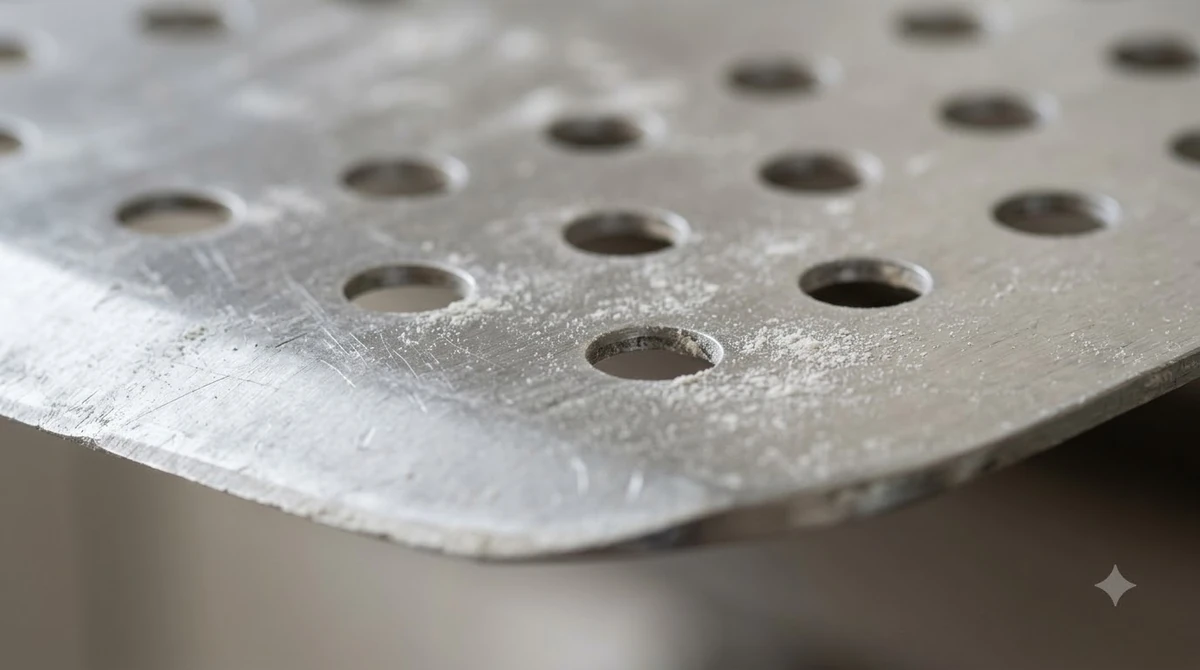
Cleaning an aluminum pizza peel is straightforward. Wash the peel with soap and water, and avoid a steel brush, which scratches the surface. Our step-by-step on how to launch a pizza shows the motion for sliding the pizza off.
- Dust the blade with semolina before the dough goes on.
- Slide the dough on with a short, quick motion.
- Brush off loose flour after the pizza is out.
- Wash with soap and water, then store the peel.
A longer handle is not always better. It gives more reach into the oven, but it also makes the peel heavier to control, especially when you lift a loaded pizza. A shorter handle is easier to manage on a small countertop oven, where the opening is close to you anyway.
Blade shape matters as much as size. A round aluminum pizza peel fits a round stone well, while a square or rectangular blade covers more of a rectangular steel. Match the shape to the surface you bake on.
Common mistakes when buying an aluminum peel
The most common mistake with an aluminum pizza peel is choosing a blade that is too wide for your stone or a handle that is too short for your oven. Both make launching harder and bring your hand closer to the heat.
- Buying a blade by its marketing name instead of its listed size.
- Skipping the flour or semolina step and blaming the peel for sticking.
- Using steel wool or a steel brush, which can scratch the blade.
Frequently Asked Questions
Is an aluminum pizza peel better than a wooden peel?
It depends on the job. Aluminum is thinner and usually slides under a pizza more easily, while wood does not get as hot as metal in your hand. Some bakers keep one of each.
Should I buy a solid or perforated aluminum peel?
Buy solid if you mostly load and serve pizza. Buy perforated if you turn pizza often with a lot of flour, since the holes let extra flour fall through.
Does an aluminum pizza peel need seasoning?
An aluminum pizza peel generally does not need seasoning. Wash it with soap and water and avoid steel brushes. Check the manufacturer’s care label for anything specific to the model you buy.
Why does dough stick to my aluminum peel?
Bare metal gives dough little to grip, so an aluminum pizza peel can make it cling if the surface is not prepared. Dust the blade with semolina or flour and move quickly once the dough is on it.
Is aluminum food safe?
The sources read for this guide do not settle it. Wikipedia does not address food contact for anodized aluminum, and one author recommends stainless steel. Check the manufacturer’s material statement before you buy.
What size aluminum peel should I get?
Match the blade to your stone or steel and the handle to your oven opening. Measure both before you order, because listed sizes differ from one product to the next.
Pick the blade type of your aluminum pizza peel first, then the handle length, and only then compare brands. Measure your oven and stone before you order, and check the manufacturer’s material statement if food contact matters to you.
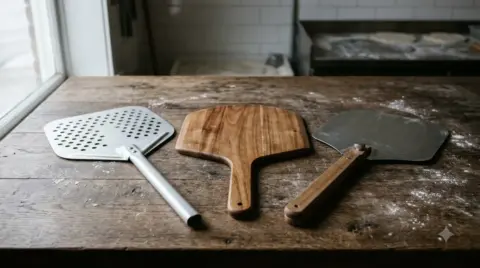 9 min readGear & PantryMetal Pizza Peel: How to Choose Aluminum or SteelUpdated Nov 17, 2026
 8 min readGear & PantryOoni Koda 16 Cover: What to Look For Before You BuyUpdated Nov 8, 2026
 9 min readGear & PantryPasta Rolling Pin: What to Look For Before You BuyUpdated Nov 15, 2026
 8 min readGear & PantryColander for Pasta: What to Look for Before You BuyUpdated Nov 16, 2026
 8 min readGear & PantryBest Ooni Karu 16 Cover: What to Look for Before You BuyUpdated Nov 10, 2026
 5 min readGear & PantryTop Rated Panettone: What to Look for Before You BuyUpdated Nov 13, 2026