
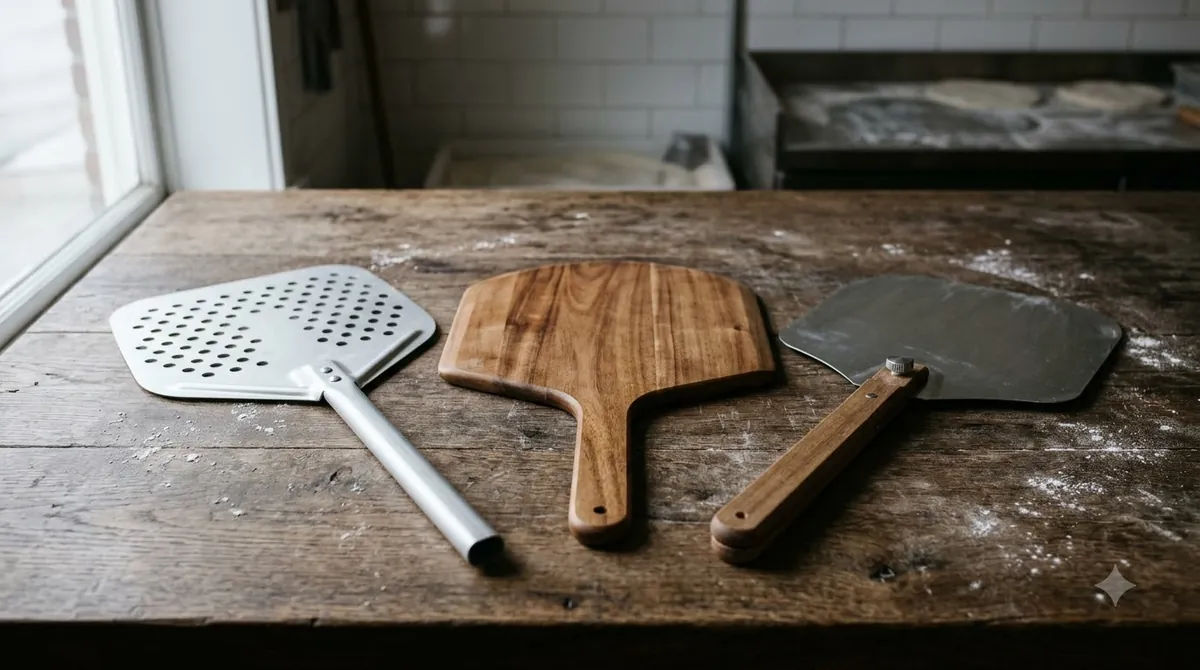

A wooden pizza peel is a flat paddle with a long handle that slides pizza into and out of a hot oven. Its job is to move dough from the work surface onto a hot stone without tearing it or knocking off toppings.
Choosing one depends on your oven depth, the size of the pizzas you make and whether you prefer wood or metal. The sections below explain how each factor affects the way you cook at home.
What a Wooden Pizza Peel Does in the Oven
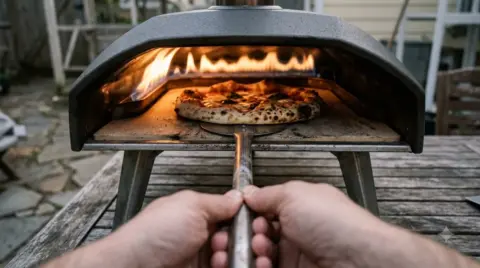
A wooden pizza peel carries an assembled pizza into the oven and lifts it out again, so you never have to reach toward a hot pizza stone with your hands. The peel slides under the dough, you hold it level, and you let the pizza slide off onto the stone in one smooth motion.
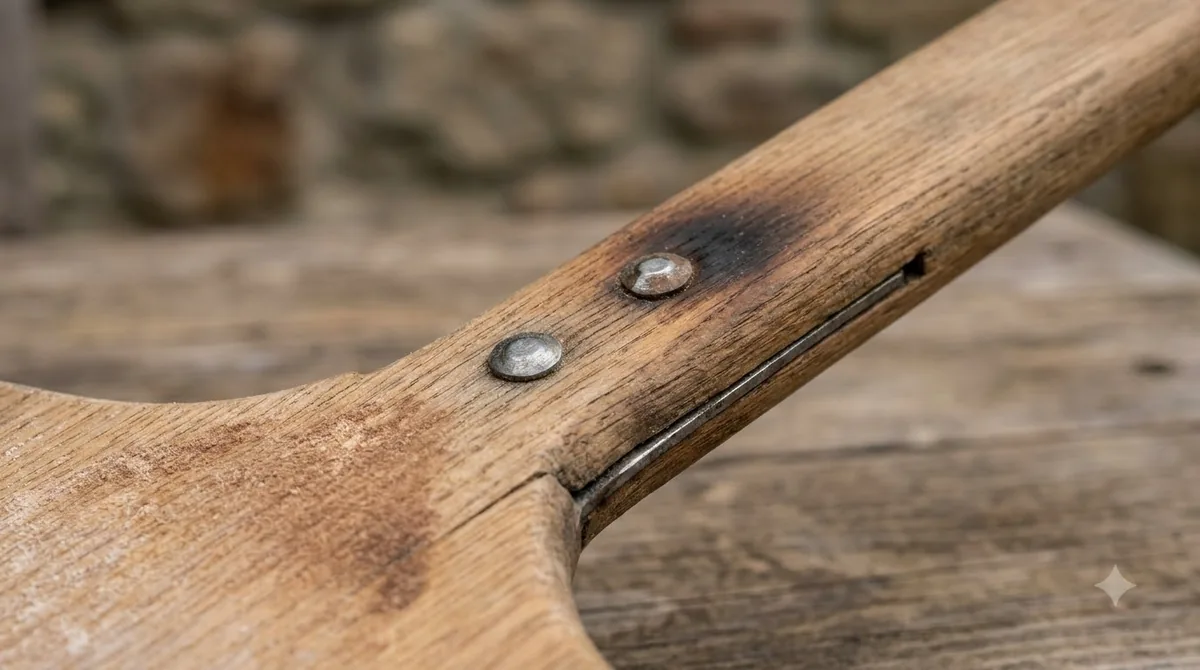
Most home cooks use a wooden pizza peel in three stages. First they build the pizza on the peel itself, then they launch it onto the stone, and finally they use the peel to retrieve the finished pizza. Each stage depends on the same thing: a surface that lets the dough move freely.
- Shape the dough on a lightly floured work surface, then move it to the peel.
- Add sauce and toppings quickly so the dough does not soften and stick.
- Hold the peel at a shallow angle over the stone, then give a short, firm jerk to release the pizza.
- Slide the peel back under the edge of the baked pizza and lift it out.
The same tool works for slicing and serving in some kitchens, but the surface you use to launch a pizza is not always the best one for cutting. Keep that in mind before you decide how many peels to own.
Wood Versus Metal Peels
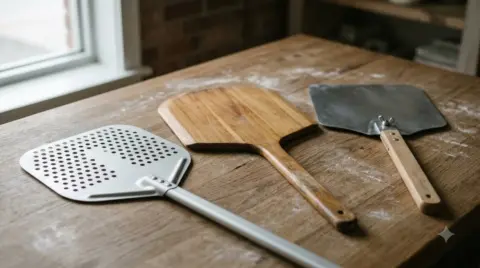
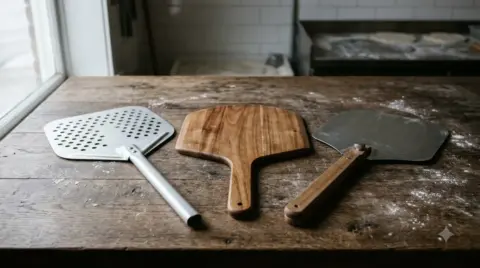
A wooden peel is the usual choice for a home oven because wood does not get hot enough to burn your hand, while a thin metal surface can heat up during repeated use. Metal pizza peels are still common, especially for thin, perforated designs that let flour fall away.
The trade-off is mostly about feel and upkeep. Wood is thicker, so it can feel heavier in the hand, and it needs more careful cleaning. Metal is thinner and slides under dough more easily, but it can conduct heat to your fingers when you work near a hot oven for a long time.
| Feature | Wooden peel | Metal peel |
|---|---|---|
| Heat on the handle | Stays cool enough to hold | Can get hot enough to burn |
| Thickness | Thicker, sturdier feel | Thin edge that slides under dough |
| Cleaning | Brush dry, avoid soaking | Easy to wipe and rinse |
| Best for | Everyday home launching and serving | Thin, perforated launch with long handles |
According to Wikipedia’s overview of the pizza peel, a wooden model usually has a handle on one side and a flat surface, and the wood keeps the handle cooler than a metal carrying surface. Read the full pizza peel entry for the historical background of the tool.

Gozney 14" Acacia Wood Pizza Placement Peel
Pros & ConsViewHide
Reasons to buy
- Acacia wood peel that doubles as a server
- 71% of Amazon ratings are 5-star
- Lower price than the aluminum peels
Reasons to avoid
- Wood needs more care than aluminum
- About 4% of ratings are 1-star
How to Pick the Right Size
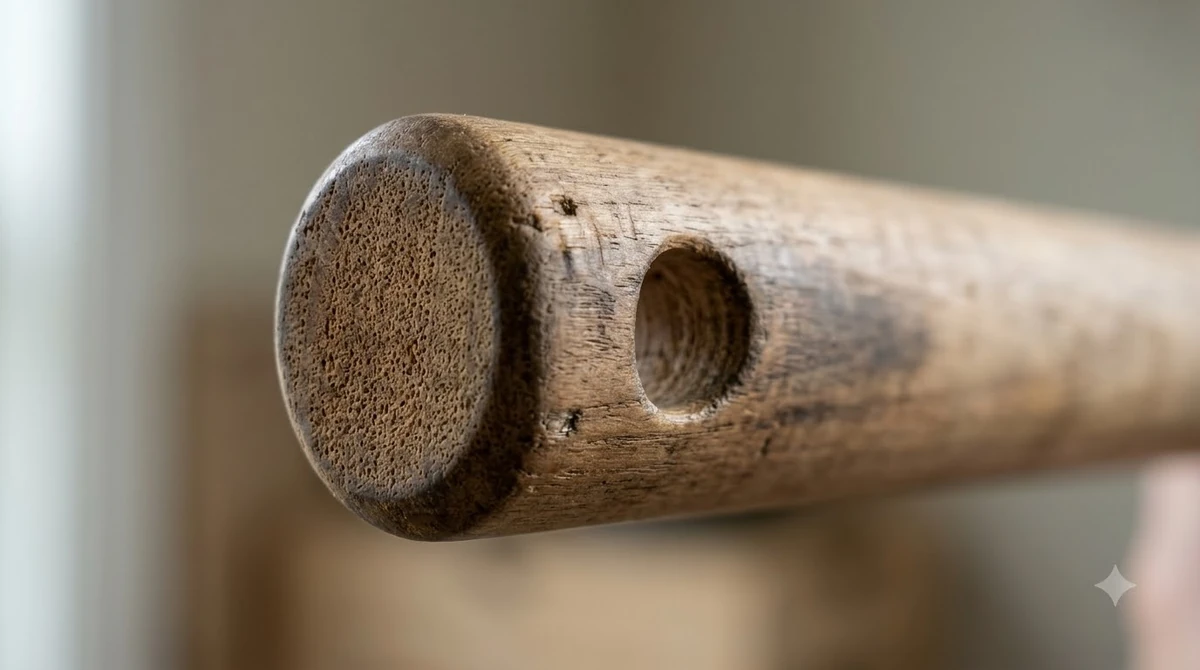
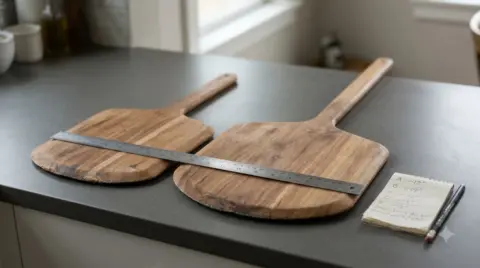
Pick a wooden pizza peel surface that is a little larger than the pizza you plan to make, and a handle long enough to reach the back of your oven without leaning in. The surface should be big enough to support the dough through shaping and topping.
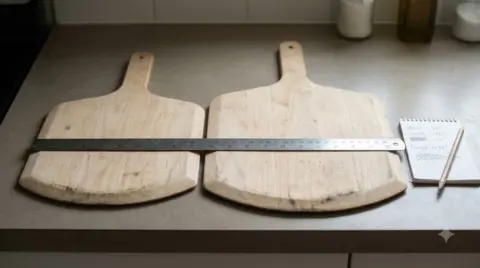
Household wooden pizza peels are commonly built with a handle around 15 cm long and a carrying surface around 35 cm square, which suits many countertop and backyard ovens. Peels range from very small models of about 12 cm square to large surfaces of a meter square or more, so the range is wide.
- Measure the depth of your oven from the door to the back wall before buying.
- Choose a handle that leaves your hand well clear of the heat when the surface is inside.
- Match the surface to the largest pizza you plan to make, with a small margin.
- Consider a lighter peel if you handle it often, and a thicker one if you want a steady feel.
A wooden pizza peel that is too short forces you to lean into the oven, and one that is too small makes it hard to slide the dough without folding the edges. Both problems are common reasons people switch to a different size after their first few bakes. If you are still comparing shapes and materials, our overview of pizza peels covers the main types.
Keeping Dough From Sticking
Dust the wooden pizza peel with flour, cornmeal or semolina before you add the dough, so the pizza can slide off cleanly. Wikipedia’s pizza peel entry notes that peels are often dusted with flour, cornmeal or bran so that baked goods slide on and off easily. Our guide on how to use a wooden pizza peel walks through loading and launching.
Use a light, even dusting rather than a thick layer. Too much dust can burn on the stone and leave a bitter taste, while too little lets the dough grip the wood. A quick test is to slide the empty peel under the dough and check that it moves freely before you add toppings.
- Dust the wooden pizza peel evenly, including the edges.
- Shape the dough directly on the dusted surface.
- Shake the peel gently before launching to check the pizza moves.
- If it sticks, lift the edge and add a little more dust underneath.
Caring for a Wooden Peel
Care for a wooden pizza peel is mostly about keeping water out of the wood. Brush off flour and bits of dough while the peel is still dry, then wipe any sticky spots with a damp cloth and dry the surface right away.
Avoid soaking the peel or leaving it in a sink. Wet wood can swell and warp, and a warped surface will catch dough at the edges. Store the peel flat or hanging so air reaches both faces. The exact care advice from each manufacturer may differ, so check the label or care sheet that came with your peel. For a full routine, see how to clean a wooden pizza peel.
Cutting pizza directly on a wooden peel is a debated habit. Many cooks prefer a separate board for cutting, which keeps the launch surface smooth and reduces the chance of knife marks that can trap flour and dough.
Common Mistakes When Buying and Using a Wooden Pizza Peel
Most problems with a wooden peel come from three choices: a handle that is too short, a surface too small for the pizza, or dough that was not dusted enough. Each one is easy to avoid if you check it before the oven is hot.
- Buying by price alone without checking the handle length.
- Using a wet or freshly washed peel for launching.
- Trying to launch a pizza that has been sitting on the peel too long.
- Leaving the peel in a hot oven when you are not using it.
Another frequent issue is over-topping the pizza. A wooden pizza peel can only carry so much weight before the dough starts to bend and fold at the edges. Heavy toppings add weight and make the dough harder to slide, so keep the load light for your first few tries and build up gradually.
Related reading: a wooden peel launches and retrieves pizza, but it is not the tool for rotating a pie that is already baking. Our pizza turning peel guide explains that separate tool and how to choose one.

Frequently Asked Questions
What is a wooden pizza peel used for?
A wooden pizza peel is used to slide a pizza into a hot oven and take it out again. It holds the dough while you add toppings and gives you a controlled way to place it on the stone. Many cooks also use the same board to carry the finished pizza to the table.
Is a wooden peel better than a metal one?
For most home cooks a wooden pizza peel is the more comfortable choice, because the handle stays cool and the surface is sturdy. A metal peel can be better for a very thin launch. Neither is wrong, and the right choice depends on your oven and habits.
What size wooden pizza peel should I buy?
Choose a surface slightly larger than your pizza and a handle that fits your oven depth. Household peels are often around 35 cm square with a 15 cm handle, but measure your oven before you buy.
Can you cut pizza on a wooden peel?
Some peels are sold as boards that can be used for cutting, but many cooks prefer a separate cutting board to protect the launch surface. Check the care instructions for your peel before you cut on it.
How do I stop pizza sticking to the peel?
Dust the peel with flour, cornmeal or semolina before you add the dough. Shape the dough on the dusted surface, keep toppings light, and slide the peel under the pizza with a short, firm motion. For a step-by-step method, read how to launch a pizza without it sticking to the peel.
A wooden peel is a simple tool, and a good one pays off with every bake. Start with a size that matches your oven and the pizzas you make most often, and keep it dry between uses.
 8 min readGear & PantryHow to Use a Wooden Pizza Peel: Step-by-Step GuideUpdated Nov 10, 2026
 8 min readGear & PantryPizza Peel: What It Does and How to Choose OneUpdated Nov 16, 2026
 8 min readGear & PantryPizza Turning Peel: How It Works and How to Choose OneUpdated Nov 16, 2026
 9 min readGear & PantryMetal Pizza Peel: How to Choose Aluminum or SteelUpdated Nov 17, 2026
 9 min readGear & PantryBest Pizza Peel for Ooni Karu 12: How to Choose the Right Size and MaterialUpdated Nov 10, 2026
 9 min readGear & PantryHow to Choose a Pizza Peel Size for Your OvenUpdated Nov 11, 2026