
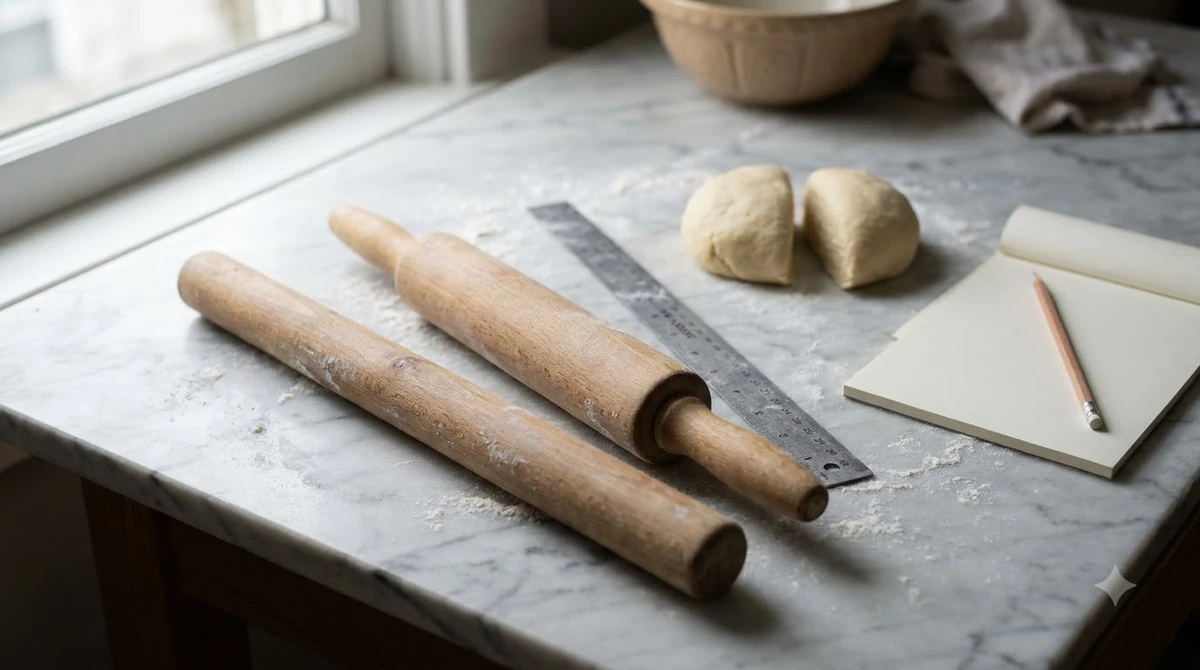

A pasta rolling pin is a long, plain wooden pin used to roll fresh egg dough into thin sheets by hand. Most traditional versions are tapered, so you can thin the center of the sheet while the ends stay slightly thicker.
Length, diameter and wood matter more than brand names, because they decide how much control you have over the dough. This guide explains what to check before you buy and when a plain pin is enough.

Italian Hand Made Mattarello Pasta Rolling Pin
Pros & ConsViewHide
Reasons to buy
- Comes with a dough scraper, per the listing
- Handmade Italian-style mattarello shape for rolling pasta sheets
- 4.6 average from about 68 Amazon ratings
Reasons to avoid
- Only about 68 ratings, so a shorter track record
- Wood needs hand washing and oiling; do not soak it

Pros & ConsViewHide
Reasons to buy
- 35-inch length gives room to roll a wide, thin pasta sheet
- Straight dowel shape suits tagliatelle and lasagna sheets
- 4.6 average from about 312 Amazon ratings
Reasons to avoid
- Very long, so it needs a big counter and storage space
- Too much pin for small batches or tight kitchens

Pros & ConsViewHide
Reasons to buy
- 31-inch length is easier to store than the 35-inch size
- Slim 1.38-inch diameter suits pasta sheets, per the listing
- 4.6 average from about 312 Amazon ratings
Reasons to avoid
- Still long for small counters
- No handles, so it takes practice to roll evenly

Geetery 24 Inch Long Pasta Rolling Pin 1.87
Pros & ConsViewHide
Reasons to buy
- 24-inch length fits most counters and drawers
- Thicker 1.87-inch diameter adds weight for dough
- Vintage wood style, per the listing
Reasons to avoid
- Only 7 Amazon ratings, a thin track record
- 4.3 average is lower than the other pins here
What a pasta rolling pin is
A pasta rolling pin is a slender wooden rod, usually without a handle, that you press and push across fresh dough to flatten it evenly. Fresh dough is firm and elastic, so the pin has to spread it from the center outward rather than squeeze it at one spot.
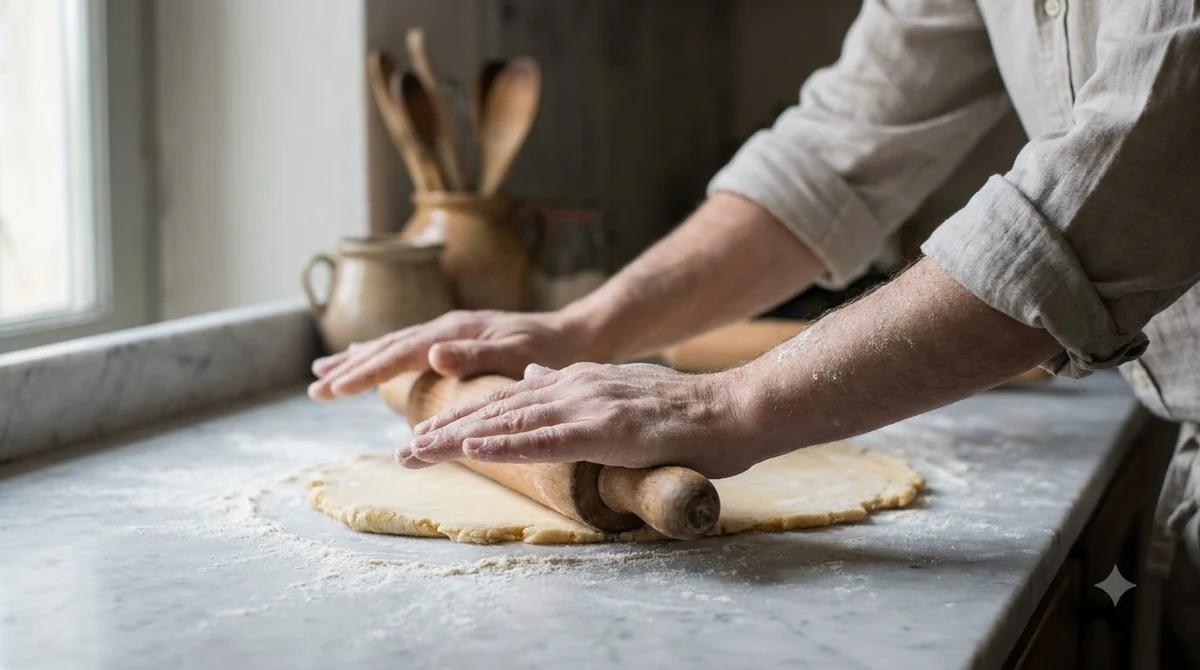
Reference works on rolling pins group them into two main families. Rod pins are thin, usually wooden, and they include most French style pins. Roller pins are thick and heavy and are made from a range of materials. The pins used for pasta in the sources reviewed here all belong to the thin rod family.
A regular pastry pin can roll pasta, but it is built for a different job. Pastry dough is usually softer and cut into shapes, while pasta dough is meant to be stretched into a wide, even sheet that you can drape or cut into noodles.
Tapered, straight and specialty pins
A tapered pasta rolling pin is the traditional choice for hand-made pasta because it rolls dough more thinly and with more control than a handled pin. The thicker center pushes the dough outward while the thinner ends let you finish the edges.
The Wikipedia rolling pin overview describes tapered and straight rod types, and it notes hybrid pins with tapered ends for precision. The table below compares the shapes you are most likely to see for pasta.
| Pin type | Main job | Published detail |
|---|---|---|
| Tapered rod | Thins fresh sheets with control | 50 cm long, 32 mm at each end, 40 mm in the center |
| Straight rod | Same diameter along its length, no taper | Check length and diameter on each listing |
| Ravioli pin | Ridges that cut ravioli shapes | 50 cm by 44 cm, makes 40 mm by 30 mm ravioli |
| Tagliatelle pin | Cuts strips from a rolled sheet | 32 cm long |
| Handled pin | General baking and pastry | Suits biscuits and pastry tarts more than pasta |
A straight rod looks like the simplest option for a pasta rolling pin, because the diameter stays the same from end to end. It offers less taper to work with, so the thin ends that help finish a sheet are harder to shape.
Shaping pins for ravioli and tagliatelle handle the cutting once a sheet is rolled. They do not replace a basic rolling pin, so buy one only if you make that shape often.
Size and length
Length and diameter decide how much dough a single pass of a pasta rolling pin can cover, so check both before you buy. Published figures from one retailer give a tapered pin of 50 cm, with 32 mm at each end and 40 mm in the center. A compact wooden pin in the same guide measures 28 cm long with a 2.5 cm diameter. A good work surface matters as much as the pin, as covered in choosing a pasta board.
A traditional wooden pin sold in Bologna measures 38.5 cm in length. The seller’s listing from Bologna Welcome’s merchandise shop describes it as the tool for rolling a quality pasta sheet in the traditional way, and it showed a price of EUR 15 on 2026-11-07. Prices change, so confirm the current figure on the shop page.
A longer pin covers more of the dough in each pass, but it can feel awkward on a small counter. A shorter pin is easier to control, though it needs more passes to reach the same width.
Choosing the wood
Beech is the most popular choice for a classic pasta rolling pin, and it is described as affordable, well weighted and durable. Hornbeam is the stronger wood, and it is recommended for pins with cutting ridges because the ridges cut cleanly.
Hornbeam is described as particularly strong and hard, which makes it a good match for spaghetti and tagliatelle pins. Beech suits a plain tapered pin for everyday fresh pasta. Both are sensible choices, and the difference is mainly in hardness and how the ridges hold their shape.
Pear wood has a very fine grain, which suits intricate carving such as biscuit molds. That makes it a less obvious pick for pasta, where the goal is a smooth, even push across a wide sheet.
A heavier wood gives more weight behind each push, which helps with stiff dough. The same weight can tire your wrists during a long session, so a lighter pin may suit you better if you roll often.
How to roll fresh pasta with a pin
To roll fresh pasta with a pasta rolling pin, flour the surface, the dough and the pin, then press the pin into the center of the dough and push it outward. Work from the center to the edges so the sheet stays even.
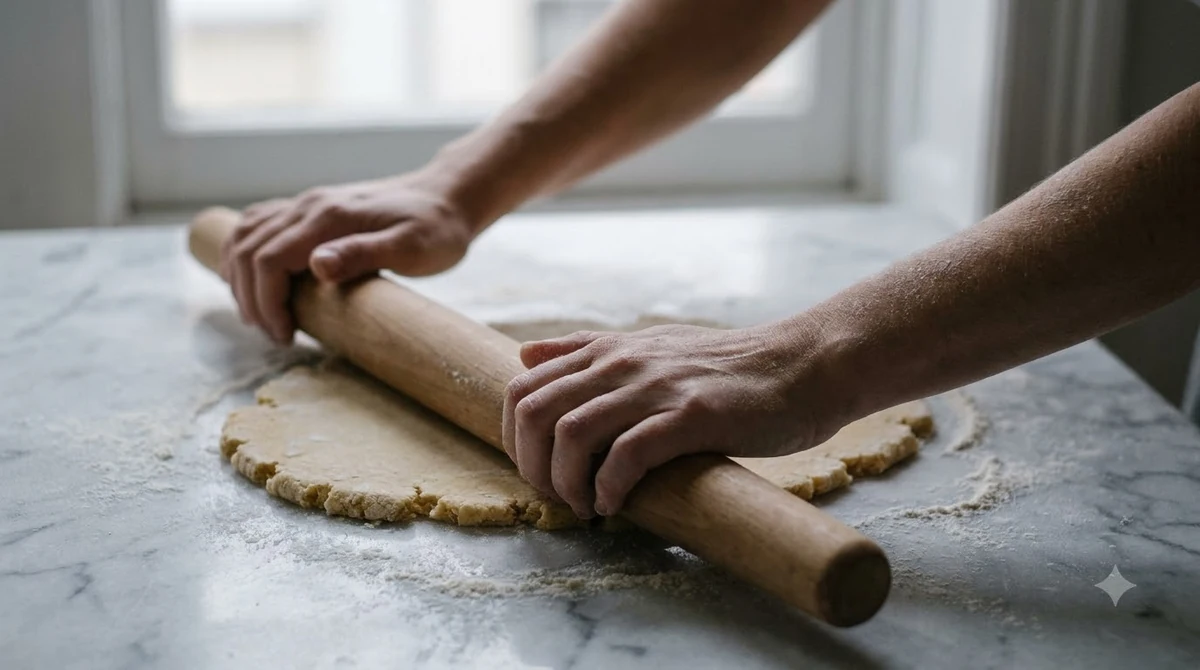
The steps below cover the basic method. Follow the timing and resting notes in your own recipe, because the pin only handles the shaping.
- Dust the work surface, the dough and the pin with flour.
- Place the pin in the center of the dough and press down gently.
- Push the pin away from you, then pull it back to the starting point.
- Turn the dough a quarter turn and repeat until the sheet is even.
- Lift the sheet often and add a little flour underneath so it does not stick.
Keep the edges a little thicker than the center, because that makes the sheet easier to lift and move, and long cut strands can then hang on a pasta drying rack. The aim is an even sheet, not one exact thickness. No thickness target from a manufacturer or retailer was confirmed in this research, so use the thickness your recipe and your shape call for, or read how thin to roll pasta for shape-by-shape guidance.
Care and storage
Dust a wooden pasta rolling pin with flour to keep dough from sticking during use, and coat it in a neutral oil after use to prevent cracking. These two habits are the care steps the sources describe, so they matter more than the brand name.
After each session, wipe off dough and flour with a dry cloth. Dry the pasta rolling pin fully before you put it away, so no moisture stays trapped in the wood.
Common mistakes
The most common mistake is rolling dough that clings to the pin, because sticky dough tears and loses its even thickness. Each mistake below is a handling problem, so you can fix most of them without buying a new pasta rolling pin.
- Pressing hard on the edges, which thins them too far and makes them tear.
- Rolling in one direction only, so the sheet grows lopsided.
- Skipping the flour on the pin, which lets dough stick and drag.
- Leaving a wooden pin wet after washing, which invites cracks.
- Buying a length for a machine width instead of your own board.
When a pin is enough and when a machine helps
A pasta rolling pin is enough for small batches and for shapes such as tagliatelle, where you cut the strips by hand or with pasta cutters for tagliatelle after rolling. Hand rolling takes more time and arm work, but it needs no equipment beyond a pasta board and a pin.
A machine helps when you make large batches often or want very uniform sheets, and our noodle maker machine guide covers the main options. A tapered pin still gives more control on thin sheets than a handled pin, so it is worth owning even if you also use a machine.
Pasta rolling pin buying checklist
Before you buy a pasta rolling pin, check the taper, length, diameter, wood and whether it has a handle. Each one changes how the pin feels in use, and the listing should state the first four clearly.
- Taper: tapered for control, straight for an even push.
- Length: match it to your board and the sheet width you want.
- Diameter: check the figure at each end and in the center.
- Wood: beech for everyday use, hornbeam for ridged shaping pins.
- Handle: the buyer guide says a handled pin suits biscuits and pastry tarts, so check the shape before you buy.
Not verified in this research: the current price and stock of individual brands, which specific models suit which doughs, and warranty terms. Check the product page, the maker’s care instructions and the seller’s return policy before you buy.
Frequently Asked Questions
Is a regular rolling pin good enough for pasta?
A regular handled pin can roll pasta dough, but a tapered pasta rolling pin gives more control on thin sheets. A buyer guide from a UK kitchen retailer describes the tapered design as the traditional choice for hand-made pasta.
Can a straight wooden rod roll pasta?
Straight rods are one of the two rod types that reference works describe, so a straight wooden pin can be used with the same technique. Check its length and diameter on the product page, because a pin with no taper gives less control at the thin ends.
What length should a pasta rolling pin be?
The right length for a pasta rolling pin depends on your board and how wide you want each sheet. Published examples include a 50 cm tapered pin, a 38.5 cm Bologna pin and a 28 cm compact wooden pin, so compare them against your counter space.
Which wood is best for a pasta rolling pin?
Beech is the most popular classic choice, and hornbeam is described as strong and hard, which suits pins with cutting ridges. Pear wood has a fine grain that suits carving more than pasta, so it is a less common choice for this job.
How do I clean a wooden pasta rolling pin?
Wipe off dough and flour with a dry cloth, then dry the pin fully. Coat it in a neutral oil after use to help prevent cracking, as the same buyer guide advises for wooden pins.
Do I need a ravioli pin to make ravioli?
No, you can cut ravioli by hand, but a ravioli pin has ridges that cut the shapes once the sheet is rolled. One retailer lists a 50 cm by 44 cm ravioli pin that makes 40 mm by 30 mm ravioli.
Start with a tapered wooden pasta rolling pin in a length you can comfortably handle, and add a shaping pin only if you make that shape often. Check the current price and specifications on the seller’s page before you order, because prices and stock change.
 9 min readGear & PantryHow to Use a Pasta Rolling Pin, Step by StepUpdated Nov 11, 2026
 8 min readGear & PantryColander for Pasta: What to Look for Before You BuyUpdated Nov 16, 2026
 8 min readGear & PantryOoni Koda 16 Cover: What to Look For Before You BuyUpdated Nov 8, 2026
 8 min readGear & PantryBest Ooni Karu 16 Cover: What to Look for Before You BuyUpdated Nov 10, 2026
 5 min readGear & PantryTop Rated Panettone: What to Look for Before You BuyUpdated Nov 13, 2026
 9 min readGear & PantryLa Molisana Pasta Review: Bite, Brand and What to Check Before You BuyUpdated Nov 8, 2026