
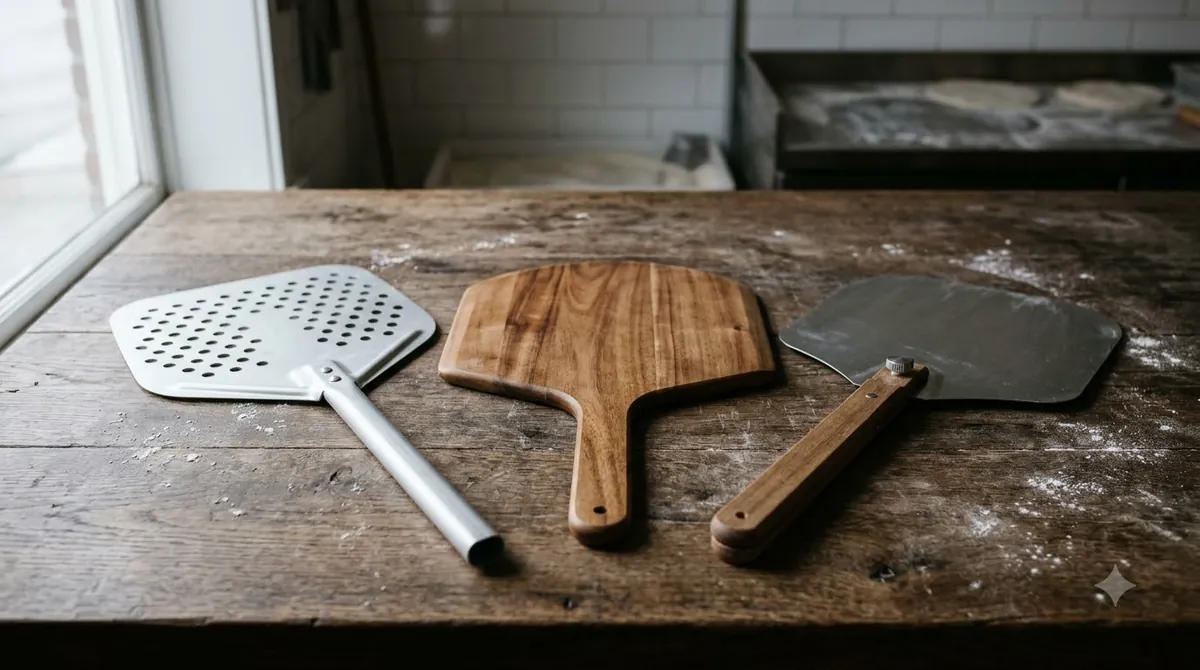

A metal pizza peel is a thin, flat tool, usually made of aluminum or stainless steel, that slides under a pizza to move it onto a hot surface, turn it, and take it out. Its thin blade slides easily under a finished pie, but raw dough tends to stick to bare metal.
Choosing one comes down to the metal, a solid or perforated blade, and the size of your stone or steel. The points below rest only on sources that could be read, and gaps are marked.

ooni 12' Aluminium Metal Pizza Peel
Pros & ConsViewHide
Reasons to buy
- 12 in aluminum peel, the size Ooni says the Karu and Koda 12 accept
- 85% of ratings are 5-star
- Lightweight with a long handle
Reasons to avoid
- Aluminum does not double as a serving board
- Priced higher than generic peels

Gozney 14" Balance Pizza Placement Peel
Pros & ConsViewHide
Reasons to buy
- Perforated aluminum blade for placing 14 in pizzas
- 84% of Amazon ratings are 5-star
- Gozney-branded for its ovens
Reasons to avoid
- 14 in size is large for small ovens
- Costs more than basic peels

Gozney 14" Pro Pizza Placement Peel with Fully
Pros & ConsViewHide
Reasons to buy
- Fully perforated aluminum blade for 14 in pizzas
- 77% of Amazon ratings are 5-star
- Made by Gozney for its ovens
Reasons to avoid
- Premium price for a peel
- About 5% of ratings are 1-star

Gozney 12" Venture Pizza Placement Peel
Pros & ConsViewHide
Reasons to buy
- 12 in perforated aluminum peel from the Venture line
- 100% of its few ratings are 5-star
- Matches the 12 in cooking size of the Tread
Reasons to avoid
- Only a handful of Amazon ratings
- Costs more than generic 12 in peels
What a metal pizza peel does in your oven
A metal pizza peel is a flat blade on a handle that moves pizza onto a hot stone or steel, turns it during baking, and removes it when it is done.
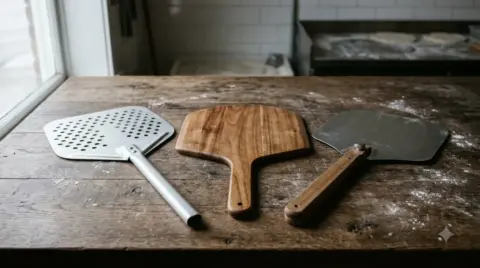
Peels are most often made of wood, but the carrying surface can also be sheet metal attached to a wooden handle, according to Wikipedia’s pizza peel article. The metal version is usually thinner than wood, which is why sources describe it as easier to slide under a pizza.
A metal pizza peel is most often picked for three jobs: sliding under a baked pie, turning the pizza partway through cooking, and cleaning up without the odor and stain problems of wood. Each job depends on the metal and the surface, so the next sections cover those choices in order.
Aluminum vs stainless steel: which metal to choose
Aluminum is generally the lighter and easier-to-lift option, while stainless steel is the material one author recommends for food contact.
| Factor | Aluminum | Stainless steel |
|---|---|---|
| Weight | Lighter and easier to lift than wood, according to Tasting Table’s comparison | No weight figure was confirmed; compare the listed weight before buying |
| Food contact | The anodizing reference does not address food contact | One author prefers it because aluminum “will react to food” (an opinion, not a test result) |
| Surface finish | Anodizing thickens the oxide layer and increases corrosion and wear resistance | Not covered by the sources read; check the maker’s finish statement |
| Strength | Anodizing does not increase the strength of the object | Not covered by the sources read for this guide |
Anodizing is an electrolytic process that thickens the natural oxide layer of aluminum. The Wikipedia anodizing article says this increases resistance to corrosion and wear, while the surface stays harder than bare aluminum with only low to moderate wear resistance.
The same source does not discuss food contact, so an anodized finish alone does not answer whether a peel is suitable for food. Read the manufacturer’s material statement before buying, and do not assume either metal is safer based on the name alone.
Solid or perforated blade
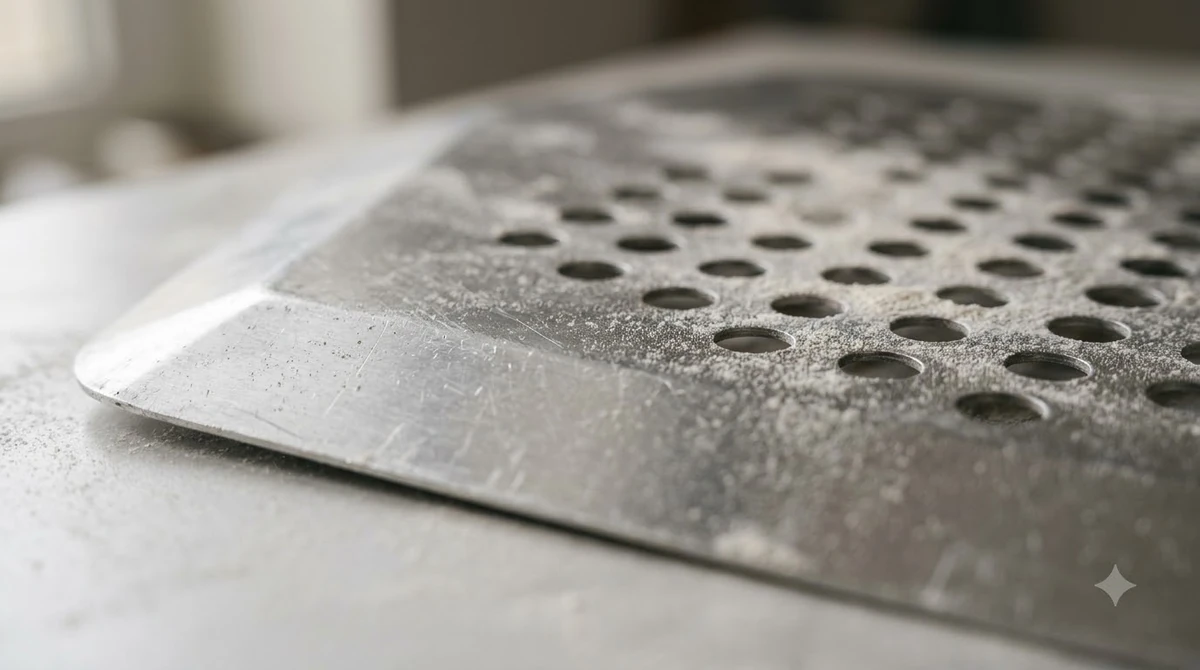
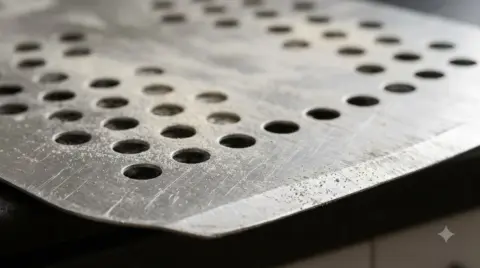
A perforated blade lets extra flour fall through its holes during launch, turning, and removal, while a solid blade keeps one continuous surface. A pizza screen lets air and flour pass through holes in a similar way, and our guide to pizza screen technique shows how to use one.
Thursday Night Pizza describes a two-peel setup with a nonstick topping peel and a thin perforated metal pizza peel for turning and removing the pizza. The same article notes that perforated metal is still stickier than wood or bamboo, so flour remains necessary. Our guide on how to use a metal pizza peel covers the technique.
Lacademie notes that perforated surfaces cost more than solid ones. A solid blade is the simpler option if you want the lowest price and do not need flour to fall through holes.
Why pizza sticks to a metal pizza peel and how to stop it
Raw dough sticks to bare metal, so the usual fix is a light dusting of flour or a little cornmeal, plus quick, confident movements from start to finish.
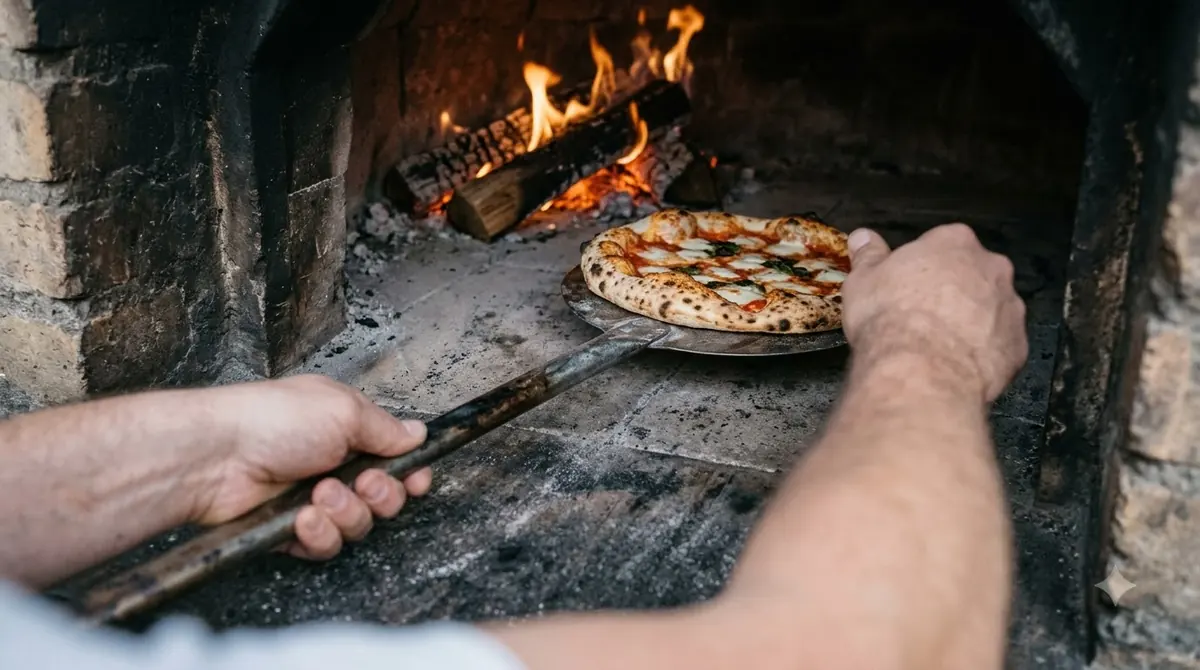
Tasting Table’s summary of the sources lists these steps:
- Dust the blade with flour before you place the dough.
- Add a little cornmeal if needed, since too much of it will burn on the stone.
- Shape the pizza on the peel and launch it without delay, so the dough does not rest on the metal.
- Check that the pie slides freely before you push it into the oven.
- Load with a wooden pizza peel if you can. Wood grain helps dough release, so many bakers load with wood and retrieve with metal.
Thursday Night Pizza also warns that raw dough sticks to the metallic surface, so a topped pizza may need extra flour before it moves off the peel. Our guide to pizza sticking to the peel covers other causes, and how to launch a pizza walks through the slide into the oven.
Metal peel or wooden peel: which job each one does
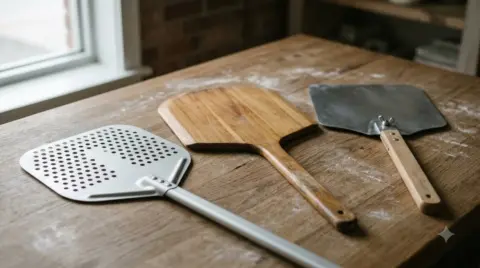
Many bakers load with a wooden peel and retrieve with a metal one, because wood helps dough release while metal slides under a baked pizza more easily.
| Task | Metal pizza peel | Wooden peel |
|---|---|---|
| Loading raw dough | Dough can stick unless floured | Grain helps dough release |
| Turning during bake | Thin blade suits frequent rotation | Traditional wooden peels are heavy |
| Removing a baked pizza | Thin surface slides under the pizza more easily | Heavier to handle |
| Cleaning | Nonabsorbent, so odors and stains do not stick | Harder to clean and needs regular oiling |
Foods Guy’s comparison, as reported by Tasting Table, suggests a metal pizza peel suits people who value easy cleaning and lightweight tools, or who have delicate wrists or low upper body strength. Thursday Night Pizza adds that metal suits prepping several pizzas at once. If you want a smaller peel only for rotating the pie, see our pizza turning peel guide.

How to size a metal pizza peel for your stone or steel
For a round stone or steel 10 to 12 inches across, Thursday Night Pizza recommends a short-handled peel with a paddle no wider than 12 inches. If you cook on the Koda 12, our pick of a peel sized for the Ooni Koda 12 narrows the choice.
For square or rectangular surfaces, choose a peel about as wide as the stone. The author uses a 14-inch square peel on a 14 by 16 inch stone.
The same source describes paddles from 7-inch turning peels up to XL models with surfaces of 16 inches or larger, in round, square and rectangular shapes. Lacademie adds that commercial ovens need longer handles to reach the back of the oven.
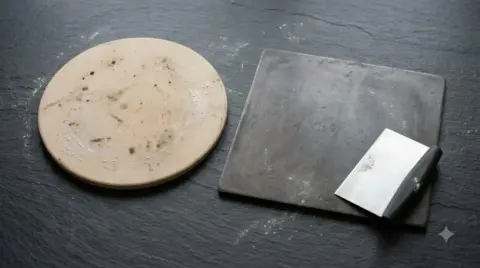
Thursday Night Pizza’s sizing rule applies to a steel as well as a stone, since the article describes both surfaces. Measure the surface you bake on, whether a stone or one of the pizza steels, before you buy, then pick a metal pizza peel that fits it rather than the pie you plan to make.
Caring for and cleaning a metal pizza peel
Wash a metal pizza peel with warm water and mild soap, and avoid steel brushes or abrasive detergents.
- Soak the blade in warm water if food has baked on, then remove the loose residue.
- Wash with mild soap and warm water, then rinse.
- Skip steel brushes and abrasive cleaners.
- If rust spots appear, follow the maker’s care instructions rather than scraping them with abrasive tools.
- Store the peel in a cool, dry place away from direct heat.
Metal does not absorb odors or stains the way wood does, which is one reason many cooks find it simpler to maintain. Lacademie also notes that metal pizza peels do not need thorough drying.
Specs this guide could not confirm
No fetched source gave a reliable thickness, gauge, weight or handle length for metal pizza peels, so this guide does not quote those numbers.
Check the product listing or spec sheet for blade thickness, handle length and overall weight. Ask the maker whether the blade is food-grade and whether the finish is anodized, and keep the answer with your purchase record. The sources read for this guide gave no current prices either, so check any price on the live listing on the day you buy.
Related reading: this page covers metal blades only. For an overview of every peel type, launching and turning included, see our pizza peel guide.
Frequently Asked Questions
Is a metal pizza peel better than a wooden one?
Neither is better for every job. Wood helps dough release during loading, while metal is thinner and slides under a finished pizza more easily, so many bakers use one of each for different steps.
Can I launch pizza with a metal pizza peel?
Yes, but raw dough is more likely to stick to bare metal. Dust the blade with flour, work quickly and check that the pie slides before you launch it into the oven.
Should I buy aluminum or stainless steel?
Aluminum is generally lighter and easier to lift, while stainless steel is recommended by some authors for food contact. Choose based on weight in your hand, the finish statement from the maker and how you plan to use the peel.
Is anodized aluminum safe for food?
The anodizing reference used for this guide describes the surface treatment but does not address food contact. Read the manufacturer’s material statement, and do not treat the anodized finish alone as proof of food safety.
Do I need a perforated metal pizza peel?
No, but a perforated blade lets extra flour fall through its holes during launch, turning and removal. Lacademie says perforated peels cost more than solid ones, so weigh the price against how much flour you use.
How do I keep pizza from sticking to a metal pizza peel?
Use a light dusting of flour and a little cornmeal, keep the dough off the blade for as short a time as possible, and move with one smooth motion. Too much cornmeal will burn in the oven.
Pick the metal by how you will use the peel, choose a solid or perforated blade to match your flour habits, and size the blade to your stone or steel. Keep a wooden peel for loading if you can, and check the maker’s material statement before you buy.
 9 min readGear & PantryHow to Use a Metal Pizza Peel Without StickingUpdated Nov 10, 2026
 8 min readGear & PantryBest Aluminum Pizza Peels: What to Look For and What to BuyUpdated Nov 17, 2026
 8 min readGear & PantryPizza Steel: How to Choose, Preheat and Care for One at HomeUpdated Nov 16, 2026
 8 min readGear & PantryPizza Turning Peel: How It Works and How to Choose OneUpdated Nov 16, 2026
 8 min readGear & PantryPizza Peel: What It Does and How to Choose OneUpdated Nov 16, 2026
 8 min readGear & PantryWooden Pizza Peel: What It Is and How to Choose OneUpdated Nov 16, 2026