
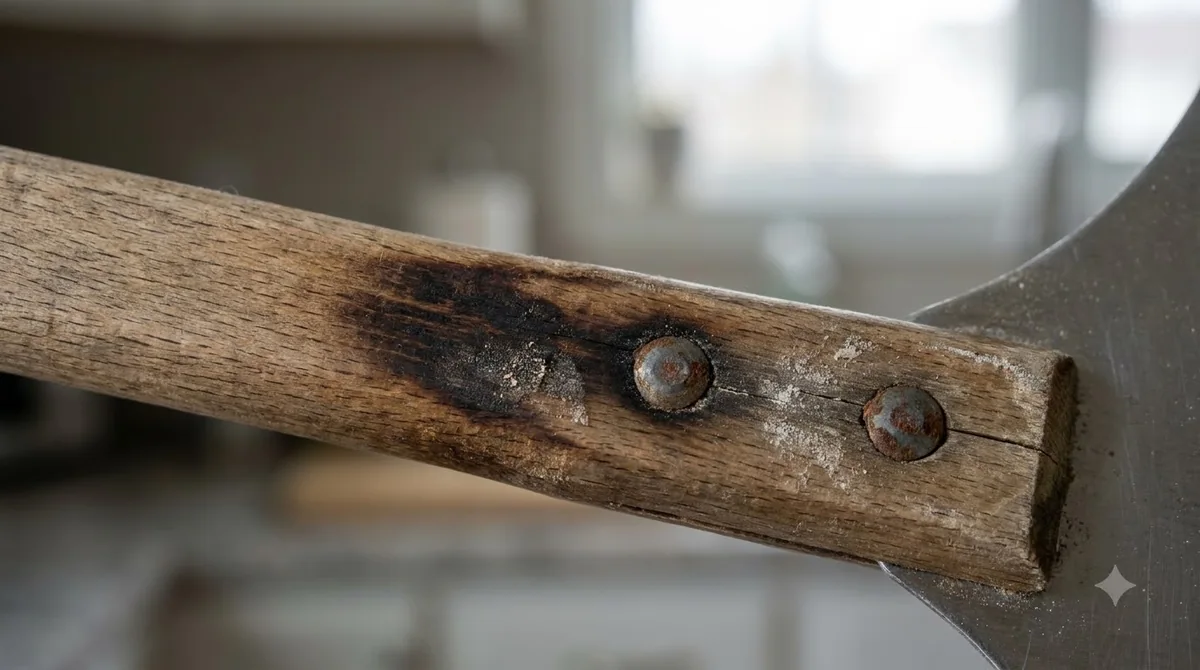

A pizza turning peel is a long-handled tool that rotates a pizza inside a hot oven so it bakes evenly. It is not the tool for sliding a raw pizza into the oven, which is the job of a separate launching peel. Most home cooks reach for one when their oven heats unevenly.
Wood-fired and gas ovens often have hot spots, so a pizza turning peel helps the crust brown evenly. The sections below cover the technique, how it differs from a launching peel, and what to check before buying.

Gozney Venture Pizza Turning Peel for
Pros & ConsViewHide
Reasons to buy
- Shortest turning peel in the Gozney line, easy to pack with the portable Tread
- Stainless steel blade with a chamfered edge that helps slide under the pizza
- Sized for 12 in pizzas with a soft-touch beech handle
Reasons to avoid
- Short handle keeps your hand closer to the oven heat
- Made for 12 in pizzas, so check reach on larger ovens

Gozney 12" Venture Pizza Placement Peel
Pros & ConsViewHide
Reasons to buy
- 12 in perforated aluminum peel from the Venture line
- 100% of its few ratings are 5-star
- Matches the 12 in cooking size of the Tread
Reasons to avoid
- Only a handful of Amazon ratings
- Costs more than generic 12 in peels

Gozney 14" Balance Pizza Placement Peel
Pros & ConsViewHide
Reasons to buy
- Perforated aluminum blade for placing 14 in pizzas
- 84% of Amazon ratings are 5-star
- Gozney-branded for its ovens
Reasons to avoid
- 14 in size is large for small ovens
- Costs more than basic peels
What a Pizza Turning Peel Does
A pizza turning peel slides under a partly baked pizza and rotates it, so every part of the crust gets time near the heat source.
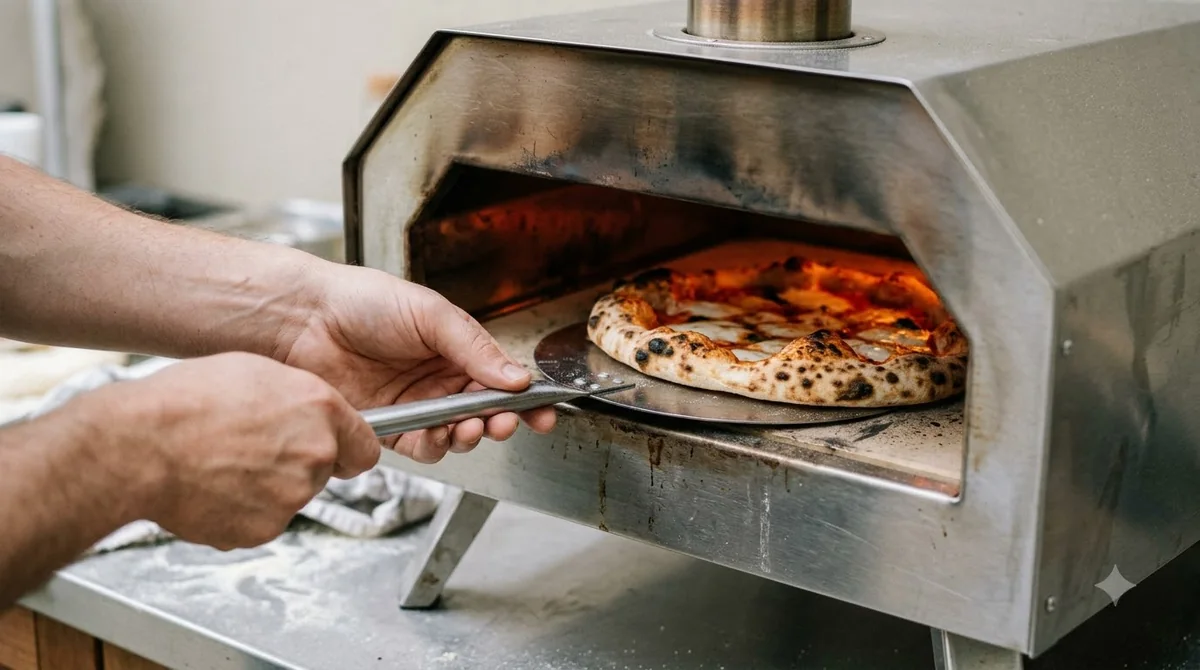
The pizza turning peel is built for turning, not for loading. Once the base has set, you slide the thin head under the crust and move the pizza by a small amount. Gozney describes its turning peels as tools to twist and turn the pizza in the oven, which matches what the tool does in practice. For the full technique, see our guide on how to use a pizza turning peel.
With a pizza turning peel, small, steady movements work better than one big spin. A large move can drag the toppings across the stone and push cheese or sauce onto the peel. Keep the pizza as flat as you can while you turn it, so the base stays in contact with the stone for as long as possible.
The back of an oven is usually hotter than the door area, so the crust there colours first. A pizza turning peel brings the lighter side toward that heat. Without a turn, one side can scorch while the other stays pale and soft.
How a Turning Peel Differs From a Launching Peel
A launching peel, which Gozney also calls a placement peel, has the biggest head of the set and is used to slide the raw pizza into the oven.
| Feature | Launching peel | Turning peel |
|---|---|---|
| Main job | Slide the raw pizza onto the hot stone | Rotate the pizza while it bakes |
| Head | Biggest head in the set, per Gozney | Smaller working tool; check the listing for head size |
| Handle | Not stated on the pages reviewed; check the product page | Gozney sells a smaller handled Roccbox Turning Peel and a larger handled Gozney Turning Peel |
| Material | Wood (traditional) or metal (modern) | Not stated on the pages reviewed; check the product page |
Keeping two peels is common for this reason: one to load the pizza and one pizza turning peel to turn it. Using a single tool for both jobs usually means the pizza is either dragged in or flipped too early. Keeping the roles separate makes each step easier to control.
Step by Step: Using a Pizza Turning Peel
To use a turning peel (see also how to turn a pizza in a pizza oven), launch the pizza first, wait until the crust starts to colour and rise at the back of the oven, then slide the turning peel under and rotate.
- Launch the pizza onto the stone with your launching peel, using the steps in how to launch a pizza.
- Wait until the crust starts to colour and rise at the back of the oven. Gozney advises against turning too early.
- Slide the turning peel under the crust, near the middle of the pizza.
- Turn in small movements, then check the colour at the back of the pizza.
- Lift the finished pizza out with the peel you launched it with.
Gozney also suggests practising with a cooked pizza before you use a pizza turning peel on a hot, raw one. That gives you a feel for the angle and the weight of the peel without the risk of losing the toppings. Practice makes the turn feel routine rather than rushed.
Keep your hands and wrists relaxed and let the pizza turning peel do the work. Tilting the handle sharply can tip the pizza off the head, so a low, flat angle is safer for both the pizza and the oven walls.
Check the base before you rotate fully. Lift one edge with the pizza turning peel and look at the underside. If it is still pale and the cheese has not begun to set, leave the pizza in place a little longer.

Choosing a Pizza Turning Peel: Size, Material and Handle
Choose a pizza turning peel by checking its handle length against your oven opening, the head material, and whether the head has perforations.
Handle length on a pizza turning peel decides how far you can reach into the oven. Gozney sells one turning peel with a smaller handle and one with a larger handle, which shows that length is a choice rather than a fixed standard. Measure the depth of your oven opening and how far in you must reach before you buy.
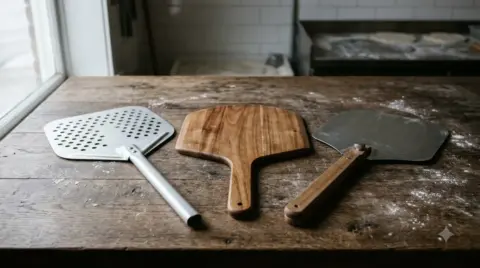
Material is the next decision. Gozney describes wood as the more traditional option and metal as the modern one, and its metal peels (compare metal pizza peels and wooden pizza peels) are aluminium with a hard anodized finish. Check the product page for the head material of the specific turning peel you are considering. If you choose metal, see our guide to using a metal pizza peel without sticking.
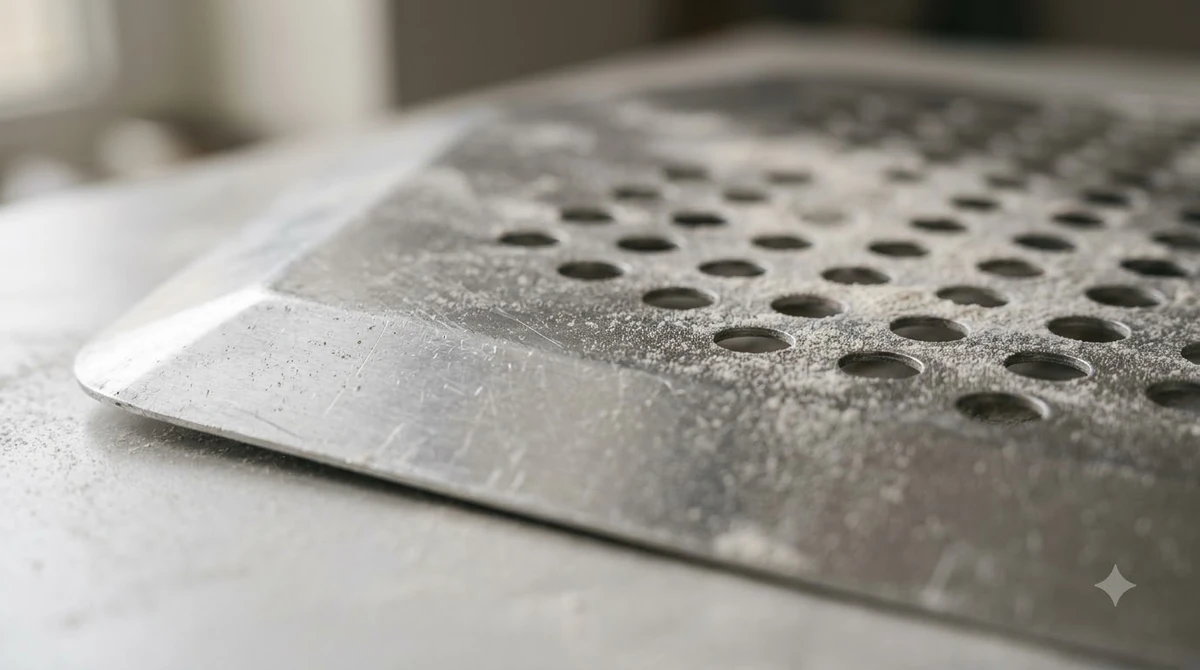
Perforation matters for flour. Gozney’s peels have perforated gaps that let excess flour fall through, and the company notes that too much flour can burn the base. A perforated head leaves less loose flour under the crust, which lowers the risk of scorching during the turn.
Common Mistakes When Turning a Pizza
The most common mistake is turning too early, before the crust has set and started to colour, which lets the toppings slide.
- Turning before the crust colours and rises, so the toppings move.
- Using the turning peel to load raw dough into the oven.
- Leaving too much flour on the base, which can burn it at high heat.
- Holding the pizza in one spot for too long, so one side scorches.
- Pulling the peel out too fast and dragging the cheese off the crust.
Practise on a cooked pizza first, as Gozney suggests, and keep each movement small. Most problems with a pizza turning peel come from timing and flour rather than from the tool itself, so fix those before you buy a new peel.
What the Sources Do Not Confirm
Exact dimensions, weight, blade thickness and handle measurements for pizza turning peels were not confirmed on the pages reviewed for this guide.
Head size matters as much as handle length. A head that is too wide for your oven will hit the walls or the door frame, while a head that is too narrow may leave the crust unsupported. Compare the head against your oven opening as well as the handle, so the pizza turning peel fits the space you cook in.
Check the manufacturer’s specification sheet or the retailer listing for those numbers before you buy. Photos alone can make a head look larger or smaller than it is, so a stated measurement is the safer guide for fit in your oven.
Frequently Asked Questions
Can I use a pizza turning peel to launch pizza?
Not usually. A pizza turning peel is designed to rotate a pizza that is already in the oven, so most cooks use a separate launching peel to slide the raw pizza onto the stone. Keeping one peel for each job gives the cleanest result.
How long should I wait before turning the pizza?
Wait until the crust starts to colour and rise at the back of the oven. Gozney’s guidance is to avoid turning too early, because an unset pizza can slide or tear. Watch the colour of the crust rather than relying on a timer alone.
Do I need a pizza turning peel for an indoor oven?
Not always. A turning peel helps most when an oven heats unevenly, as wood-fired and gas ovens often do. In a steady oven with a stone, a single good launching peel may be enough. Check your oven’s manual for how evenly it heats.
Should a turning peel be wood or metal?
Either can work. Gozney describes wood as the more traditional material and metal as the modern one, with its metal peels made from aluminium with a hard anodized finish. Choose the material that suits your oven and the way you handle dough.
Why does flour matter so much when turning a pizza?
Excess flour on the base can scorch under high heat. Gozney notes that its perforated peels let excess flour fall through, and that too much flour can burn the base. Brush off loose flour before the pizza goes into the oven.
Buy a pizza turning peel only after you know the oven you will use it in. Check the handle length against the oven opening, then pick the material you find easier to handle. If you bake pizza often, a second peel for launching is a worthwhile addition to the turning peel, and our guide to the best pizza peels covers those.
 8 min readGear & PantryHow to Use a Pizza Turning Peel Without Tearing Your PizzaUpdated Nov 10, 2026
 7 min readGear & PantryRotary Cheese Grater: How It Works, How to Choose One and Use ItUpdated Nov 16, 2026
 8 min readGear & PantryPizza Peel: What It Does and How to Choose OneUpdated Nov 16, 2026
 8 min readGear & PantryWooden Pizza Peel: What It Is and How to Choose OneUpdated Nov 16, 2026
 8 min readGear & PantryBest Gozney Roccbox Peel Options: Placement and Turning Peels ComparedUpdated Nov 10, 2026
 9 min readGear & PantryMetal Pizza Peel: How to Choose Aluminum or SteelUpdated Nov 17, 2026