
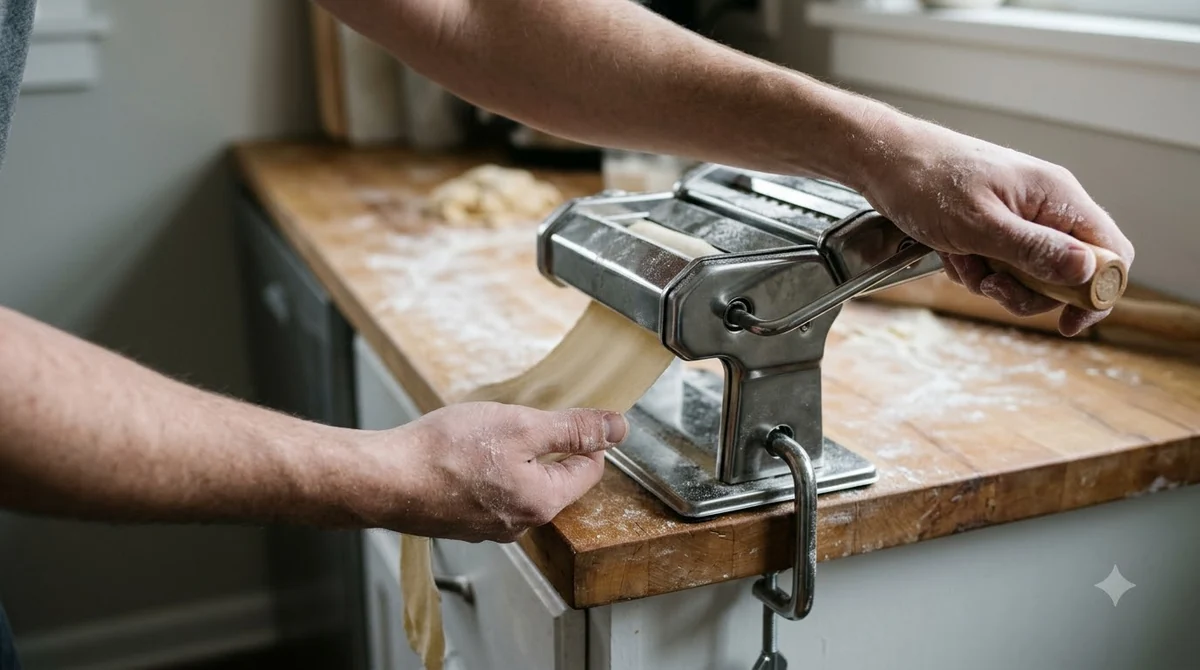

A cheap pasta maker is usually a manual hand-crank machine that rolls fresh dough into sheets for tagliatelle or spaghetti. The manual models reviewed by Food Network were listed at about $100 to $111 as of 2026-11-13, so you can start making pasta without a large spend.
Budget machines roll medium sheets well, but they can tear or stick on the thinnest settings. Choose a cheap pasta maker for occasional cooking, and move up in price if you make pasta every week.
| Pick | Best for | Key fact |
|---|---|---|
| Marcato Atlas 150 | Buyers who can stretch the budget for a sturdier machine | Nine thickness settings; listed at $111 as of 2026-11-13 |
| Imperia Pasta Maker | Occasional use on a tight budget | Listed at $100; tears and sticks on the thinnest settings |
| ProCook pasta maker | Shoppers who want a low-cost hand crank | Eight settings and even thin sheets; the crank can feel unstable |
| KitchenAid pasta roller attachment | Owners of a stand mixer | Listed at $90; needs dough that is flattened first |

MARCATO Atlas 150 Machine, Made in Italy, Red
Pros & ConsViewHide
Reasons to buy
- Made in Italy hand-crank pasta machine rolling dough in steps
- Includes a pasta cutter and hand crank
- Fits Marcato attachments and the optional motor
Reasons to avoid
- Only rolls and cuts the sheet; tortellini are still shaped by hand
- Takes more counter and storage space than a hand cutter
- Fixed to a countertop edge, so check clamp room

Imperia IPasta Classic Pasta Maker
Pros & ConsViewHide
Reasons to buy
- Made in Italy with chromed steel cutting rollers
- Makes 150 mm sheets, 6.5 mm fettuccine and 2 mm tagliolini
- Six roller thickness settings from 0.5 mm to 5 mm
- Clamp slot accepts a separate motor
Reasons to avoid
- Manual crank, so you turn it for every pass
- Only three cut widths in the box
- Motor is a separate purchase

Pasta Maker Deluxe Set- Stainless Steel
Pros & ConsViewHide
Reasons to buy
- Three attachments make five types: lasagnette, fettuccine, angel hair, spaghetti and ravioli
- Hand crank with adjustable thickness
- Chrome-coated steel body
- 67% of 4.6K Amazon ratings are 5-star
Reasons to avoid
- Manual only, no motor
- Clamps to a countertop edge
- 8% of ratings are 1-star
How We Chose These Cheap Pasta Makers
The picks below come from published reviews that tested the machines, not from hands-on use by this site. Each cheap pasta maker in the reviews was checked against three criteria: price as listed, performance on thin settings and how steady the hand crank and clamp felt. Prices are shown as they appeared on the page read on 2026-11-13, and they change often. A cheap pasta maker that scores well on all three is a better fit for regular use than one that wins only on price.
Manual vs Electric on a Tight Budget
Manual pasta makers cost less and suit occasional cooks, while electric models save effort but usually cost more. Food Network reviewers found that manual machines work with just about any dough recipe, while electric machines perform best with the maker’s own recipes.
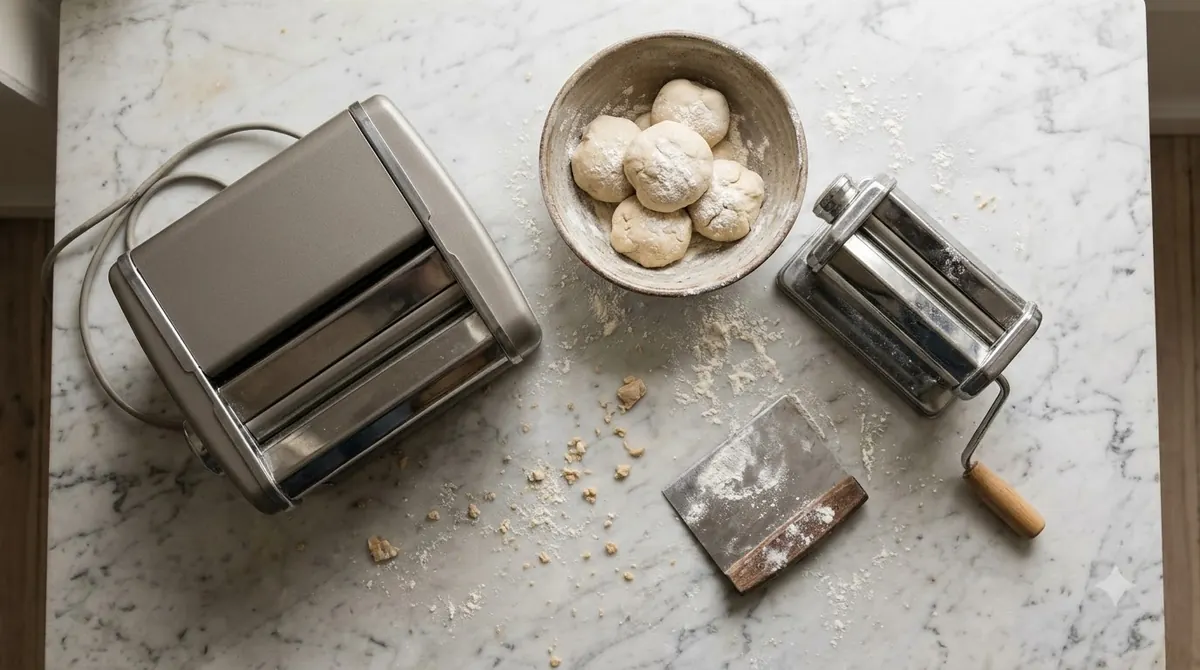
A manual cheap pasta maker clamps to a table and runs on your arm. The price is lower, the machine is lighter, and it takes up less counter space. Final Check’s buying guide describes manual models in the same terms, noting that they are cheaper and better suited to occasional use.
Why manual is usually the budget choice
A cheap pasta maker is usually manual. Electric machines add a motor, which means a higher price on the machines compared in the reviews. If you only make pasta now and then, that extra cost buys little. Food Network’s tests found that manual machines suit a wide range of dough recipes.
| Option | Typical cost | Dough flexibility | Effort |
|---|---|---|---|
| Manual hand crank | Lowest | Works with almost any dough | You crank by hand |
| Electric motor model | Higher | Best with the maker’s own recipes | Little effort |
When electric earns its price
Electric machines are easier for beginners, and the motor takes the work out of rolling. Wholewheat dough needs a stronger motor than most budget electric models have, according to Final Check’s guide. If you cook pasta every week or want to save time, an electric model is worth the higher cost. Check the Food Network pasta maker tests for the dough notes before you buy.
Best Cheap Pasta Makers by Type
The Marcato Atlas 150, the Imperia pasta maker, a ProCook pasta maker and the KitchenAid pasta roller attachment each suit a different budget and kitchen setup. A cheap pasta maker is only the right pick if its trade-offs fit how you cook. Each one has a clear trade-off between price and performance on the thinnest settings.
The Marcato Atlas 150 is the sturdier option in this group. Food Network listed it at $111 as of 2026-11-13, with a regular price of $150. It has nine thickness settings and a changeable cutter, and reviewers called it a strong value. The thinner settings still showed slight tearing and sticking.
The Imperia pasta maker is the lowest-priced manual model in the Food Network list, at $100. It rolled both egg and eggless dough, and reviewers recommended it for occasional use. It tore and stuck on thin settings, and its frame felt less sturdy than the Atlas. If you want a second budget option, read about the CucinaPro pasta maker.
The ProCook pasta maker is labelled a budget pick by Expert Reviews. It offers eight thickness settings and produced even, thin sheets on its lowest setting. Its hand crank and clamp felt fairly unstable during use, though the reviewer said this improved with practice.
The KitchenAid pasta roller attachment is a good fit if you already own a stand mixer. Food Network listed it at $90 as of 2026-11-13, and reviewers found it durable. It handled un-flattened dough poorly, so flatten the dough before rolling. See whether the KitchenAid pasta attachment is worth it before you buy.
Features to Check Before You Buy a Cheap Pasta Maker
When you shop for a cheap pasta maker, look for the number of thickness settings, a clamp that holds steady, and attachments that match the shapes you want to make. A machine with more settings gives more control over how thin the sheet becomes.
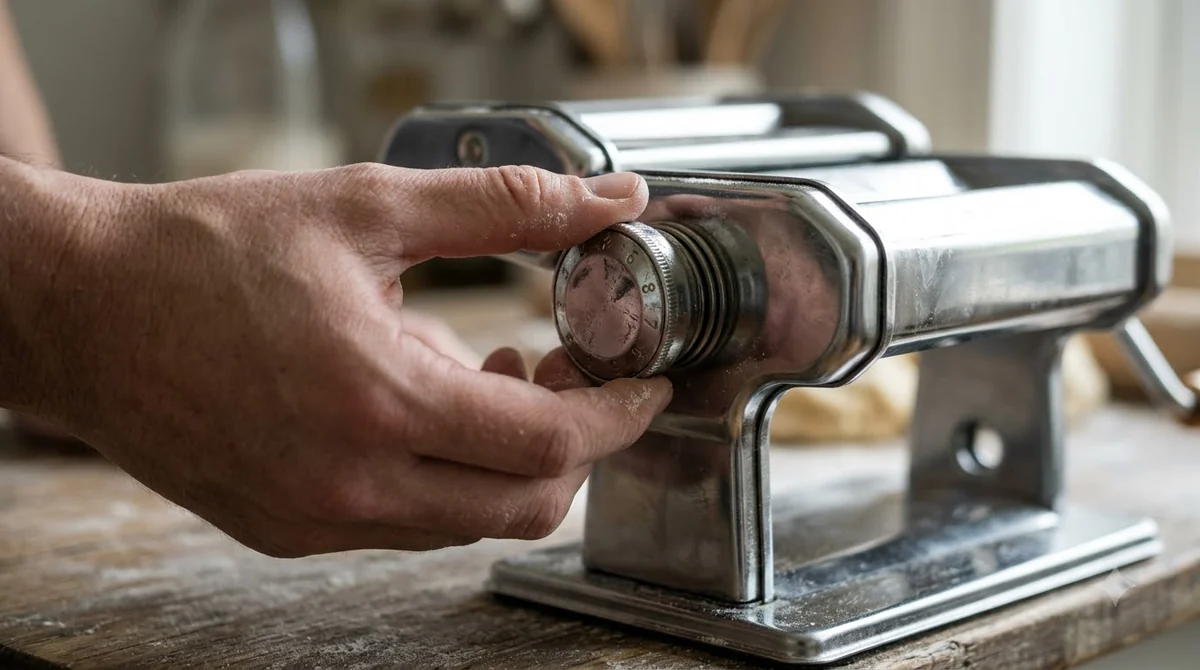
- Thickness settings: the Atlas offers nine and the ProCook offers eight, which gives room to move from thicker sheets to thinner ones.
- Clamp and crank: a clamp that feels loose makes thin rolling harder, so test the grip before you buy if you can.
- Attachments: spaghetti, linguine, tagliatelle and pappardelle cutters cover the common shapes. Final Check notes that manual machines can take spaghetti or tagliatelle attachments or leave dough as lasagne sheets.
- Materials and cleaning: stainless steel can be wiped with a damp cloth, and cleaning tools often come included, according to Final Check.
Common Mistakes With Cheap Pasta Makers
The most common mistake with a cheap pasta maker is feeding un-flattened dough into the machine, which leads to tears and clogs. Flatten the dough into a thick sheet first, then roll it down through the settings one step at a time.
- Rolling on the thinnest setting first, which can tear the sheet on budget machines.
- Skipping a clamp check, since a loose clamp makes the crank feel unstable during use.
- Leaving dried dough on the rollers. Food Network reviewers said stuck-on dough on the Imperia needed a toothpick to remove.
- Expecting a smooth first session. Expert Reviews’ pasta maker tests noted that the ProCook crank felt unstable at first but improved with practice.

How to Choose by Cooking Habit
Choose a manual machine if you cook pasta occasionally and want the lowest cost. Choose a motor-driven model only if you make pasta often or want to skip the cranking.
For occasional use, a cheap pasta maker is the practical choice. Our guide on how to choose a pasta maker covers the same checks in more detail, and our best pasta machines roundup shows what a bigger budget buys. If you find yourself making pasta every week, the time saved by a motor may be worth the extra money, which is the trade-off the Food Network and Final Check guides both describe.
Skip the cheapest model if you plan to roll very thin sheets often. The Food Network reviews found tearing and sticking on the thinnest settings of budget machines, so a slightly higher price can buy a smoother result.
Frequently Asked Questions
Is a cheap pasta maker good enough for fresh pasta?
Yes, for everyday fresh pasta such as tagliatelle and fettuccine. Budget machines roll medium sheets well, but reviewers found they tear or stick on the thinnest settings. Flatten the dough before each pass to reduce tearing.
How many thickness settings do I need?
The reviews name nine settings on the Marcato Atlas 150 and eight on the ProCook pasta maker. More settings give finer control, but a steady clamp also matters, since the ProCook crank felt unstable during use.
Can a manual pasta maker handle any dough?
Food Network reviewers found that manual pasta machines work well with just about any dough recipe. Electric models perform best with the recipes supplied by the manufacturer, so check the manual before you start.
Is an electric pasta maker worth it for beginners?
Electric machines are easier for beginners because the motor does the rolling. If you cook pasta only now and then, a manual machine usually gives the same result for less money. Compare the time you would spend cranking a cheap pasta maker with the extra price.
Can a cheap pasta maker make lasagne sheets?
Many manual machines can leave dough as flat lasagne sheets, which is a simple way to use the rolling function. Cut the sheets to the size of your dish, and check the machine’s width before you buy if you plan to make lasagne often.
What should I check before buying a budget machine?
Before you buy a cheap pasta maker, check the number of thickness settings, the stability of the clamp and crank, and the attachments included. Read the price as listed on the current page, because prices change, and look for a cleaning tool and a clear manual.
If you make pasta only a few times a year, a cheap pasta maker is the sensible choice. If it becomes a weekly habit, put the budget toward a sturdier model or a motor, and you will likely get better results for the money.
 9 min readBest PicksCheap Pizza Oven: Budget Types That Actually Cook WellUpdated Nov 12, 2026
 8 min readBest PicksBest Gifts for Pasta Lovers by Skill Level and BudgetUpdated Nov 12, 2026
 8 min readBest PicksItalian Pasta Maker: How to Choose a Good OneUpdated Nov 12, 2026
 6 min readBest PicksTop Rated Pasta Maker: Manual, Attachment or ElectricUpdated Nov 13, 2026
 6 min readBest PicksAutomatic Pasta Maker Sale: What to Check Before You BuyUpdated Nov 13, 2026
 5 min readBest PicksStand Alone Pasta Maker: Manual or Electric ComparedUpdated Nov 13, 2026