

Heat resistant gloves are insulated gloves that keep hot pans, oven racks and grill grates from burning your hands. You can choose a good pair by its material, the EN 407 rating printed on the label, and a cuff long enough for your reach.
Kitchen and industrial heat resistant gloves are rated on different scales, so read the label before you buy. The sections below explain each rating and the trade-offs between materials.
A glove lowers the risk of burns, but it does not make a hot surface safe to touch. Follow the manufacturer’s rating and care instructions every time you use a pair.

Gozney Heat-Resistant Gloves 14" for Pizza Ovens
Pros & ConsViewHide
Reasons to buy
- Suede shell with a soft internal lining
- Extended forearm coverage for working close to a hot oven
- Listing states heat resistance up to 950 F for pizza oven use
Reasons to avoid
- Hand wash only
- No customer reviews yet, so the 5.0 rating is not a track record
- Suede can stiffen if it gets wet
What Heat Resistant Gloves Protect Against
Heat resistant gloves protect your hands from hot cookware, oven racks and other hot objects by slowing heat transfer through an insulated layer. An oven glove is the mitt-style version that covers the whole hand.
According to the Wikipedia article on oven gloves, they are thermally insulated gloves or mitts, usually worn in the kitchen, that protect the hand from ovens, stoves and cookware. Unlike a pot holder, an oven glove covers the whole hand, which is why many cooks prefer one for lifting a hot tray.
The core job of any heat resistant glove is the insulation layer. Traditional mitts pair a cotton outer shell with padding inside. The shell gives the glove its feel and look, while the padding does most of the protecting.
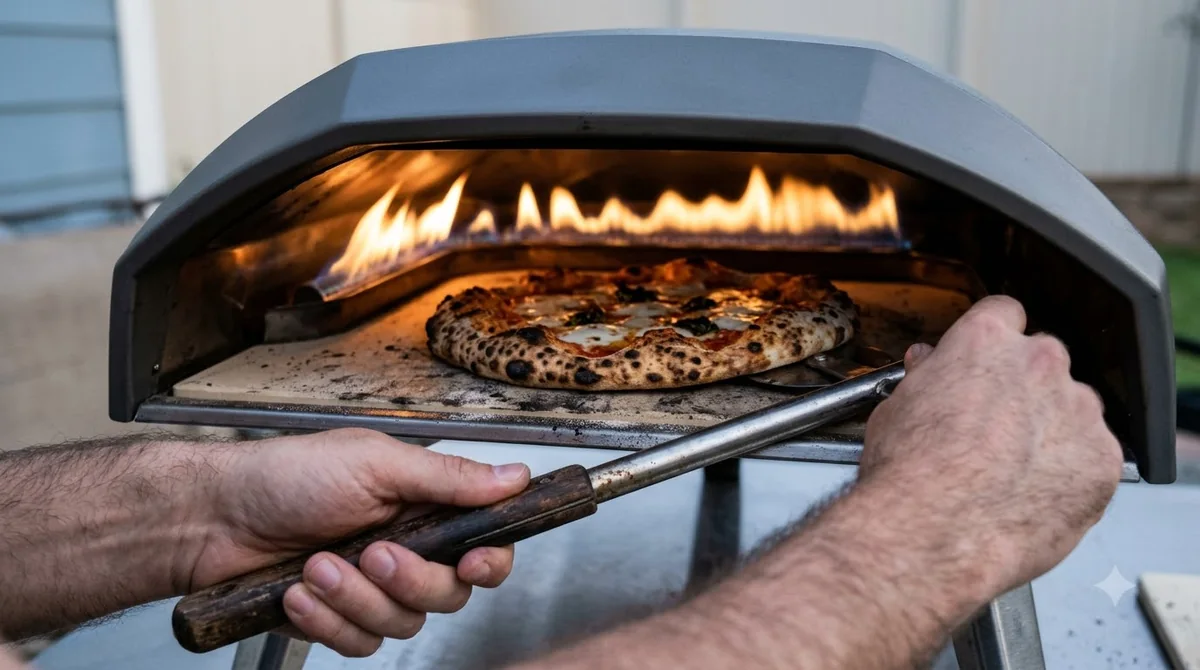
The same name covers heat resistant gloves used for grilling, smoking and workshop tasks, but their ratings are not the same. A glove that handles a hot baking tray is not automatically suited to molten metal, so match the glove to the task. Cooks who tend a wood fire should also read how to light a wood fired pizza oven, since the oven door and tools get hot.
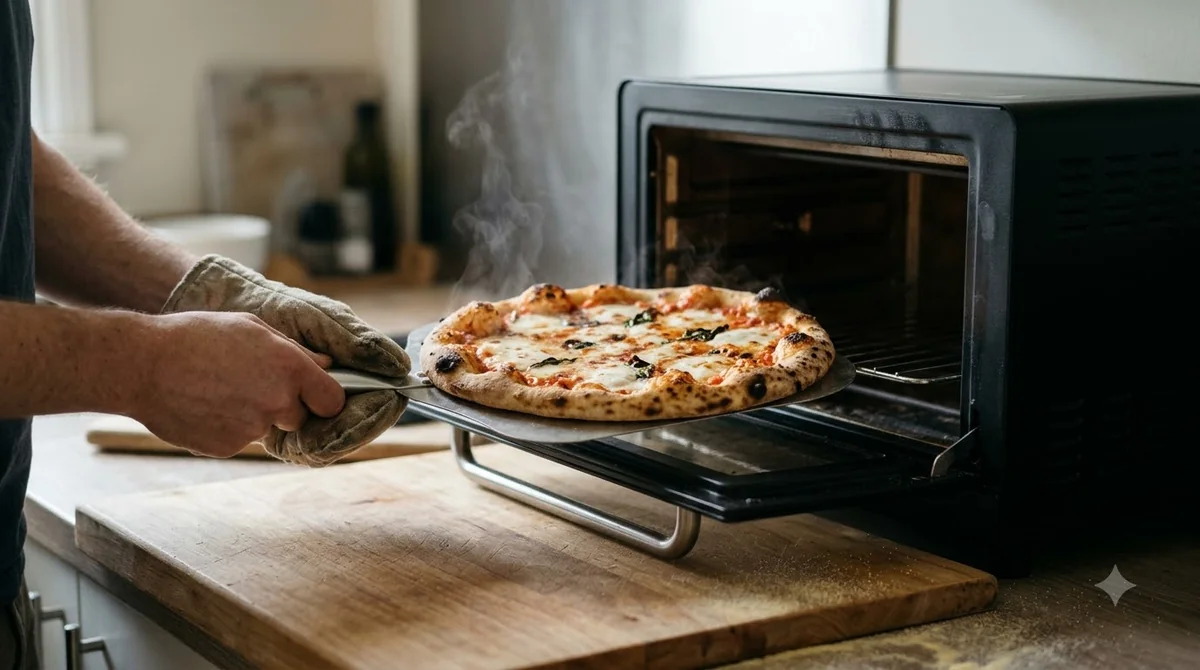
- Hot oven racks and baking trays
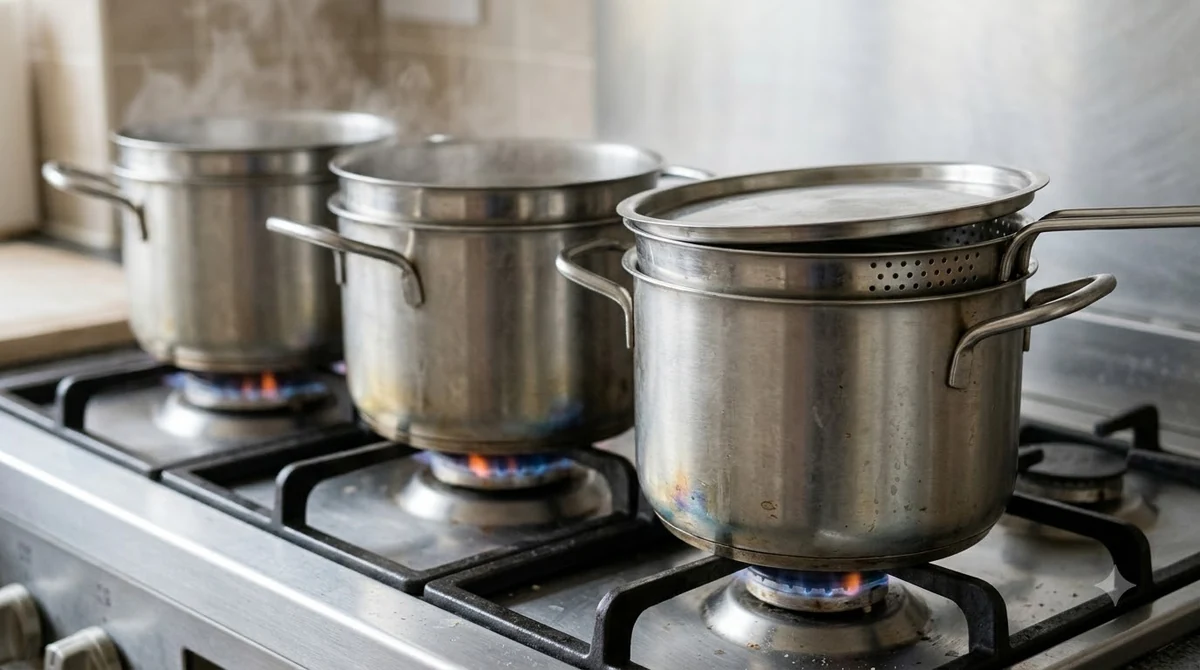
- Pans and pasta pots lifted from a stove
- Grill grates and smoker doors
- Hot dishes passed across a table
Materials: Cotton, Silicone, Leather and Aramid Fibers
Cotton-shell mitts suit everyday baking, while aramid fibers such as Kevlar and Nomex handle much higher heat and appear in protective clothing. Each material used in heat resistant gloves trades comfort, grip or heat limit against the others.
Cotton is comfortable and familiar, but it absorbs moisture, and damp fabric conducts heat faster. Silicone grips well and wipes clean. Its heat limit depends on the product, so check the label instead of assuming. Leather resists abrasion, which suits workshop jobs, though it is stiffer and needs more care.
Aramid fibers are the high-heat option for heat resistant gloves. Kevlar keeps much of its strength at high temperatures for short periods, but it weakens with long exposure. Wikipedia’s Kevlar article reports that its strength falls by about 10 percent after 500 hours at 160 °C (320 °F), and by about 50 percent after 70 hours at 260 °C (500 °F).
Nomex, another aramid, can withstand temperatures up to 370 °C (700 °F) according to its own Wikipedia entry. It is used in firefighting and racing gear, and racing drivers wear Nomex gloves as part of their kit.
| Material | Main strength | Trade-off |
|---|---|---|
| Cotton shell with insulating lining | Comfortable and familiar | Absorbs moisture and loses protection when damp |
| Silicone | Grip and water resistance | Heat limit depends on the product |
| Leather | Abrasion resistance for workshop tasks | Stiffer and needs more care |
| Aramid (Kevlar, Nomex) | Strong at high temperatures | Costs more, and long exposure weakens Kevlar |

How the EN 407 Rating Works
EN 407 is the European standard for heat protective gloves, and it is the rating to look for on heat resistant gloves. It scores six separate tests from 0 to 4, and a glove that passes at least one test carries a flame symbol followed by six digits in test order. An X means that hazard was not tested.
Before the heat tests apply, a glove must reach at least level 1 for abrasion and tear resistance under the related EN 388 standard. ATOM’s explainer on the EN 407 standard lists the six tests, which are:
- Flame behavior, which measures how long the material keeps burning or glowing after the flame is removed.
- Contact heat, which presses the glove against hot plates set at 100, 250, 350 and 500 °C levels.
- Convective heat, which exposes the glove to a flame in a test chamber.
- Radiant heat, which exposes the glove to a radiant heat source.
- Small molten metal splashes, counted as the number of drops needed to raise the inside temperature by 40 °C.
- Large molten metal splashes, where metal is poured over the glove with PVC foil underneath.
Contact heat has a built-in limit on heat resistant gloves. Under EN 407, a glove needs at least level 3 for burning behavior before it can earn level 3 or 4 for contact heat. Without that, its contact heat score is capped at level 2. The contact heat test also counts a pass only when the inside of the glove rises no more than 10 °C within at least 15 seconds.
EN 407 was updated in 2020 as EN 407:2020, so check the edition named on the label. The standard also has limits on its scope: it does not cover welding or firefighting, and welding gloves are covered by the separate EN 12477 standard.
Features to Compare Before You Buy
Compare the EN 407 contact heat level, material, cuff length, grip and washability. These five points decide how a heat resistant glove performs at the stove or on the workbench.
| Feature | What to look for | Why it matters |
|---|---|---|
| EN 407 rating | Flame pictogram with six digits | Shows tested results, not only a marketing claim |
| Cuff length | Covers the wrist and part of the forearm | Protects you when reaching into a deep oven or grill |
| Grip | Textured palm or silicone dots | Helps you hold a heavy or slippery pan steady |
| Washability | A care label that matches how you clean | Keeps the insulating layer clean and dry |
The rating is the most useful number on a heat resistant glove label, but it is only one part of the decision. A heat resistant glove that fits badly or grips poorly can cause more accidents than a plainer pair that you handle with confidence.
How to Use and Care for Heat Resistant Gloves
Dry heat resistant gloves fully and keep them away from direct heat, because damp or damaged insulation loses protection. Replace a pair once the lining is thin or torn, since a worn glove no longer slows heat the way it did when new.
- Read the care label first and follow its washing instructions.
- Check the palm and fingers for holes, thin spots or scorched areas before each use.
- Dry the gloves thoroughly, away from direct heat sources such as a dryer or radiator.
- Keep a damp pair away from the stove, since moisture makes the glove conduct heat faster.
- Replace the pair when the lining is thin, torn or no longer keeps its shape.
Repeated washing and heat exposure wear the insulating layer over time. A glove only lowers the risk, so a long-handled pizza peel or a pizza oven brush keeps your hands farther from the heat in the first place. Aramid fibers also weaken with long exposure, as the Kevlar data above shows, so a glove that looks intact may still have lost some of its protection.
Common Mistakes When Choosing Heat Resistant Gloves
The most common mistake is buying heat resistant gloves on looks or price while skipping the rating and cuff length. A short cuff leaves the wrist exposed, and a glove without a clear rating leaves you guessing about its limits.
- Ignoring the EN 407 label and assuming all heat gloves perform the same
- Choosing a short cuff for a deep oven or grill
- Using a damp pair near a hot pan
- Treating a kitchen oven glove as suitable for welding or molten metal
- Keeping a worn pair with thin or scorched spots
Before you buy, read the label, look at the cuff, and check that the care method fits how you clean your kitchen tools.
Frequently Asked Questions
Are heat resistant gloves the same as oven mitts?
Oven mitts are one type of heat resistant glove, designed mainly for kitchen use. Gloves for industrial or workshop tasks use different materials and ratings, so the names do not always match the level of protection.
What does the EN 407 rating mean on a glove?
The EN 407 rating is a set of six heat and flame tests, each scored from 0 to 4. A flame symbol with six digits on the label shows the result for each test in order, and an X means that test was not carried out.
Are silicone gloves heat resistant?
Silicone gloves offer good grip and water resistance, but their heat limit depends on the specific product. Check the label or the manufacturer’s data sheet before you rely on a silicone glove near a very hot pan.
Can heat resistant gloves be used for welding?
Only if the glove is rated for welding. Welding gloves are covered by the separate EN 12477 standard, and EN 407 does not cover welding, so a kitchen glove is not a welding glove.
How should I wash heat resistant gloves?
Follow the care label first. Dry the gloves fully and keep them away from direct heat, because a damp insulating layer conducts heat faster and reduces protection.
How long do heat resistant gloves last?
There is no fixed lifespan. Check the palm and fingers for holes, thin spots or scorch marks before each use, and replace a pair when the lining is thin, torn or no longer keeps its shape.
Pick a pair by its rating, cuff length and material rather than by price alone. For everyday cooking, a cotton-shell mitt with a long cuff covers most tasks. For grilling, welding or molten metal, check the specific rating before you rely on any heat resistant glove.
 8 min readGear & PantryPizza Oven Table: How to Choose a Stand That Is Stable and Heat-SafeUpdated Nov 17, 2026
 9 min readGear & PantryCento San Marzano Tomatoes Review: What the Label Really MeansUpdated Nov 10, 2026
 9 min readGear & PantryGusto Etna Pistachio Cream Review: What’s Really in the JarUpdated Nov 5, 2026
 9 min readGear & PantryBest Jarred Pizza Sauce: How to Choose One That Tastes FreshUpdated Nov 10, 2026
 8 min readGear & PantryBest Pesto: How to Choose a Jar That Fits Your PastaUpdated Nov 16, 2026
 9 min readGear & PantryBest Truffle Oil: How to Choose a Bottle That Matches Your CookingUpdated Nov 16, 2026