
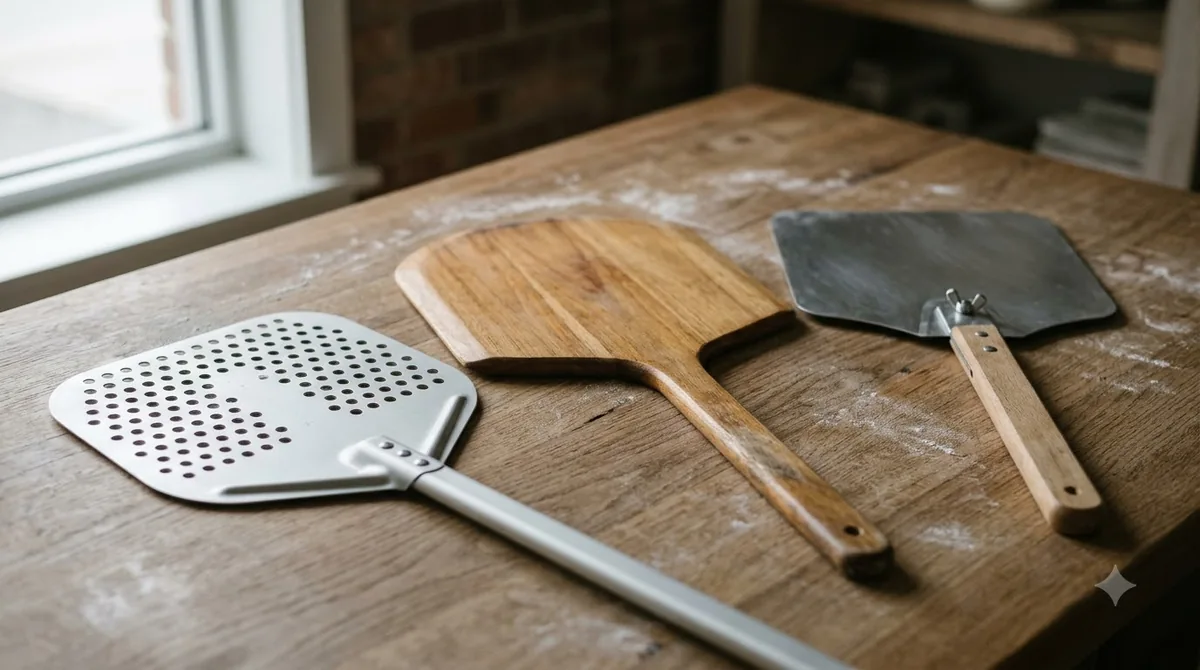

A pizza peel is a flat, shovel-like tool that slides pizza into a hot oven and lifts it back out. Most traditional peels are wood, and many modern ones use thin aluminum on a wooden or metal handle. The right pizza peel depends on your oven, the size of your pizzas and how you handle dough.
Material, head size and handle length matter most, and they should match your oven and the way you cook at home. Understanding each one makes your first launch easier.

ooni 12' Aluminium Metal Pizza Peel
Pros & ConsViewHide
Reasons to buy
- 12 in aluminum peel, the size Ooni says the Karu and Koda 12 accept
- 85% of ratings are 5-star
- Lightweight with a long handle
Reasons to avoid
- Aluminum does not double as a serving board
- Priced higher than generic peels

Gozney 14" Acacia Wood Pizza Placement Peel
Pros & ConsViewHide
Reasons to buy
- Acacia wood peel that doubles as a server
- 71% of Amazon ratings are 5-star
- Lower price than the aluminum peels
Reasons to avoid
- Wood needs more care than aluminum
- About 4% of ratings are 1-star

Gozney 14" Balance Pizza Placement Peel
Pros & ConsViewHide
Reasons to buy
- Perforated aluminum blade for placing 14 in pizzas
- 84% of Amazon ratings are 5-star
- Gozney-branded for its ovens
Reasons to avoid
- 14 in size is large for small ovens
- Costs more than basic peels
What a Pizza Peel Does in the Oven
A pizza peel moves baked goods into and out of an oven while keeping your hands out of the hottest part.
Think of it as a long, flat spatula. The head carries the dough or the finished pizza, and the handle lets you place food farther back in the oven than you could reach with your hands. Wikipedia’s peel article describes the tool in the same way, as a flat board for sliding baked goods into and out of an oven.
The same article notes that a thin metal and wood peel works well with flat breads such as pizza, and that the tool is sometimes called a pizza shovel. In practice, a pizza peel does two jobs: it launches the pizza onto the oven floor, and it retrieves the pizza once it is cooked.
Because soft dough can stick, the surface you choose matters as much as the handle. The sections below cover material, size, technique and care, in that order.
Wood or Metal: Choosing the Right Pizza Peel Material
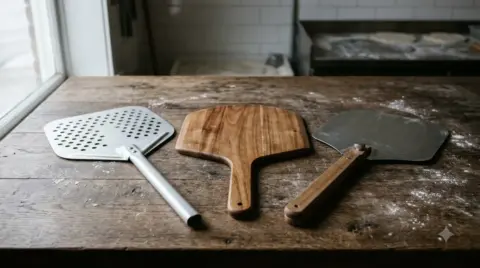
Wood is the traditional material, while aluminum is thinner and easier to slide under a finished pizza.
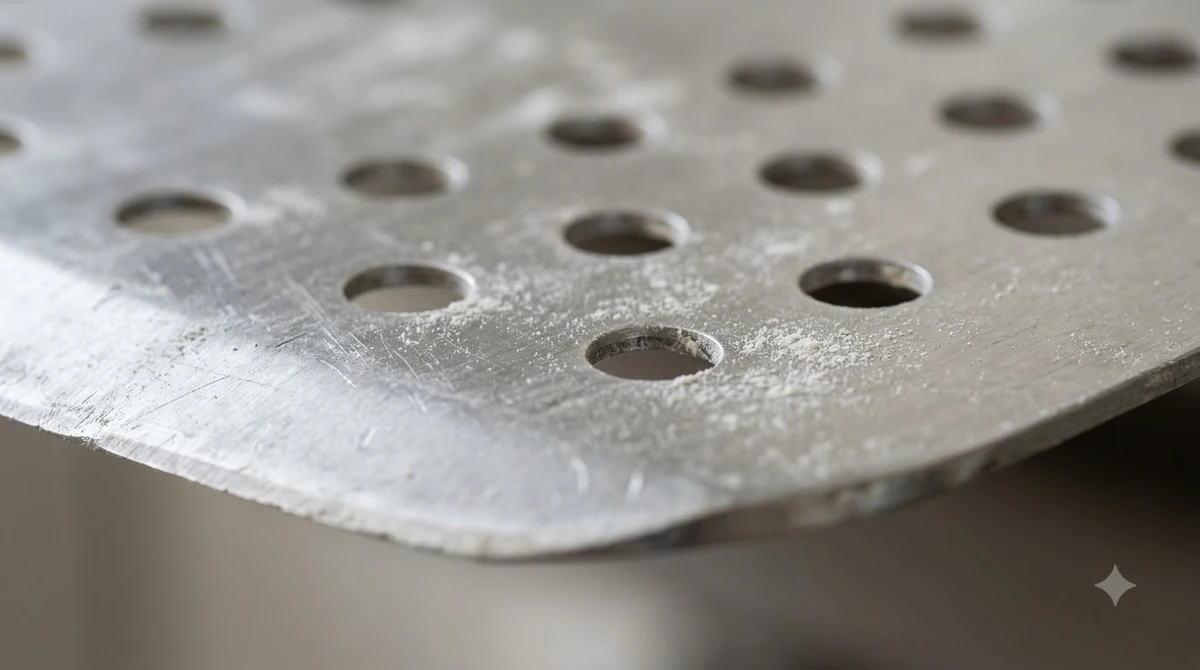
A wooden pizza peel has a rougher texture that gives more grip, and it does not become hot enough to burn your hands the way metal can. The trade-off is that unfinished wood is porous, so it can absorb moisture from wet dough. Wood is also thicker than metal, which makes it harder to slide under a baked pizza.
Metal pizza peels usually have an aluminum base on a wooden handle. Aluminum is non-porous, so moisture has nowhere to go, and a metal peel can make wet dough stick if it is not dusted well. Sophistiplate says that thinness suits removing a pizza from the oven.
Coated wood peels are easier to clean than bare wood, and the finish helps the pizza slide. According to Sophistiplate’s pizza peel guide, condensation can form between a coating and uncooked dough, so a light dusting of cornstarch is suggested.
| Material | Strength | Watch for |
|---|---|---|
| Unfinished wood | More grip, does not burn hands | Porous, can absorb moisture from wet dough |
| Coated wood | Easier to clean, helps pizza slide | Condensation under the coating, so dust with cornstarch |
| Aluminum with wooden handle | Thin, slides under a baked pizza easily | Non-porous, can stick if dough is wet or under-dusted |
If you plan to buy only one peel, Sophistiplate suggests a high-quality wood peel. Owning both a wood and a metal peel gives you one tool for loading and one for unloading.

Launch Peel and Turning Peel Explained
A launch peel has the largest head and slides pizza onto the oven floor, while a turning peel rotates and removes it.
Gozney describes the placement or launch peel as the one with the biggest head. You use it to slide the pizza in, so the dough touches the hot floor directly. Gozney’s guide to pizza peels adds that pizzerias usually keep more than one peel for this reason.
A turning peel is used to rotate the pizza while it bakes and to take it out. Gozney recommends a turning peel for larger ovens. For the technique, see our guide to using a turning peel in the oven.
A turning peel is the usual tool for retrieving the finished pizza. A launch peel can do the same job, but it needs to cool before you use it to launch the next pizza.
How to Choose Pizza Peel Size and Handle Length
The head should be slightly larger than the pizza you plan to make, and the handle should match the depth of your oven.
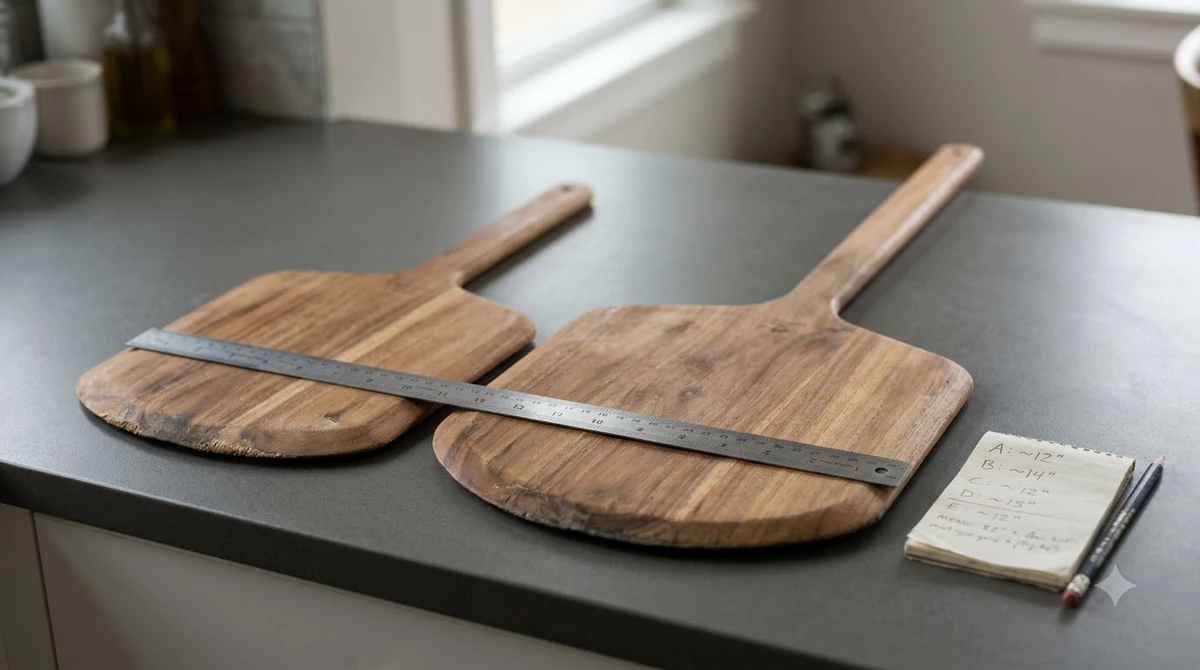
The Wikipedia article on peels gives typical ranges. A household carrying surface is around 35 cm square, and a household handle is around 15 cm long. Peels range from about 12 cm square to 1 meter square or more, and handles from about 6 cm to 1.5 meters. Those ranges are wide, so start with your oven and your pizzas rather than a catalog size.
Before you buy, check four things:
- The inside depth of your oven, from the opening to the back wall.
- The diameter of your largest pizza.
- A head that is slightly larger than that diameter.
- A handle long enough to reach the back of the oven without the head hitting the sides.
Gozney sells turning peels in two handle lengths: a shorter one for its Roccbox oven and a longer one for any size outdoor pizza oven. The guide gives no exact measurements, so compare the listed length on each product page before you order.
How to Use a Pizza Peel Without Sticking
Dust the peel lightly, build the pizza on it, and slide it onto the oven floor in one smooth motion. If dough still grips the surface, read why pizza sticks to the peel.
Dusting is the main way to keep dough from bonding to the peel. Flour, cornmeal and milled wheat bran are the common options, and peels are often sprinkled with them so baked goods slide on and off. Follow these steps for a clean launch:
- Dust the peel lightly with flour, cornmeal or wheat bran.
- Build the pizza directly on the peel, stretching the dough to the size you want.
- Give the peel a gentle shake to check that the pizza moves freely before you launch it.
- Slide the pizza forward in one motion so the dough touches the oven floor directly.
- Retrieve the pizza with a turning peel, or let your launch peel cool before using it again.
Too much flour causes its own problem. Gozney warns that too much flour can burn the base of the pizza, which is why its launch peels have perforated gaps that let excess flour fall through. A perforated peel is a useful choice if you dust generously.
Caring for a Pizza Peel and Common Mistakes
Gozney advises keeping a launch peel clean, cool and free of debris so pizzas slide in without mishaps.
According to Gozney, a turning peel needs less of this care because it never holds uncooked dough. The sources reviewed for this guide do not give cleaning or oiling steps for wood peels, and they do not state how long a wood peel lasts, so follow the maker’s care instructions for the peel you own, and see our guide to how to clean a wooden pizza peel for general upkeep. For technique, see our wooden peel loading and launching tips.
Three practical points come up in the sources:
- Too much flour can burn the base of the pizza.
- Bare aluminum can make wet dough stick, so dust it before you load the pizza.
- A peel can double as a serving board, but a separate wood cutting board is the better choice for cutting.
Frequently Asked Questions
What is a pizza peel used for?
A pizza peel is used to slide pizza into a hot oven and take it out again. It keeps your hands away from the hottest part of the oven and lets you place food farther back. Cooks also use a peel to move flat breads and other baked goods.
Is a wooden or metal pizza peel better?
Neither is better for every cook. Wood gives more grip and does not get as hot as metal, while aluminum is thinner and slides under a baked pizza more easily. Sophistiplate suggests owning both, or a high-quality wood peel if you only buy one.
What size pizza peel should I buy?
Choose a head slightly larger than the diameter of your largest pizza, and a handle that matches your oven depth. Household peels are often around 35 cm square, but sizes vary widely, so measure your oven and your pizzas before buying.
What should I dust a pizza peel with?
Flour, cornmeal and milled wheat bran are the dusting options named in the sources reviewed. Use a light coat, because too much flour can burn the base. Perforated peels let excess flour fall through, which helps when you dust generously.
Can I cut pizza on a pizza peel?
Sophistiplate notes that a peel can double as a serving board, but it recommends a separate wood cutting board for cutting. Keeping the launch peel for launching and retrieving pizza helps it stay in good shape for the job it does best.
Do I need two pizza peels?
Two peels are useful, not required. Gozney notes that pizzerias usually keep more than one, one for launching and one for turning. If you cook at home with a small oven, one good peel may be enough, and a turning tool can be a second purchase later.
If you buy only one peel, decide by how you cook. A wood peel suits a cook who wants more grip, while a thin aluminum peel suits removing finished pizzas. Measure your oven depth and your largest pizza before you order, because those two numbers decide which size will work.
 8 min readGear & PantryWooden Pizza Peel: What It Is and How to Choose OneUpdated Nov 16, 2026
 8 min readGear & PantryPizza Turning Peel: How It Works and How to Choose OneUpdated Nov 16, 2026
 8 min readGear & PantryDigital Kitchen Scale: What It Does and How to Choose OneUpdated Nov 16, 2026
 8 min readGear & PantryCavatelli Maker: What It Does and How to Choose and Use OneUpdated Nov 17, 2026
 8 min readGear & PantryPizza Dough Proofing Box: What It Does and How to Use OneUpdated Nov 10, 2026
 9 min readGear & PantryMetal Pizza Peel: How to Choose Aluminum or SteelUpdated Nov 17, 2026