
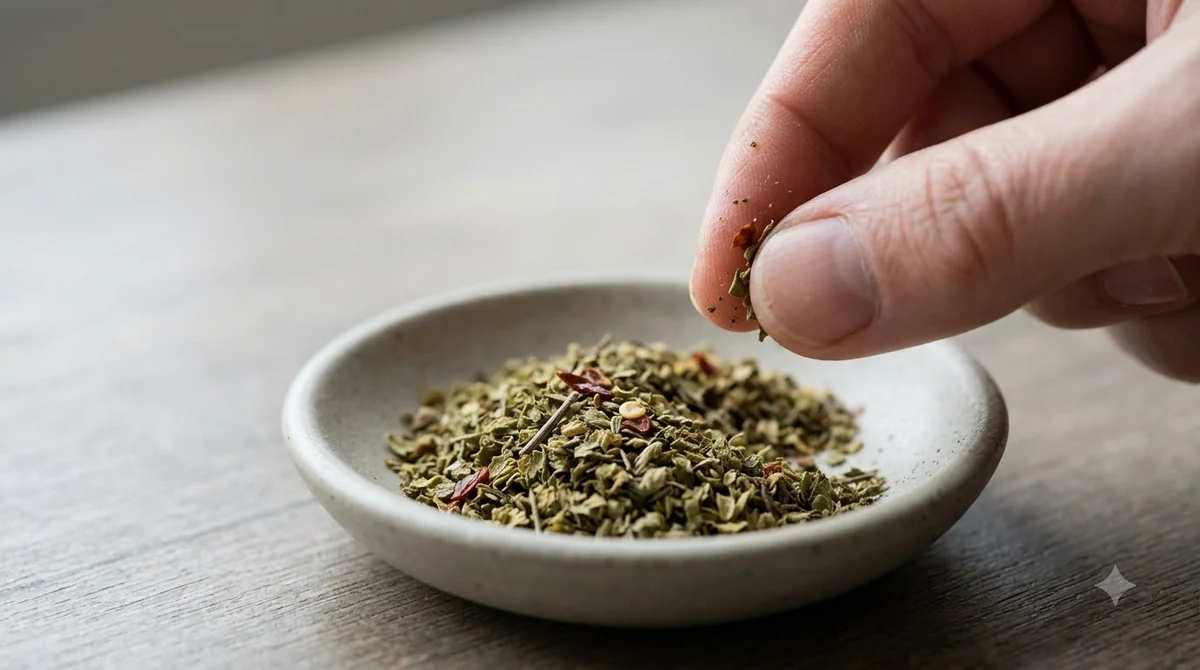

The best Italian seasoning is a dried herb blend built on basil, oregano, rosemary, thyme and marjoram. The herb balance, the ingredient label and how fresh the jar is matter more than the brand name on the front. This guide explains what goes into the blend and how to judge a jar before you buy.
When you shop for the best Italian seasoning, remember that two jars with the same name can taste different because optional herbs and spices vary. Read the ingredient list, then check that the herbs match the dishes you cook most often.
What Italian Seasoning Usually Contains
Italian seasoning is a blend of dried aromatic herbs, and its base is basil, oregano, rosemary, thyme and marjoram. That base is set out in Wikipedia’s Italian seasoning entry.
Many blends also add parsley, sage, savory, coriander, mint, crushed red pepper or garlic powder. These additions are optional, so the same name can cover mixes that taste quite different. The same source notes that pre-blended dry herb mixes are not common in Italy.
When you compare jars for the best Italian seasoning, look for the five base herbs first. A blend that leaves out oregano or basil is still a herb mix, but it will taste different from the common style described above.
How to Read the Label
When flavor is added to a food, US labeling rules allow the single term spice in the ingredient statement, according to 21 CFR 101.22 at the Cornell Legal Information Institute. That means a label that says only spice does not tell you which herbs are inside.
The same rule defines spice as any aromatic vegetable substance in the whole, broken or ground form. The rule text does not set separate declarations for blends, so the ingredient list on the jar is the only guide to the herbs it contains. Use these three checks before you buy:
- Look for the five base herbs by name: basil, oregano, rosemary, thyme and marjoram.
- Check whether garlic powder, salt or crushed red pepper is added, since those change how the blend fits a recipe.
- Find the date or best-by mark, and skip any jar that is past it.
How to Choose the Best Italian Seasoning by Herb Balance
Choose by the herb you taste most, because oregano and marjoram are related and sound alike on a label but do not taste the same. Marjoram is described as sweet, with pine and citrus notes, and it resembles oregano in flavor.
| Herb | Flavor note from the sources | What it does in a blend |
|---|---|---|
| Oregano | Earthy, warm and slightly bitter, with strength that varies | Gives the blend its sharpest, most recognizable note |
| Marjoram | Sweet, with pine and citrus notes | Softens the oregano and adds a rounder finish |
| Basil | The main herb in basil pesto, a sweet and fresh note | Best added late, because cooking quickly destroys its flavor |
The sources used here list rosemary and thyme as base herbs but do not describe their flavor in enough detail to rank them against the others. For that reason, this table covers only the three herbs with clear flavor notes.
Plain logic helps when you compare two jars. A blend with more oregano will usually taste stronger and more bitter than one with more marjoram, so the herb order on the label is a useful hint. If you make marinara sauce often, a blend with a sweeter balance may suit you better. For that reason the best Italian seasoning for tomato sauce is not always the best choice for grilled meat. If you season grilled meat or roasted vegetables, a sharper oregano-led mix may be the better fit.

Why Oregano Quality and Drying Matter
Oregano is one of the herbs you notice most in the best Italian seasoning blends, and the way it was dried changes its flavor. Oregano has an earthy, warm and slightly bitter taste, and its intensity can vary a great deal.
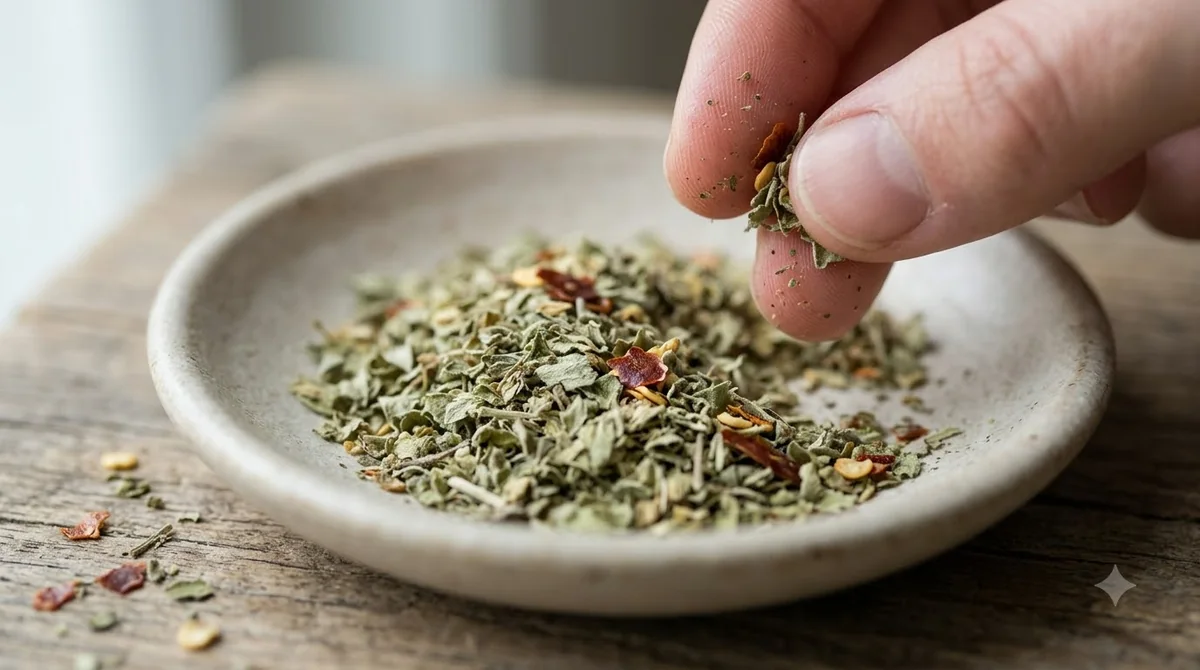
According to Wikipedia’s oregano entry, growing conditions can matter more than the difference between species. The entry says this effect “may be greater than the differences between the various species of plants.” Plain garden oregano may taste bland, with larger and less dense leaves, while good-quality oregano can be strong enough to almost numb the tongue.
Drying reduces the volatile compounds that carry flavor. The same entry notes that higher heat and longer drying times do more damage. In one sample it cites, warm-air convection drying cut the volatile content to below a third of the fresh level. Dried oregano can also taste more intense than fresh, so do not swap it one-for-one for fresh leaves without tasting first.
Mexican oregano is a different plant. It is Lippia graveolens, from the vervain family rather than the mint family, and it has a stronger savory note than true oregano. If a label names Mexican oregano, the blend will not taste like a classic Italian mix.
Storage and Freshness
Whole dry spices keep their flavor for roughly two years, while ground spices last about six months, according to Wikipedia’s spice entry. Those figures are for spices in general, and the source gives no separate number for dried herbs, so treat them as a guide.
Flavor comes partly from volatile oils, and those oxidize or evaporate when exposed to air. Ground spices are better stored away from light. Grinding increases surface area, which speeds up oxidation and evaporation, so the flavor is kept best by storing a spice whole and grinding it when needed.
Italian seasoning is already a ground or crushed blend, so you cannot store it whole. Even the best Italian seasoning loses aroma over time, so use three habits to keep the jar fresh:
- Write the opening date on the lid when you first open the jar.
- Keep the lid closed and the jar away from light and steam from the stove.
- Rub a pinch between your fingers and smell it. If the aroma is faint, replace the jar rather than adding more.
The sources used here do not give a storage temperature or humidity level for dried herbs, so this guide does not state one. Follow the storage line on the jar.
Italian Seasoning vs Herbes de Provence
Herbes de Provence is a similar herb blend, and both mixes share oregano, thyme, rosemary and marjoram. The main difference is the mix itself: Italian seasoning is built around basil, while herbes de Provence often includes savory.
The Wikipedia entry for herbes de Provence lists savory, marjoram, rosemary, thyme and oregano as typical herbs, with others such as basil, bay leaf, tarragon, fennel and lavender added by region. Lavender is sometimes included in North American versions. The same entry lists Italian seasoning as a similar blend, but it does not compare the two in detail.
A French Label Rouge standard sets the shares at 19% thyme, 27% rosemary, 27% savory and 27% oregano. That standard applies to Label Rouge herbes de Provence, so it works as a reference point, not as a rule for every jar. The sources do not give a substitution ratio between the two blends, so start with a smaller amount and taste as you go.
Mistakes to Avoid When You Buy
Buying the best Italian seasoning by brand name alone skips the details that change flavor and freshness. Four mistakes come up often when people compare jars:
- Assuming every jar uses the same herbs, when optional additions vary.
- Buying a large ground jar you will not finish within a few months.
- Confusing Mexican oregano with the Mediterranean kind, since the two taste different.
- Skipping the date check on the lid.
This guide to the best Italian seasoning covers the herb mix and the label. For pizza, how to make pizza at home shows where a seasoning fits. It does not rank brands or give prices, because current prices and product ratings were not verified for this article. Check the current ingredient list and product page before you buy.
Frequently Asked Questions
What is the main ingredient in Italian seasoning?
There is no single main ingredient. The base blend is basil, oregano, rosemary, thyme and marjoram. Optional herbs and spices can be added on top of that base.
Is there one official recipe for Italian seasoning?
No single official recipe was found in the sources used here. Wikipedia describes the base herbs and the optional additions, which means two products can share the name and still differ in taste.
Is Italian seasoning common in Italy?
Pre-blended dry herb mixes are not common in Italy, according to the Wikipedia entry on Italian seasoning, and the entry gives no further detail on Italian use.
How long does Italian seasoning keep its flavor?
The Wikipedia spice entry gives about two years for whole dry spices and about six months for ground spices. Dried herbs are ground or crushed, so the six-month figure is the safer guide. Smell the jar before you use it, and replace it when the aroma fades.
How do I know whether the label lists the herbs?
Look for the herb names in the ingredient statement. Under the US rule, a label may use the single term spice for flavor, so a line that says only spice does not show which herbs are in the jar. Check the brand’s ingredient list if you need more detail.
Can I make my own Italian seasoning?
Yes, using the five base herbs gives you a blend you can adjust. Start with equal parts, then change the oregano or marjoram to suit your taste. Store your mix in a closed container away from light, and make only as much as you expect to use within a few months.
If you cook pizza and pasta most weeks, the best Italian seasoning is a blend whose herb list you recognize, in a size you can finish in a few months. Read the label first, check the date, and keep the jar closed away from light. A simple blend you use often will serve you better than a large jar that goes stale on the shelf.
 9 min readGear & PantryBest Pizza Seasoning: How to Choose a Good BlendUpdated Nov 8, 2026
 9 min readGear & PantryThe Best Italian Pasta Brand: How to Choose a Good BagUpdated Nov 17, 2026
 9 min readGear & PantryBest Italian Olive Oil: How to Choose a Real OneUpdated Nov 17, 2026
 9 min readGear & PantryGarofalo Pasta Review: Is This Bronze-Drawn Italian Pasta Worth It?Updated Nov 8, 2026
 8 min readGear & PantryBest Italian Cookies to Buy and GiftUpdated Nov 17, 2026
 8 min readGear & PantryBest Italian Olive Oil Gift Set: What to Check Before You BuyUpdated Nov 11, 2026