
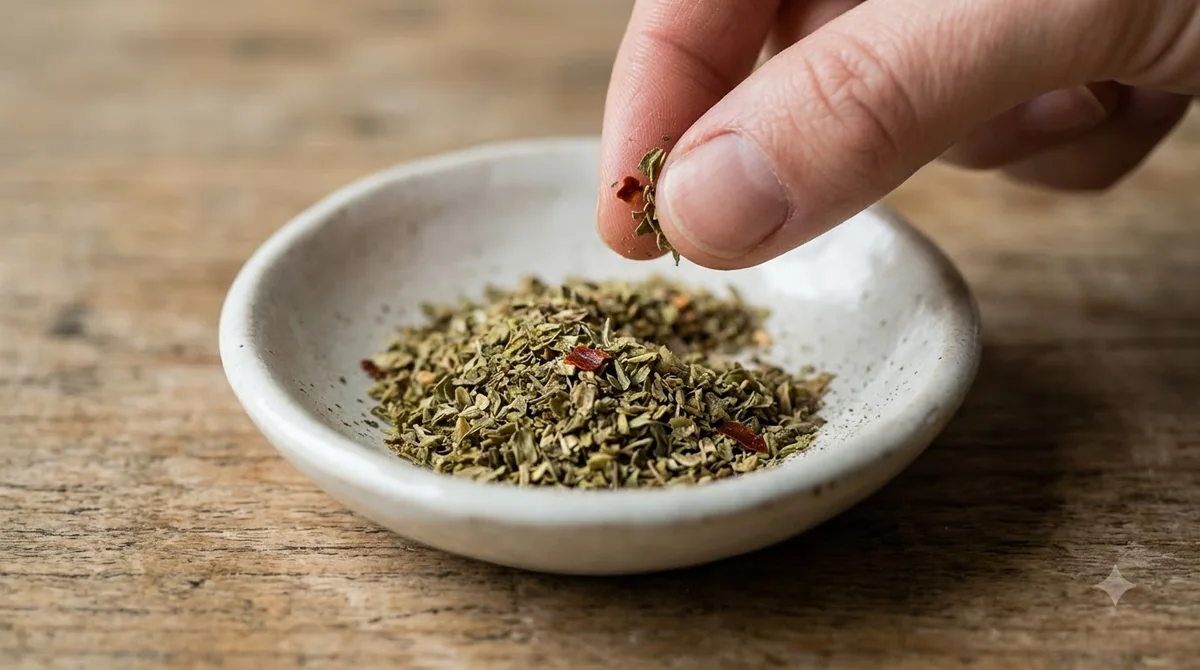

The best pizza seasoning is a blend of dried herbs, usually oregano, basil and garlic, with an optional pinch of chili. The right blend depends on your pizza style and how much heat you want. Start by reading the label, not the front of the jar.
To find the best pizza seasoning, check whether each herb is named or hidden under the word “spice”, and buy a jar you can finish within a few months. The sections below explain what to look for and why the wording on a label matters.
What a pizza seasoning blend usually contains
A pizza seasoning is a blend of dried herbs, and its common base is oregano, basil and garlic, sometimes with crushed chili.
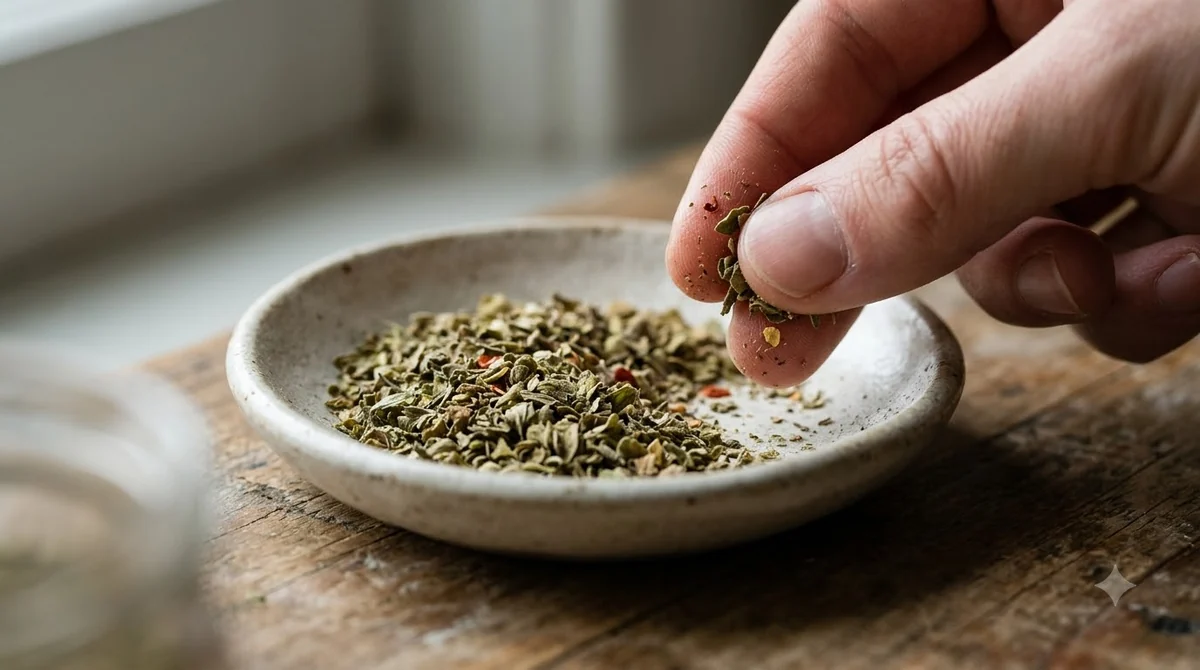
Wikipedia’s Italian seasoning article describes the category as a blend of dried aromatic herbs. Its core is basil, oregano, rosemary, thyme and marjoram. Some blends add parsley, sage, savory, coriander, mint, crushed red pepper or garlic powder.
Pizza seasoning is narrower in practice, and no single source defines it; the broader best Italian seasoning guide covers the wider category. Two jars with the same name can use different herbs, which is why the label is the only reliable guide. Wikipedia’s pizza article lists oregano and garlic for pizza marinara (see our marinara pizza recipe), and basil for the Margherita pizza.
Most blends made for pizza include some combination of these four ingredients, and the best pizza seasoning for you depends on which ones you want:
- Oregano, the herb that carries most of the classic pizza flavor
- Basil, usually sweet basil in Western cooking
- Garlic, most often as garlic powder
- Crushed red pepper, in blends that add heat
How to read the label on the best pizza seasoning
Start with the ingredient list, because under the US food labeling rule, ingredients are listed in descending order of predominance by weight. The first named herb is the one present in the largest amount.
A herb listed near the end may be a small part of the blend, even when the jar shows plenty of it. Use these four checks before you buy:
- Read the ingredient list from the top. The first named herb is the largest part by weight.
- Look for the word “spice”. US rules let a manufacturer declare a spice simply as “spice”, so herbs hidden in a blend may not be named. The details are in the federal rule in 21 CFR 101.22.
- Check how garlic is written. Under the same rule, garlic powder must be declared by its common or usual name, so “garlic powder” is the expected wording.
- Check the Nutrition Facts panel for sodium per serving. Compare two jars using the same serving size, not the size of the jar.
If a blend contains salt, remember that the dough, sauce and cheese add salt too. Check the sodium line before you season the dough, so the finished pizza does not end up over-salted.
Oregano: Mediterranean, Mexican and “Italian” labels
For a classic pizza, choose Mediterranean oregano from Origanum vulgare, which is not the same plant as Mexican oregano.
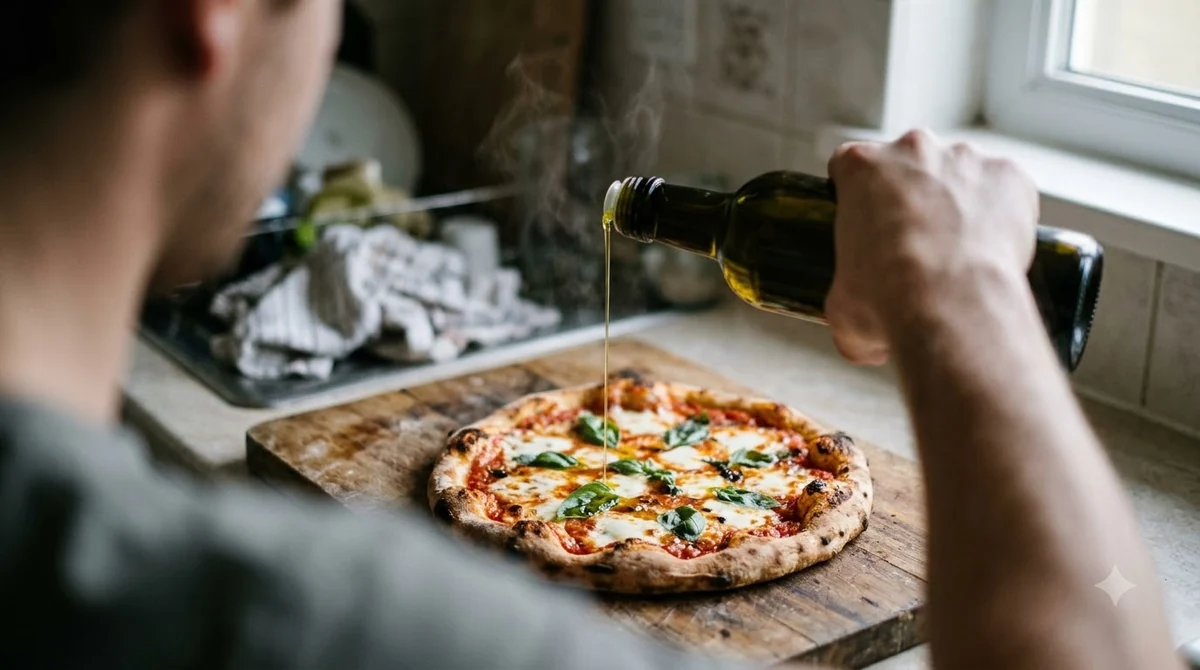
Oregano is a member of the mint family and is native to the Mediterranean. Wikipedia calls Greek and Italian oregano, subspecies hirtum, the best all-purpose culinary subspecies. Mexican oregano, Lippia graveolens, belongs to the vervain family instead, and it has a stronger savory note with a citrus accent.
Be careful with the word “Italian”. Plants sold as Italian or Sicilian oregano are often sweet marjoram hybrids, not Origanum vulgare. The name on the jar does not prove which plant is inside, so check the ingredient line and the product’s own page.
| Feature | Mediterranean oregano | Mexican oregano |
|---|---|---|
| Plant | Origanum vulgare, mint family | Lippia graveolens, vervain family |
| Flavor | Piney, with a rosemary-like hint | Stronger savory note with a citrus accent |
| Fit for classic pizza | Yes, the usual choice | Only for a bolder, citrus-tinged taste |
Oregano also has a history in American pizza. Wikipedia notes that soldiers returning from Europe after World War II brought back a taste for the “pizza herb”, which had probably been eaten in Southern Italy for centuries.
Garlic, basil and chili: the other herbs that matter
Basil and garlic give most pizza blends their savory base, while chili flakes decide how hot the seasoning will be.
Basil is most often used fresh, and Wikipedia notes that cooking quickly destroys its flavor, so it is usually added last. In Western cooking, “basil” usually means sweet basil, also called Genovese basil. A dried basil in a blend will taste different from fresh leaves, so do not expect fresh basil flavor from a jar.
Garlic powder is made from dehydrated garlic. Garlic cloves are peeled, sliced, heated and dried to about 6.5 percent moisture, then ground to the desired size. Because the powder is so dry, it hardens and clumps when moisture or heat gets in.
Chili heat comes from capsaicin, and its strength varies by cultivar, so two jars of crushed red pepper can taste very different. A hot pizza such as the diavola pizza recipe is where a chili-forward blend fits. Chili can be used fresh, dried, pickled or powdered, which is why the wording on the label matters. To judge heat from a label:
- If chili appears near the top of the list, expect more heat.
- If chili is missing from the list, the blend will add little or no heat.
- If the only word for the seasoning is “spice”, you cannot tell how much chili it holds.
Blend or homemade: which one to buy
A ready blend saves time, while separate dried herbs let you control the balance, so the best pizza seasoning for you depends on how often you bake.
| Choice | Best for | Trade-off |
|---|---|---|
| Ready blend | Occasional baking and quick weeknight pizza | Less control, and herb amounts may be hidden under “spice” |
| Separate dried herbs | Frequent baking and adjusting to taste | More jars to store, and each herb fades over time |
Drying affects both options. According to Wikipedia’s oregano article, higher heat and longer drying reduce the volatile compounds that carry aroma, so a gently dried herb keeps more flavor. A blend holds its aroma no longer than its most delicate herb.
Pre-blended mixes are also not a common product in Italy itself, according to Wikipedia’s Italian seasoning article. Treat a jar as a convenience product, and taste a small amount of sauce with it before you season a full batch.
How to store pizza seasoning so it stays fresh
Even the best pizza seasoning needs a cool, dry place, because moisture and heat make garlic powder harden or clump, and they speed up the loss of aroma in dried herbs.
- Keep the jar in a cool, dry cupboard, away from the stove and the oven.
- Close the lid after each use, because moisture is the main enemy of a dry powder.
- Use the best-before date as a guide, since manufacturers use it to estimate how long the powder keeps its peak flavor and texture.
- Garlic powder is generally good for up to 4 years, depending on how it is stored.
- Smell the jar before you bake. A faint or dusty smell means the flavor has faded.
Buy the size you can use in a few months. A large jar kept beside a steamy pot will lose its aroma before it empties, and a small jar wastes less when that happens.
Who should choose which seasoning
The best pizza seasoning for a classic pizza flavor has clear oregano and garlic, and you should skip any jar that hides its herbs if you want control over the result.
- Pick a blend with named herbs if you like to adjust the balance yourself.
- Pick a plain oregano and basil mix if you want a classic taste without chili.
- Pick a blend with chili listed high in the ingredients if you want real heat.
- Skip a jar whose only seasoning word is “spice” if you want to know exactly what you are adding.
This guide to the best pizza seasoning does not test brands or rank products. It explains how to read a label and choose by criteria. For current product details, check the seller’s own page.
Frequently Asked Questions
Is pizza seasoning the same as Italian seasoning?
Not exactly. Italian seasoning is a broader blend of dried herbs, often basil, oregano, rosemary, thyme and marjoram. Pizza seasoning is usually built around oregano, basil and garlic, and it may include chili.
Is oregano the only herb I need for pizza?
No. Oregano carries much of the classic pizza flavor, but basil and garlic are common partners, and chili is optional. Choose the herbs by the taste you want, then check the label to confirm them.
Should I buy Mexican oregano for pizza?
Only if you want a bolder, citrus-tinged savory flavor. For a classic pizza, Mediterranean oregano from Origanum vulgare is the usual choice, because it has the piney, rosemary-like note most people expect.
Does drying change the flavor of herbs?
Yes. Higher heat and longer drying reduce the volatile compounds that carry aroma. A herb dried gently keeps more of its flavor, and the herbs in an old or poorly stored jar will taste weaker.
How long does garlic powder last in a seasoning?
Garlic powder is generally good for up to 4 years when it is stored cool and dry, depending on storage conditions. The best-before date estimates how long it keeps its peak flavor and texture, so use it as a guide.
Can a seasoning label just say spices?
Yes. US rules let a manufacturer declare a spice simply as “spice”, so the individual herbs may not be named. If you need to know which herbs are inside, look for a product that names them.
Choose the best pizza seasoning by reading the label first: named herbs, a recognizable oregano, a clear chili level and a sensible jar size. A small jar used within a few months will taste better than a large one that sits near the stove.
 9 min readGear & PantryHow to Choose the Best Italian SeasoningUpdated Nov 16, 2026
 7 min readGear & PantryBest Capers: How to Choose Good Capers at the StoreUpdated Nov 16, 2026
 9 min readGear & PantryThe Best Italian Pasta Brand: How to Choose a Good BagUpdated Nov 17, 2026
 8 min readGear & PantryBest Balsamic Vinegar: How to Choose a Good Bottle in 2026Updated Nov 17, 2026
 8 min readGear & PantryIs King Arthur 00 Flour Good? Specs, Results and Who It SuitsUpdated Nov 8, 2026
 8 min readGear & PantryIs Rustichella d’Abruzzo Pasta Good? A Practical 2026 ReviewUpdated Nov 8, 2026