

A pasta measuring tool is a small gadget with graduated holes that sizes dry spaghetti by serving. The best pick for most home cooks is a stainless steel spaghetti measure with one to four holes, though a digital scale is more precise. Each hole matches a portion, so you can size dinner before the water boils.
The tool only suits long pasta, and its holes follow a serving guide rather than your appetite. Check the package label before you trust any hole.
| Pick | Best for | Key fact |
|---|---|---|
| Stainless steel spaghetti measure | Everyday portions of long pasta | Usually marketed for 1 to 4 servings; some models are dishwasher safe |
| Plastic spaghetti measure | Light use and a lower price | Lightweight; check the listing for the number of holes |
| Digital kitchen scale | Exact dry weights for any shape | Reads in grams or ounces, so no hole guess is needed |

Stainless Steel Spaghetti Pasta Measure (Silver)
Pros & ConsViewHide
Reasons to buy
- Stainless steel measure with 1-, 2-, 3- and 4-person servings
- Listing says it is dishwasher safe
- 76% of about 600 Amazon ratings are 5-star
Reasons to avoid
- Works for long pasta only; short shapes fall through
- Holes are a rough guide, so check them against the package serving size

Pasta Measurer Tool – Stainless Steel Kitchen
Pros & ConsViewHide
Reasons to buy
- Stainless steel measure with three serving sizes from 2 oz to 6 oz
- Adds a ruler, a calorie guide and a conversion chart on the same tool
- 73% of Amazon ratings are 5-star
Reasons to avoid
- Only about 36 ratings, a short track record
- Still a hole-based guide, not an exact weight

Pros & ConsViewHide
Reasons to buy
- Switches between grams and ounces, which suits weighing flour and eggs
- Tare function lets you weigh ingredients one after another in the same bowl
- Rated 4.6 stars across a very large number of Amazon ratings
Reasons to avoid
- 11 lb capacity is plenty for dough but not for big batches in a heavy bowl
- Basic design with no extras such as a built-in timer
How We Chose the Tools in This List
This list compares the main types of pasta measuring tool rather than ranking brands, and it draws on retailer listings, a patent record and buyer reports, not hands-on testing.
The criteria are simple: how many servings a tool covers, what it is made of, which pasta shapes it fits, and how clearly its holes are labeled. Retailer listings describe most spaghetti measures as covering one to four servings, and several list stainless steel as the material. Buyer comments add one caveat that matters. A single hole can give different portions depending on appetite. No independent lab test of accuracy turned up, so treat every hole as a guide rather than a measurement.
Brand names are left out of the text on purpose. The product boxes above show two stainless steel measures and a digital scale, and this page does not quote prices or stock, which change often. Use the criteria below to compare any pasta measuring tool you find.
What a Pasta Measuring Tool Actually Measures
A pasta measuring tool sizes a bundle of dry spaghetti by serving, using holes labeled for one to four portions on most models.
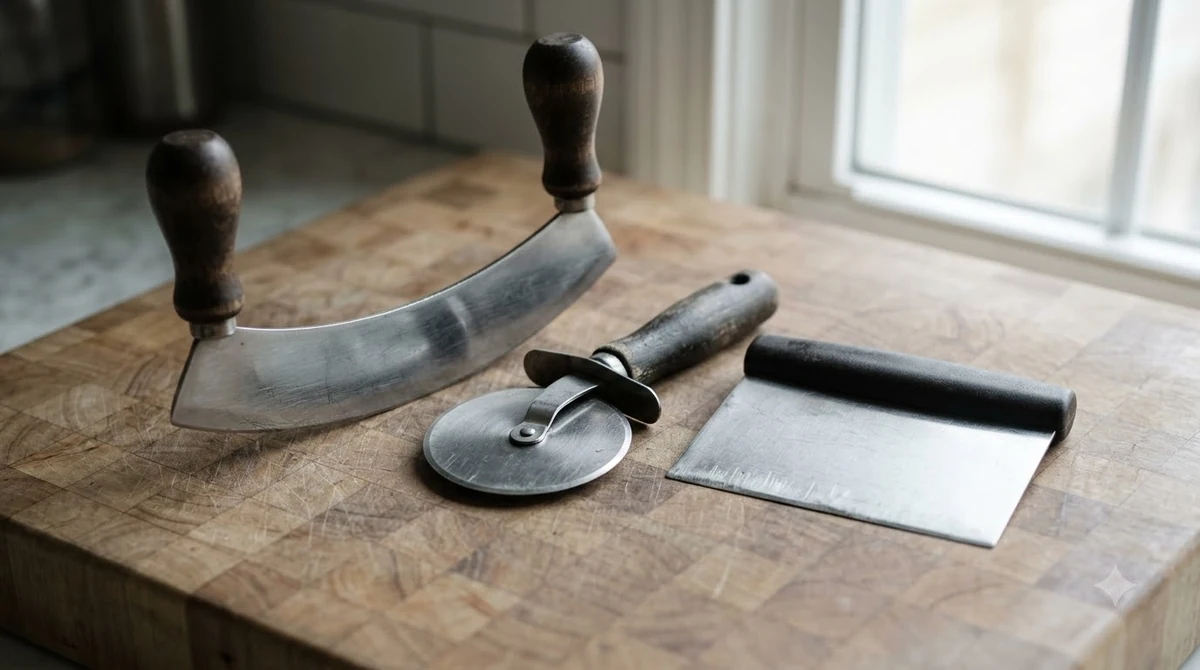
Most pasta measuring tool designs in this category are a flat plate or rod with a row of holes. You push a bundle of dry spaghetti through the hole that matches the number of people you are cooking for, and the bundle that fits is your portion. The idea is older than most kitchen gadgets. US Patent 4,333,241, filed March 24, 1981 by Ronald J. Wasik and Janice E. Wasik and granted June 8, 1982, describes a raw pasta measurer. It uses a flexible line about ten inches long, looped around the bundle, with openings marked in cooked portions.
Three kinds of pasta measuring tool are common today. Each one measures in a different way, so the right choice depends on the pasta you cook and how exact you need to be.
- Hole-based spaghetti measure: a plate with one to four holes, usually stainless steel or plastic.
- Looped raw-pasta measurer: a line with gradations, following the design in the patent.
- Digital kitchen scale: weighs dry pasta in grams or ounces and works for every shape.
Which Pasta Shapes a Measuring Tool Fits
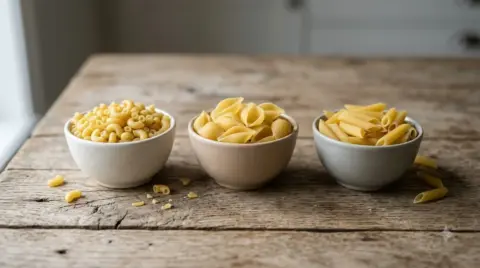
Hole-based measures are built for long pasta, such as spaghetti, linguine, bucatini and fettuccine, and short shapes like penne or rotini fall through the holes.
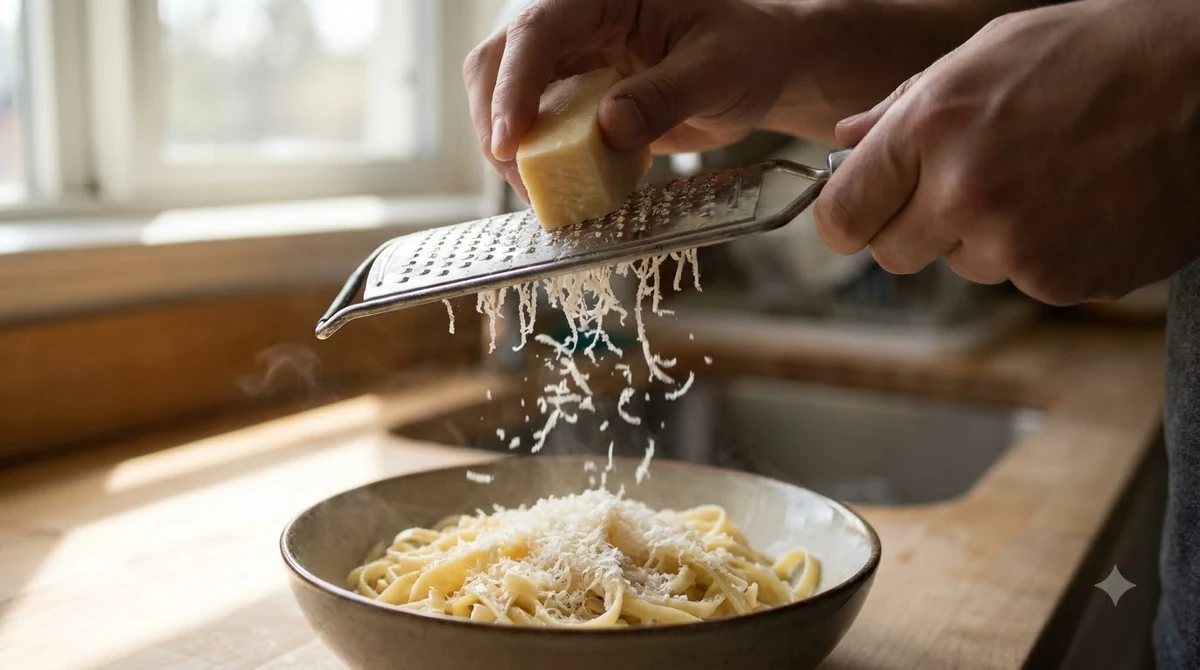
Spaghetti is most commonly sold in lengths of 25 to 30 cm, or 10 to 12 inches, according to the Wikipedia entry on spaghetti. That length is long enough to gather into a bundle and push through a hole, which is why these tools are built around long strands. Our spaghetti pasta guide covers the strand itself. The fit depends on the shape, not on how much you cook, so check the shape list on any pasta measuring tool listing before you buy.
| Shape | Works with a hole-based measure? | Note |
|---|---|---|
| Spaghetti | Yes | The main use case for these tools |
| Linguine | Yes | Named as a fit on retailer listings |
| Bucatini | Yes | Named as a fit on retailer listings |
| Fettuccine | Yes | Named as a fit on retailer listings |
| Penne | No | Short tubes fall through the holes |
| Rotini | No | Short spirals fall through the holes |
For short pasta, a measuring cup or a digital scale is the practical choice, since no hole-based pasta measuring tool fits penne. A scale is also the better option when you cook a mix of shapes, because it measures weight rather than fit. Our roundup of the best digital kitchen scales lists scales for baking and portioning.
Scale or Tool: Which Is More Accurate
A digital scale gives a dry weight in grams or ounces and works for any pasta shape, so it is the better choice when precision matters.
A pasta measuring tool gives a rough guide, while a scale gives a number. Buyer comments for one stainless measure report that its single hole gave two small portions for one person, which shows how much a hole depends on appetite. No independent lab test of accuracy was found for any pasta measuring tool in this category, so the figures on a hole label should be read as approximate.
| Method | Works for | Precision |
|---|---|---|
| Hole-based measure | Long pasta only | Rough, by serving |
| Digital kitchen scale | Any shape | Exact to the scale’s smallest step |
| Penny or coin check | Long pasta | Rough, judges width only |
The penny method is a folk alternative that some guides describe. It uses a US penny as a width gauge around a bundle. It is free and quick, but no tested accuracy data came up, so treat it as a rough check rather than a portion standard.
How to Use a Pasta Measure Correctly
Check the dry serving size on the package first, then match the hole to that weight, because hole labels are a guide and not a standard.
Start with the package, not the tool. Most dry pasta packages print a serving size in ounces or grams, and that label is the figure to trust for that brand. Retailer guides for spaghetti measures often cite about 2 ounces of dry pasta per person, and some listings attribute that to USDA guidance. The USDA page could not be checked for this article, so confirm the figure against your own box before you rely on it. For a breakdown by shape and appetite, see our guide on how much pasta per person.
- Read the dry serving size on the pasta package.
- Match that weight to the hole on your pasta measuring tool labeled for the number of people you are cooking for.
- Push a bundle of dry spaghetti through the hole until it fits snugly.
- Weigh one bundle on a kitchen scale once, to check the tool against the label.
- Adjust the hole for the next meal based on how much your household actually eats.
Thicker strands weigh more each, so the same bundle size can give a different dry weight for bucatini than for thin spaghetti. A practical test is to fill one hole, weigh that bundle once on a kitchen scale and compare it with the package. Repeat the check with a second bundle. If the two numbers match the label, the hole is a useful guide for your household. If they do not, treat that hole as approximate. A spaghetti spoon is a related tool for lifting and serving cooked strands, and our roundup of spaghetti spoons compares them.

Common Mistakes When Buying and Using One
The most common mistakes are buying a tool for short pasta, assuming one hole fits every appetite and skipping the package label.
- Using a pasta measuring tool on short shapes such as penne or rotini, which fall through the holes.
- Treating each hole as an exact weight, when buyer reports show big differences in portion size.
- Mixing up raw and cooked portions. The patent design marks its openings in cooked portions, so check whether a listing means dry or cooked before you buy.
- Choosing plastic for heavy daily use when a stainless steel model is listed as dishwasher safe.
Frequently Asked Questions
Is a pasta measuring tool accurate?
A pasta measuring tool gives a rough guide. No independent lab test of accuracy was found, so the serving size on the package is the better reference.
Can I use a pasta measuring tool for penne?
No. Hole-based measures are made for long pasta, and short shapes such as penne fall through the holes.
How many ounces of dry spaghetti is one serving?
Retailer guides often cite about 2 ounces of dry pasta. Check the package label, since that is the figure printed for the brand you are cooking.
Is a kitchen scale better than a pasta measure?
For precision, yes. A scale weighs dry pasta in grams or ounces, and it works for every shape, not just long pasta.
Can you measure pasta without a tool?
Yes. Weigh the dry pasta on a kitchen scale, or use the serving size on the package to count portions by eye.
If you cook long pasta most nights, a stainless steel pasta measuring tool, such as a spaghetti measure, is a simple way to size portions. If you cook short shapes or need exact amounts, a digital scale does the job better, and the package label stays your reference.
 9 min readGear & PantryHow to Use a Pasta Measuring Tool for Perfect PortionsUpdated Nov 11, 2026
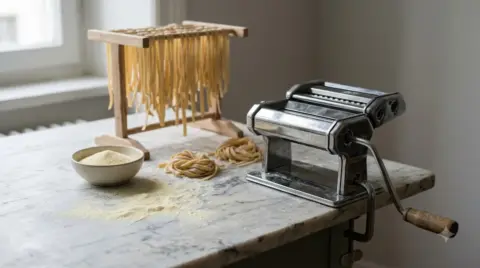 8 min readGear & PantryThe Best Pasta Making Tools for Home CooksUpdated Nov 17, 2026
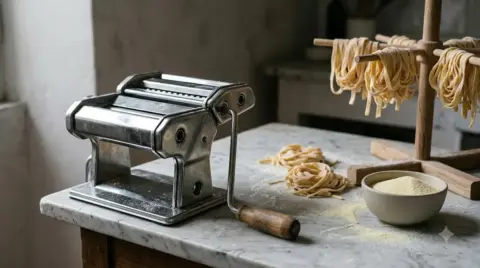 7 min readGear & PantryBest Pasta Chitarra for Making Spaghetti at Home in 2026Updated Nov 10, 2026
 8 min readGear & PantryBest Spaghetti Brand: Top Picks and How to ChooseUpdated Nov 17, 2026
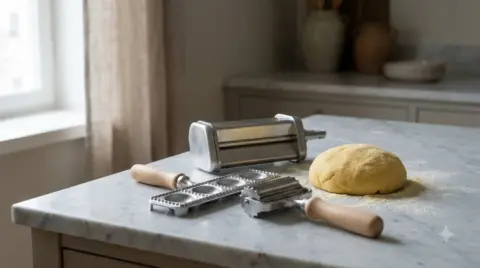 8 min readGear & PantryBest Tortellini Makers: Which Tool Type Fits Your KitchenUpdated Nov 17, 2026
 8 min readGear & PantrySpaghetti Spoon: What It Is and How to Choose OneUpdated Nov 15, 2026