
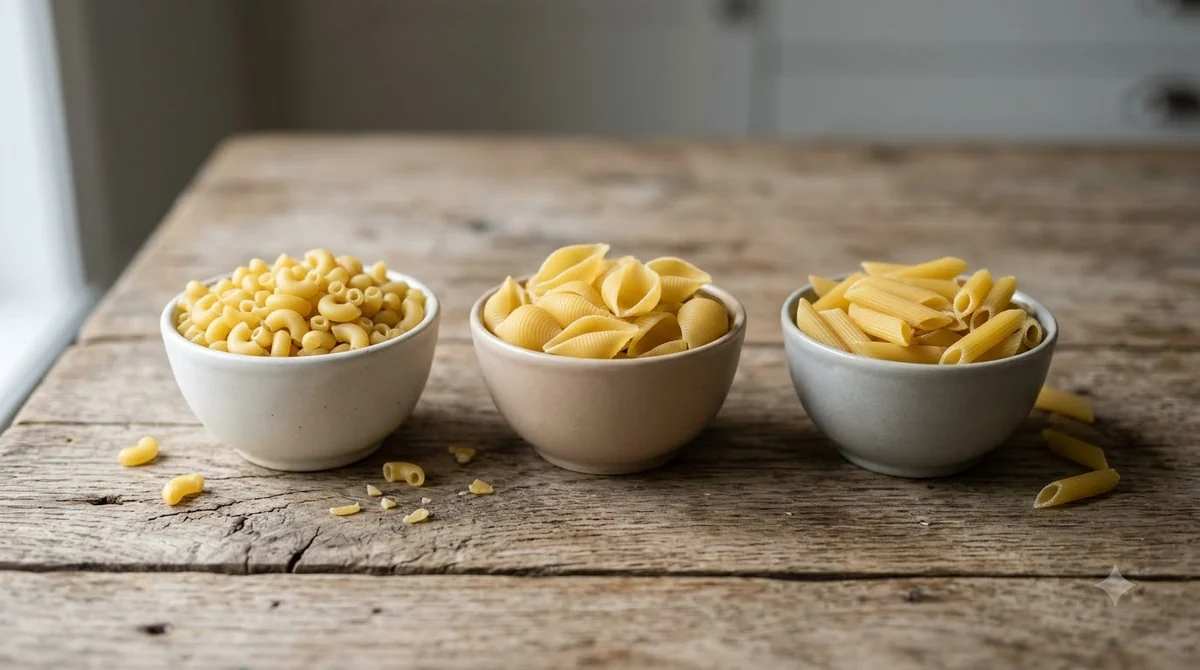

To learn how to use a pasta measuring tool, wrap the tool around a bundle of dry spaghetti and match its size to the marked servings. The method works for long strands and gives you a portion before the pasta goes into the pot.
Most tools are made for long pasta, so short shapes often do better with a kitchen scale or a measuring cup. This guide on how to use a pasta measuring tool covers the steps, how to read the marks, common mistakes, and when a scale is the better choice.
What a Pasta Measuring Tool Does
A pasta measuring tool sizes a portion by the circumference of a bundle of dry pasta, not by its weight. You get a quick, scale-free estimate for long shapes such as spaghetti, linguine and bucatini.
The design is described in a US patent for a pasta measurer. It uses a flexible tape about ten inches long with a ring at one end. You wrap the tape around the bundle, and the marks show how many cooked portions that bundle matches.
The same patent notes that domestic pasta was marketed in 10 and 12 inch lengths. That is why the tool suits spaghetti-length strands better than shorter shapes. The patent does not give a weight for each mark, so the tool estimates a count, not grams.
Learning how to use a pasta measuring tool starts with one idea: it reads the size of a bundle, not the number of single strands. That makes it a good fit for a home cook who wants a quick portion before the water boils, and a poor fit for anyone who needs exact grams for baking or portion control.
How to Use a Pasta Measuring Tool, Step by Step
To measure one serving, gather a bundle of dry pasta in one hand, wrap the tool around it, and lock it at the mark for your count. Designs differ, but the steps for how to use a pasta measuring tool are much the same across tools.
- Hold a handful of dry spaghetti in one hand. Start with a bundle that looks close to the right size.
- Wrap the tape or loop around the bundle, keeping the strands together and parallel.
- Add or remove strands until the bundle sits at the mark for your number of people. The patent notes this adjustment may be necessary.
- Lock the tool’s end through the hole or tab for that count, so the bundle stays in a loop.
- Lift the bundle straight into the boiling water, then check the count against the package’s serving guide.
Practice how to use a pasta measuring tool a few times with the same box before you rely on the result. After two or three bundles, your hand learns roughly how much spaghetti sits at each mark, which makes the next portion faster. Keep the bundle in one hand while you adjust the tool with the other. Holding both the tape and the pasta in one hand, as the patent describes, makes small changes easier and keeps the strands from slipping.
How to Read the Holes and Choose a Portion
Each hole or mark stands for a portion count, and a reference point is that about 0.5 kg (1 lb) of dried pasta serves up to four people. Wikipedia’s pasta article gives that figure, which works out to about 125 g per person as a starting point.
| People | Dry spaghetti (reference) |
|---|---|
| 1 person | About 125 g |
| 2 people | About 250 g |
| 3 people | About 375 g |
| 4 people | About 500 g |
A useful habit is to write down the count that works for your household after a few meals. Once you know how to use a pasta measuring tool for your own family size, the marks become a shortcut rather than a guess. Treat this table as a reference, not a rule. Appetites, starters and side dishes change the amount, and each brand lists its own serving size on the package. Match the marks on your tool to your own count, then check the result against that label.
Using the Spaghetti Server Hole as a Backup
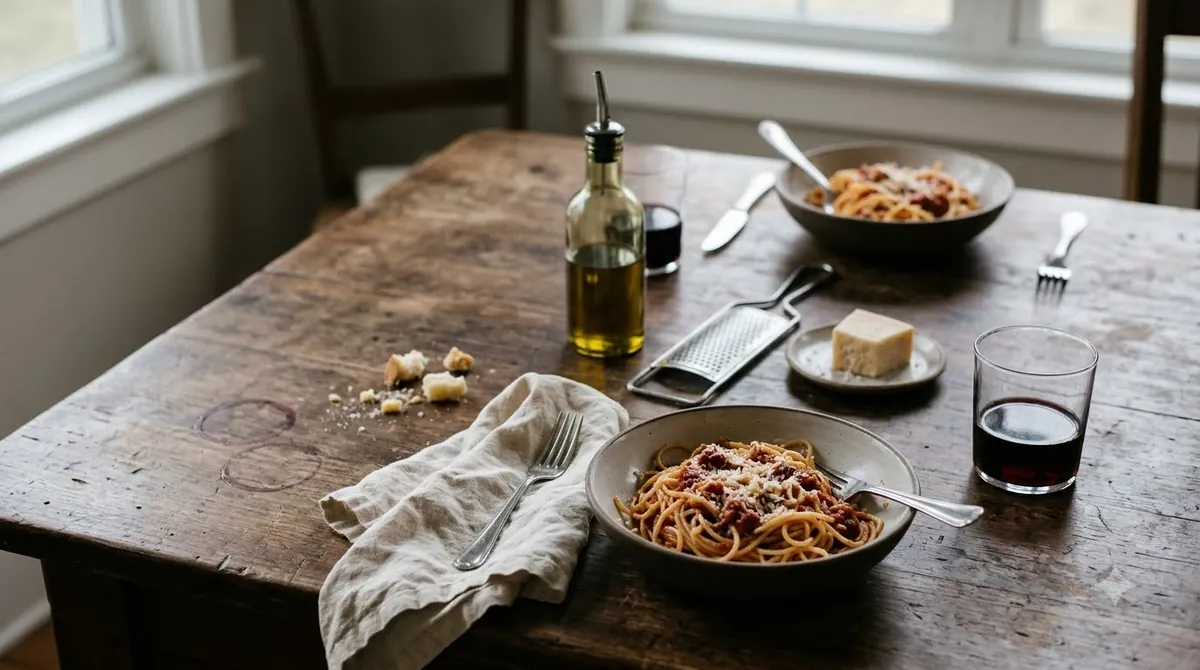
If you have no measuring tool, the centre hole of a spaghetti server can gauge one serving of dried spaghetti. A Better Homes & Gardens Australia article describes this method and notes that the size can vary slightly depending on the spoon.
Test it once before relying on it, since it is only a stand-in for how to use a pasta measuring tool properly. Fill the hole with dry strands, compare the bundle with the package guide, and note how many people that bundle feeds. Use the same spoon each time so your estimates stay consistent.
Common Mistakes to Avoid
Most errors come from a bundle that is too loose, too tight, or built from short shapes that do not hold together. Each mistake in how to use a pasta measuring tool is easy to correct once you know it.
- Holding a loose bundle, which makes the count drift each time you measure.
- Squeezing the strands to fit a mark, which changes the reading of the bundle.
- Using the tool on penne, rigatoni or macaroni, which do not stay together in a bundle.
- Reading the marks as grams. The patent gives no weight conversion for them.
- Choosing a tool that is too short for your pasta. The patent ties the design to 10 and 12 inch lengths.
Mistakes in how to use a pasta measuring tool also start in the box. Broken pieces, dust at the bottom of a bag, or strands that were bent in transit change how a bundle sits in the tool, so pick out the damaged pieces before you measure. Dried pasta from different brands can differ in strand thickness. Weigh one full batch on a scale the first time you use a new box, then compare the result with your tool so you know how close it is.
When a Kitchen Scale Works Better
A kitchen scale gives you a weight, which a hole-based tool cannot, so it suits exact portions and any shape that does not bundle well. Weigh the dry pasta, then divide by the number of people.
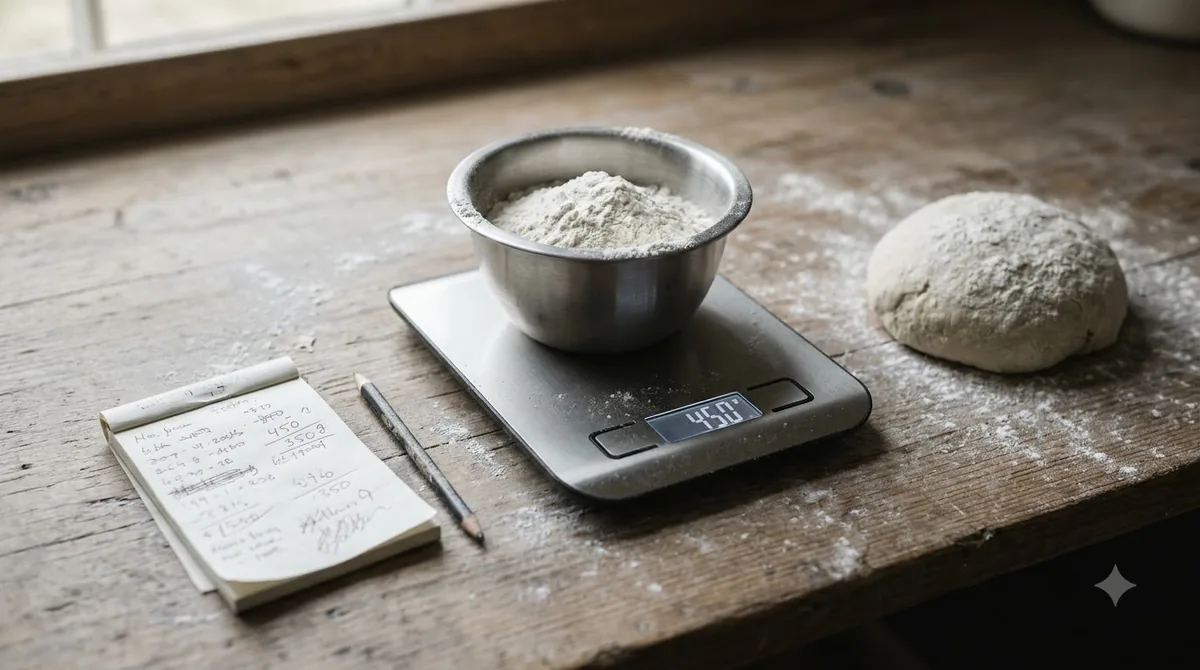
A scale also helps you check how to use a pasta measuring tool accurately, and it makes it easier to compare boxes. Our guide on how to use a digital kitchen scale covers the basics, and the best digital kitchen scales are a good place to start shopping. If you buy two shapes or two brands, weigh one portion of each, so the cost and the amount you cook stay comparable across the pantry. You can also compare gadgets in our roundup of the best pasta measuring tools.
Fresh pasta needs a different count. The same Wikipedia article says about 0.7 kg (1.5 lb) of fresh pasta is needed to serve four people generously, and fresh pasta takes only about half the time of dried pasta to cook. A tool made for dry strands does not transfer to fresh pasta, so how to use a pasta measuring tool ends where fresh pasta begins. Weigh fresh dough or use your recipe’s quantity.
Storing Dry Pasta and Your Tool
Uncooked dried pasta keeps about a year in an airtight container stored in a cool, dry place, according to Wikipedia’s pasta article. Keep the bag sealed between uses so the strands stay dry and bundle cleanly. Write the purchase date on the box, so you can see which pack to cook first when you stock up on several shapes.
Part of how to use a pasta measuring tool well is care, so keep the measuring tool dry and clean after each use, and follow the maker’s cleaning instructions, since materials and finishes differ between models. Store the tool close to the pasta so you measure before you cook, rather than guessing at the pot. More kitchen help lives in our Gear & Pantry guides.
Frequently Asked Questions
Can you use a pasta measuring tool for penne?
Usually not well. These tools are designed around long strands, and short shapes do not hold a bundle the same way. The principle of how to use a pasta measuring tool works only when the strands can be gathered and wrapped. For penne, rigatoni or macaroni, a kitchen scale or a measuring cup gives a more reliable portion.
How much dry spaghetti is one serving?
A common reference is about 0.5 kg (1 lb) of dried pasta for up to four people, which is roughly 125 g per person. Check the serving guide on the box you are cooking, because brands and menus differ. For more portion math, read how much pasta per person.
Does the tool measure weight?
No. Knowing how to use a pasta measuring tool means knowing that it estimates portions by the size of the bundle. The patent describes wrapping a tape around the bundle and gives no weight conversion for the marks, so use a scale when you need grams.
Can I use it to measure cooked pasta?
How to use a pasta measuring tool is a dry pasta question, since the tool is meant for dry strands before cooking. Once pasta is drained, portion it by weight or by the count in your recipe instead, because cooked strands no longer bundle in the same way.
Is a spaghetti server hole accurate?
It gives a rough estimate. The Better Homes & Gardens Australia article notes that sizes vary by spoon, so test the hole once against a scale or the package guide before you rely on it.
Start with the tool for everyday spaghetti, then move to a scale for short shapes and exact recipes. Once you have practiced how to use a pasta measuring tool a few times, it becomes a quick habit at the stove. Count portions by the people at the table, not by how hungry you feel, and adjust from the package guide. Dry pasta stored airtight keeps well, so a full box is a safe buy for a household that cooks often.
 8 min readGear & PantryBest Pasta Measuring Tools for Spaghetti PortionsUpdated Nov 17, 2026
 8 min readGear & PantryThe Best Pasta Making Tools for Home CooksUpdated Nov 17, 2026
 9 min readGear & PantryBest Pizza Oven Tool Sets: What to Buy and What to SkipUpdated Nov 18, 2026
 8 min readGear & PantryBest Tortellini Makers: Which Tool Type Fits Your KitchenUpdated Nov 17, 2026
 9 min readGear & PantryHow to Use a Pasta Rolling Pin, Step by StepUpdated Nov 11, 2026
 9 min readGear & PantryHow to Use a Pasta Pot with Strainer, Step by StepUpdated Nov 11, 2026