
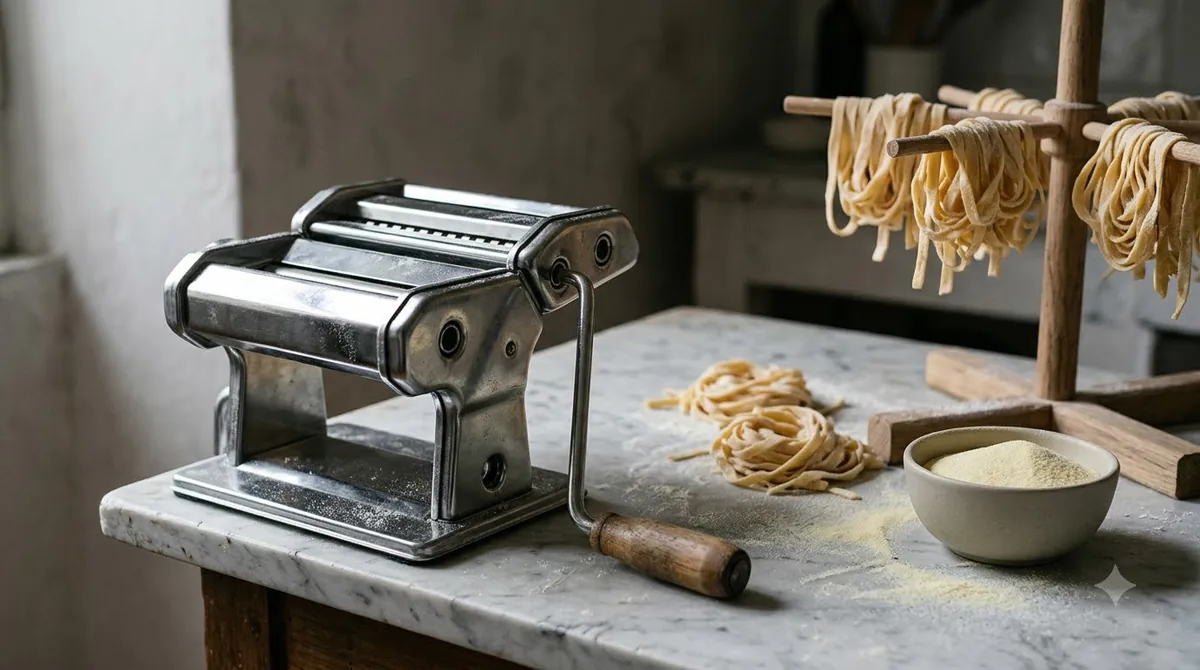

The best pasta chitarra is the one whose wire area fits the sheets you roll, and whose frame suits how you clean and store it. A chitarra is a frame with parallel wires that cuts a rolled sheet of dough into square strands.
Wooden frames with stainless steel wires are the common format, and some models offer two widths. Start with width and wire area before you compare brands.
What a pasta chitarra is and how it works
A pasta chitarra is a frame with a series of parallel wires crossing it, and it cuts a rolled egg dough sheet into square strands about 2 to 3 mm thick.
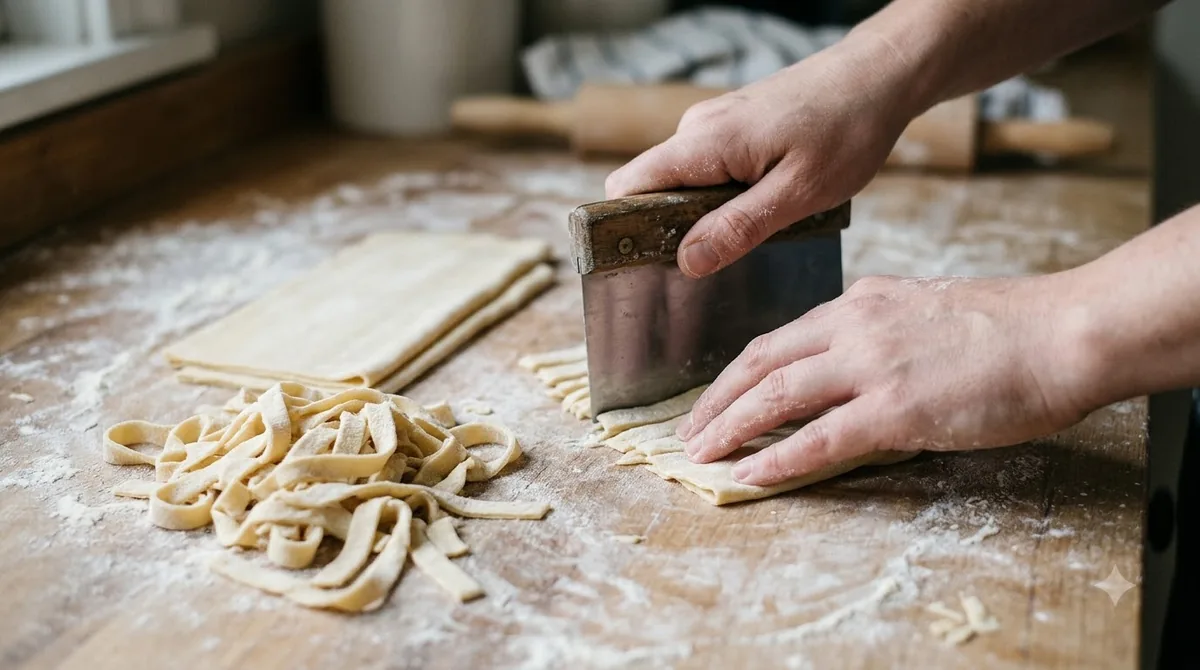
The name means guitar, which describes the wires stretched across the frame. The origin of the tool is not very clear. A traditional recipe from the Teramo province dates to the early 1800s or even before, and some accounts credit Chieti instead, according to Wikipedia’s article on spaghetti alla chitarra. For the dish itself, see our guide to spaghetti alla chitarra.
The wires give the pasta its square shape and a porous surface that helps sauce adhere. A pasta machine rolls and cuts with a crank, but the chitarra cuts in one press, which makes it a second tool rather than a replacement for a machine. If you want a machine as well, see pasta machine for spaghetti.
Because the cut is square, the strands look different from round spaghetti on the plate. Cooking time depends on the thickness of the cut and the dough, so taste a strand before you drain it instead of following a fixed time. A pasta chitarra suits sauces that need to cling, since the textured surface of the strands helps them hold on.
How the tool cuts dough
- Roll the dough into a sheet no larger than the wire area of your tool.
- Lay the sheet flat over the wires.
- Press the sheet down with a rolling pin, or one of the best pasta rolling pins, so the wires cut it into strands.
- Lift the cut strands off the frame and cook them, or dry them on a rack for later use.
Wood or stainless: which chitarra type fits you
Most chitarra models use a wooden frame with stainless steel wires, and some offer two wire spacings so one tool can cut spaghetti and tagliatelle.
The wooden frame is the traditional look, but it asks for careful cleaning. Stainless steel wires are the material King Arthur Baking names for its reviewed model. For most home cooks, the wire spacing and the wire area matter more than the frame material, because they set the width of the strands and the size of each batch.
| Feature | What it means for you | Check before buying |
|---|---|---|
| Wire material | Stainless steel wires are the common choice for taut strings | Confirm the listing names stainless steel wires |
| Frame | A wooden frame needs dry cleaning and must not be soaked | Read the care instructions in the listing |
| Wire area | Sets the largest sheet you can roll for one press | Compare it with your usual batch size |
| Width options | Some models cut spaghetti on one side and tagliatelle on the other | Check that each side is labeled with its width |
| Tension | Adjustable screws keep the wires tight over time | Look for screws at the base of the frame |
King Arthur Baking’s review of one wooden model describes two sides: about 3 mm spaghetti on one and about 5 mm tagliatelle on the other. A tool with two widths saves you from buying a second cutter if you cook both shapes.
The trade-off is flexibility against simplicity. A single-width pasta chitarra is simpler to store and check, while a two-width model gives you two shapes but asks you to keep track of which side you are pressing. Pick the tool that matches the shapes you cook most often.
A wooden pasta chitarra suits cooks who want the traditional look and do not mind hand cleaning. Skip it if you cook pasta mostly with a machine and rarely press dough by hand, because the tool only earns its counter space when you make fresh sheets regularly.
Prices change often and differ by listing, so this guide does not list them. Compare the wire area, width options and frame care first, then check the current price on the seller page.

Eppicotispai "Chitarra" Pasta Cutter
Pros & ConsViewHide
Reasons to buy
- Wood frame with stainless steel strings, listed as made in Italy
- Comes with a 32 cm (12.5 inch) rolling pin to press the dough through
- 75% of 670 Amazon ratings are 5-star
Reasons to avoid
- Wooden frame needs to be kept dry
- 7% of ratings are 1-star, so check the string tension on arrival

Pasta Guitar Chitarra Cutter Rolling Pin,Dark Wood
Pros & ConsViewHide
Reasons to buy
- Cuts dough into strips in 2 widths
- Includes a rolling pin and bolts to tighten the strings
- 77% of Amazon ratings are 5-star
Reasons to avoid
- Over-tightening the bolts can break the strings
- Costs more than some other chitarra cutters

Beechwood Chitarra Pasta Cutter
Pros & ConsViewHide
Reasons to buy
- Beechwood frame with dual-width stainless steel strings
- Cuts about 0.1 inch spaghetti on one side and 0.23 inch tonnarelli on the other
- Every one of its few Amazon ratings is 5-star
Reasons to avoid
- Only 3 ratings, so there is almost no track record
- Wood frame needs drying and gentle cleaning
Width options
Two widths on one tool let you move between thin strands and wider ribbons without a second cutter. Check the labeling on each side before you press a sheet, because the strand width depends on which side the sheet goes over.
Sizing, tension and care
Keep each rolled sheet no larger than the wire area, which is about 6 by 14 inches on one reviewed model, and never soak the wooden frame.
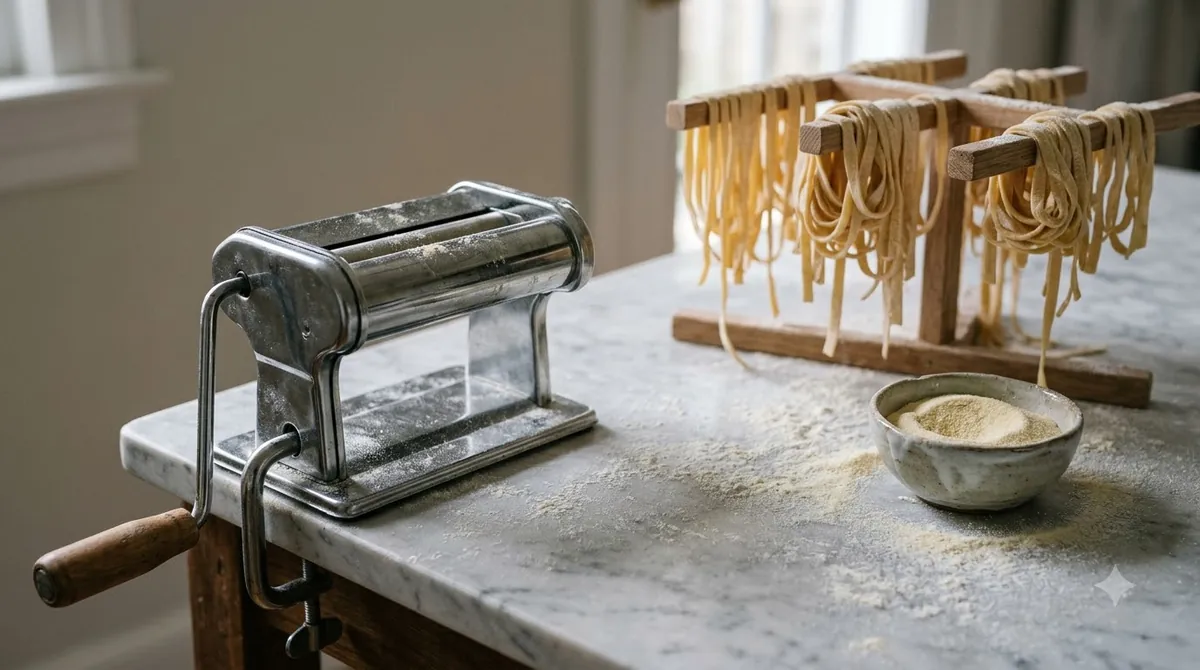
Follow these steps to protect the tool and get even strands:
- Measure the wire area before you roll, then keep the sheet inside it. King Arthur Baking’s chitarra guide advises against rolling dough larger than the wire area.
- Adjust the tension with the two screws at the base of the frame when the wires feel loose.
- Let any dough bits dry on the wires, then brush them away.
- Never soak the frame, because water can warp the wood.
A common mistake is rolling the sheet too thick or too thin for the wires to cut cleanly. King Arthur Baking’s guide does not state a dough thickness, so test a small piece first and adjust the tension if the strands stick together.
Keep a pasta drying rack close by, since the same guide says cut pasta can be dried on a rack for later use. Store the pasta chitarra in a dry place away from the sink, so the wooden frame never takes on water between uses.
Frequently Asked Questions
Is a pasta chitarra the same as a pasta machine?
No. A pasta chitarra cuts a rolled sheet by pressing it through parallel wires with a rolling pin. A pasta machine rolls and cuts dough with a hand crank and interchangeable dies, so it can make more shapes. The chitarra’s signature result is the square strand.
What shape does a pasta chitarra make?
It makes square strands about 2 to 3 mm thick, which is the shape behind spaghetti alla chitarra, according to Wikipedia. Some tools also cut a wider tagliatelle on a second side, as one reviewed model does.
How big should the dough sheet be?
Roll the sheet no larger than the wire area. King Arthur Baking gives about 6 by 14 inches as the wire area on one reviewed model, so measure your own pasta chitarra before you roll. If a sheet is too big, cut it into smaller pieces and press each one separately.
How do I clean a wooden chitarra?
Let any dough bits dry, then brush them away. Do not soak the frame, since water can warp the wood, according to King Arthur Baking’s guide. Keep the frame dry when you put it away.
Can I dry the cut pasta on a rack?
Yes. King Arthur Baking’s guide says cut pasta can be dried on a rack for later use. The guide does not give drying times, so follow your recipe or the package for timing.
What dough does a pasta chitarra need?
Traditional spaghetti alla chitarra uses durum semolina and eggs, according to Wikipedia. Check a tested recipe for the exact ratio and resting time, since the sources used here do not give them.
Is a pasta chitarra worth buying for occasional cooking?
It depends on how often you make fresh pasta. A pasta chitarra is most useful if you press sheets by hand regularly and want the square cut. If you make fresh pasta only once in a while, a simpler tool or a rolling pin and knife may cover your needs, and you can still try the method without buying a dedicated frame.
Choose a pasta chitarra by wire area and width options first, then by how much frame care you are willing to do. A chitarra is a second tool, so decide whether you will cook this shape often enough to justify the counter space. Our list of pasta making tools shows what else a fresh pasta kit needs.
 8 min readGear & PantryThe Best Pasta Making Tools for Home CooksUpdated Nov 17, 2026
 8 min readGear & PantryBest Pasta Measuring Tools for Spaghetti PortionsUpdated Nov 17, 2026
 8 min readGear & PantryBest Spaghetti Brand: Top Picks and How to ChooseUpdated Nov 17, 2026
 8 min readGear & PantrySpaghetti Spoon: What It Is and How to Choose OneUpdated Nov 15, 2026
 8 min readGear & PantryHow to Use a Spaghetti Spoon: Step-by-Step GuideUpdated Nov 11, 2026
 8 min readGear & PantryBest Garganelli Boards for Homemade PastaUpdated Nov 10, 2026