
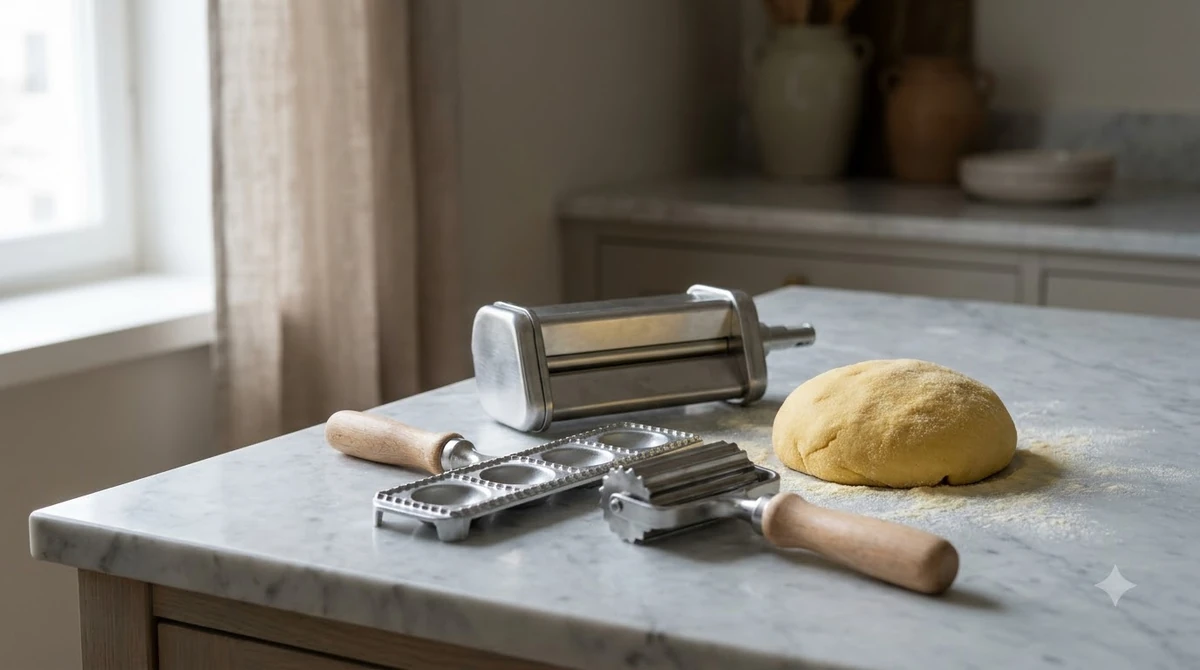

A tortellini maker is a tool that cuts, presses or shapes small ring-shaped pasta at home. Most options fall into three types, and each one does a different part of the work.
Choose a tortellini maker by how much dough you roll and how many tortellini you want per batch. Hand tools suit small batches, while a pasta machine suits larger ones.
| Pick | Best for | Key fact |
|---|---|---|
| Hand cutter or pasta wheel | Cooks who fold and pinch by hand | Cuts the square base at 3 to 4 cm |
| Press or stamp mold | Quicker shaping from rolled sheets | Forms the piece in one press, then you check the seal |
| Pasta machine with attachment | Large batches of fresh dough | Rolls dough to about 1 mm in steps |

Homemade Pasta Cutter - Festooned Wheel
Pros & ConsViewHide
Reasons to buy
- Festooned (fluted) hand wheel for cutting pasta squares and strips
- Simple hand tool for small batches
- Tool only, so it is easy to clean and store
Reasons to avoid
- Cuts the dough only; filling and folding are manual
- Cut size depends on how you measure the sheet
- Not a dedicated tortellini shaper

Eppicotispai 8-Piece Raviolli and Tortellini
Pros & ConsViewHide
Reasons to buy
- 8-piece set for homemade ravioli or tortellini
- Stainless steel cutting pieces and beechwood tools
- Includes a rolling pin, so it works as a starter kit
- 79% of 142 Amazon ratings are 5-star
Reasons to avoid
- You still fill and fold the pasta by hand
- Wood parts need hand washing and drying
- Check the cut size on the listing against the 3 to 4 cm squares used in this guide

MARCATO Atlas 150 Machine, Made in Italy, Red
Pros & ConsViewHide
Reasons to buy
- Made in Italy hand-crank pasta machine rolling dough in steps
- Includes a pasta cutter and hand crank
- Fits Marcato attachments and the optional motor
Reasons to avoid
- Only rolls and cuts the sheet; tortellini are still shaped by hand
- Takes more counter and storage space than a hand cutter
- Fixed to a countertop edge, so check clamp room

KitchenAid KSMPRA 3-pc Pasta Roller/Cutter Set
Pros & ConsViewHide
Reasons to buy
- Roller and cutter attachments for KitchenAid stand mixers
- Rolls even sheets without hand cranking
- 88% of 9K Amazon ratings are 5-star
Reasons to avoid
- Needs a compatible KitchenAid stand mixer
- Rolls and cuts the dough, but does not fill or fold tortellini
- One of the costlier tools in this guide
What a tortellini maker actually shapes
Tortellini are small, ring-shaped stuffed egg pasta from Emilia-Romagna, and a tool usually covers only one step of making them. Knowing which step matters helps you judge any tortellini maker before you compare products.
According to Wikipedia’s tortellini entry, the pasta is associated with Bologna and Modena, although the origin is disputed. The shape is a small ring, and the traditional filling uses pork loin, prosciutto, mortadella, Parmesan, egg and nutmeg. Tortelloni are larger, about 5 g each compared with about 2 g for tortellini.
Ravioli are a related shape but not the same piece. Ravioli are commonly square, while tortellini are small rings, so a tool sold for ravioli may not produce the shape you want. Check the piece shape in the product description before you buy, and see our guide to the best ravioli makers if you want to compare the two.

Three tool types and how they differ
Most tortellini makers fall into three groups: a hand cutter, a press or stamp mold, and a pasta machine with a roller or cutter attachment. Each group asks for a different dough and leaves a different amount of work to your hands.
| Tool type | Dough you need | What the tool does | What you still do by hand |
|---|---|---|---|
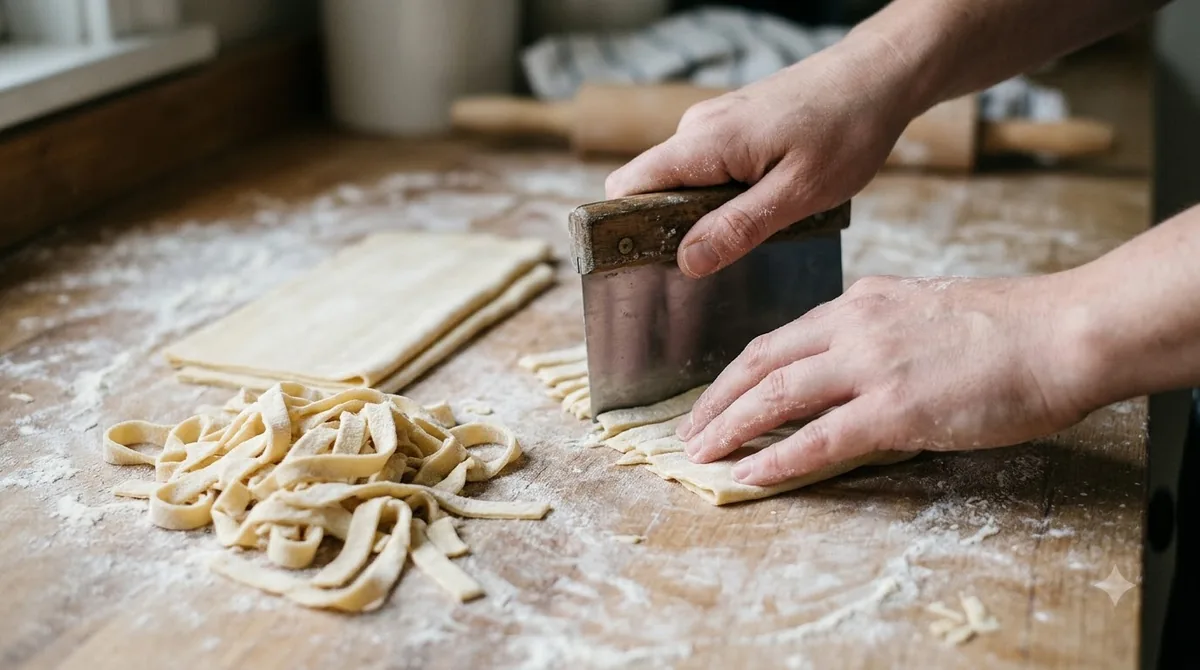
| Hand cutter or pasta wheel | Rolled sheet from any egg dough | Cuts the squares | Filling, folding and pinching |
| Press or stamp mold | Thin rolled sheet, cut to fit the mold | Shapes the piece in one press | Filling each piece and checking the seal |
| Pasta machine with attachment | Fresh dough fed through rollers | Rolls the sheet, and cuts if a cutter attachment is fitted | Filling, folding and pinching |
Hand cutter and pasta wheel
A straight cutter or a pasta wheel gives you the square base that tortellini need, and our guide to the best pasta cutters covers the wheel styles. A recipe site on Italian pasta calls for squares of 3 to 4 cm and says a sharp knife works as well as a wheel. This option keeps the tool simple, but the folding and pinching take the most time.
Press or stamp mold
A press or stamp mold makes shaped pieces in one step once you have a rolled sheet. Search results in this run showed these sold as tortellini maker starter sets with several stamps. Piece counts and materials were not confirmed on a product page, so check those figures on the seller page before you buy.
Pasta machines: what they add to the process
A pasta machine rolls fresh dough thinner in steps, and whether you need an extra attachment depends on the equipment you already own. Fresh pasta was traditionally made by hand, sometimes with basic machines, according to Wikipedia’s pasta entry. The hand crank rolls the dough thinner a step at a time.
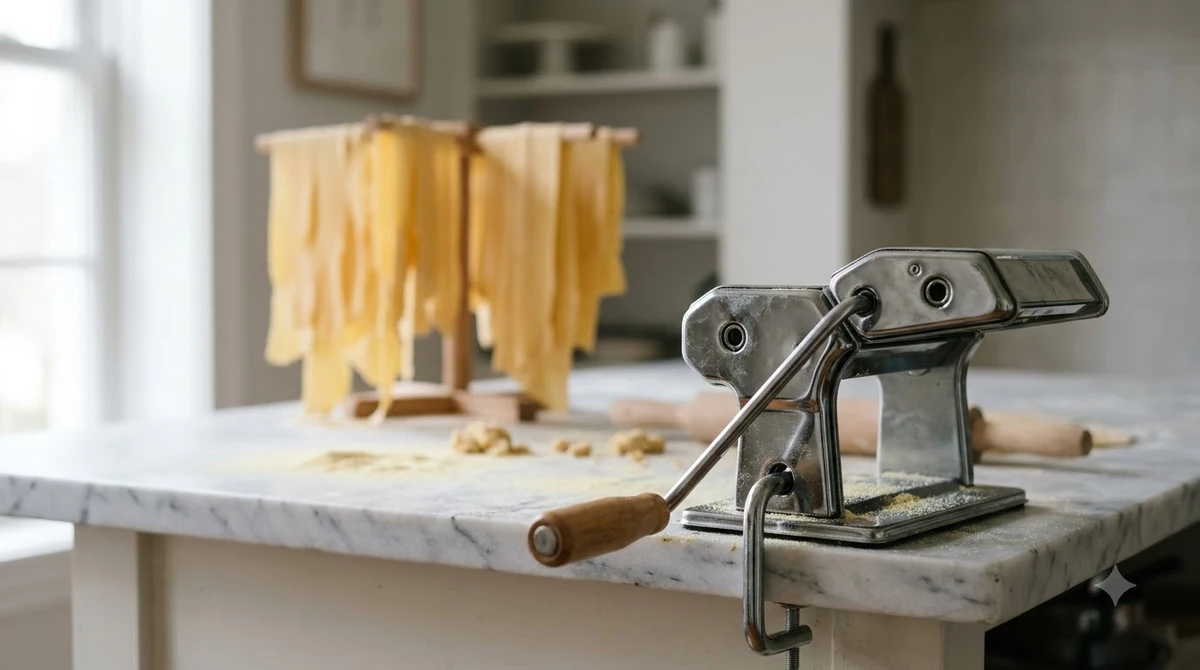
For a tortellini maker built on a pasta machine, a recipe site gives a target of about 1 mm and says to start on the widest setting and pass the dough through once. It also notes that the setting number differs from one machine to another, so use the thickness as your guide.
- Manual machine: one recipe site recommends the Imperia manual machine as a traditional choice for rolling fresh egg pasta.
- Motor attachment: the same source says a compatible motor can make rolling faster on a manual machine.
- Stand mixer roller attachment: the KitchenAid pasta roller is one option for rolling sheets, not for the shaping step.
A pasta machine only rolls the dough. Cutting and filling still happen by hand unless you add a cutter attachment, so plan the shaping time separately. Our pasta machine for fresh pasta page covers the machine side in more detail.
How to shape tortellini by hand
Shaping starts with squares of 3 to 4 cm, a filling ball about the size of a chickpea, and a fold and pinch that forms the ring. The steps below apply to any tortellini maker, so you can use them to judge how much work a tool removes.
- Cut the sheet into strips about 3 to 4 cm wide, then cut the strips into squares of the same size. Traditional Bolognese versions use squares closer to 3 cm.
- Roll the filling into tiny balls, about the size of a chickpea, and place one in the center of each square.
- Fold each square corner to corner into a triangle, and press out the trapped air.
- Fold the top point down toward the filling.
- Bring the two side corners around your fingertip, overlap them slightly and pinch firmly to seal.
The finished tortellino should have a small opening in the center. Moisten the edges with a fingertip only if they have dried out, so the seal holds without making the dough sticky.
How this guide chose the tool types
This guide groups each tortellini maker by the job it does, rather than ranking one brand above another. The tortellini and pasta facts come from encyclopedia and recipe pages that could be read in full. Retail product pages could not be checked for specs or prices in this round, so model names and costs are left out.
Buying checklist for a tortellini maker
Check the type of tortellini maker, the dough it needs and whether it fits your storage space before you pay for a set. A short checklist helps you compare listings that describe the same tool in different words.
- Dough: a cutter or press needs rolled sheets, and a machine needs fresh dough you can feed through rollers.
- Piece size: confirm the cut size on the product page, since traditional squares sit near 3 to 4 cm.
- Starter sets: check whether the tortellini maker set includes the cutter, rolling pin and stamps you actually need.
- Stand mixer: confirm the attachment fits your model before you buy.
- Cleaning and storage: a machine takes more counter space than a hand cutter, so measure your space first.
A common mistake is rolling the sheet too thick before cutting. Thick dough makes the folds hard to seal and can leave the centers heavy.
Frequently Asked Questions
Do I need a tortellini maker to make tortellini at home?
No. Tortellini can be made with a knife or pasta wheel for the squares and hands for the folding and pinching. A tortellini maker mainly saves time on cutting, shaping or rolling, so it is a convenience rather than a requirement for the shape.
Is a tortellini maker the same as a ravioli maker?
Not always. Ravioli are commonly square, while tortellini are small rings. Check the piece shape and size on the product page, because a tool made for ravioli may not give you the tortellino fold.
What dough thickness should I aim for?
Aim for about 1 mm. The setting number that gives this thickness depends on the machine, so start on the widest setting, pass the dough once, and check the thickness before narrowing the setting further.
Can I use a stand mixer for tortellini dough?
A stand mixer can run a roller attachment to thin the dough into sheets. The attachment does not do the cutting, filling or folding, so you still shape each piece by hand. Check that the attachment fits your model before you buy it.
How big should the squares be?
Around 3 to 4 cm is the size named in the recipe method reviewed here. Traditional Bolognese versions use squares closer to 3 cm. Keep the squares the same size so the pieces cook evenly.
Choose a tortellini maker by how many tortellini you want per batch and whether you already own a stand mixer or pasta machine. A hand cutter suits small batches, while a machine suits larger ones. Confirm piece size, dough needs and fit on the seller page before you buy.
 8 min readGear & PantryThe Best Pasta Making Tools for Home CooksUpdated Nov 17, 2026
 8 min readGear & PantryBest Pasta Measuring Tools for Spaghetti PortionsUpdated Nov 17, 2026
 9 min readGear & PantryBest Pizza Oven Tool Sets: What to Buy and What to SkipUpdated Nov 18, 2026
 9 min readGear & PantryHow to Use a Pasta Measuring Tool for Perfect PortionsUpdated Nov 11, 2026
 8 min readGear & PantryCavatelli Maker: What It Does and How to Choose and Use OneUpdated Nov 17, 2026
 8 min readGear & PantryRavioli Maker: What to Check Before You BuyUpdated Nov 17, 2026