
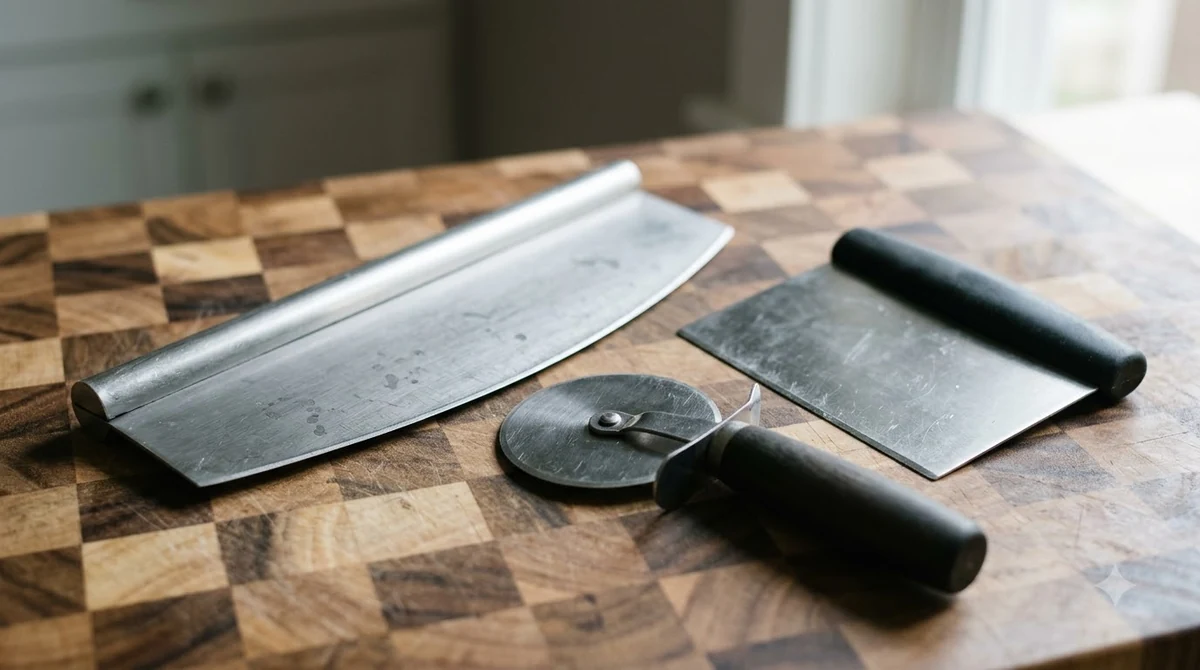

A pizza cutter is a handheld tool that divides a baked pizza into slices. Most home cooks use a wheel-type cutter, which is a round blade on a handle, though the curved mezzaluna is the other common style.
The right type depends on how you cut and how large your pizzas are. A wheel suits clean, straight cuts on a flat pizza, while a mezzaluna suits people who also chop herbs.
Two main types of pizza cutter
The two main types of pizza cutter are the wheel and the mezzaluna, and both come in many sizes.
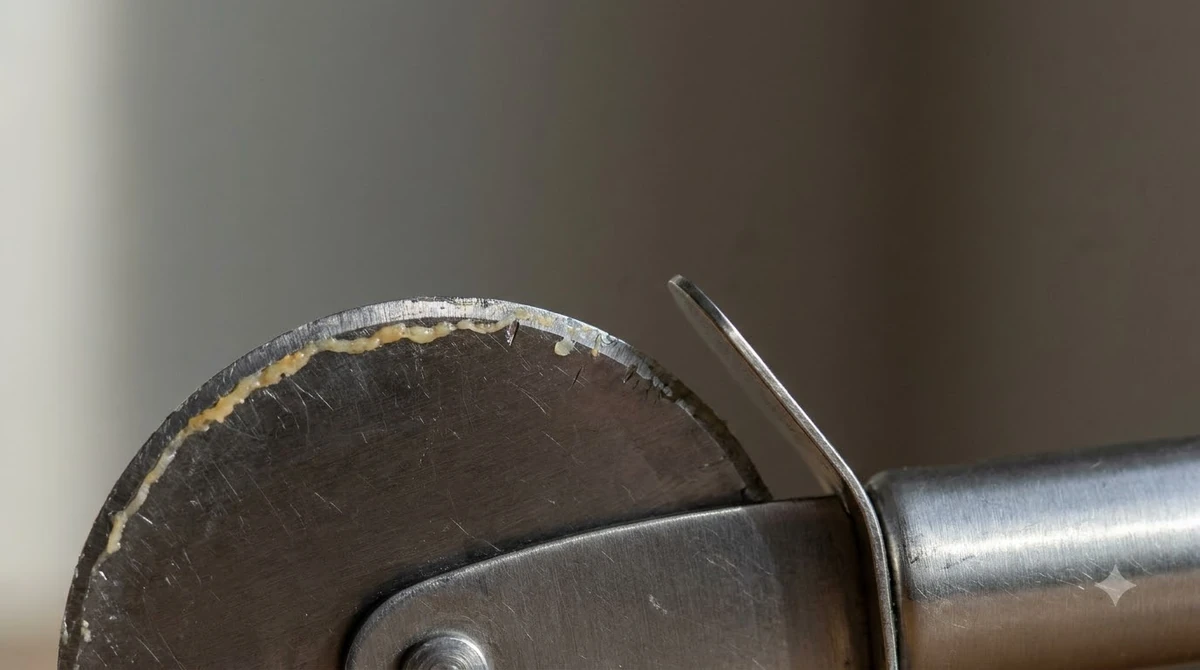
The wheel style is the most common. It has a round blade on an axle, mounted on a handle, and you press it down and roll it across the pizza. The mezzaluna is a large curved knife with one or two blades, and you rock it back and forth over the food. According to Wikipedia’s entry on the pizza cutter, the mezzaluna was designed to cut with a rolling motion rather than a dragging one.
The name comes from the tool’s most common job. Both styles are also used beyond pizza, for cutting dough and chopping herbs or vegetables. Wheel cutters are sometimes used for craft work, too.
How a wheel cutter works
In the design described in US patent 4,423,551, a rotary wheel does most of the cutting, while the blade edge separates the slices and lifts them out.
Pressing a pizza cutter’s wheel down and rolling it in a straight line gives a clean edge across the pizza. Cutting through the middle at varying angles produces equal triangle-shaped slices, and you can make each slice as thin or as wide as you like. The wheel is the better tool here because a knife can leave jagged edges and drag toppings across the crust, according to a reference guide we read. The patent record for this utensil describes the wheel as doing the main cutting work.
Wide slices suit styles such as New York-style pizza. A wheel that is shorter than the pizza needs two passes to cross it, so the size of your pizza cutter matters more than most cooks expect.
How to choose a pizza cutter
Look for a stainless steel wheel, a handle you can hold steadily, and a size that matches the pizzas you make most often.
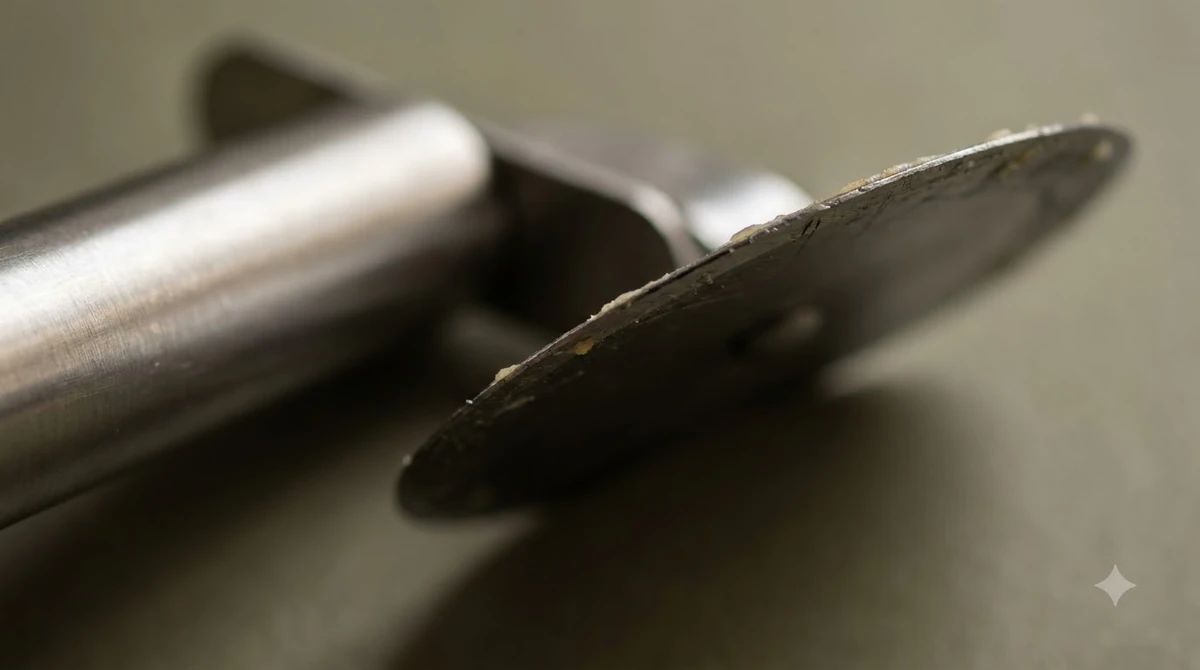
- Blade material: stainless steel is the common material for a wheel pizza cutter, according to a reference guide we read.
- Handle: handles are commonly plastic, metal or wood. Pick the one that feels steady when you press down.
- Size: cutters come in different sizes, and the right one depends on your usual pizza diameter.
- Type: a wheel for straight cuts on a flat pizza, or a mezzaluna if you also chop herbs.
Pizza shops may prefer a mezzaluna because staff can cut quickly and efficiently. For a home oven, the speed matters less than how well the cutter fits in your drawer and how easily you can keep it clean.
Wheel or mezzaluna: side-by-side comparison
A wheel suits straight slicing on a flat pizza, while a mezzaluna suits rocking cuts and chopping herbs and vegetables.
| Feature | Wheel cutter | Mezzaluna |
|---|---|---|
| Blade | Round wheel on an axle | Curved blade, single or double |
| Cutting motion | Press down and roll | Rock back and forth |
| Common sizes | Many sizes | Many sizes |
| Other uses | Cutting dough, craft work | Chopping herbs and vegetables |
| Best fit | Straight cuts on a flat pizza | Fast cutting and herb prep |
If you cook mostly pizzas for a family and rarely chop herbs, a wheel pizza cutter is the simpler choice. For a rocking-style alternative, see our guide to rocker pizza cutters. If you chop herbs as often as you cut pizza, a mezzaluna earns its place in the drawer. For the slicing technique, see our guide on how to use a pizza cutter.

How to Use a Pizza Cutter
Using a pizza cutter well comes down to pressure, position and the order of cuts. Let the pizza rest briefly after it leaves the oven so the toppings settle before you cut.
- Place the wheel at the centre of the pizza, then press down with a steady hand.
- Roll the wheel through in one smooth pass where the length allows, rather than sawing back and forth.
- For equal slices, cut from the centre outward at even angles, turning the pizza instead of twisting your wrist.
- Lift each slice with a spatula so the toppings stay in place.
- Wipe the wheel between pizzas if sauce or cheese builds up.
A common mistake is dragging the wheel back and forth, which can push toppings off the crust. A practical check is to look at the edges after the first cut. Clean edges with toppings still in place mean the wheel is rolling well. Torn cheese or sauce pushed to one side points to dragging or a dull wheel.
Matching the Cutter Size to Your Pizza
After blade type, blade size matters most. Wheel and blade diameters vary by model, and listed sizes differ from one brand to the next, so compare the stated size with the pizzas you bake most often rather than a generic figure.
A wheel that is shorter than the pizza needs more passes, and each extra pass is another chance to drag toppings. A longer wheel covers more of the pizza in one motion but needs more room in the drawer. If your pizzas are large, check that the cutter you choose can reach from the centre to the edge without awkward angles.
Deep-dish and thick-crust pizzas are a different case. Many cooks use a knife for very thick slices, because a wheel may need more force to get through.
Care, cleaning and common mistakes
Clean your pizza cutter after each use, because food can collect around the wheel and dry in place.
- Clean the wheel area. The patent design includes openings in the yoke that let food particles fall out, and inner edges that scrape the wheel faces, which makes cleaning easier.
- Do not use a knife for straight cuts. A knife can leave jagged edges and drag toppings across the pizza.
- Check the handle joint. A loose handle makes it harder to keep steady pressure on the wheel, so tighten or replace it before you cut.
- Read the care label. Wooden handles and some finishes may not suit the dishwasher, so follow the maker’s instructions.
Most cutters are fine for home use if you wipe them after each pizza and dry them before storing.
Store the cutter where its blade is protected, such as in a drawer with a sheath or a separate slot, so the edge does not knock against other utensils between uses.
Common Buying Mistakes
- Buying the shortest wheel for large pizzas, which means more passes for every cut.
- Choosing a handle that is hard to press firmly, since steady pressure is what makes a clean cut.
- Picking a mezzaluna when you only slice pizza, or a wheel when you mostly chop herbs.
- Ignoring cleaning access. The patent record describes yoke openings and inner scraper edges that help food fall out, so look for similar features in the listing.
What this guide does not confirm
Sharpening intervals, dishwasher safety and price ranges were not confirmed on the pages we read, so check them before you buy a pizza cutter.
One reader comment on a reference page says a wheel can be sharpened by a knife shop and that the commenter has theirs sharpened once a year. That is one reader’s habit, not a verified interval. Check the manufacturer’s care page or ask a local knife shop before you buy, and check current prices on the retailer’s listing, since they change often.
Frequently Asked Questions
Is a pizza wheel better than a mezzaluna?
Neither is better for every job. A wheel gives a clean, straight cut on a flat pizza, while a mezzaluna rocks through slices and also chops herbs and vegetables. Choose based on the job you do most often in your kitchen.
What blade material is common on a pizza cutter?
Stainless steel is the common blade material for wheel cutters, according to a reference guide we read. Stainless steel resists rust, which matters for a tool that touches wet dough and sauce.
Can you use a pizza cutter for things other than pizza?
Yes. The sources we read mention cutting dough, chopping herbs and vegetables, and some craft work. A mezzaluna is the better choice for chopping, while a wheel is handy for cutting dough into strips, and a bench scraper can also divide dough.
Does the handle material matter?
Handles are commonly plastic, metal or wood. The material matters less than how steady the grip feels when you press down. Choose the one that stays comfortable during a full pizza.
How big should a pizza cutter be?
Size depends on the pizzas you make most often. Choose a wheel or blade that can cross the full diameter of your usual pizza in one or two passes.
If you cut mostly flat pizzas for a family, start with a pizza cutter that has a stainless steel wheel in a size that fits your pizza, and add a mezzaluna later only if you chop herbs often. Check care instructions before buying, and keep the wheel clean after every use. If you are still building your kit, our guide on how to make pizza at home shows where each tool fits.
 7 min readGear & PantryPizza Rocker Cutter: What It Is and How to Choose OneUpdated Nov 10, 2026
 8 min readGear & PantryPasta Cutter Guide: 3 Types, Blades and How to Use OneUpdated Nov 10, 2026
 9 min readGear & PantryRavioli Cutter Guide: Types, Sizes and How to Use OneUpdated Nov 10, 2026
 8 min readGear & PantryBest Pasta Cutter Wheel Types for Home CooksUpdated Nov 10, 2026
 11 min readGear & PantryBest Yeast for Pizza Dough: How to Choose the Right TypeUpdated Nov 16, 2026
 9 min readGear & PantryBest Pizza Flour: How to Choose by Type, Style and OvenUpdated Nov 17, 2026