
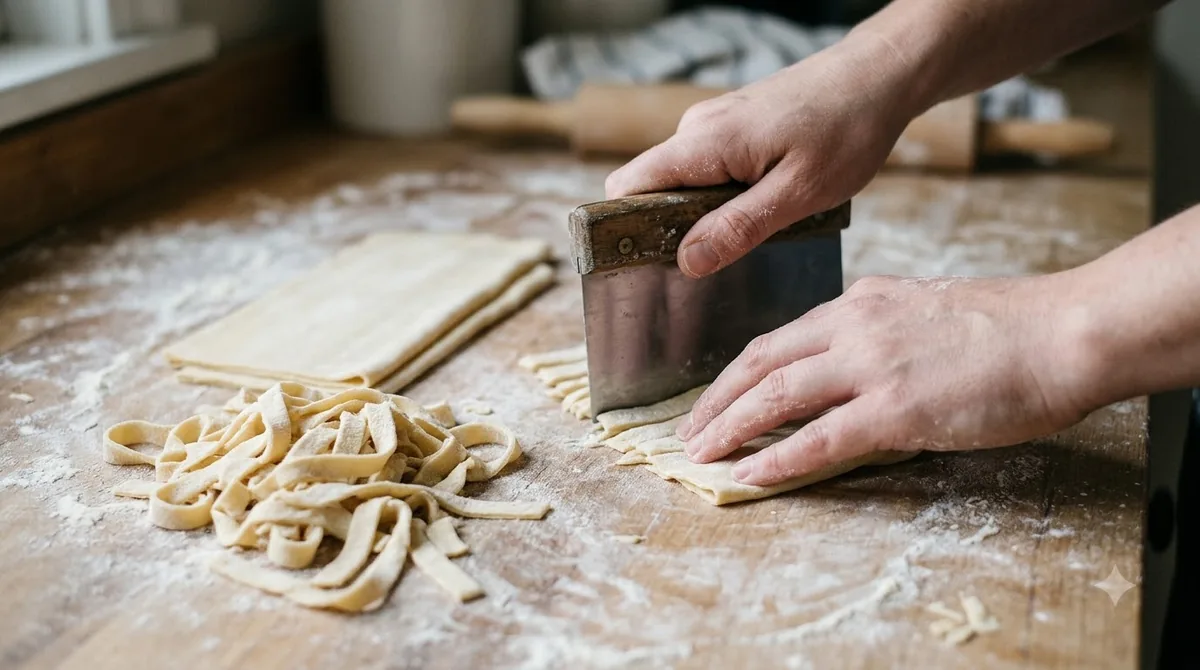

A bench scraper is a rigid, flat metal blade used to cut dough, portion it, and move chopped food from a board to a bowl. The best-tested models use a sharp stainless blade about 6 by 3 inches. Size, edge and handle matter more than the name on the box.
Some metal models are hand wash only, while others tolerate the dishwasher. Check the cleaning rule before you buy, because it decides how you care for the tool every day.

Amazon Basics Multi-Purpose Bench Scraper
Pros & ConsViewHide
Reasons to buy
- Stainless-steel blade with 1/4-inch measurement marks, per the listing
- Contoured non-slip handle and dishwasher safe
- Rated 4.8 stars on Amazon
Reasons to avoid
- 6.1 x 4.33-inch blade is compact for large dough batches
- Square edge is not suited to scooping sticky dough from a bowl

OXO Good Grips Multi-Purpose Scraper & Chopper
Pros & ConsViewHide
Reasons to buy
- Stainless-steel blade with 1-inch measurement markings, per the listing
- Soft non-slip grip and dishwasher safe
- Rated 4.8 stars on Amazon
Reasons to avoid
- Costs more than basic metal scrapers
- Metal blade should not be used on non-stick or scratch-prone surfaces
What Is a Bench Scraper Used For?
A bench scraper cuts and portions dough, scrapes flour off the work surface, and lifts chopped ingredients, so it earns a place in both pizza and pasta kitchens. The tool was originally designed for pastry chefs and bread bakers, according to America’s Test Kitchen’s review.
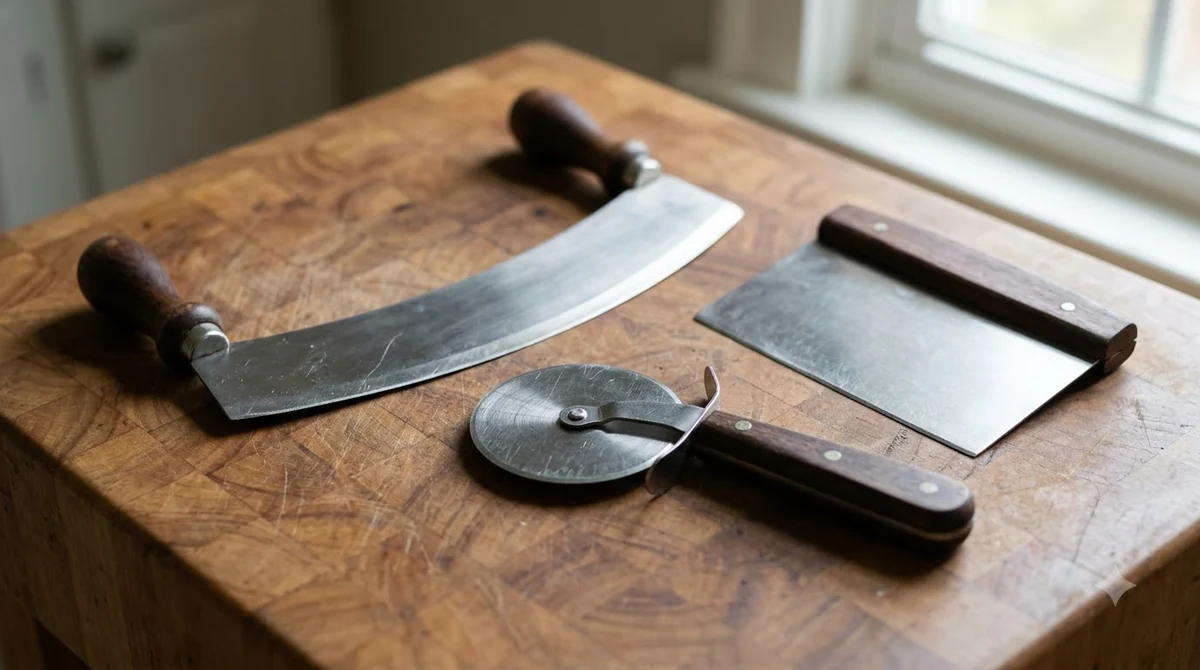
The same blade covers more jobs than most people expect. Common uses include:
- Cutting a ball of dough into even portions for pizza, rolls or fresh pasta dough.
- Scraping sticky dough (see why pizza dough gets too sticky) and flour off the counter between steps.
- Scooping chopped onion, garlic or herbs from the board into a pot or bowl.
- Cubing cold butter before you work it into pastry.
- Smoothing the sides of a cake before frosting.
- Scraping excess off a dry measuring cup so the amount is level.
The review also notes that a bench scraper works on both sweet and savory cooking. That range is the main reason it is more useful than a bowl scraper for a general prep station, since it handles flat surfaces and board-to-pot transfers that a bowl scraper cannot reach. For the cutting and scraping moves, see our guide on how to use a bench scraper.
Bench Scraper vs. Bowl Scraper: What Is the Difference?
A bench scraper is a larger, rigid tool with a straight edge, while a bowl scraper is smaller, flexible and curved, usually made of plastic or silicone. Pick the shape that matches the surface you are working on.
| Feature | Bench scraper | Bowl scraper |
|---|---|---|
| Shape | Rectangular with a straight edge | Curved to follow a mixing bowl |
| Flexibility | Rigid | Flexible |
| Usual material | Metal | Plastic or silicone |
| Typical job | Dough, counters and board-to-pot transfer | Scraping the inside of a bowl |
Reference entries describe a dough scraper as a small stainless steel sheet of about 8 by 13 centimeters with a handle, and note that the same tool is also called a pastry scraper. The Wikipedia scraper entry lists these names for similar flat tools.
Stores label the same flat steel tool in different ways, so the name alone tells you little. Compare the blade shape, edge and handle instead.
What Size, Material and Handle Should You Look For?
Look for a rectangular blade about 6 by 3 inches in sharp metal, weighing roughly 5 to 6 ounces, with a handle about three-quarters of an inch wide. The test kitchen rated each model on performance and ease of use.
- A rectangular blade about 6 by 3 inches.
- A sharp metal blade with a thin edge.
- A weight of about 5 to 6 ounces.
- A textured, hard handle that resists slipping.
- A handle thin enough to lie flat on the counter.
- Optional measurement markings on the blade.
Skip curved or tapered blades, and skip plastic blades on any bench scraper you consider. Testers described plastic blades as duller and less effective at cutting dough. Soft plastic handles that collect flour are also a poor fit for a tool you use in floured work.
Thick handles that stick out past the blade are another point to check. The test noted that one thick, cylindrical handle caught food, so a flat, slim grip suits a scraping tool better.
Which Tested Models Stand Out?
In the America’s Test Kitchen review dated June 25, 2025, the Dexter-Russell Sani-Safe won, while a plastic King Arthur model was not recommended. Prices at test time were about $10 to $15 on Amazon, so check the current listing before you buy.
The testers made galette dough and pain au levain dough, moved chopped onion, garlic and cilantro, then scraped each counter and washed each tool after each test. Ratings reflected performance and ease of use.
| Model | Blade and handle | Weight | Cleaning note | Verdict |
|---|---|---|---|---|
| Dexter-Russell Sani-Safe S196B | Stainless blade, polypropylene handle, 6 by 3 in | 5.6 oz | Maker advises hand washing; survived several dishwasher runs | Highly recommended, the winner |
| Anmarko 8541966195 | Stainless blade, wood handle, 6 by 3 in | 5.5 oz | Hand wash | Highly recommended, sharpest blade tested |
| Norpro Grip-Ez 583 | Stainless blade, Santoprene handle, 6 by 3 in | 5.8 oz | Not stated in the review | Recommended, thick handle collects flour |
| OXO Good Grips 73281 | Stainless blade, Elastron handle, 6 by 3 in | 6.7 oz | Dishwasher safe | Recommended, handle became sticky and too wide |
| Williams Sonoma Olivewood 648856 | Stainless blade, wood handle, 6 by 3.75 in | 6.8 oz | Hand wash only | Recommended with reservations, heaviest and largest |
| Norpro Stainless 577 | Stainless blade and handle, 6 by 3.5 in | 6.7 oz | Maker advises hand washing; held up to several cycles | Recommended with reservations, among the dullest blades |
| King Arthur 21273 | Plastic blade and handle, 5.5 by 3 in | 0.7 oz | Not stated in the review | Not recommended, dull and too lightweight |
The review points to handle shape and edge sharpness as the main differences between bench scraper models. Among the models in the table, edge thickness in the test ran from 0.3 mm on the sharpest blade (Anmarko) to 1 mm on the Norpro Stainless.

How Should You Clean and Care for It?
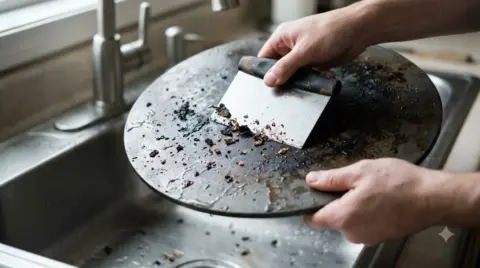
Wash a bench scraper in warm soapy water right after use, and follow the maker’s cleaning rule for the model you own. Hand wash and dishwasher instructions differ from one bench scraper model to the next.
- Scrape off dough and flour with the blade while the dough is still soft.
- Wash the blade and handle with warm soapy water and a soft sponge.
- Rinse and dry the blade fully before you store it, so moisture does not sit on the edge.
- Check the box or the maker’s page for a dishwasher rule before you load it.
The test kitchen reported that the Dexter-Russell scraper survived several dishwasher runs, and its copies survived industrial dishwashers. The maker still advises hand washing, so treat the dishwasher as a bonus rather than a rule. During testing, each scraper was also washed per its manufacturer’s instructions five more times, so the results reflect repeated cleaning rather than a single wash.
The Williams Sonoma olivewood model is hand wash only. Keep any wood handle out of the dishwasher and dry it by hand.
Common Mistakes When Buying One
The most common mistake is buying a curved, tapered or plastic blade, which the test kitchen found less useful for cutting dough. Check the blade shape of each bench scraper before you compare prices.
- Choosing a curved or tapered blade.
- Choosing a plastic blade for dough.
- Picking a soft plastic handle that collects flour.
- Ignoring a thick handle that sticks out past the blade.
- Assuming every metal model is dishwasher safe.
Edge sharpness is the last check. A blade that feels dull in the store will also feel dull on a floured board, so look for a thin, clean edge before you buy. Handle size counts too: the test found the King Arthur handle extremely thin, with no natural resting place for the fingers.
Frequently Asked Questions
Can you use a bench scraper on cake?
Yes. The test kitchen lists smoothing the sides of a cake among the common uses for a bench scraper. Use the flat edge to smooth frosting along the side of the layer, holding the blade at a steady angle.
How much does a bench scraper cost?
The models in the June 2025 test sold for about $10 to $15 on Amazon at the time. Prices change often, and the same model can sell for more or less on another day. Check the current listing before you buy, and compare the blade size and handle, not just the price.
Does a bench scraper replace a bowl scraper?
Not fully. A bowl scraper has a curved, flexible edge for the inside of a mixing bowl, and testers said bowl scrapers are used almost only in baking. Many cooks keep both, since one handles flat work and the other handles round surfaces.
Should you buy one with measurement markings?
Markings on a bench scraper are optional, and the test treated them as an extra rather than a requirement. They help with rough portions on the blade. A digital kitchen scale is still the right tool when a recipe calls for an exact dough weight.
Is a plastic bench scraper good enough?
Usually not for dough. The test kitchen recommends metal blades and found plastic blades duller and less effective at cutting dough. A plastic model may still suit light scraping jobs, but it is a weaker choice for portioning.
Start with a sharp metal bench scraper about 6 by 3 inches, a handle that lies flat on the counter, and a cleaning rule you can follow every day. If you bake pizza or bread often, choose a model with markings and keep it for dough. Set aside a second tool for bowls, and pair it with a pizza cutter for slicing the finished pie. Our dough scraper guide covers similar tools.
 9 min readGear & PantryHow to Use a Bench Scraper: Techniques, Cleaning and Common MistakesUpdated Nov 10, 2026
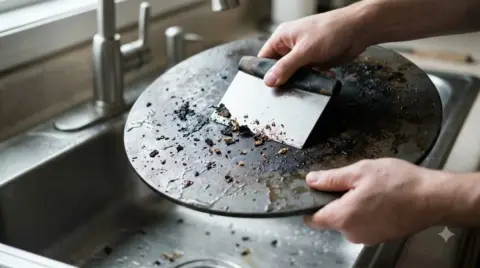 8 min readGear & PantryDough Scraper: Types, Uses and What to Look ForUpdated Nov 16, 2026
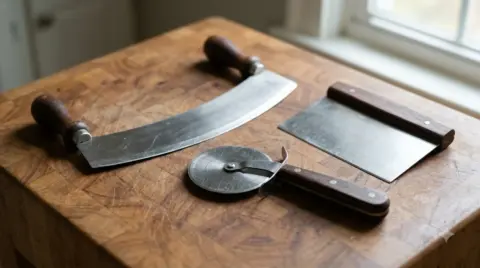 8 min readGear & PantryHow to Use a Dough ScraperUpdated Nov 10, 2026
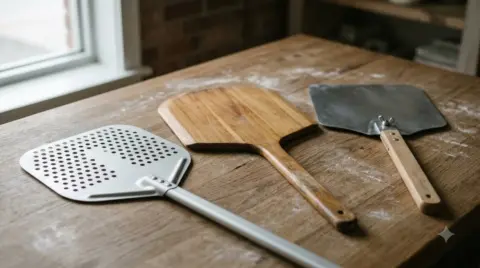 8 min readGear & PantryPizza Peel: What It Does and How to Choose OneUpdated Nov 16, 2026
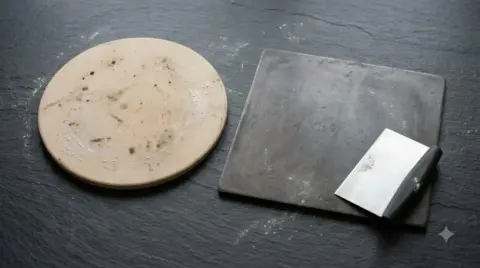 8 min readGear & PantryPizza Steel: How to Choose, Preheat and Care for One at HomeUpdated Nov 16, 2026
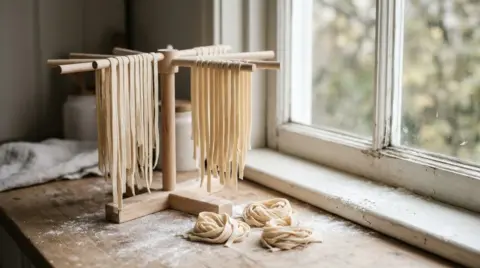 9 min readGear & PantryPasta Drying Rack: How to Choose and Use One at HomeUpdated Nov 16, 2026