
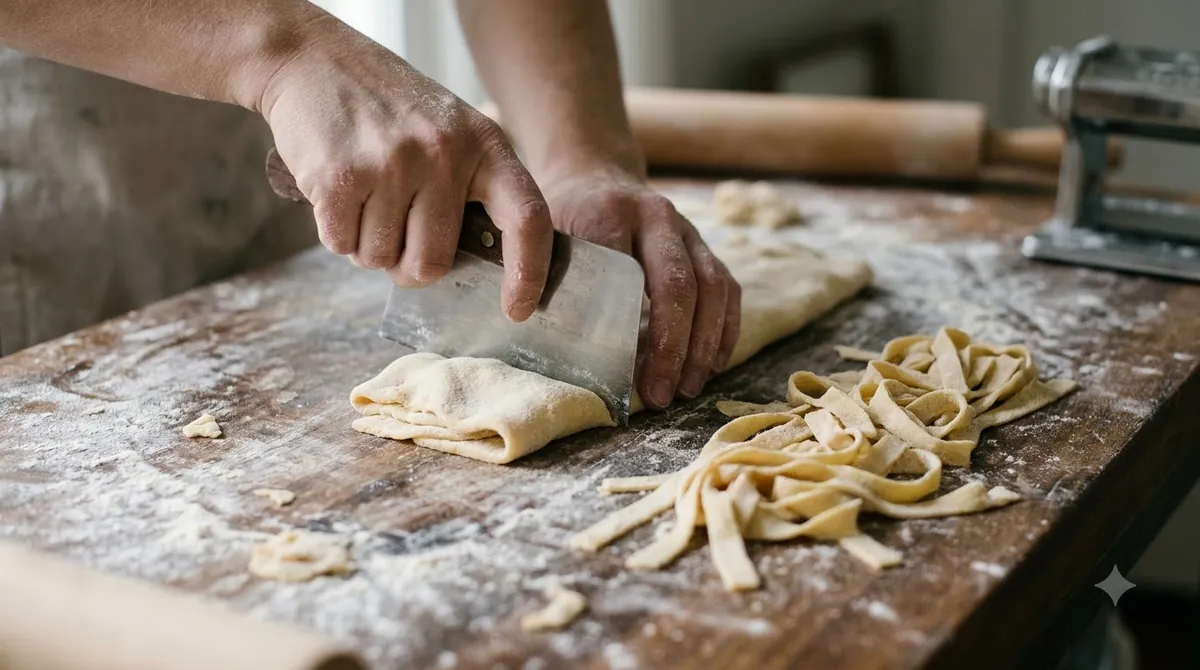

A pasta cutter is a tool that slices a thin sheet of pasta dough into strands, ribbons or shapes of a set width. It is the step that turns flat dough into the noodle you eat, and the blade you choose decides the shape.
Most home cooks meet a pasta cutter in one of two forms: an attachment that clips onto a hand-crank roller or stand mixer, or a standalone hand tool such as a wheel cutter. Each form suits a different amount of pasta and a different kitchen setup.

Antree 3-1 Pasta Roller & Cutter Attachment Set
Pros & ConsViewHide
Reasons to buy
- Roller plus spaghetti and fettuccine cutters in one set
- Lower price than the KitchenAid-branded set
- 4.5-star Amazon rating
Reasons to avoid
- Third-party brand, not made by KitchenAid
- Confirm the fit for your mixer before buying

KitchenAid KSMPRA 3-pc Pasta Roller/Cutter Set
Pros & ConsViewHide
Reasons to buy
- Roller and cutter attachments for KitchenAid stand mixers
- Rolls even sheets without hand cranking
- 88% of 9K Amazon ratings are 5-star
Reasons to avoid
- Needs a compatible KitchenAid stand mixer
- Rolls and cuts the dough, but does not fill or fold tortellini
- One of the costlier tools in this guide

MARCATO Made in Italy Spaghetti 150 Attachment
Pros & ConsViewHide
Reasons to buy
- Made in Italy cutter built for the Atlas 150
- 84% of Amazon ratings are 5-star
- Spaghetti is a staple shape for first-time cutters
Reasons to avoid
- Fits the Atlas 150 only, so check your machine name
- Single shape per attachment

Marcato Capellini 150 Pasta Cutter Attachment
Pros & ConsViewHide
Reasons to buy
- Thin angel-hair style cut for the Atlas 150
- Chrome steel build, made in Italy
- 4.2-star Amazon rating
Reasons to avoid
- Needs thin sheets, so set the regulator high
- Single shape per attachment
What a Pasta Cutter Does
A pasta cutter sets the width of every strand, so the cut matters as much as the dough itself.
Fresh pasta is traditionally made by hand, sometimes with simple machines. According to Wikipedia’s pasta article, the cook feeds sheets of pasta dough into the machine by hand. Fresh egg pasta is generally cut into strands of various widths and thicknesses, and the pasta cutter is what makes that width repeatable.
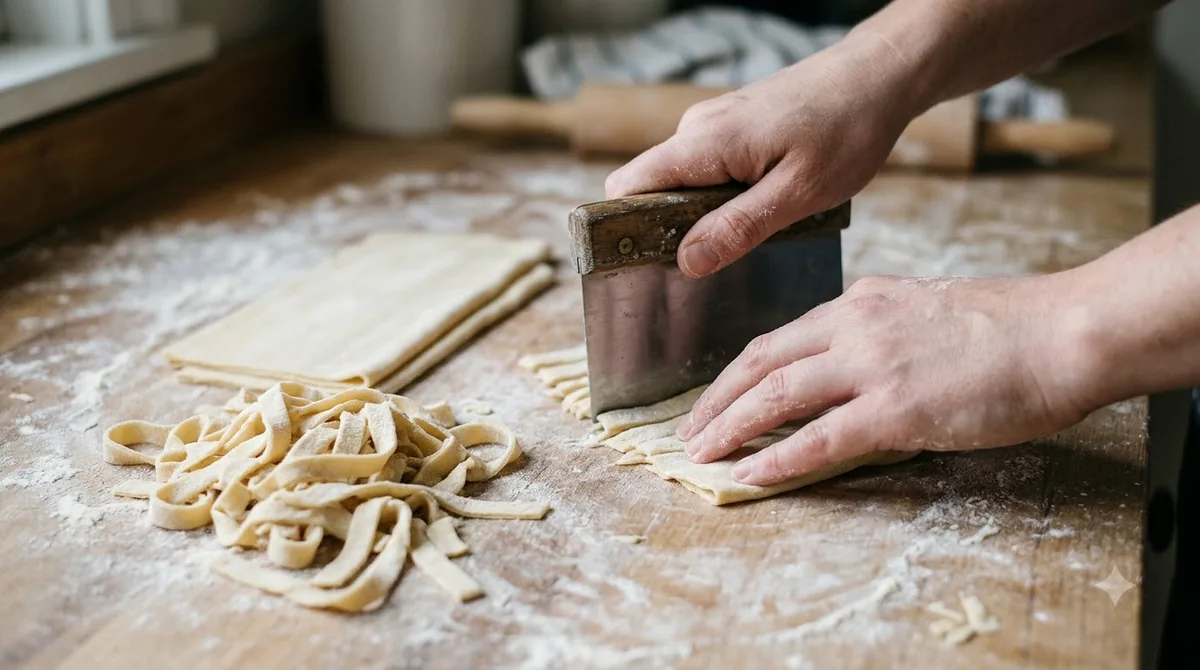
The same reference says fresh egg pasta is more tender than dried pasta and takes about half the time to cook. Dried pasta can be shipped farther and has a longer shelf life, so the two kinds suit different cooking plans. A pasta cutter you use for fresh dough is usually paired with a dough recipe and a rolling step, not with a bag of dry pasta.
Once cut, fresh strands need to be cooked or dried soon, because they have a short window before they stick together. Keep them loosely spread on a floured tray until you cook them. A large pasta board gives you room to roll, cut and spread the strands.
Types of Pasta Cutters
Pasta cutters come in three main forms: roller attachments, standalone hand cutters and rolling wheels for ravioli.
Attachment Cutter Sets
KitchenAid’s UK page says its pasta roller is made for all KitchenAid stand mixers, and that its cutters are sold separately. The page says those cutters make spaghetti, fettuccine or other noodles from thick to fine, and that you can also use manual pasta cutting tools. KitchenAid’s pasta roller listing confirms that the roller itself comes with a cleaning brush and no cutters.
A typical third-party set pairs a sheet roller with one or two cutters. A Madtasting roundup describes the Antree 3-in-1 set as rolling sheets 5.5 inches wide and cutting both spaghetti and fettuccine. The KitchenAid KSMPRA set is listed with a 6-inch sheet width and fettuccine and spaghetti cutters.
Standalone and Wheel Cutters
A hand-held wheel is the simplest kind of pasta cutter. NBC Select describes a Master Feng ravioli cutter with a rolling textured wheel that cuts several ravioli pieces at once, plus stamps for round or square ravioli. For stamped shapes, see our guide to the best ravioli cutters. A plain wheel with a fluted edge gives the same kind of decorative cut on sheets of dough.
Compare the main pasta cutter forms on the points that matter at home.
| Cutter type | Typical shapes | How it attaches | Cleaning notes from sources |
|---|---|---|---|
| Roller attachment set | Spaghetti, fettuccine | Clips to a stand mixer or roller | KSMPRA listing says hand wipe only |
| Standalone strand cutter | Spaghetti, fettuccine, linguine | Hand-operated, no mount | Not stated in the sources reviewed |
| Ravioli wheel | Ravioli pieces, squares, round stamps | Hand-held | Check the product page for your model |
The table shows that attachments depend on your mixer or roller, while hand tools work with any dough sheet you can roll.
Materials and Blade Quality
Stainless steel is the blade material that several listings name, and SUS304 is the grade quoted for two of the sets in the Madtasting roundup, the Antree set and the GVODE 3-piece set.
Not every cutter is metal. A 3-piece set is listed as food-grade plastic, and the NEWSETS 3-in-1 pairs stainless steel shafts and blades with a plastic shell. The Master Feng ravioli cutter uses a brass and steel mechanism with a wooden handle, according to NBC Select.
NBC Select’s buying advice says to look for machines made with good quality steel. Chef Shawn Matijevich, quoted in the same guide, prefers a fluted cutter with a straight blade and a fluted blade on either side for an all-in-one tool.
When you read a listing, check these points:
- The blade material of the pasta cutter and the grade stated, such as SUS304.
- The cut width, given in millimeters or inches.
- The mount type and whether it fits your exact mixer model.
- The handle material, plastic or wood.
- The cleaning method in the manual or listing.
How to Use a Pasta Cutter
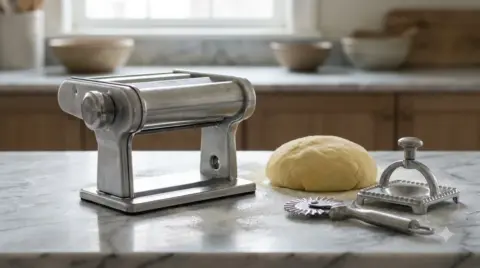
Attachment pasta cutters follow a short sequence, and the exact steps depend on your model and its manual. Our guide on how to use a pasta machine covers the full rolling routine. For hand cutters as well, see our guide on how to use a pasta cutter.
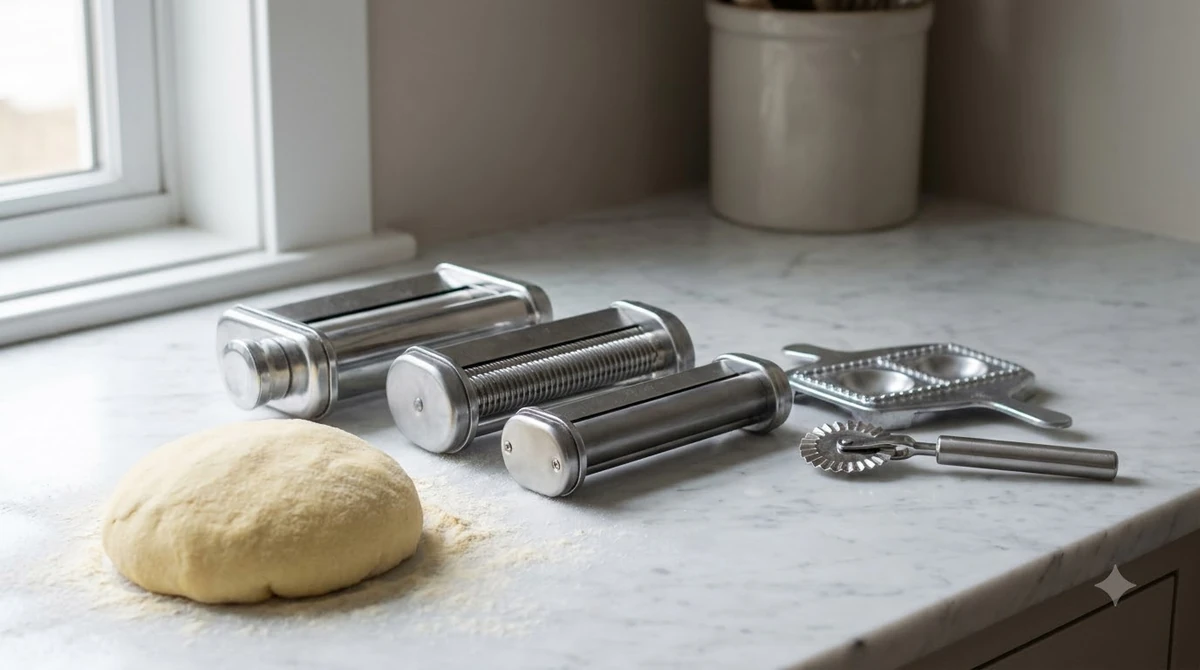
- Attach the roller and the cutter to the mixer or hub as the manual shows.
- Roll the dough through the widest setting first, then move to thinner settings until the sheet is the thickness your recipe needs (see how thin to roll pasta).
- Feed the thinned sheet into the cutter by hand and catch the strands as they come out.
- Lay the strands loosely on a floured tray so they do not stick, then cook them or store them as described in how to store fresh pasta.
Press-style attachments work differently. NBC Select notes that one press attachment uses a side lever to set the cut length, and that you can use kitchen shears to cut pieces as they come out.
Common Mistakes With a Pasta Cutter
The two mistakes that matter most are washing a cutter the listing says is not dishwasher safe, and letting dough dry on the rollers before you clean them.
Several listings say not to use a dishwasher. The NEWSETS 3-in-1 set lists dishwasher safe as no, and a 3-piece set is not dishwasher safe. Check the manual for your set before you wash it.
Dry dough is harder to remove than wet dough, so the timing of cleaning matters. A KitchenAid customer review, which is user feedback and not official advice, suggests letting dough dry before brushing it off the rollers.
Feeding dough that is too thick is a third common error with any pasta cutter. The strands can tear or stick to the blades, so roll the sheet thinner in steps before you cut it.
Cleaning and Care
Most cutter sets are cleaned by hand with the brush that comes in the box, then wiped dry.
KitchenAid’s UK page says to use the included brush to clear dried dough from hard-to-reach parts, then wipe the roller with a dry cloth. The KSMPRA listing quoted by Madtasting says hand wipe only.
Manual machines need more upkeep. NBC Select quotes Matijevich saying that manual machines can require a lot of maintenance and cleaning, so a cutter you clean soon after use is easier to keep in good shape.
What This Guide Could Not Confirm
Fit, price and cut width depend on the exact model, and this guide could not confirm all of them for every cutter.
Prices change often and were not checked against live sellers, so this article lists none. Check the current listing before you buy.
Compatibility claims for third-party sets are not always the same across sellers. Match the set to your mixer model number and to the manufacturer’s page, not to a roundup alone.
Cut widths for most standalone cutters are not stated in the sources reviewed here. Where a width is missing, check the manual or product page instead of assuming one.
Frequently Asked Questions
Does a pasta cutter need a stand mixer?
No. Standalone pasta cutters are hand tools that work without a mixer. KitchenAid’s UK page says its own cutters attach to the stand mixer, and that manual pasta cutting tools can also be used with its pasta roller, so the choice depends on how much pasta you make and what equipment you already own.
What shapes can a pasta cutter make?
Most pasta cutters make strands: spaghetti, fettuccine, linguine and other noodles. Wheel cutters make ravioli pieces, squares and round stamped shapes. The width of each strand comes from the blade, so check the listed cut width before you buy when you need a specific noodle.
Are pasta cutters dishwasher safe?
Not always. The NEWSETS 3-in-1 set is listed as not dishwasher safe, and so is a 3-piece set. The KSMPRA listing says hand wipe only. Read the manual for your model before washing, because listings for similar sets do not always agree.
Which blade material should I look for?
Stainless steel is the material most often named for the blade, and SUS304 is the grade quoted for two sets in one roundup. The sources reviewed here do not rank materials for durability, so compare the stated grade and read recent buyer reviews before you decide.
If you make pasta at home, start with the pasta cutter that matches the shapes you cook most often, then check your mixer or roller model before buying. A hand wheel pasta cutter is enough for ravioli and a few shapes, while an attachment set suits larger batches. Read the current listing and the manual for fit and cleaning before you commit.
 9 min readGear & PantryRavioli Cutter Guide: Types, Sizes and How to Use OneUpdated Nov 10, 2026
 9 min readGear & PantryPizza Cutter Guide: 2 Best Types and How to Choose OneUpdated Nov 16, 2026
 8 min readGear & PantryBest Pasta Cutter Wheel Types for Home CooksUpdated Nov 10, 2026
 9 min readGear & PantryGozney Dome Peel: How to Pick the Right Blade and TypeUpdated Nov 10, 2026
 8 min readGear & PantryHow to Use a Pasta Cutter at HomeUpdated Nov 10, 2026
 9 min readGear & PantryPasta Drying Rack: How to Choose and Use One at HomeUpdated Nov 16, 2026