
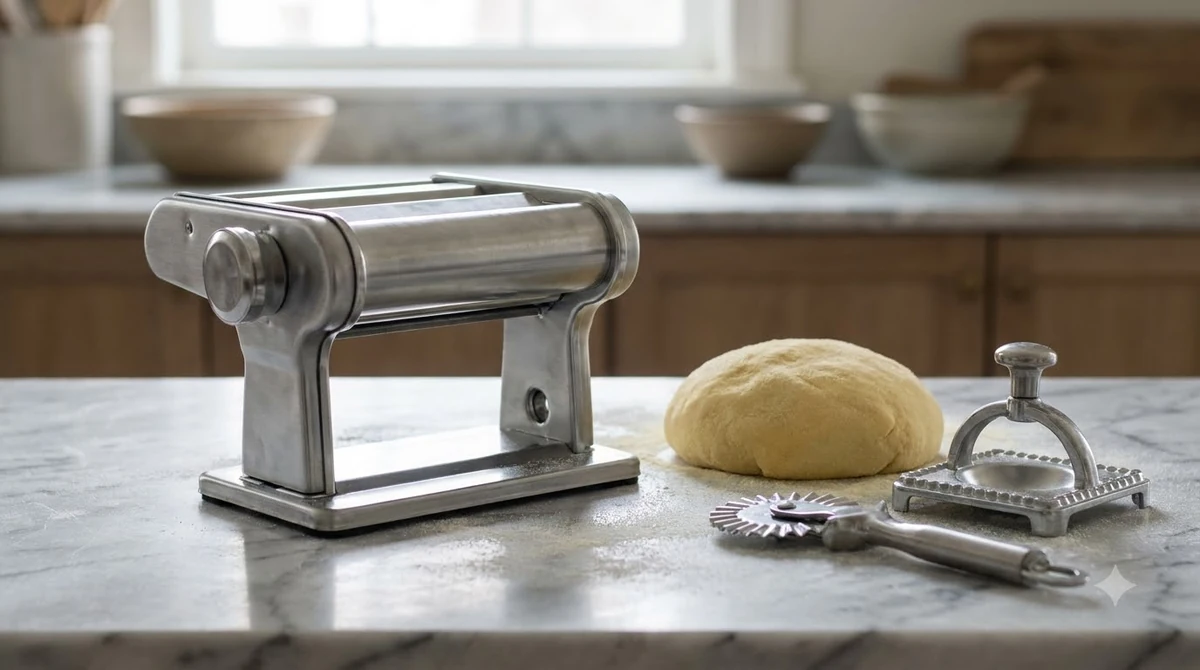

A ravioli cutter is a kitchen tool that cuts sheets of fresh pasta into matched pieces so you can seal a filling inside. Ravioli are usually square, though round and semi-circular shapes are also used, and the tool you choose decides which shape you get and how neat the edges look. Stamps give the cleanest sealed shapes, while pastry wheels are faster for straight cuts.
If you only make a few ravioli at a time, a knife or a fork can also do the job, so a dedicated cutter makes most sense when you cook pasta regularly.

Fantes Ravioli Maker Stamp Set
Pros & ConsViewHide
Reasons to buy
- Sturdy aluminum frame with a wooden handle and fluted edge
- Cuts and seals 2.75-inch square ravioli in one press
- Compact, easy to store, and low priced
Reasons to avoid
- Stamps one ravioli at a time, slower for big batches
- Hand-wash only, per the listing

Geetery 5 Pcs Ravioli Mold Set 2 Inch Square
Pros & ConsViewHide
Reasons to buy
- Set includes a 12-hole mold, rolling pin and three cutting tools (round, square, wheel)
- Each hole is about 2 x 2 inches, a good size for filled ravioli
- 80% of Amazon ratings are 5-star
Reasons to avoid
- About 300 ratings, a shorter track record than older brands
- Larger set with several pieces to wash and store

Ravioli Maker Press, Ravioli Cutter
Pros & ConsViewHide
Reasons to buy
- Made of food-grade BPA-free plastic with a cutting wheel, according to the listing
- Press is usable on both sides, with grooved edges for cutting
- Makes 8 square ravioli per press
Reasons to avoid
- Plastic build may feel less sturdy than metal frames
- Only 8 ravioli per batch, so large meals need several rounds
What a ravioli cutter does
A ravioli cutter separates the sheets into pieces that hold filling and keeps each piece the same size, so the finished pasta cooks evenly.
Ravioli are a stuffed pasta, with a filling enclosed in thin dough. They are commonly square, although circular and semi-circular forms are also used, including mezzelune, which are half-moons (Wikipedia, Ravioli). Traditional fillings vary by region, with ricotta and spinach common in Rome and Latium. Without a cutter, each piece has to be trimmed by hand, which usually leaves uneven edges and more dough to re-roll. If you are choosing between filled shapes, our guide to tortellini vs ravioli explains how they differ.
Fresh egg pasta is usually made from flour and egg, and some recipes add salt and water. The dough is rolled into thin sheets before it is shaped, and a pasta machine feeds the sheets through rollers while a hand crank thins them gradually (Wikipedia, Pasta). The cutter works best once you can produce a thin, even sheet. Our guide on how to use a pasta machine shows the rolling steps.
Types of ravioli cutters
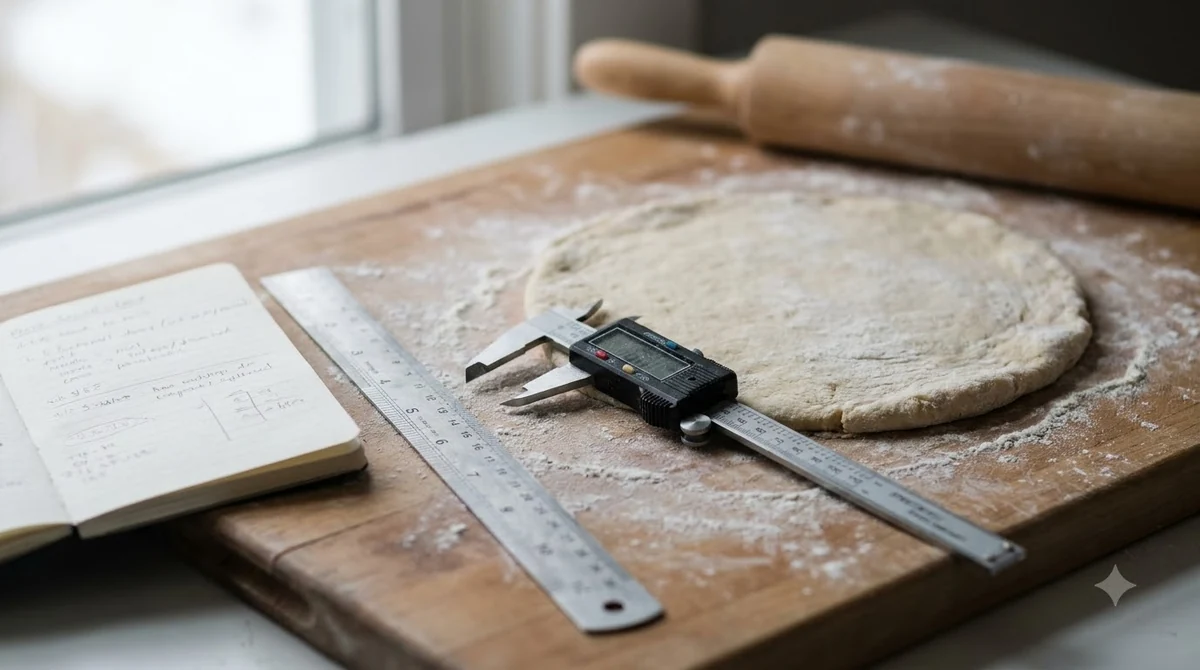
The three common types are the stamp, the fluted pastry wheel and the plain round or square cutter, and each one suits a different amount of work.
Stamps (pressed ravioli cutters)
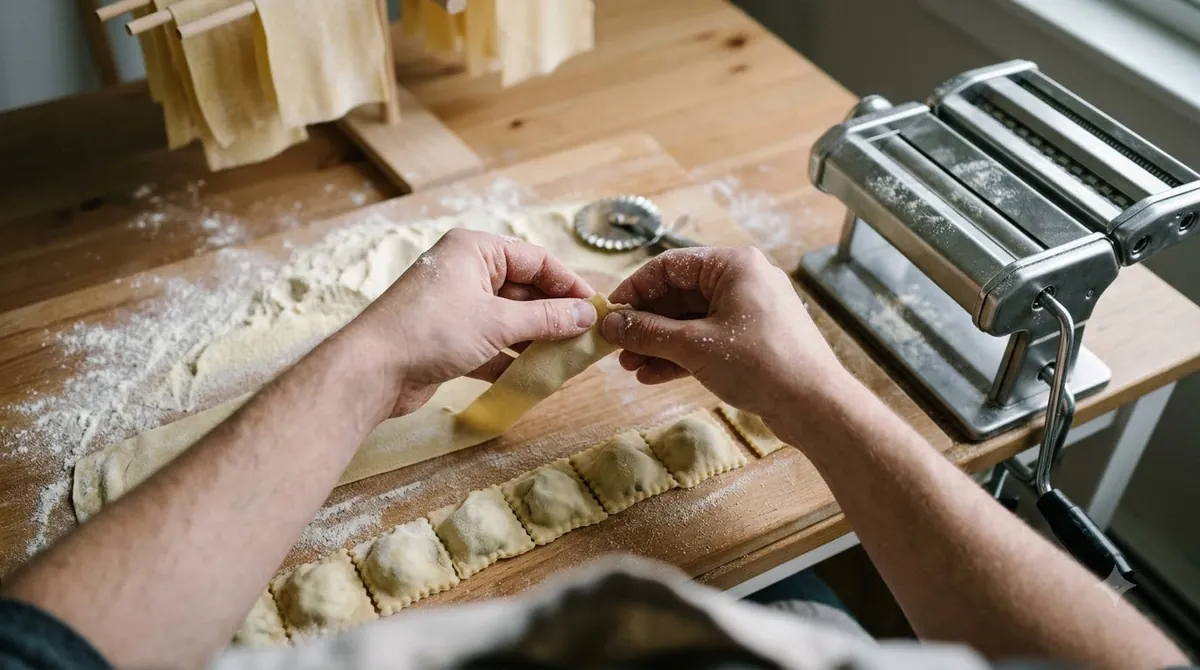
A stamp is a mold with a set number of cells, and our guide to how to use a ravioli mold covers the full-size versions. You lay a second sheet over the filled first sheet, press the stamp down, and it cuts and shapes each piece in one movement. One Italian-made round stamp listed by a kitchen retailer is described as cast aluminum with a beechwood handle and a 2 inch diameter cut (Fantes product listing). Stamps give the most consistent results, but they depend on a sharp edge, so a dull stamp tends to cut poorly.
Fluted pastry wheels
A pastry wheel is a small wheel on a handle that cuts dough and leaves a jagged or patterned edge (Wikipedia, Pastry wheel). It is quick for cutting straight lines across a sheet, and it is the usual choice for trimming squares. The wheel form is old, with the first attested professional use dating to 1549 in Italy. Some buyers report that wheels stop turning smoothly or tear the dough, so check how the wheel rolls before you rely on it for a full batch.
Plain round and square cutters
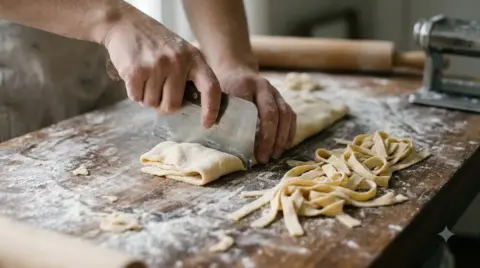
A plain round or square cutter is the simplest option, but it does not seal the pieces by itself. One guide advises a round cutter of at least three to four inches across when you cut without a mold, and that size gives enough room for a spoonful of filling (Tasting Table). You will still need to press around each filling by hand.
Choosing the right ravioli cutter size and shape
Pick the ravioli cutter size from the filling you plan to use, then choose round or square to match the shape you want. A ravioli cutter that matches your filling saves dough and makes sealing easier.
A cutter that is too small leaves too little room for filling, and one that is too large makes pieces that are hard to seal. Start by measuring how much filling a single spoonful makes, then choose a ravioli cutter that leaves a clear border around that mound. A ravioli cutter that is slightly larger than your mound is usually easier to work with than one that is too tight. As a general rule, the border should be wide enough that the two sheets meet cleanly all the way around.
When you compare listings, look at these points:
- Shape: square is the most common, but round and half-moon cutters are also sold.
- Diameter or size: the cut size should match the filling you use, and a set gives you more options.
- Material: a cast aluminum stamp is rigid and easy to wipe clean.
- Handle: a wooden handle gives a firm grip when you press down.
- Care notes: check the listing for cleaning instructions before you buy.
We could not confirm current prices, or the full range of sizes for each model, from the sources we read. Check the product listing for the diameter, material and included pieces before you order.
Dough and tools you need
You need a thin, even sheet of dough, a filling, an egg wash to help the sheets stick, and a sharp cutter.
- Pasta dough: flour and egg, with salt and water in many recipes.
- Rolling tool: a rolling pin, or a pasta machine for thinner and more even sheets.
- Egg wash: a beaten egg or egg yolk, brushed lightly near the filling.
- Sealing tools: your fingers or a fork to press the edges together.
- A toothpick: for a small vent in each piece, which helps prevent bursting while cooking.
Step by step: how to use a ravioli cutter
Fill one sheet, cover it with a second, press out the air and then cut. The steps below follow the method given for a round stamp, with notes for other ravioli cutters such as wheels and plain cutters. For a full dough and filling recipe to use with a ravioli cutter, see our guide to homemade ravioli. Our guide on how to use a ravioli cutter covers the cutting itself.
- Roll the dough very thin, then place small spoonfuls of filling on one sheet, spaced evenly.
- Brush a little egg wash around each mound of filling, staying away from the filling itself.
- Lay the second sheet on top and press down around each mound with your fingers. Push out any trapped air so the seal is airtight (Tasting Table).
- Cut with the stamp by pressing firmly, or with a wheel by rolling along the lines between the mounds.
- Lift away the scraps and re-roll them, as the dough gets tougher with each pass.
- Poke a small hole in each piece with a toothpick before cooking (Fantes product listing).
The fold-over method may not give a perfect shape every time, but the slightly uneven edges are part of the homemade look. Focus on a complete seal first, and the shape will follow.
Common mistakes and how to fix them
Most problems with a ravioli cutter come from dough that is too thick, a dull cutter or air trapped inside the seal. Use the table below to find the likely cause.
| Problem | Likely cause | Fix |
|---|---|---|
| Ravioli open during cooking | Air trapped in the seal, or a weak edge | Press out air, seal the full edge and poke a small vent |
| Dough tears when cut | Sheet too thick, or a dull cutter | Roll thinner and use a sharp cutter |
| Wheel drags or stops turning | Stiff or worn wheel, as some buyers report | Test the action in the store or on a scrap sheet before you commit |
| Pieces are uneven | Filling spaced unevenly | Mark the spacing lightly on the sheet before you add the filling |
Care and storage
Clean a ravioli cutter right after use, before dough dries into the cells or along the edge. A clean ravioli cutter cuts more cleanly the next time you use it.
Cast aluminum stamps are rigid and easy to wipe clean, but dry them fully to avoid spotting. Wood handles should not soak in water. The retailer listing we read for one stamp gave no care instructions, so follow the manufacturer’s guidance for any model you buy. Store the cutter in a dry drawer, where the edges will stay protected.
Frequently Asked Questions
What is a ravioli cutter used for?
It cuts fresh pasta sheets into matched pieces so you can seal a filling inside each one. Stamps and wheels are the most common types.
Is a pastry wheel the same as a ravioli cutter?
A pastry wheel is one type of cutter. It leaves a jagged or patterned edge, while a stamp cuts and shapes each piece in one press.
What size ravioli cutter should I buy?
Choose the size from the amount of filling you use, and leave a border wide enough to seal. Check the listing for the exact diameter, since sizes vary between models.
Why do my ravioli burst in the pot?
Trapped air or a weak seal is the most common cause. Press out the air, seal the whole edge and poke a small vent with a toothpick before cooking.
Can I use a knife instead of a cutter?
Yes, a knife can cut square pieces with straight edges. It does not seal the pieces, so you still need to press around each filling by hand.
Do I need a pasta machine?
No. A rolling pin can work if you can roll the sheet thin and even. A pasta machine makes thin, consistent sheets easier to produce. If you want a tool that forms and seals the pieces for you, see our ravioli maker buying checks.
Start with a stamp if you want sealed, uniform ravioli, and choose a wheel if you mostly cut straight shapes with a ravioli cutter. Measure your filling first, pick the size that leaves a clean border, and check the listing for material, diameter and care notes before you order.
 8 min readGear & PantryPasta Cutter Guide: 3 Types, Blades and How to Use OneUpdated Nov 10, 2026
 8 min readGear & PantryHow to Use a Ravioli Cutter at HomeUpdated Nov 10, 2026
 9 min readGear & PantryPizza Cutter Guide: 2 Best Types and How to Choose OneUpdated Nov 16, 2026
 10 min readGear & PantryRavioli Mold: What It Is and How to Use One at HomeUpdated Nov 17, 2026
 8 min readGear & PantryBest Pasta Cutter Wheel Types for Home CooksUpdated Nov 10, 2026
 7 min readGear & PantryPizza Rocker Cutter: What It Is and How to Choose OneUpdated Nov 10, 2026