
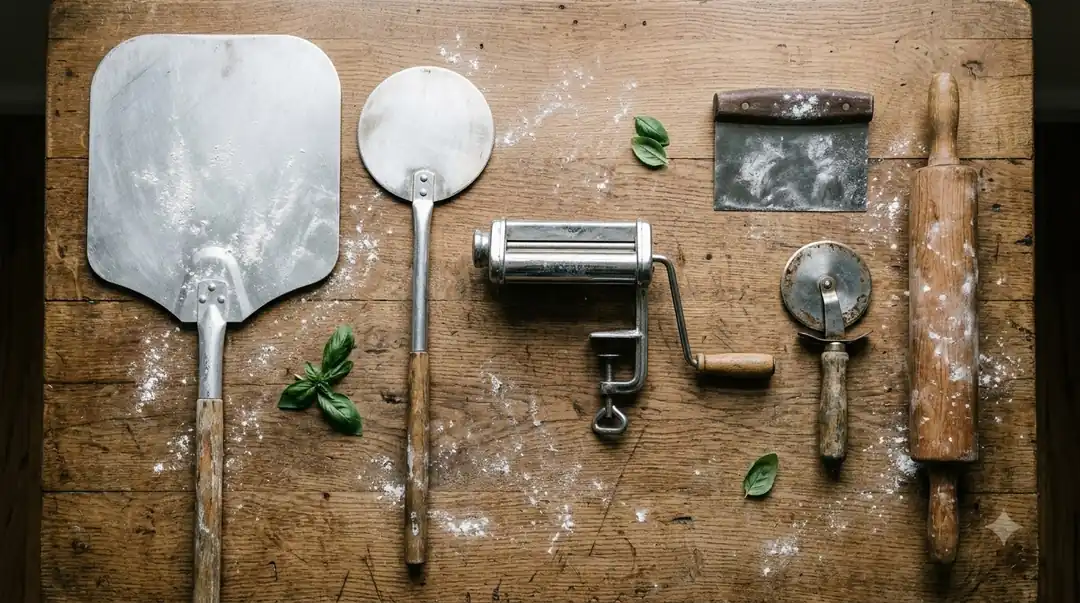

A pasta cutter wheel is a handheld wheel on a handle that cuts sheets of fresh pasta into strips, squares or ravioli. The right one depends on the edge you want and how many shapes you cut. Single wheels suit ravioli and decorative edges, while multi-wheel cutters suit long batches of strips of the same width.
Quick Picks: Pasta Cutter Wheel Types at a Glance
The main pasta cutter wheel types are the single fluted wheel, the single smooth wheel and the multi-wheel cutter. Each one suits a different shape, so start with the shape you cut most often.
| Type | Best for | Key fact |
|---|---|---|
| Single fluted wheel | Ravioli and decorative edges | Leaves a jagged, crimped edge |
| Single smooth wheel | Straight strips and squares | Leaves a clean, straight cut |
| Multi-wheel cutter | Batches of same-width strips | Wheel spacing sets the width |
The pasta cutter wheel options below are listed on Amazon, from a dual-headed stainless tool to a brass wheel with a wooden handle. Compare the edge type and wheel size with the shapes you cut most.

Norpro Grip-EZ Pastry & Ravioli Cutter Wheel
Pros & ConsViewHide
Reasons to buy
- Dual-headed tool: fluted wheel for scalloped edges, smooth wheel for straight cuts
- Stainless steel blades with a soft grip handle
- Over 5,000 Amazon ratings, 81% 5-star
Reasons to avoid
- Small wheels suit ravioli and strips, not long cuts across wide sheets
- Wheel size is fixed, with no adjustable spacing
- Hand wash and dry to protect the blades

Pros & ConsViewHide
Reasons to buy
- 1.6 inch stainless steel fluted wheel with a wooden handle
- Cuts and crimps ravioli, pastry and pie crust
- 413 Amazon ratings, 80% of them 5-star
Reasons to avoid
- Single fluted wheel, so no smooth edge option
- Wooden handle needs drying after washing
- Small wheel for wide pasta sheets

Homemade Pasta Cutter - Festooned Wheel
Pros & ConsViewHide
Reasons to buy
- Festooned (fluted) hand wheel for cutting pasta squares and strips
- Simple hand tool for small batches
- Tool only, so it is easy to clean and store
Reasons to avoid
- Cuts the dough only; filling and folding are manual
- Cut size depends on how you measure the sheet
- Not a dedicated tortellini shaper

Pasta Cutter Wheel - Fluted Pastry Cutter Double
Pros & ConsViewHide
Reasons to buy
- Double fluted wheel with a wooden handle
- Lowest price in this group
- Suited to ravioli, cookies and pizza
Reasons to avoid
- About 100 Amazon ratings
- 10% of ratings are 1-star or 2-star
- Fluted edge only, no smooth wheel
What a Pasta Cutter Wheel Does
A pasta cutter wheel is a kitchen tool used to cut pasta sheets and other doughs, and it usually has a small wheel mounted on a handle. You roll the wheel across the dough in a straight line to cut it. According to Wikipedia’s entry on pastry wheels, the same tool family is used to cut pastry and other doughs, and the wheel can leave a jagged cut or pattern in the dough.
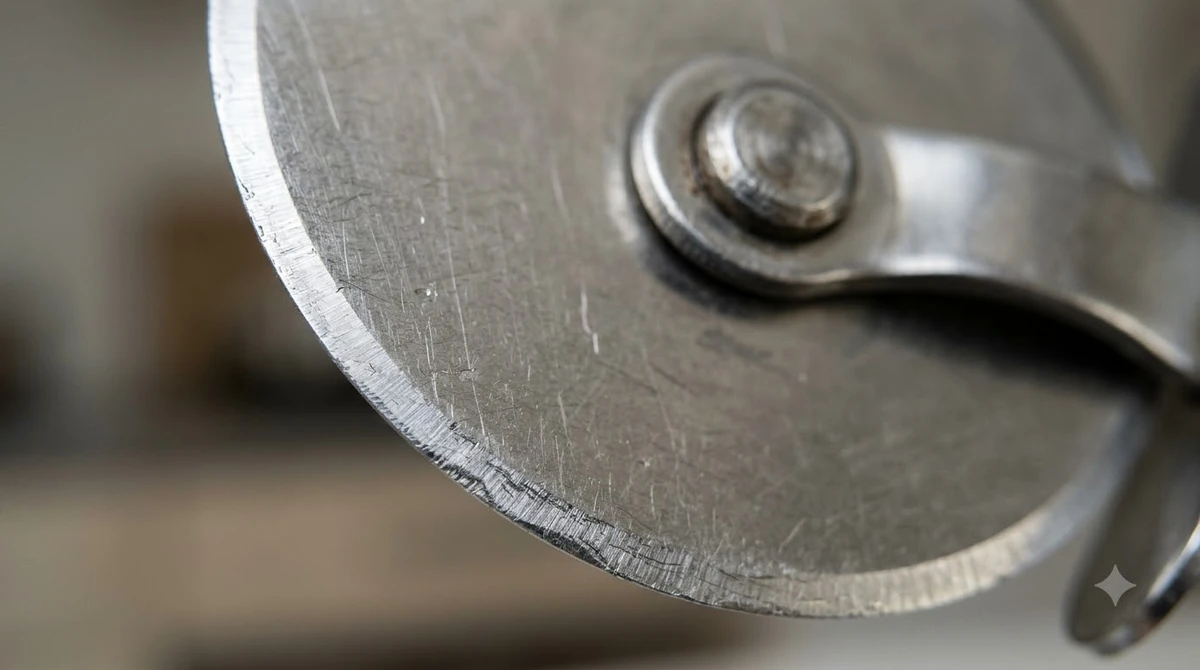
That jagged edge is the reason many cooks pick a fluted wheel for decorative shapes. Plain-edged wheels leave a straight line, which suits strips and squares that will not be filled.
Most pasta cutter wheels sold for home kitchens are a single wheel on one handle. Our guide to pasta cutters compares other ways to cut pasta. You can also find versions with several wheels, which cut more than one strip in a single pass.
Fluted, Smooth and Multi-Wheel Types
A fluted wheel gives a zigzag edge, a smooth wheel gives a straight clean cut, and a multi-wheel cutter sets several strips at once. Each type answers a different question about the shape you need.
Single Fluted Wheel
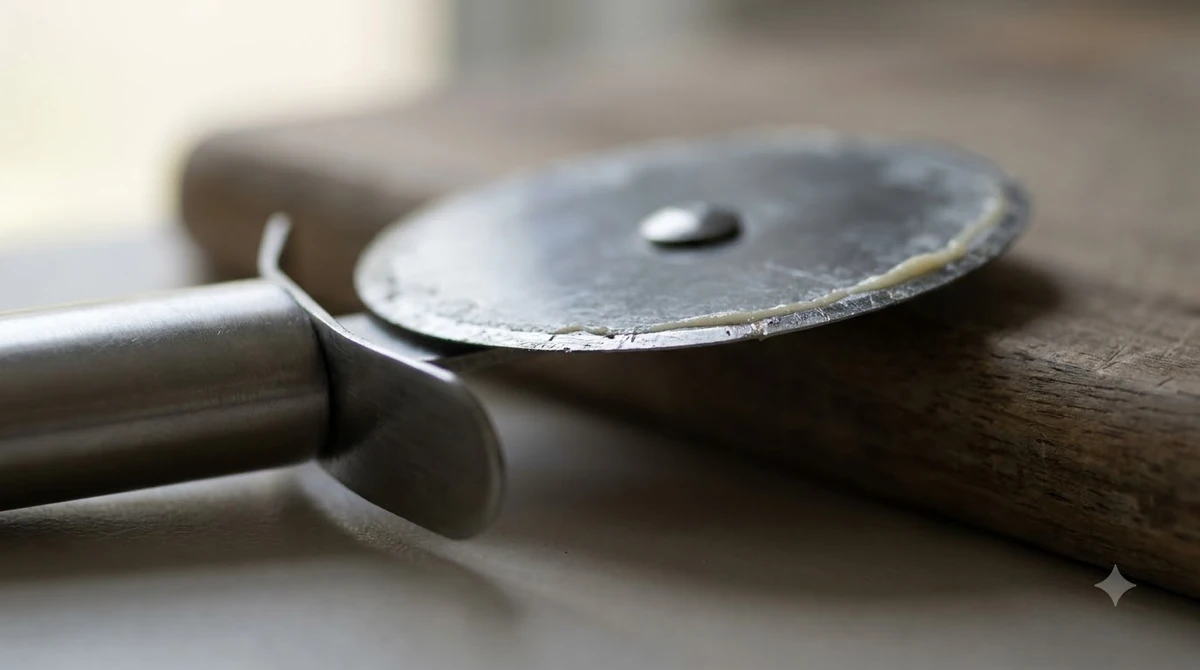
A fluted wheel is the usual choice for ravioli. Ravioli originated as a traditional food in Italian cuisine, and Wikipedia’s ravioli entry notes that they are commonly square, though circular and semi-circular forms are also made. A fluted edge fits that shape well because the crimp helps seal the two layers of dough along the cut. See our ravioli cutters guide for tools made for filled pasta.
Single Smooth Wheel
A smooth wheel is better for straight cuts. Use it for tagliatelle-style strips, squares for lasagne sheets, or any shape you will not fill. The edge stays clean, so the cut looks neat on the plate.
Multi-Wheel Cutter
A multi-wheel cutter holds several wheels on one handle. The spacing between wheels sets the width of each strip, so one pass gives you a full set of same-width noodles. Some adjustable models let you change the spacing or remove wheels, so check that feature before you buy. Professional kitchens may use several wheels together, while home cooks tend to start with a single wheel.
What to Look for in a Pasta Cutter Wheel
Edge type, wheel count, blade material and handle comfort matter most when you compare pasta cutter wheels. Start with the edge and the number of wheels, then check the rest. Most listings for this tool follow the same pattern, so the same checklist works across brands.
- Edge: fluted for ravioli and decorative edges, smooth for straight cuts.
- Wheel count: one wheel for varied shapes, several wheels for batches of one width.
- Blade material: brass, stainless steel and plastic each feel different in the hand and need different care. Check the product page for the exact material.
- Handle: a comfortable grip matters more when you cut a large batch of dough.
Who Should Buy Which Type
Buy a single fluted wheel if you mostly make ravioli, and a multi-wheel cutter only if you cut many strips of the same width. A single wheel also covers pie crust edges and lattice strips, so it works for baking as well.
Skip the multi-wheel type if you cut only one or two shapes. For a single shape, one pasta cutter wheel is enough. A fixed-spacing model only gives one strip width per pass, so a single smooth wheel is easier when you need mixed shapes.
Common Mistakes When Using a Pasta Cutter Wheel
The most common mistake is cutting dough that is too thick or too dry. The wheel drags, and the edge tears instead of cutting cleanly. Rolling the sheet to a consistent thickness matters more than the exact pasta cutter wheel you own, because an even sheet gives an even cut. A pasta rolling pin or a machine both work, and King Arthur says that without a machine you should roll the dough from thick to thin and aim for an even thickness throughout, as described on its fresh pasta recipe page. No machine at all? Read how to make pasta without a machine.
- Rolling the dough too thick, so the wheel cannot cut through in one pass.
- Letting the dough dry out on the surface before cutting, which causes tearing.
- Pressing too hard with a light wheel, which can distort the sheet.
- Cutting a sheet that is not supported on a flat surface, so it stretches.
How to Use and Care for a Pasta Cutter Wheel
Dust the wheel and the dough lightly with flour, roll the wheel firmly in one pass, and dry the wheel fully before you store it. If dough sticks to the wheel, a little more flour on the wheel and the surface is the first thing to try. King Arthur also tosses cut noodles in semolina and rests the dough for at least 30 minutes before shaping, which makes a sheet easier to roll and cut. More tools are in our gear and pantry guides.
- Flour the wheel and the dough surface lightly.
- Place the sheet on a flat, supported surface.
- Roll the wheel in one firm, straight pass.
- Wipe off dough residue and dry the wheel before storing it.
What Is Not Yet Verified and How to Check It
Exact wheel sizes, blade materials and prices vary by seller and by model, and this guide does not list them as fixed facts. Check the product page for the wheel diameter, the material and the current price before you buy, and compare the dimensions with the width of your pasta sheets.
The listings in the product box above show how much each pasta cutter wheel can differ. Norpro’s Grip-EZ is dual-headed, with a fluted wheel for scalloped edges and a smooth wheel for straight cuts, and it has a stainless steel blade and a Santoprene handle. Tredoni’s wheel is listed at 1.6 inches in stainless steel with a wooden handle, and the La Gondola cutter is brass with a wooden handle. FLATRI’s cutter is a fluted double-wheel model with a wooden handle. Compare these details with your own pasta shapes before you choose a pasta cutter wheel.
Frequently Asked Questions
Is a pasta cutter wheel the same as a pastry wheel?
In most kitchens, yes. A pastry wheel is a kitchen tool used to cut pastry and other doughs, and the same wheel design is often sold for pasta.
Should I buy a fluted or a smooth wheel?
Choose a fluted wheel for ravioli and decorative edges, and a smooth wheel for straight strips and squares. If you make both, a fluted wheel and a smooth wheel cover most home recipes.
Do I need a multi-wheel cutter?
Only if you cut many strips of the same width at once. Home cooks who cut varied shapes usually find a single pasta cutter wheel more flexible, and it costs less to start.
Where did ravioli come from?
Ravioli originated as a traditional food in Italian cuisine. They appear in the 14th-century cookbook The Forme of Cury under the name rauioles, according to the Wikipedia ravioli entry.
Can I use a pasta cutter wheel on pie crust?
Yes. A fluted pastry wheel is often used on pie crust and lattice strips, so one tool can cover pasta and baking.
If you mostly make ravioli, a single fluted wheel is the simplest buy. Choose a multi-wheel cutter only when you cut many strips of one width, and check the wheel size and material on the product page before you order.
 8 min readGear & PantryPasta Cutter Guide: 3 Types, Blades and How to Use OneUpdated Nov 10, 2026
 9 min readGear & PantryRavioli Cutter Guide: Types, Sizes and How to Use OneUpdated Nov 10, 2026
 9 min readGear & PantryPizza Cutter Guide: 2 Best Types and How to Choose OneUpdated Nov 16, 2026
 8 min readGear & PantryHow to Use a Pasta Cutter at HomeUpdated Nov 10, 2026
 8 min readGear & PantryBest Flour for Pasta: How to Choose by Dough TypeUpdated Nov 16, 2026
 9 min readGear & PantryBest Whole Wheat Pasta: Types, Texture and How to ChooseUpdated Nov 12, 2026