

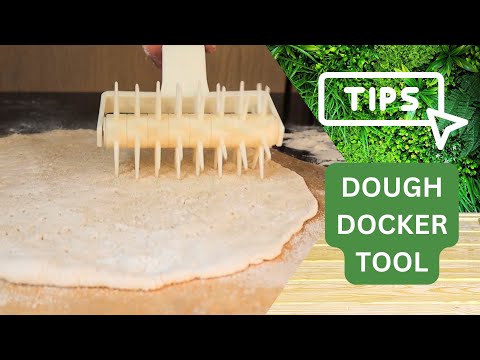
A pizza dough docker is a tool with pins or spikes that makes small holes in raw dough so steam can escape in the oven. According to the patent for a hand-held docker, this helps prevent large bubbles or blisters from forming during baking.
Dockers come as hand tools, rolling barrels and industrial machines. Check the barrel width, pin length and materials before you buy a pizza dough docker, and match the tool to how much dough you make.
What a pizza dough docker does
A pizza dough docker perforates raw dough so steam can escape while it bakes, which helps control large bubbles and blisters.
The pizza dough docker is pressed into the dough so it leaves a pattern of small holes across the surface. Dough left unpierced can puff up unevenly, and the patent says the large blisters that form are susceptible to burning. The patent for a hand docker describes this as a way to let steam out before it can lift the dough into one large pocket. The same idea applies to rolling barrels and to the industrial machines covered later in this guide. US patent 7,677,879 on dough docking describes the hand tool and its purpose in detail.
In practice, docking does three things:
- It makes small openings in the dough surface.
- It gives steam a path out while the crust bakes.
- It targets large blisters, not every bubble.
Why docking helps control large bubbles
Docking lets steam leave the dough, so large blisters are less likely to form, according to the patent for a hand docker.
The patent calls large blisters unsightly and says they are susceptible to burning during baking. A docked surface gives the steam a route out, so the dough can bake more evenly across the top instead of forming one large pocket. For a crisper base overall, see our tips on how to get crispy pizza crust.
A pizza dough docker is one step in preparing dough, not a complete fix. The patent says docking helps prevent large bubbles, and it does not claim that docking removes every bubble. Other factors, such as how you shape the dough, are outside what that patent covers.
Steam builds up inside the dough as it heats, and the holes give it a way out. A typical sequence for a home pizza looks like this:
- Shape the dough to the final size you want to bake.
- Dock the surface with the tool.
- Bake the pizza as your recipe describes.
Types of pizza dough dockers
The three common types of pizza dough docker are the hand docker with a curved base, the roller docker with a pinned barrel and the industrial machine with motor-driven spiked wheels.
| Type | How it works | Where it fits |
|---|---|---|
| Hand docker | Pressed into the dough, then rocked from side to side | Docking one pizza at a time |
| Roller docker | A barrel with pins that rolls across the dough | Dough you roll out flat |
| Industrial machine | A motor turns a shaft with spiked wheels while dough moves along a tray | High-volume production lines |
Hand dockers
The hand docker in US 7,677,879 has a base that is not flat, so you can rock it across the dough. The patent’s approximate figures give a base about 8 inches across, which suits a 9-inch dough. Each protrusion is about 0.50 inch high and ends in a flat tip.
Roller dockers
Roller dockers use a barrel with pins that rolls across the dough. Our guide to the pizza dough roller types compares rolling pins, dockers and sheeters. The Vollrath product page for its dough dockers describes an HDPE plastic barrel with a stainless steel handle and stainless steel pins. Its barrel is listed in two widths, 2-3/4 inches or 5 inches.
Industrial machines
The industrial pizza dough docker in US patent 4,573,388 for a pizza docker uses wheels with radial spines on a drive shaft, and dough moves along a tray beneath them. The patent was filed in 1984 and granted in 1986. It gives no numeric dimensions, so it is a reference for high-volume work rather than a home tool.
What to check before you buy
Check barrel width, pin length and materials first, since these are the specifications a pizza dough docker listing states most clearly.
Barrel width tells you how much of the dough one pass covers. Pin length affects how deep the holes go, though this listing does not state a depth. Materials tell you what the tool is made of. The Vollrath product page for its dough dockers gives the example below.
- Barrel width: 2-3/4 inches or 5 inches, according to the listing.
- Pin length: 10 mm stainless steel pins.
- Materials: HDPE plastic barrel and a stainless steel handle.
The listing does not state the pin count, product type or whether the tool is dishwasher safe. Check the listing for the exact model you plan to buy before you rely on those details.
How to dock pizza dough
To dock dough with a hand docker, shape the dough, press the tool onto it and rock it from side to side, as the patent describes.
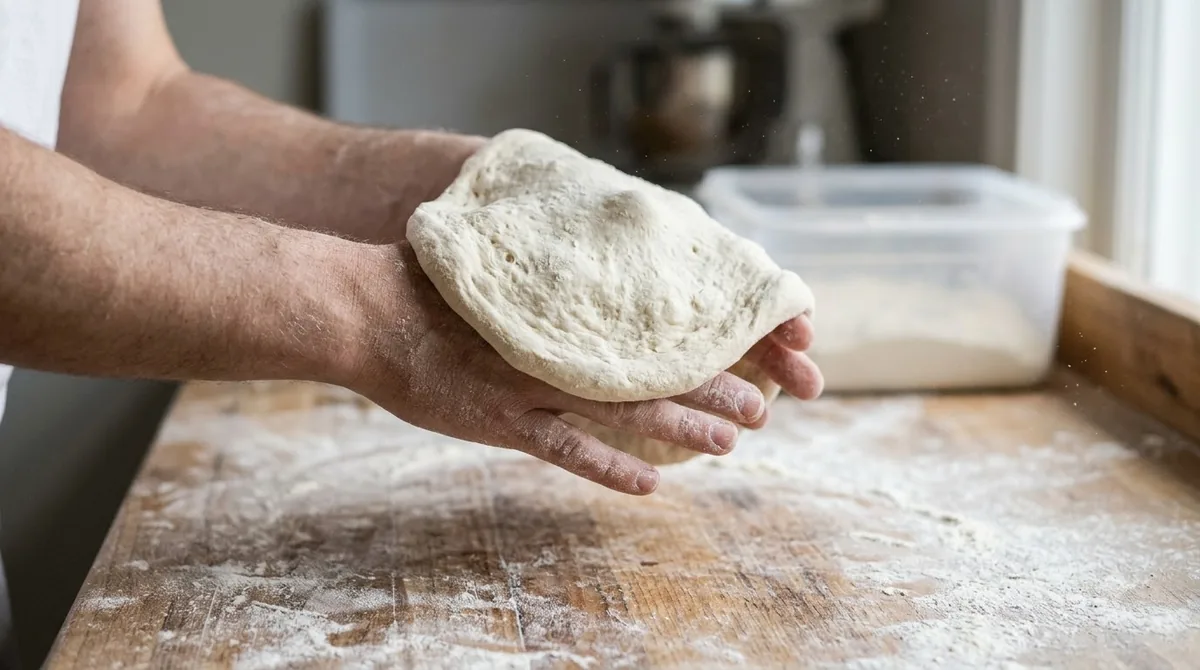
- Shape the dough first, using our guide on how to stretch pizza dough, so the surface you dock is the size you plan to bake.
- Place the tool on the dough and press it in.
- Rock the tool from side to side across the surface.
- Lift the tool and check that the dough is not torn before you bake.
The patent does not state how deep to press or how close to space the holes, so this guide does not give a number for either. Follow the maker’s instructions for the pizza dough docker you own, and test on a spare piece of dough before you dock the pizza you plan to serve.
Common mistakes to avoid
The two common problems are tearing the dough and expecting a pizza dough docker to stop every bubble. Both come from using the tool without a plan, so it helps to think through the steps before the dough is on the bench.
- Pressing too hard or dragging the tool across the dough, which can tear it (more on why pizza dough tears). The patent says earlier docking tools had a tendency to tear uncooked dough.
- Choosing a width that does not match your pizza. The hand docker example has a base about 8 inches across for a 9-inch dough.
- Expecting a pizza dough docker to stop all bubbles. The patent describes it as a way to prevent large bubbles or blisters.
- Skipping the shaping step, since the shape you dock sets the surface the steam has to escape from.
What the sources do not confirm
The sources used here do not confirm docking depth, hole spacing, the pin count for most models, or cleaning rules, so this guide does not give those numbers for any pizza dough docker.
Retail price ranges appeared only in search results, not on a page we read, so they are left out. Prices also change, so the retailer is the best place to check them.
- Docking depth and hole spacing: check the instructions for your tool.
- Pin count: check the product listing for the exact model.
- Cleaning and dishwasher safety: check the maker’s care guide.
- Current prices and stock: check the retailer before you buy.
Frequently Asked Questions
Does a pizza dough docker stop every bubble?
No. The patent for a hand docker describes docking as a way to prevent large bubbles or blisters, not all bubbles. How you handle and shape the dough also affects the crust, and the patent does not cover those steps.
Will a pizza dough docker tear my dough?
It can if you press too hard or drag the tool. The patent says earlier docking tools had a tendency to tear uncooked dough, and its design aims to reduce that problem. Press evenly and check the surface after each pass.
How wide should a pizza dough docker be?
It depends on the size of your pizza. The hand docker example in the patent has a base about 8 inches across for a 9-inch dough. The Vollrath roller listing shows barrels of 2-3/4 inches or 5 inches, so match the width to your dough.
Is the Vollrath dough docker still sold?
The Vollrath product page, as read on 2026-11-07, marks the Dough Dockers as discontinued. Check the current listing or a supplier before you plan a purchase, since availability can change.
Do I need a docker for every pizza?
Not necessarily. A pizza dough docker targets large blisters, so whether you need it depends on your dough and how it bakes. Bake one pizza with docking and one without to compare the crust for your own recipe.
Are industrial pizza dockers for home use?
Usually not. The industrial design in US 4,573,388 uses a motor-driven shaft with spiked wheels that move dough along a tray, which suits high-volume production. Home cooks usually choose a hand or roller docker instead.
A pizza dough docker is a small tool with one clear job: it lets steam out of the dough and helps control large blisters. Choose it by barrel width, pin length and materials, then check the maker’s listing for anything this guide does not confirm. Where a number is missing, look for it in the manufacturer’s instructions rather than guessing.
 8 min readGear & PantryPizza Dough Roller: Types, Uses and What to Check Before You BuyUpdated Nov 8, 2026
 9 min readGear & PantryHow to Use a Pizza Dough DockerUpdated Nov 11, 2026
 9 min readGear & PantryBest Ninja Artisan Pizza Oven Covers: What to Check Before You BuyUpdated Nov 11, 2026
 8 min readGear & PantryPizza Dough Proofing Box: What It Does and How to Use OneUpdated Nov 10, 2026
 10 min readGear & PantryOoni Koda 12 Regulator: What It Does, How to Check It, and What to BuyUpdated Nov 11, 2026
 8 min readGear & PantryRavioli Maker: What to Check Before You BuyUpdated Nov 17, 2026