
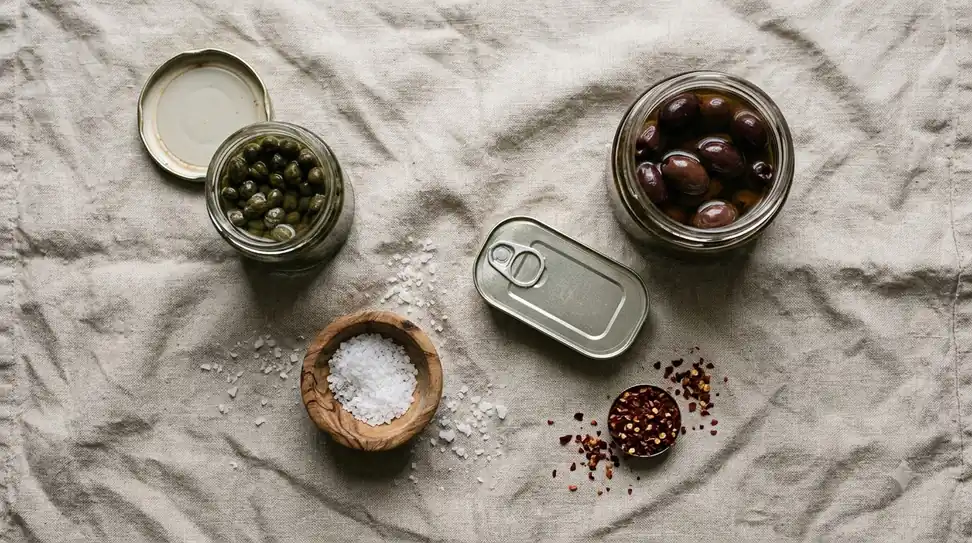

The best capers match how you cook, so check the bud size, the packing medium and the sodium line on the label before you buy. Capers are the pickled flower buds of a Mediterranean shrub, which means the jar itself tells you most of what you need to know.
Brand names matter less than the label. This guide explains how to find the best capers by reading a caper jar and matching the product to your recipe.
What capers are and how they are made
Capers are the closed flower buds of Capparis spinosa, a perennial shrub native to much of the Mediterranean. The buds are picked, pickled and sold in jars or cans.
According to Wikipedia’s caper entry, the process is short. Harvesters pick the buds, and the pages we read say picking happens daily because the smallest buds sell for the most.
- Pick the closed buds, usually in the morning.
- Pickle them in salt or in a salt and vinegar solution.
- Drain the pickled buds.
- Sell them in jars or cans.
The flavor develops when glucocapparin is released from each bud. Wikipedia compares the taste to black pepper or mustard, which explains why a few buds can add a sharp note to a dish without much effort.
How to choose the best capers by size
Ripe caper buds range from under 7 mm to more than 14 mm, and size is the first comparison to make on the label. The smallest buds sell for the most, so a size statement tells you what you are paying for.
Some sellers use grade names for bud size. The sources we read did not define any grade names, so this guide does not explain them. Use the size printed on the jar, or a millimeter range, as the basis for comparison.
| Criterion | What to look for | Why it matters |
|---|---|---|
| Bud size | A stated size or millimeter range | Ripe buds run from under 7 mm to more than 14 mm, so size varies widely |
| Packing medium | Wording for salt, salt and vinegar, or brine | Shows how the buds were preserved before sale |
| Sodium | The sodium line per 100 grams | Pickled capers are high in sodium because of the salt in the brine |
| Origin | A stated place of origin or a protected name | Wikipedia links the best capers to Pantelleria, as a belief rather than a measurement |
| Ingredients | A short list such as capers, salt, water and vinegar | Each extra ingredient is one more item to check against your diet |

Packing medium: salt, salt and vinegar, or brine
Capers are pickled in salt or in a salt and vinegar solution, so the packing wording tells you how the buds were preserved. Check it when you compare the best capers on a shelf. Wikipedia describes both methods and notes that the buds are drained after pickling.
- Salt wording means the buds were preserved in salt.
- Salt and vinegar wording means both were used in the pickling solution.
- Brine wording means the buds are sold in a salty liquid, which Wikipedia names as the reason pickled capers are high in sodium.
The sources we read did not give a home rule for rinsing or draining before cooking. Check the packaging for any instruction, and follow it before you add the capers to a recipe.
Reading the label and sodium
Canned, pickled capers contain about 2,350 mg of sodium per 100 grams, which Wikipedia lists as 102 percent of the Daily Value. Sodium is therefore the first number to compare between two jars.
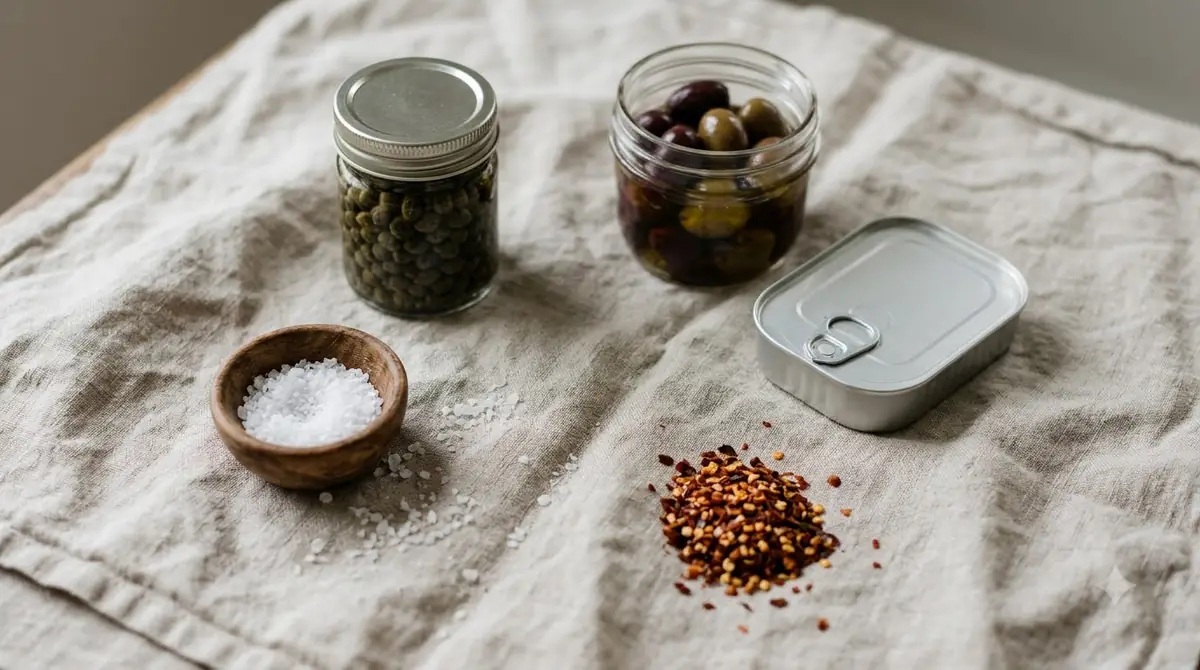
According to Wikipedia’s nutrition summary, canned capers are about 84 percent water, with 5 percent carbohydrates and 2 percent protein. The brine is where most of the salt sits, so the sodium line tells you more than the calorie count does.
Use the per-100-gram figure when you compare the best capers in the store, because serving sizes differ between labels. Run through this checklist before you put a jar in your basket:
- Compare the sodium per 100 grams on each jar.
- Check the packing medium wording.
- Look for a stated size or millimeter range.
- Scan the ingredient list for anything beyond salt, water and vinegar.
- Read any drain or rinse instruction on the packaging.
Capers vs caper berries
Capers are the buds of the caper plant, while caper berries are its fruit, and both are usually sold salted or pickled.
| Item | Part of the plant | Usual form for sale |
|---|---|---|
| Capers | Flower bud | Salted or pickled |
| Caper berries | Fruit | Salted or pickled |
Read the product name before you buy. A jar labeled caper berries is a different product from a jar of buds.
Where the best capers come from
Wikipedia says the best capers are believed to grow on Pantelleria, an Italian island, and Italian Wikipedia lists the Pantelleria caper with IGP status.
The English Wikipedia entry presents Pantelleria as a belief rather than a measured ranking. Treat origin as one detail on the label, not as proof of quality by itself.
Italian Wikipedia reports that the Pantelleria caper holds Indicazione geografica protetta (IGP) status. An IGP is a protected geographical indication, so a jar that names Pantelleria should show that name in the label. Check the EU register for the current entry before you rely on it.
Growing conditions also shape the crop. The Capparis spinosa entry reports mean annual temperatures above 14 °C (57 °F) in cultivated areas, and a rainy spring with a hot, dry summer is considered advantageous.
Brand names matter less than the label
Brand choice matters less than the label details when you pick the best capers, since bud size, packing medium and sodium decide how a jar fits your cooking. This guide does not rank or name caper brands because the pages we read did not support a brand comparison.
Two jars from different companies can carry the same size wording and sodium line. In that case the label gives a more reliable comparison than the name printed on the front.
Using capers in cooking
Capers are common in Italian cooking, especially in Sicilian and southern Italian dishes, where they appear in salads, pasta, meat dishes and sauces. Wikipedia lists these uses as typical.
Because even the best capers are salty, taste a dish before you add more salt. The pickled flavor is strong, so a small amount usually goes further than a large spoonful.
- Salads, where a few buds add a peppery note.
- Pasta and sauces such as homemade marinara sauce, common in southern Italian cooking.
- Meat dishes, where the sharpness balances rich flavors.
Capers often sit alongside extra virgin olive oil and other pickled vegetables in a pantry. The same label-first approach works for other pantry buys, such as the best canned anchovies.
Frequently Asked Questions
What are capers made of?
Capers are the closed flower buds of the Capparis spinosa shrub. Before they are sold, the buds are pickled in salt or in a salt and vinegar solution, then drained and packed.
How big should good capers be?
There is no single size that defines the best capers. Wikipedia reports ripe buds from under 7 mm to more than 14 mm. Check the size on the jar and choose the size that suits your recipe.
Are capers high in sodium?
Yes. Canned, pickled capers contain about 2,350 mg of sodium per 100 grams, around 102 percent of the Daily Value, according to Wikipedia. Compare the sodium per 100 grams on each jar before you buy.
Are caper berries the same as capers?
No. Capers are the flower buds of the caper plant, and caper berries are its fruit. Both are usually salted or pickled, so check the product name on the label before you buy.
Where do the best capers come from?
Wikipedia says the best capers are believed to grow on Pantelleria, an Italian island. Italian Wikipedia lists the Pantelleria caper with IGP status. Check the EU register for the current entry before you rely on that protected name.
The best capers for you are the jar whose size, packing medium and sodium line suit how you cook, rather than relying on brand names alone. If your recipe already uses salt, factor the brine in before you add more. Check the packaging for any drain or rinse instruction, since the sources we read did not set a home rule.
 8 min readGear & PantryParmesan Cheese Grater: How to Choose, Use and Store OneUpdated Nov 17, 2026
 9 min readGear & PantryBest Pizza Seasoning: How to Choose a Good BlendUpdated Nov 8, 2026
 9 min readGear & PantryThe Best Italian Pasta Brand: How to Choose a Good BagUpdated Nov 17, 2026
 8 min readGear & PantryBest Balsamic Vinegar: How to Choose a Good Bottle in 2026Updated Nov 17, 2026
 9 min readGear & PantryBest Dried Oregano: How to Pick the Right Type and Store ItUpdated Nov 10, 2026
 7 min readGear & PantryOoni Koda 2 Cover: What the Carry Cover Does and How to Store the OvenUpdated Nov 10, 2026