
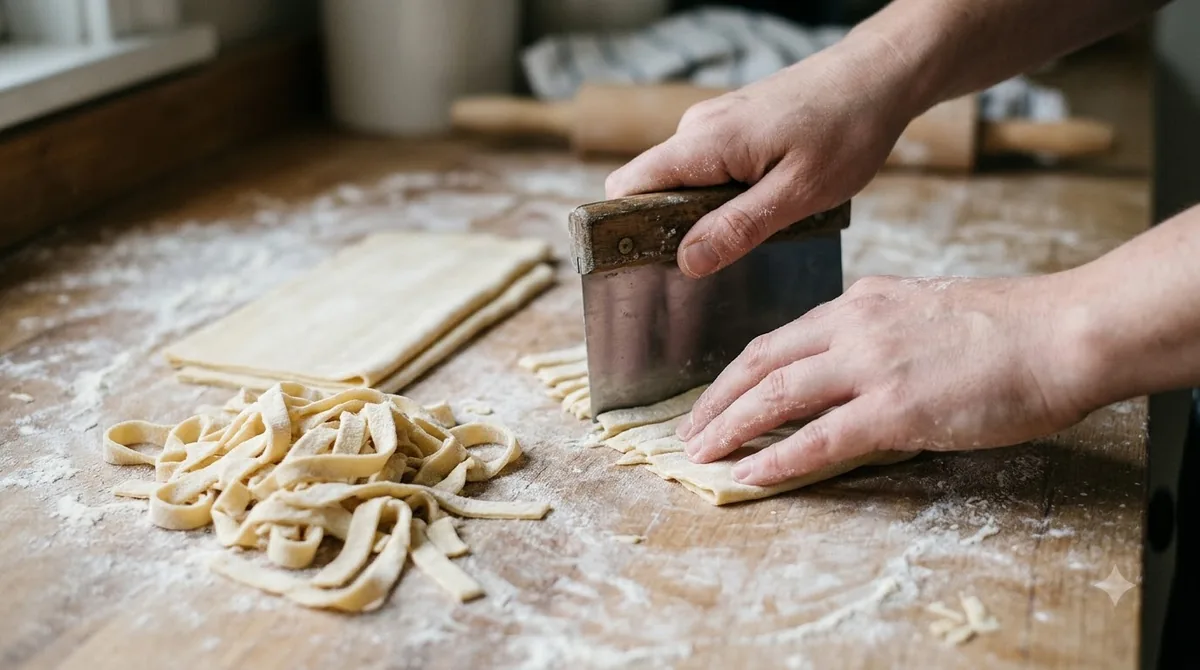

Rustichella d’Abruzzo pasta has a strong process on paper, and the answer to is rustichella d abruzzo pasta good depends on the shape you cook and the sauce you make. The brand and its UK importer describe bronze-die extrusion and slow drying for up to 56 hours. No independent long-form test was found when this review was written, so the verdict rests on those published claims.
To answer “is rustichella d abruzzo pasta good” for your own kitchen, use the process facts below to judge fit, not as proof of taste. Each claim is marked by its source, and the points still unchecked are listed at the end.
What Rustichella d’Abruzzo Is and Where It Comes From
Rustichella d’Abruzzo is an Italian pasta brand from Abruzzo, a region in central Italy, and retailer copy dates the company to 1924 in Pianella, a claim this review has not verified.
The UK importer Piccantino lists the brand’s range on its product page, which shows about 30 items. The range includes spaghetti, tagliatelle, fusilli, trofie, fregola tostata, lasagne, gnocchi, and gluten-free gnocchi. Shapes and lines can differ between markets, so check the individual pack for the shape you need.
The brand’s official website did not load when this review was prepared. That means the company’s own statements about history, factories, and product sheets could not be read directly. Treat the founding year as unverified until you can read the brand’s own page.
What the Brand Says About Its Bronze Dies and Drying
The brand says its pasta is extruded through hand-forged bronze dies and dried slowly for up to 56 hours, but it does not publish a drying temperature.
Extrusion means the dough is pushed through a shaped die. The importer’s product copy says the dough is pulled through hand-forged bronze plates, and then dries slowly for up to 56 hours. Piccantino’s product page for Rustichella d’Abruzzo is the main source for these process claims. The page gives no drying temperature, so the drying effect on texture cannot be checked from it.
Bronze dies leave a rougher surface than smooth Teflon dies. Some retailer listings say that roughness helps sauce cling. That is a retailer claim and was not checked against an independent test, so treat it as a likely benefit rather than a measured one.
The importer lists the ingredients as Italian durum wheat semolina, fresh eggs and water. Egg-based products add eggs, so the label on each shape decides whether it is an egg pasta or a semolina and water pasta. Check these four points on the pack:
- The die wording, such as bronze die or bronze-cut.
- The ingredient line, which shows semolina and water or semolina, eggs and water.
- The drying claim, which the brand states as up to 56 hours.
- The country of production printed on the pack.
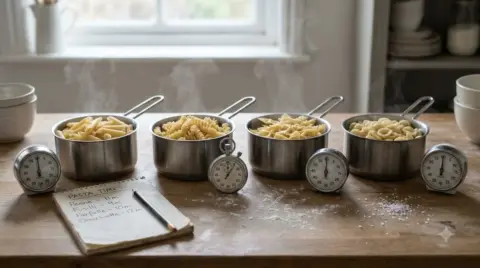
A simple home check helps you judge the texture for yourself. Cook one shape for the time printed on the pack, then taste it and look at three things: the bite, the surface, and how well a small spoonful of sauce clings. This check does not prove the brand’s claims, but it tests the result on your own stove, which is what matters most to a home cook. Is rustichella d abruzzo pasta good for your sauce? Test it with the sauce you make most often.
Shapes, Lines, and How It Cooks
The range covers long cuts such as spaghetti, shaped cuts such as fusilli and trofie, and gnocchi, so the best fit depends on the sauce you plan to make.
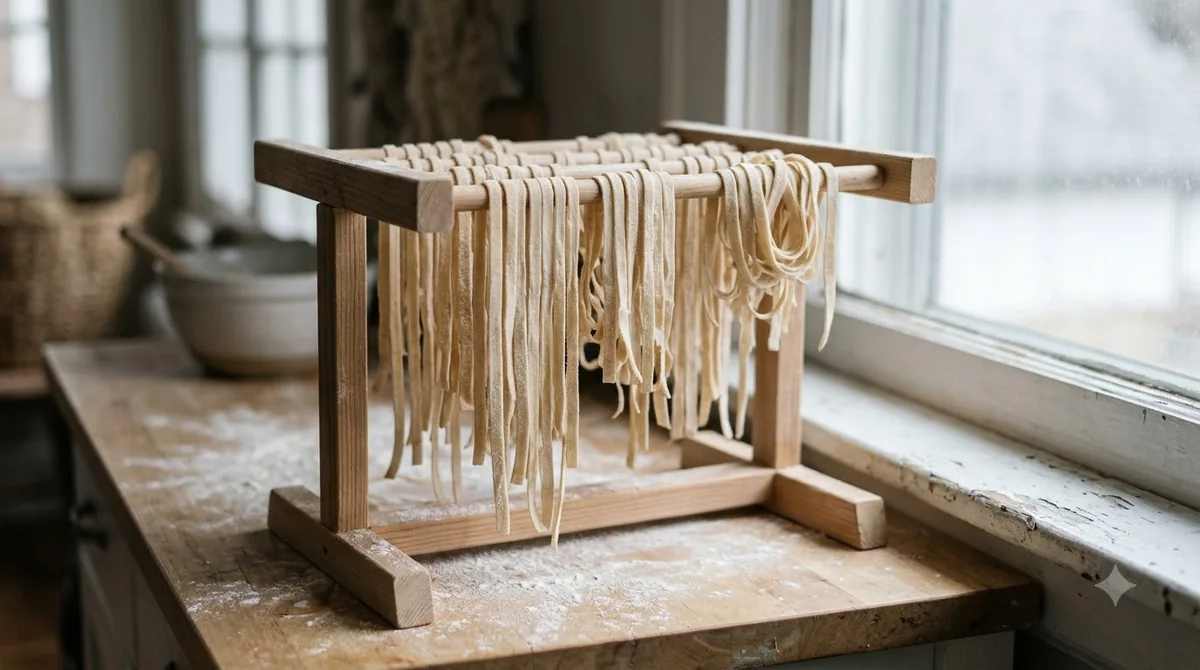
| Shape or line | Common sauce pairing | Why it fits |
|---|---|---|
| Spaghetti | Oil, tomato, or light seafood sauce | A long cut that suits thin sauces |
| Tagliatelle | Meat ragù or a rich butter sauce | A wide ribbon that holds heavier sauce |
| Fusilli | Chunky vegetable or meat sauce | The spirals catch small pieces |
| Trofie | Pesto | A short twisted shape that holds pesto |
| Gluten-free gnocchi | Butter and sage, or a simple tomato sauce | A gluten-free option in the range |
Cook any shape in plenty of well-salted water, follow the time printed on the pack, and taste a piece a minute or two before that time. The brand does not publish a cooking chart in the sources read for this review, so the pack is the reference for timing.
Do not assume that every shape is sold in every market, and check the product page before you buy.
Long, thin shapes suit smooth sauces that coat the strands, while short or shaped cuts suit chunky sauces that need something to hold. This is a general cooking principle, not a test result for this brand, but it is the simplest way to choose from this range. If you cook one sauce most often, buy the shape that matches it first.
Is Rustichella d Abruzzo Pasta Good Value?
No price was confirmed from a fetched page, so value has to be judged by the price per ounce or gram on the day you buy.
Prices change by retailer, pack size, and shipping, and a figure seen in a search snippet can be out of date. A unit-price comparison on the same product page gives a fairer answer than one pack price, and it is the best way to judge if is rustichella d abruzzo pasta good value for your budget. Bronze-die pasta is often sold above mass-market dried pasta, but that is a general market pattern, not a figure for this brand. To compare other brands on price, see these bronze cut pasta brands, this Garofalo pasta review or this La Molisana pasta review.
Use this checklist before you decide whether this brand is worth the money:
- Compare the price per ounce or gram, not the pack price.
- Check the pack size, since it differs between shapes and sellers.
- Ask whether you cook that shape often enough to finish the pack.
- Add shipping if you buy from a remote seller.
Where to Buy and What Is Still Unverified
The UK importer Piccantino lists Rustichella pasta, but this review did not confirm current stock or price.
Stock and prices change often, so check the product page on the day you buy. The points below were not verified in this review and should be checked before you rely on them:
- The official brand website, which did not load in this run.
- The 1924 founding date and the Pianella location, which come from retailer copy.
- The claim that the rough surface helps sauce cling, which comes from a retailer listing.
- The current price and stock level.
- Any independent taste or texture test, since none was found.
- The drying temperature, which the brand does not publish.
The fastest way to check the open points is to read the brand’s own product sheet, the ingredient line on the pack, and the date on a retailer listing. If a retailer’s copy and the brand page disagree, trust the brand page and the pack label. Until then, keep the founding date, the sauce-cling claim, and the price marked as unconfirmed.
Frequently Asked Questions
Is Rustichella d’Abruzzo pasta bronze-drawn?
The brand and its UK importer say it is extruded through bronze dies. Check the pack for the die wording on the specific shape you buy.
How long does Rustichella pasta dry?
The importer’s page says the pasta dries slowly for up to 56 hours. No drying temperature is given, so this review cannot confirm how that compares with other brands.
Is Rustichella pasta made with eggs?
The importer lists durum wheat semolina, fresh eggs and water as the ingredients, and some products are egg-based. Read the ingredient line on each shape before you buy.
Does Rustichella make gluten-free pasta?
The importer lists gluten-free gnocchi in its range. Check the label for any other gluten-free option, because the range can differ between markets.
Is rustichella d abruzzo pasta good for everyday cooking?
Based on the process claims and the range, it suits cooks who want a textured dried pasta for sauces they make often. No independent taste test was found, so judge it by cooking one shape you already know well.
Is there an independent review of Rustichella pasta?
No long-form independent test was found in this run. Retailer pages show few or no customer reviews, so the claims in this article rest on brand and importer copy.
The simplest way to answer whether is rustichella d abruzzo pasta good for you is to buy one shape you cook often, compare its unit price, and judge the texture and sauce fit yourself. Treat the brand’s process claims as claims until its own site or an independent test confirms them. More pasta and pantry picks are in the gear and pantry guides.
 10 min readGear & PantryIs De Cecco Pasta Good? A Review of Taste, Texture and QualityUpdated Nov 10, 2026
 9 min readGear & PantryThe Best Italian Pasta Brand: How to Choose a Good BagUpdated Nov 17, 2026
 8 min readGear & PantryBest Jarred Pasta Sauce: How to Pick a Good JarUpdated Nov 17, 2026
 9 min readGear & PantryBarilla Al Bronzo Review: Is Bronze-Die Pasta Worth It?Updated Nov 9, 2026
 9 min readGear & PantryLa Molisana Pasta Review: Bite, Brand and What to Check Before You BuyUpdated Nov 8, 2026
 9 min readGear & PantryGarofalo Pasta Review: Is This Bronze-Drawn Italian Pasta Worth It?Updated Nov 8, 2026