
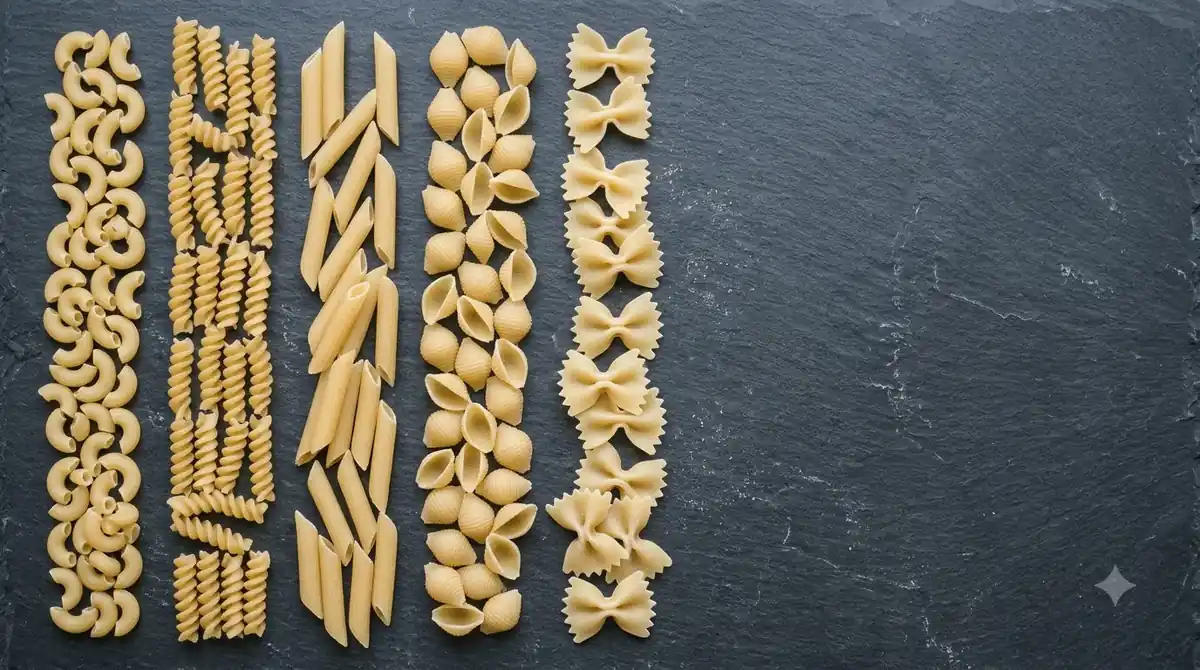

Ditaloni pasta is the largest of the three short tube shapes in the ditale family. Its name means “big thimbles” in Italian, and it comes in grooved and smooth versions for different sauces. Ditaloni pasta suits chunky sauces, creamy soups, salads and baked dishes better than thin broth.
What Is Ditaloni Pasta?
Ditaloni pasta is a short tube shape, the largest of three ditale sizes, and its name comes from the Italian word for thimble. Ditale means thimble, and the endings set the size: -oni means big and -ini means little.
According to The Pasta Project’s guide to ditalini, ditaloni pasta are the big thimbles, ditali are the little thimbles, and ditalini are the very little ones. The family is traced to Southern Italy, particularly Campania, so the shape reflects a regional pasta tradition rather than a single brand.
In practice, the family works as a set of related sizes rather than one fixed product. If a recipe calls for ditaloni but your shop only has ditali, the difference is one size step, and the basic method of cooking and saucing stays the same.
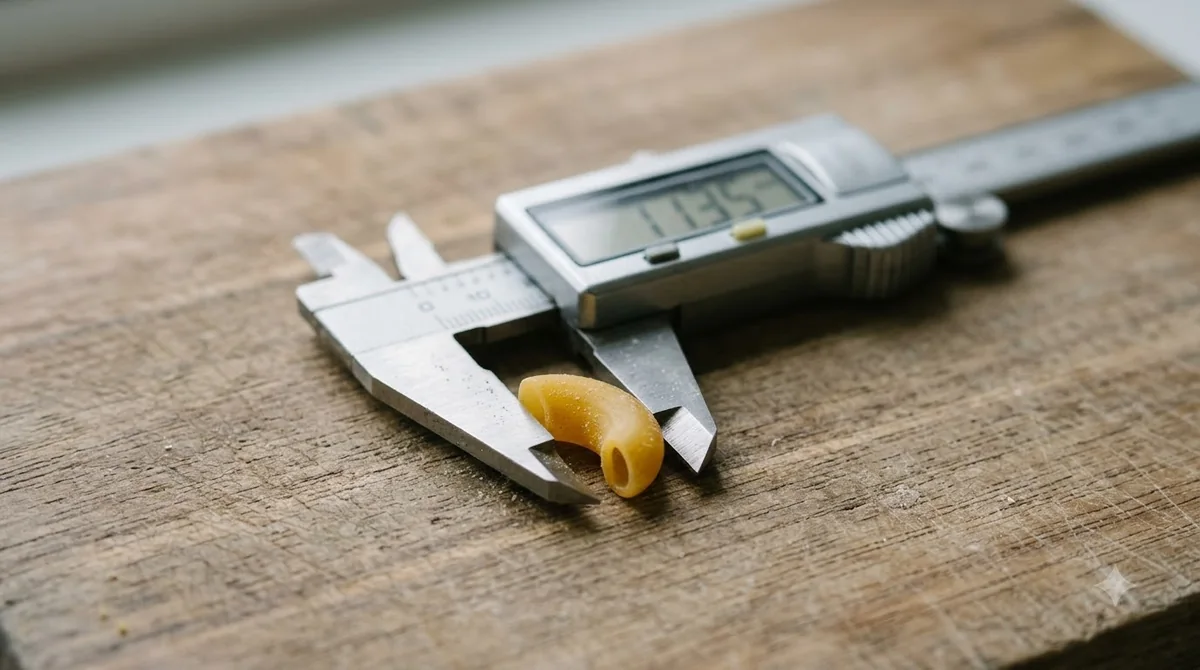
Scale matters when you shop. Garofalo’s N° 53 ditaloni pasta, one brand’s product, measures 10 mm long and 1.25 mm thick, which gives you a concrete reference point. Other brands can cut the same name to a different size, so the pack is the better guide when two boxes look alike.
Ditaloni vs Ditalini and Ditali
Ditaloni pasta is bigger than ditali and ditalini, so it suits sauces and bakes more than broth. The three shapes share one family and one basic tube form, and the main difference you will notice is size and how each one is used in the kitchen.
| Shape | Meaning in Italian | Relative size | Common use |
|---|---|---|---|
| Ditalini | Very little thimbles | Smallest | Mainly soups |
| Ditali | Little thimbles | Middle | Creamier soups, salads, bakes |
| Ditaloni | Big thimbles | Largest | Sauces, salads, bakes |
The Pasta Project notes that ditaloni pasta and ditali both work in creamier soups, in salads and in pasta bakes, while ditalini are mainly used in soups. Our guide to ditalini pasta covers that smallest size. Ditaloni are the shape to reach for when the sauce needs to be the main event, and ditalini when the pasta is one part of a broth.
Names do not always match the box. The same guide says there is no official standard that pasta makers follow, so sizes and names vary between brands. A bag labelled ditaloni pasta from one producer can look close to a ditali from another, so compare the pack size and photo rather than the word alone.
Rigate or Lisci: Which Ditaloni to Choose
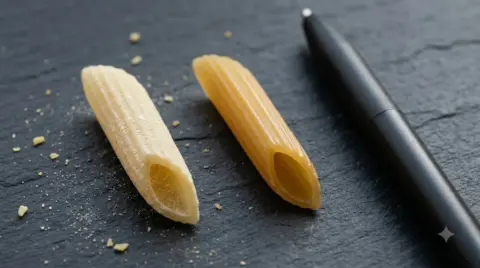
Grooved (rigate) ditaloni pasta suits heavier sauces, while smooth (lisci) ditaloni suits soups and lighter sauces. The surface decides how much sauce the tube can grip, so the choice affects the final dish more than the size does.
The grooves give a sauce more places to cling. A chunky tomato sauce, a meat ragu or a seafood sauce with pieces in it sits well in ridged tubes, because the sauce stays on the pasta instead of pooling at the bottom of the bowl. Ridged pasta is the default pick when the sauce is thick.
Smooth ditaloni pasta works better when the sauce is thin, or when the pasta goes into a soup or a creamy bake where the sauce is spread through the dish. The trade-off is that a smooth tube holds less sauce on its surface, so you may need to stir it more. Garofalo’s N° 53 is a smooth product, and the brand describes its open shape as one that lets sauce cling, which is a claim about that product only. For a grooved version, check the pack for the word rigati.
How to Cook Ditaloni Pasta
Cook ditaloni pasta for the time printed on the package, because Garofalo’s N° 53 lists 12 minutes on its own page and other brands can differ. The printed time is the best starting point for any box you buy.
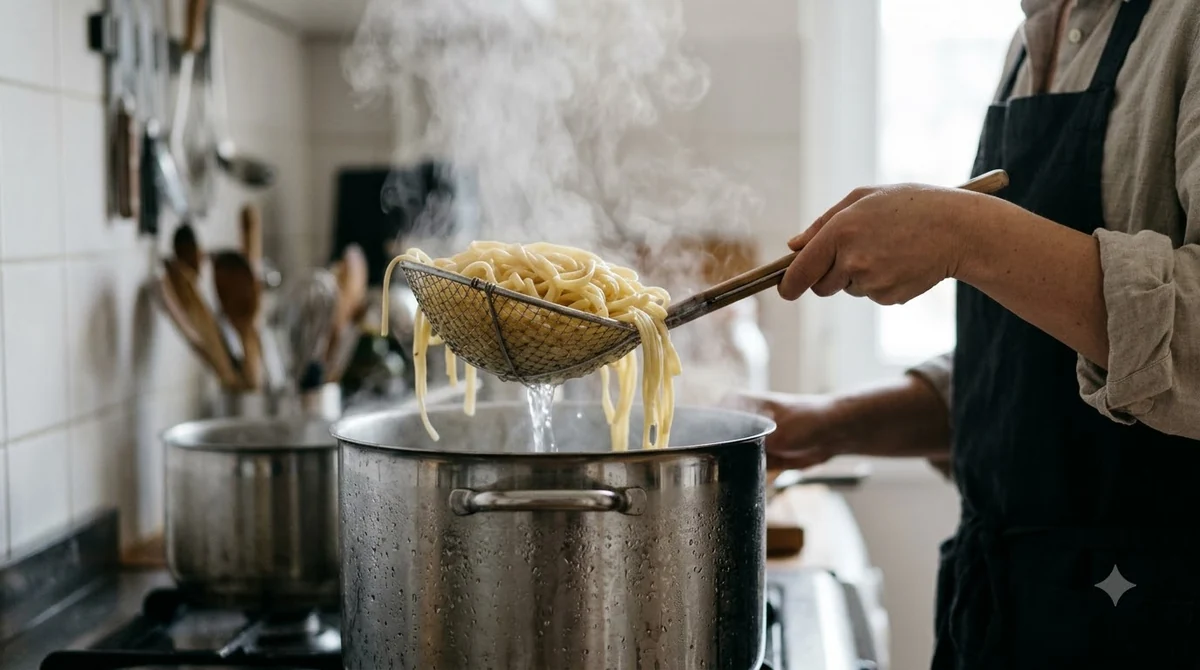
- Read the cooking time on your package and use it as the starting point.
- Start tasting a piece a little before the printed time. Stop when it is tender but still firm to the bite, as described in our guide to cooking pasta al dente.
- Drain the pasta and move it straight into the sauce, so the tubes take up the flavour while they are hot.
- Keep a cup of the cooking water aside (see starchy pasta water for sauce). A splash loosens a thick sauce that has tightened on the pasta.
Give the pasta enough room in the pot so the tubes do not stick together while they cook. Soup needs a different approach. Ditaloni pasta keeps softening in hot broth after you turn off the heat, so add it near the end of cooking and serve the bowl soon. If the soup will sit, cook the pasta separately and add it to each bowl when you serve.
Best Ways to Serve Ditaloni
Ditaloni pasta works best with chunky sauces, creamy soups, cold salads and baked pasta dishes. Its size gives each bite a substantial piece of pasta, and the tubes hold sauce and cheese well in the oven.
Garofalo’s N° 53 product page recommends ditaloni cacio e pepe as a traditional Neapolitan recipe, and it describes the shape as versatile for many meat and fish dishes. A simple cheese and black pepper sauce shows the tubes well, because nothing hides the texture of the pasta.
When you bake it, toss the pasta with the sauce before it goes into the dish, so the tubes fill with sauce rather than sitting dry under the cheese. For another baked method, read how to cook pasta in the oven. Adjust the baking time to your dish and keep an eye on the top, since the oven time is set by the dish rather than the pack.
A common mistake is serving ditaloni in thin broth. The large tubes feel heavy in a light liquid, and the broth does not coat them. If the dish is a clear soup, use ditalini instead, since that is the shape the family puts into soups. This advice covers dried pasta sold in the usual way, and it does not replace the cooking time on your own package.
What to Use Instead of Ditaloni
Ditali is the closest substitute for ditaloni, because it is the medium size in the same family and behaves in a similar way in sauces, salads and bakes. When you cannot find it, short tube pastas such as penne or ziti can stand in for sauced dishes, though that swap is a general judgment and not a tested match.
Ditali keeps the same cooking method and sauce behaviour, so it is the easiest swap. Penne and ziti are longer and have different diameters from brand to brand, so the cooking time may change. Read the package time for whichever shape you buy, and taste a piece before you drain it.
| Substitute | Why it works | Watch for |
|---|---|---|
| Ditali | Same family, one size smaller | Sizes differ by brand, so check the pack |
| Penne | Short tube that holds chunky sauce | Longer tube, so the cooking time may change |
| Ziti | Short tube used in baked dishes | Diameter varies, so taste a piece before draining |
For soup, ditalini remains the better choice than any larger tube, because the family assigns that job to the smallest size. Keep penne or ziti for sauced and baked dishes where the bigger shape can hold its own.
Frequently Asked Questions
Is ditaloni the same as ditalini?
No. Ditaloni is the largest of the three ditale sizes, while ditalini is the smallest. Ditalini are mainly used in soups, and ditaloni suit sauces, salads and bakes better than broth.
Is ditaloni the same as ditali?
No. Ditali sit in the middle of the family. Both ditali and ditaloni work in creamier soups, salads and pasta bakes, but ditaloni are the bigger shape.
How long should you cook ditaloni?
Follow the time on the package. Garofalo’s N° 53 ditaloni lists 12 minutes on its manufacturer page, but other brands may print a different time, so taste a piece before you drain it.
Can you put ditaloni in soup?
You can, but it fits creamier soups better than thin broth. For clear soups, ditalini are the better choice because the family designs that smallest size for broth.
Where does ditaloni come from?
The shape is traced to Southern Italy, particularly Campania. Garofalo, one brand that makes ditaloni, says its N° 53 is made from durum wheat semolina only and milled in Italy.
If you cook for sauces, salads or baked dishes, ditaloni is a sensible pick, and a grooved version suits chunky sauces best. For broth, choose ditalini instead. Always follow the cooking time on your own package, since sizes and times vary by brand. More shape guides are in Learn.
 5 min readLearnMafaldine Substitute: Ribbon Pastas to Use InsteadUpdated Nov 13, 2026
 6 min readLearnBucatini Substitute: Best Pasta Swaps and How to Use ThemUpdated Nov 13, 2026
 8 min readLearnFideo Pasta: What It Is, How to Toast It and SubstitutesUpdated Nov 10, 2026
 8 min readLearnManicotti Pasta: Shape, Size, Cooking Times and SubstitutesUpdated Nov 10, 2026
 6 min readLearnMacaroni Substitute: Best Pasta Shapes That WorkUpdated Nov 13, 2026
 6 min readLearnPenne Substitute: 5 Pasta Shapes That Work WellUpdated Nov 13, 2026