
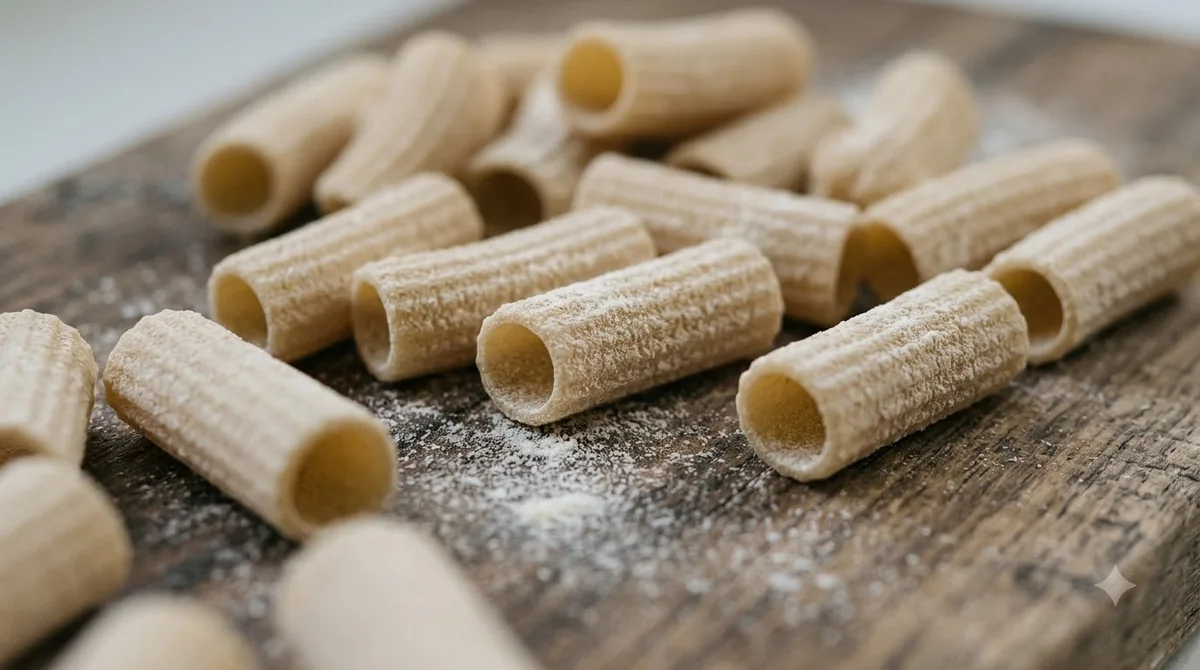

Homemade rigatoni is a short, ridged tube of pasta that is usually made by pushing rested dough through a rigatoni die. A stand mixer press attachment such as the KitchenAid pasta press lists rigatoni at Speed 6, and the dough is typically a semolina or egg dough that rests before it goes into the machine. Shaping rigatoni by hand is far harder than making spaghetti, so most home cooks rely on a machine.
This guide covers the dough, the machine setting and the handling steps that give tubes with clean ridges, using published recipes and a manufacturer’s shape chart as the references.
What Makes Rigatoni Different?
Rigatoni is a large, hollow tube with diagonal ridges on the outside, and those ridges are what hold sauce.
Because the shape is hollow and fairly thick, it needs a dough that holds its form through the die. A firm semolina dough keeps the tube walls even, while a soft dough can slump and close the centre. That is why the choice of dough matters more for rigatoni than for thin shapes.
What Dough Should You Use for Homemade Rigatoni?
A semolina dough is the best starting point for rigatoni, because it holds its shape through the die.
The Caputo traditional semolina dough uses 300 g of semolina and 160 to 180 g of room-temperature water. It calls for kneading 8 to 10 minutes until smooth, then a rest of 30 minutes to 6 hours wrapped at room temperature. The guide also says the dough should be firm and should give an al dente bite once cooked.
An egg dough also works. The PBS fresh egg pasta recipe uses 3 cups of flour, 4 large eggs, 1 teaspoon of olive oil and ½ teaspoon of salt, and it rests at least one hour at room temperature. Egg dough is softer, so it suits a machine that you feed slowly.
How Do You Shape Rigatoni in a Machine?
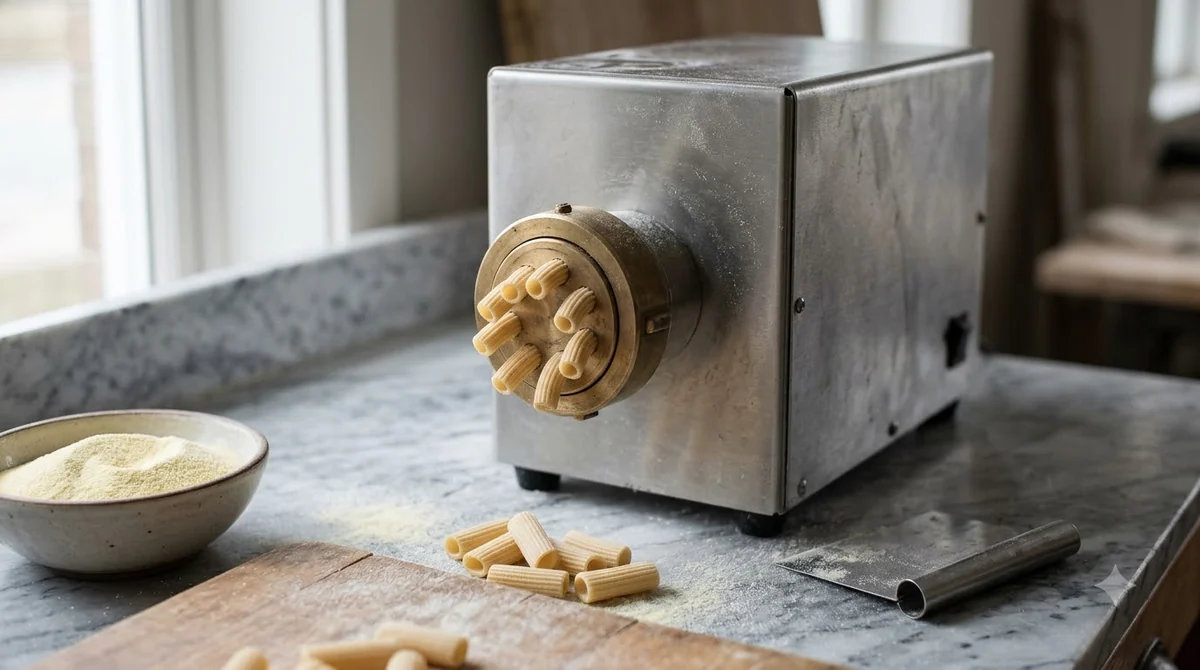
Load the rested dough into the press or extruder, choose the rigatoni die and run the machine at the speed your manual gives.
On the KitchenAid pasta press, the shape chart gives Speed 6 for rigatoni, the same speed it lists for large and small macaroni. That figure belongs to that attachment, so check your own machine’s manual before you copy it.
Feed the dough in small pieces so the flow stays even. Cut the tubes to length as they leave the die, and lay them on a floured tray in a single layer so they do not stick together.
What Should You Do Before and After Shaping?
Resting before shaping and cleaning right after shaping make the biggest difference to the final tubes.
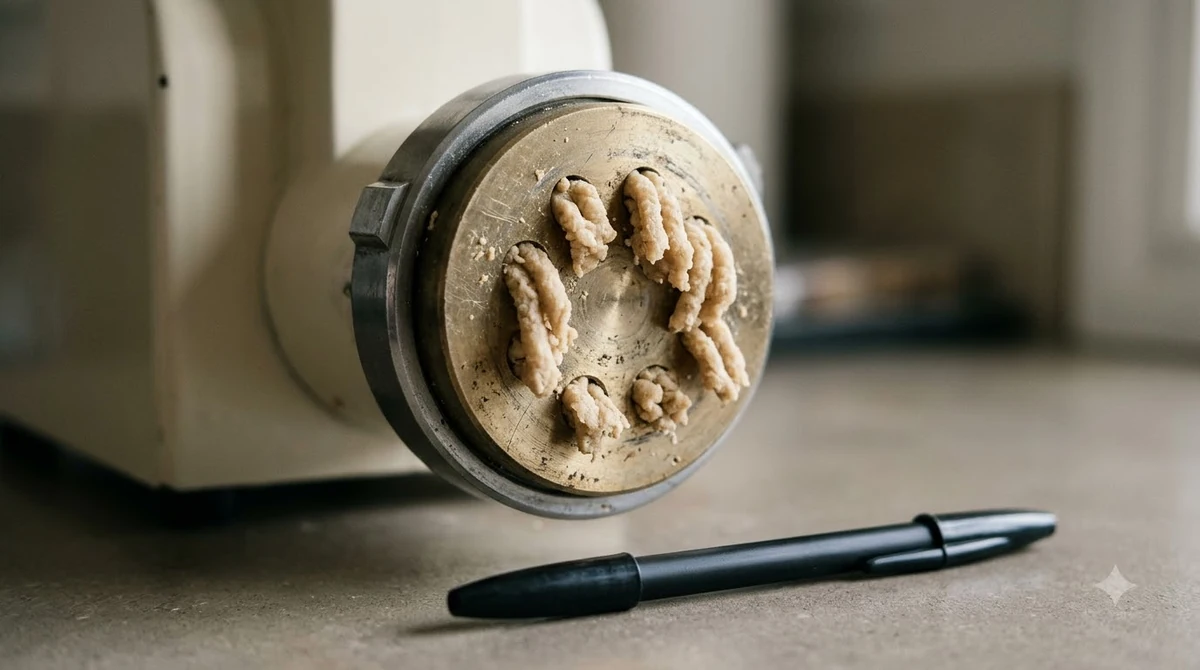
Rest the dough before loading it, and keep unused dough wrapped so it does not dry out. After shaping, clean the die and the chamber while the dough is still soft, because dried dough is much harder to remove.
| Step | What the sources say |
|---|---|
| Dough (semolina) | 300 g semolina, 160 to 180 g water, knead 8 to 10 minutes |
| Rest (semolina) | 30 minutes to 6 hours at room temperature |
| Press speed (KitchenAid) | Speed 6 for rigatoni |
What Goes Wrong With Homemade Rigatoni?
Most problems with rigatoni come from dough that is too soft or a feed that is too fast.
- Dough too soft: the tubes slump or the centre closes. Use a firmer semolina dough.
- Feeding too fast: the ridges blur and the tubes tear. Slow the machine and feed in small amounts.
- Skipping the rest: the dough resists the die and can split.
- Dirty die: residue from the last batch changes the shape. Clean it right after use.
The Caputo guide says the dough should be firm, with an al dente bite once cooked. Use that as a test before you make a full batch.
How Should You Cook Homemade Rigatoni?
Cook homemade rigatoni in a large pot of well-salted water, and taste it for doneness.
Fresh rigatoni cooks much faster than dried pasta, so start tasting early. Aim for an al dente bite, which the Caputo guide names as the target texture for its semolina dough. Drain the pasta, keep a little of the cooking water, and add it to the sauce so the sauce clings to the ridges.
Why Choose Rigatoni for Homemade Pasta?
Rigatoni is wider than penne and has ridges that catch chunky sauces, which makes it a practical shape to make at home.
The tube holds a thick sauce inside as well as on the outside, so it suits ragù and vegetable sauces. Because the shape is larger, the dough needs to be firmer, which is why semolina works well here.
How Much Dough Should You Make for a First Batch?
Start with one 300 g batch of semolina dough, the size used in the Caputo guide, so you can judge the texture before you scale up.
A small first batch also shows you how the press handles the dough. If the tubes come out uneven, adjust the water or the feed rate on that batch rather than changing everything at once, and note the settings so you can repeat what works.
Frequently Asked Questions
Can I make rigatoni without a machine?
It is very difficult to form clean ridged tubes by hand. Most home cooks use a press or extruder with a rigatoni die.
What speed should I use for rigatoni?
The KitchenAid pasta press lists Speed 6 for rigatoni. Other machines use different scales, so check the manual.
Should rigatoni dough be egg or semolina?
Semolina gives a firmer dough that holds its shape better. An egg dough also works if you feed it slowly and keep the tubes supported as they come out.
How long should rigatoni dough rest?
The semolina dough from Caputo rests between 30 minutes and 6 hours at room temperature. The PBS egg dough rests at least one hour at room temperature.
Homemade rigatoni rewards a firm dough, a steady feed and a clean machine. Rest the dough, use the setting your manual recommends, and lay the tubes out in a single layer until you cook them.
 5 min readLearnHomemade Macaroni: Dough, Shaping, Drying and Cooking TipsUpdated Nov 13, 2026
 5 min readLearnHomemade Penne: Dough, Shaping and Cooking TipsUpdated Nov 13, 2026
 5 min readLearnHomemade Fusilli: Dough, Shaping and Press SettingUpdated Nov 13, 2026
 6 min readLearnHomemade Scialatielli: Amalfi-Style Dough and ShapingUpdated Nov 13, 2026
 5 min readLearnHomemade Cavatelli: Ricotta Dough and Hand Shaping GuideUpdated Nov 13, 2026
 6 min readLearnHomemade Casarecce: Semolina Dough and Rod Shaping GuideUpdated Nov 13, 2026