
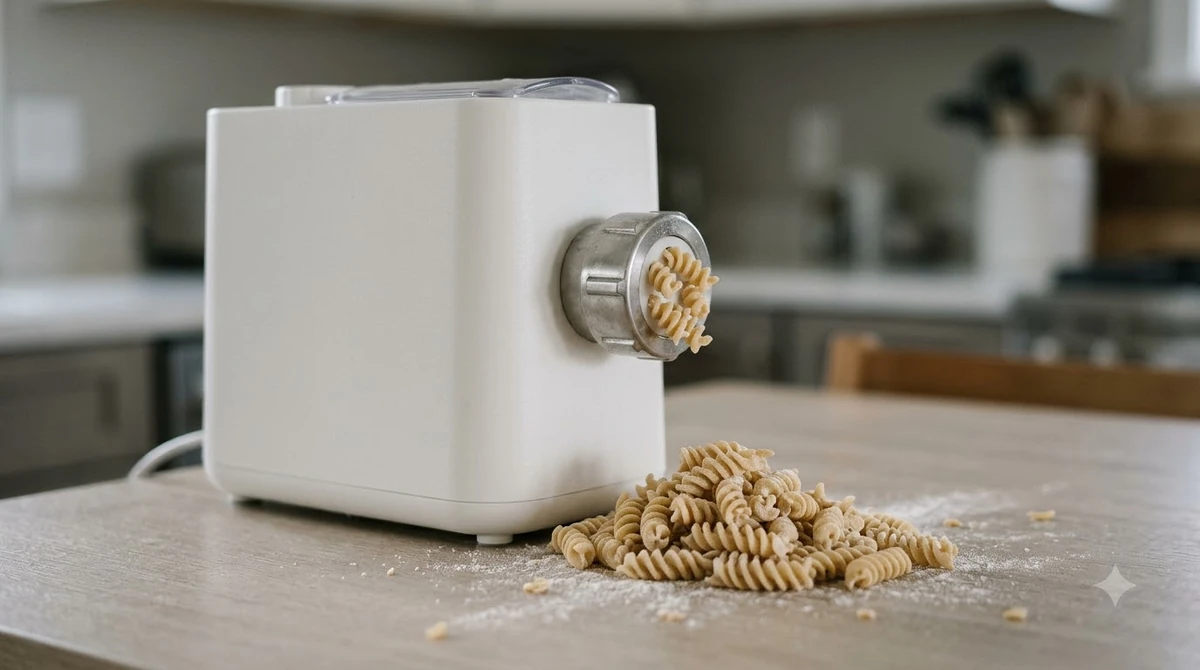

Homemade fusilli is a spiral pasta made from rested dough, and it is most often shaped with a press or extruder on a slow setting, since the spiral comes from the die rather than from hand twisting. The KitchenAid pasta press lists fusilli at Speed 3, which is slower than most of its other shapes. A simple egg dough or a semolina dough both work, and the dough should be firm enough to hold the spiral as it leaves the die.
This guide covers the dough, the press setting and the handling steps that keep the spirals intact, drawing on published recipes and a manufacturer’s shape chart.
What Makes Fusilli Different From Other Shapes?
Fusilli is a short, twisted shape with a spiral that holds sauce in its grooves, and that spiral is the reason it needs a different setting from simpler shapes.
A spiral needs the dough to hold its twist as it leaves the die. A dough that is too soft will lose the spiral, while a firm dough and a slower feed keep the grooves clean. The slower setting gives the dough time to form the twist without tearing.
What Dough Makes the Best Homemade Fusilli?
An egg dough from a published recipe gives a tender bite, while a semolina dough gives a firmer shape. Choose by the texture you want.
The PBS fresh egg pasta recipe uses 3 cups of flour, 4 large eggs, 1 teaspoon of extra virgin olive oil and ½ teaspoon of salt, with warm water added only as needed. It rests at least one hour at room temperature before you shape it.
The Caputo semolina dough uses 300 g of semolina and 160 to 180 g of room-temperature water, kneaded 8 to 10 minutes and rested 30 minutes to 6 hours at room temperature. Its firmer texture suits a spiral that needs to hold its shape.
How Do You Shape Fusilli With a Press?
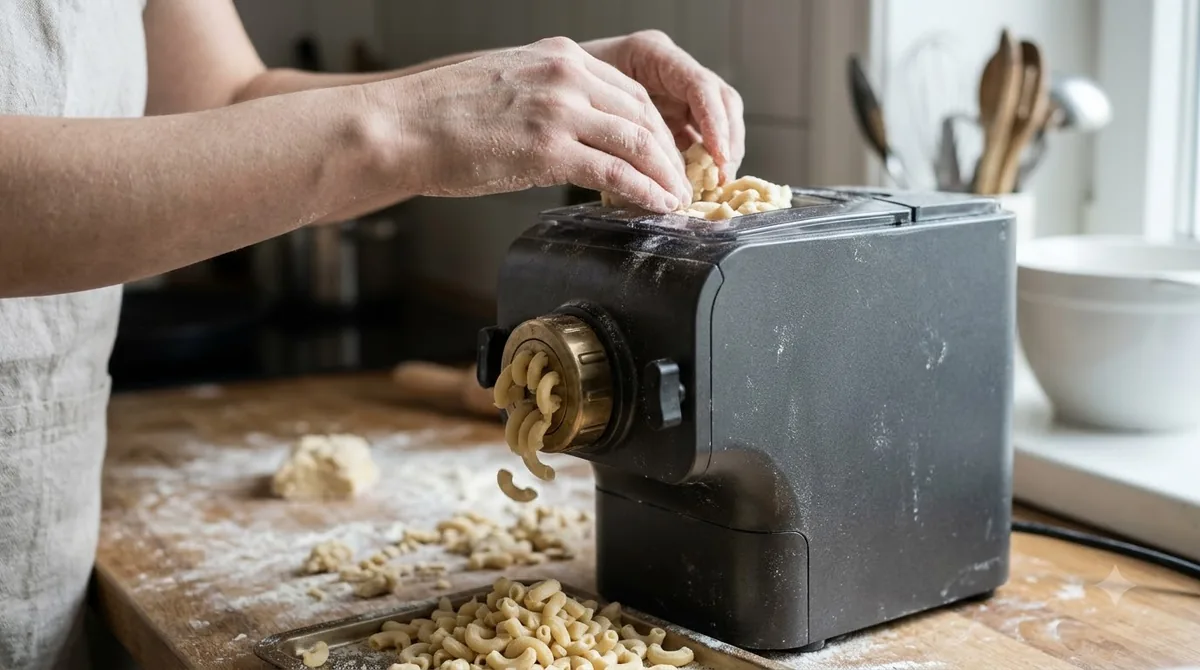
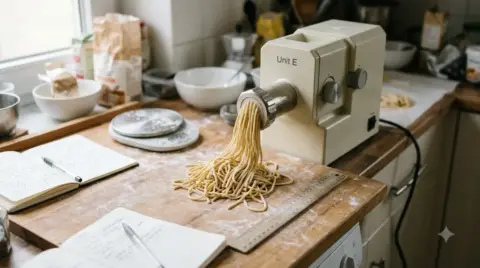
Load the rested dough into the press, fit the fusilli die and run the machine on the speed your manual gives.
The KitchenAid pasta press lists Speed 3 for fusilli. The same chart gives Speed 6 for rigatoni and Speed 10 for spaghetti, so fusilli sits at the slow end. Treat these numbers as belonging to that attachment, and check your own machine before you copy them.
Feed the dough in small amounts and keep the flow even. Cut the spirals to length as they come off the die, and spread them on a floured tray in a single layer so they do not clump.
Can You Shape Fusilli by Hand?
Hand shaping is possible but slow, and the spirals are usually less even than machine-made ones.
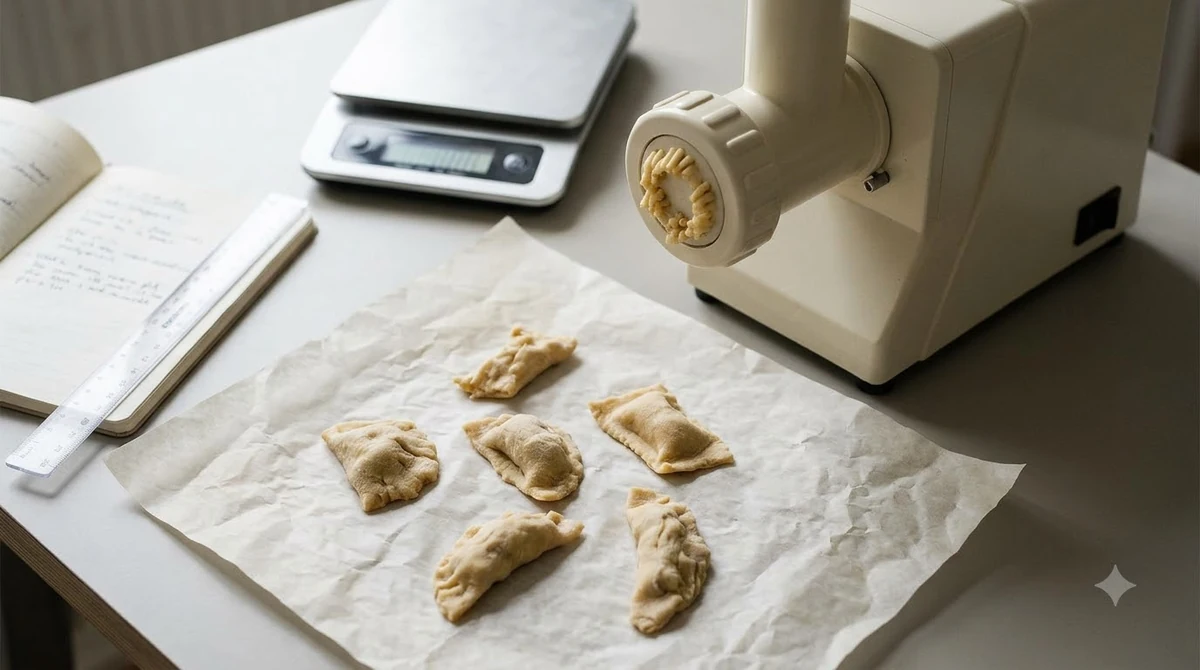
The sources we read give no step-by-step method for hand shaping, so we do not list exact measures for it. If you want to try by hand, follow a dedicated shaping guide, and keep the dough covered so the strips do not dry out while you work.
| Shape | KitchenAid press speed |
|---|---|
| Fusilli | Speed 3 |
| Rigatoni | Speed 6 |
| Spaghetti | Speed 10 |
Egg or Semolina Fusilli: Which Should You Make?
Egg fusilli is softer and more tender, while semolina fusilli holds a tighter spiral.
| Feature | Egg dough (PBS) | Semolina dough (Caputo) |
|---|---|---|
| Main ingredients | Flour, 4 large eggs, olive oil and salt | 300 g semolina and 160 to 180 g water |
| Rest | At least one hour at room temperature | 30 minutes to 6 hours at room temperature |
| Texture | Tender bite | Firm, with an al dente bite |
| Best for | Soft, tender spirals | A spiral that has to hold its shape |
If the spiral is your main concern, choose the semolina dough. If you want a tender bite, the egg dough is the better match.
Common Mistakes When Shaping Fusilli
The spiral is easy to lose when the dough, the feed rate or the resting is off.
- Dough too wet: the spiral slumps as it leaves the die.
- Feeding too fast: the spirals stretch and break apart.
- Using a faster setting: fusilli needs the slower Speed 3 on the KitchenAid press.
- Clumping on the tray: spread the spirals in a single layer while they are still soft.
What Makes a Good Fusilli Spiral?
A good spiral has even turns, clean grooves and a shape that holds after cooking.
Even turns come from a steady feed and a dough with the right moisture. If the turns look flattened or the grooves are shallow, the dough is probably too soft, and you should rest it and try again with less water.
How Do You Store Fusilli Dough and Shapes?
The Caputo semolina dough can rest wrapped at room temperature for 30 minutes to 6 hours. If you need to hold it longer, refrigerate it and bring it back to room temperature for at least two hours before shaping.
Keep shaped fusilli in a single layer on a floured tray until you cook or dry it. Stacking soft spirals presses the turns out of shape.
Frequently Asked Questions
What is homemade fusilli made from?
It is made from flour and water, or from flour and eggs, depending on the recipe. The two published doughs in this guide are an egg dough and a semolina dough.
What speed should I use for fusilli?
The KitchenAid pasta press lists Speed 3 for fusilli. Check your own machine’s manual, since other models use different settings.
Why do my fusilli lose their spiral?
The dough is often too soft or the feed is too fast. Use a firmer dough, add water only in small amounts and slow the machine down.
How long should fusilli dough rest?
The PBS egg dough rests at least one hour at room temperature. The Caputo semolina dough rests between 30 minutes and 6 hours at room temperature.
Homemade fusilli is forgiving once the dough is right. Rest it, choose the slower setting, and keep the spirals separated as they come off the press.
 5 min readLearnHomemade Rigatoni: Dough, Shaping and TipsUpdated Nov 13, 2026
 5 min readLearnHomemade Macaroni: Dough, Shaping, Drying and Cooking TipsUpdated Nov 13, 2026
 5 min readLearnHomemade Penne: Dough, Shaping and Cooking TipsUpdated Nov 13, 2026
 6 min readLearnHomemade Scialatielli: Amalfi-Style Dough and ShapingUpdated Nov 13, 2026
 5 min readLearnHomemade Cavatelli: Ricotta Dough and Hand Shaping GuideUpdated Nov 13, 2026
 6 min readLearnHomemade Casarecce: Semolina Dough and Rod Shaping GuideUpdated Nov 13, 2026