
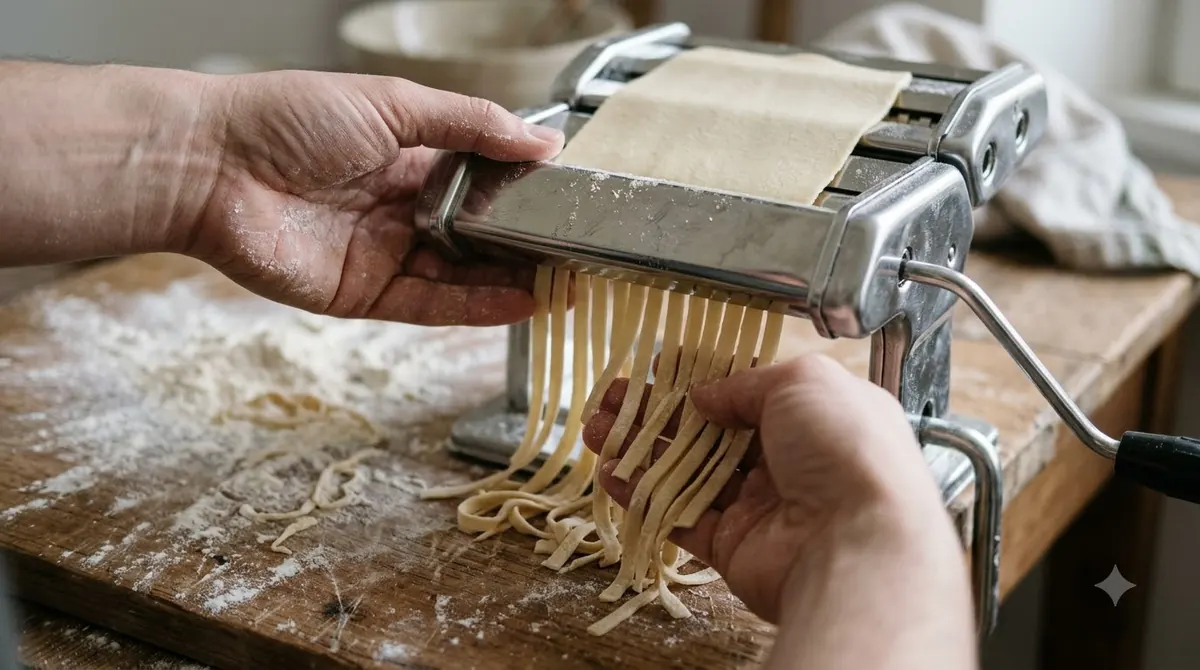

Homemade scialatielli are short, flat ribbons from Campania, usually cut to about 10 cm long and 10 mm wide. Traditional versions come from the Amalfi area and are often made with a mix of soft flour and durum semolina. The dough is firm, the cut is simple with a knife, and the ribbons suit light sauces that cling to their rough, thick edges.
What Scialatielli Are
Scialatielli are a Campanian pasta most closely linked to the Amalfi region. The name is often connected to the local word for a loose, free shape, and the pasta is usually cut by hand into short, uneven ribbons rather than rolled into long, even strands.
Reading across several recipes shows two families. Some are made with durum semolina and water, and the Ckbk reference describes the basic ingredients as durum-wheat flour and water. Others, including the Amalfi-style home recipe from The Pasta Project, use soft flour, semolina, milk and sometimes an egg.
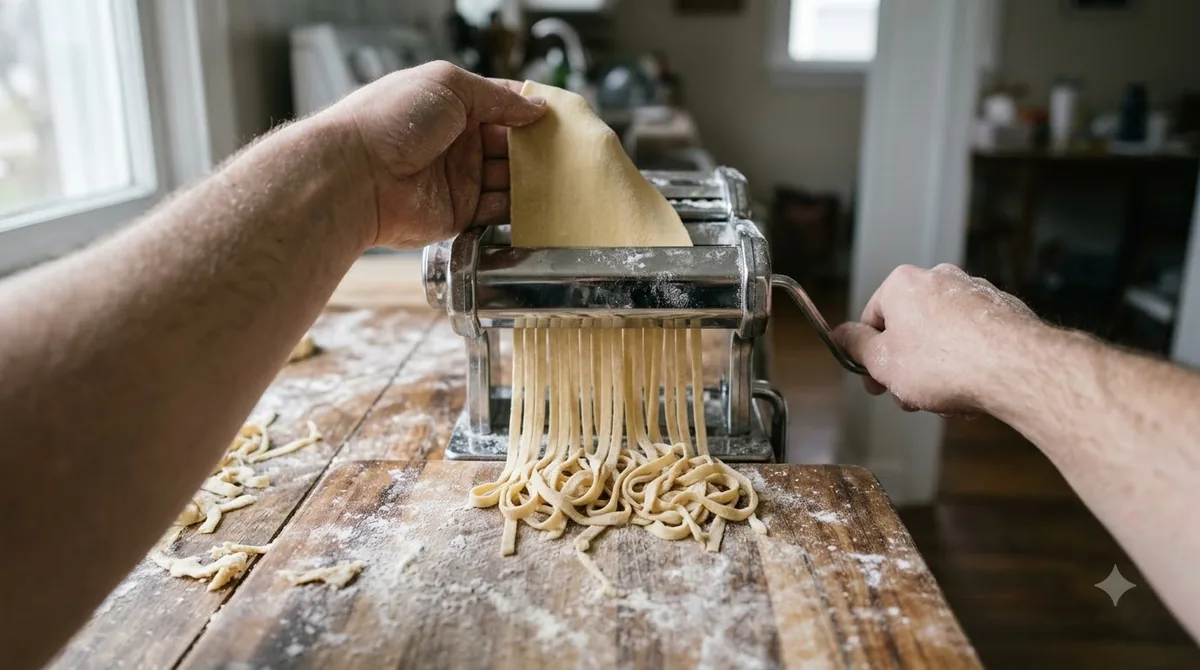
The Pasta Project’s Amalfi scialatielli recipe is the clearest home method I found, so the steps below follow it.
Homemade Scialatielli Dough
The Amalfi-style dough for four people uses 200 g of soft wheat “00” flour, 200 g of durum semolina, 120 ml of milk, two tablespoons of extra virgin olive oil, about 20 g of grated Parmesan, pecorino or caprino, and four basil leaves. An egg is optional.
- Mix the two flours on a board and make a well in the center.
- Add the milk a little at a time, then add the egg if you use one, the olive oil, the grated cheese and the crushed basil.
- Knead for 10 to 15 minutes until the dough is smooth and even in color.
- Cover the dough and let it rest for at least 30 minutes before rolling.
The milk-based dough is softer than a plain durum dough, so it can feel tacky at first. Add a little flour only if it sticks badly, since the goal is a smooth dough that holds its shape when cut.
How to Shape Homemade Scialatielli
Shaping is simpler than long-cut pasta because you cut the ribbons by hand. The result should look rustic, not perfectly uniform, and that is part of the style.
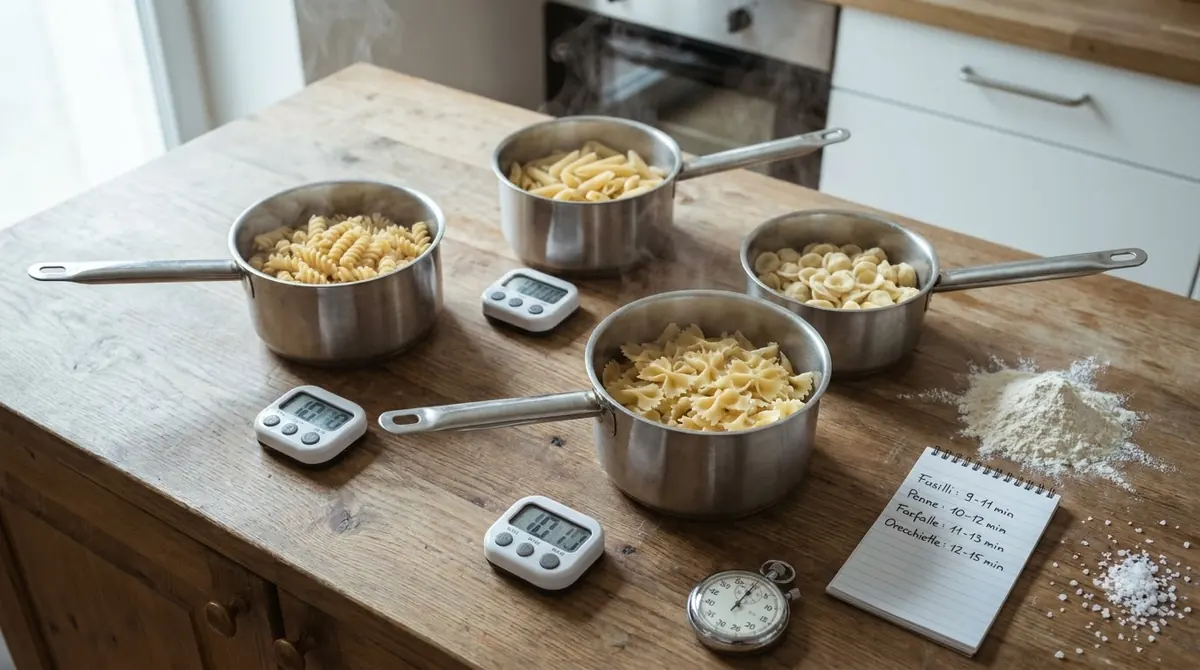
- Roll the dough with a rolling pin or a pasta machine to a few millimeters thick. The Pasta Project notes that the sheet should not be as thin as tagliatelle.
- Fold or roll the sheet on itself so it forms a loose log.
- Cut across the log with a sharp knife into ribbons about 10 mm wide.
- Unroll each ribbon gently and dust it lightly with semolina so the pieces do not stick together.
Keep the ribbons spread on a floured tray and covered until you cook them. Do not stack them, because the pieces stick and tear when you separate them later.
Cooking and Serving Scialatielli
Cook scialatielli in plenty of well-salted boiling water. The Pasta Project does not give a time for the homemade version, so start tasting after a few minutes and cook until the ribbons are tender but still have a bite. Dried commercial scialatielli take longer, so follow the time on the package.
| Style | Dough | Good with |
|---|---|---|
| Amalfi-style, homemade | Soft flour, semolina, milk, olive oil, cheese | Olive oil, basil, cherry tomatoes, seafood |
| Durum and water, handmade | Durum wheat flour and water | Simple tomato or light meat sauces |
Light sauces suit scialatielli best, because the ribbons are short and thick at the edges. A mix of olive oil, garlic, basil and a little grated cheese is a practical starting point, and the rough cut holds that sauce well. Very heavy meat sauces can overwhelm the short ribbons and slide off the rough edges.
Common Mistakes With Homemade Scialatielli
Most problems come from the dough being too wet or too rolled out. Both make the ribbons soft and hard to handle after cutting.
If the dough sticks to your hands and the board, add a small amount of flour and keep the surface lightly dusted. Too much flour makes the ribbons dry and brittle at the cut edges.
The cut edges matter too. A clean, sharp knife gives neat edges that hold sauce, while a dull blade crushes the dough and leaves the ribbons ragged and heavy.
If the sheet is rolled too thin, the ribbons tear and cook unevenly. Keep it at a few millimeters, as the recipe suggests, so the ribbons keep their chewy texture.
Frequently Asked Questions
Is scialatielli made with egg?
Not always. The Amalfi-style home recipe lists an egg as optional, and the milk-based dough does not need one. Plain durum and water versions also exist.
What is the difference between scialatielli and tagliatelle?
Scialatielli are cut into short, thicker ribbons by hand, while tagliatelle are long, thin and usually cut from a thinner sheet. The Pasta Project specifically notes that scialatielli should not be rolled as thin as tagliatelle.
Which cheese should I use?
The Amalfi-style recipe lists Parmesan, pecorino or caprino as options. Pecorino gives a sharper, saltier flavor, while Parmesan is milder and melts more smoothly into the dough. Pick one and keep the same amount, about 20 g, so the dough stays consistent.
Do I need a pasta machine?
No. The dough can be rolled with a rolling pin, and the ribbons are cut with a knife. A machine makes an even sheet faster, but it is not required for the rustic cut.
Can I prepare the dough ahead?
Yes, you can make the dough and keep it covered, then roll and cut it shortly before cooking. Shaped ribbons should stay floured and spread out, not stacked.
Scialatielli reward a simple approach. Knead the dough well, let it rest, roll it to a few millimeters and cut rough ribbons by hand. Served with a light olive oil and basil sauce, the pasta tastes like the coast it comes from, and it is a good first project for anyone learning handmade pasta. Keep notes on the flour you used and how much milk went in, because small changes in the dough change how the ribbons hold up when cooked.
 5 min readLearnHomemade Penne: Dough, Shaping and Cooking TipsUpdated Nov 13, 2026
 5 min readLearnHomemade Cavatelli: Ricotta Dough and Hand Shaping GuideUpdated Nov 13, 2026
 6 min readLearnHomemade Casarecce: Semolina Dough and Rod Shaping GuideUpdated Nov 13, 2026
 5 min readLearnHomemade Macaroni: Dough, Shaping, Drying and Cooking TipsUpdated Nov 13, 2026
 6 min readLearnHomemade Gemelli: Semolina Dough, Shaping and DryingUpdated Nov 13, 2026
 5 min readLearnHomemade Fusilli: Dough, Shaping and Press SettingUpdated Nov 13, 2026