
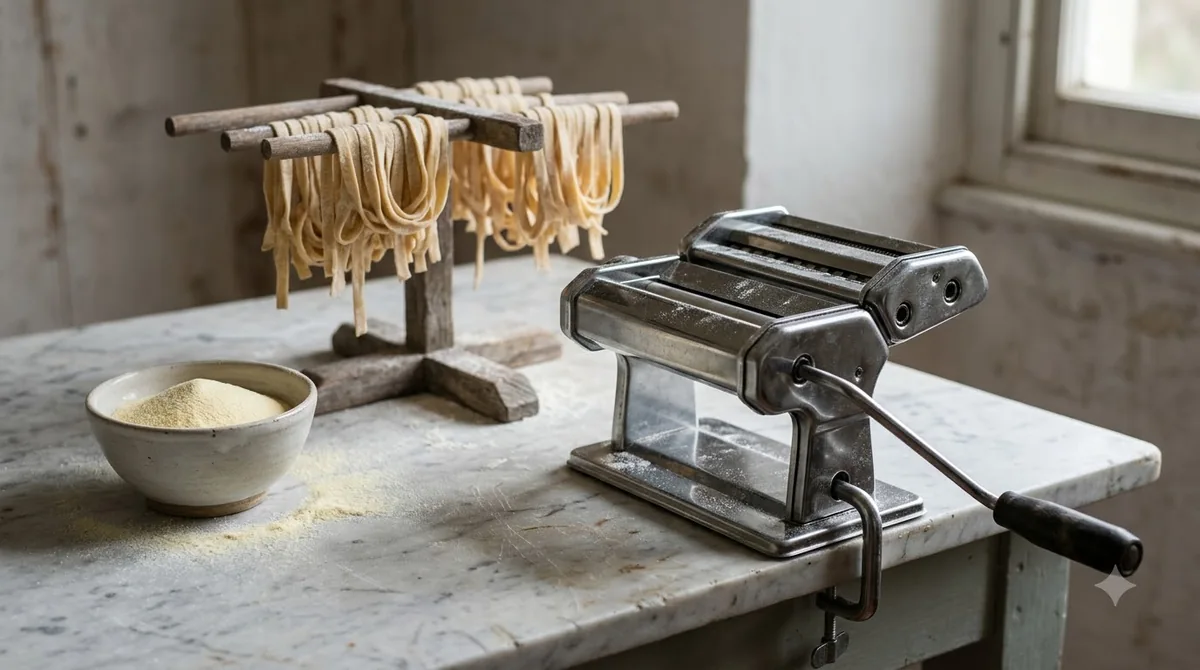

Homemade tagliatelle is a flat egg pasta made from 1 large egg for every 100 grams (3.5 oz) of flour, kneaded smooth, rolled thin and cut into ribbons about 6 to 8 mm wide. Start with a soft “00” or all-purpose flour, rest the dough covered before rolling, and cut the sheets with a sharp knife. The method is simple, and it takes practice more than special equipment.
What Is Tagliatelle?
Tagliatelle is a traditional egg pasta from Emilia-Romagna and Marche in northern Italy. Its name comes from the Italian verb “tagliare,” meaning “to cut,” which describes the way the sheet is sliced into ribbons.
The Wikipedia entry on tagliatelle notes that the shape is traditionally about 6 mm wide, and one of the earliest written records of the name is a 1549 treaty from the House of Este in Ferrara.
What Ingredients Do You Need for Homemade Tagliatelle?
You need only flour, eggs and a pinch of salt. The core ratio is 1 large egg per 100 grams of flour, which scales easily for a family-sized batch.
The Pasta Project’s tagliatelle guide recommends soft wheat “00” flour, which is what Italian cooks usually use. All-purpose flour also works, but the dough will feel a little firmer and may need a few more minutes of kneading.
- Mound the flour on a clean counter, make a well in the center and add the eggs and salt.
- Beat the eggs with a fork, gradually pulling in flour from the inside walls until a shaggy dough forms.
- Knead until the dough is smooth and elastic, then wrap it and let it rest covered before rolling.
- Roll the dough into a thin sheet, dusting lightly with flour so it does not stick.
How Do You Roll and Cut the Sheet for Homemade Tagliatelle?
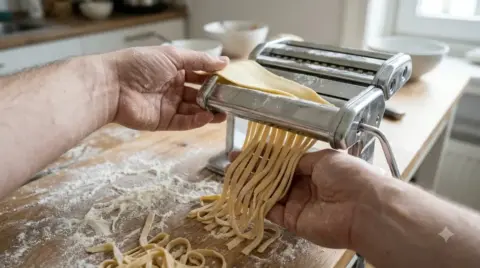
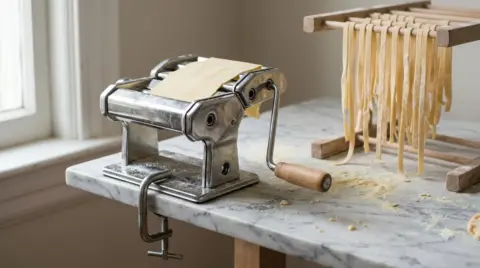
Roll the dough to the thinness you want, then fold it loosely into a flat roll and slice across it to make ribbons about 6 to 8 mm wide.
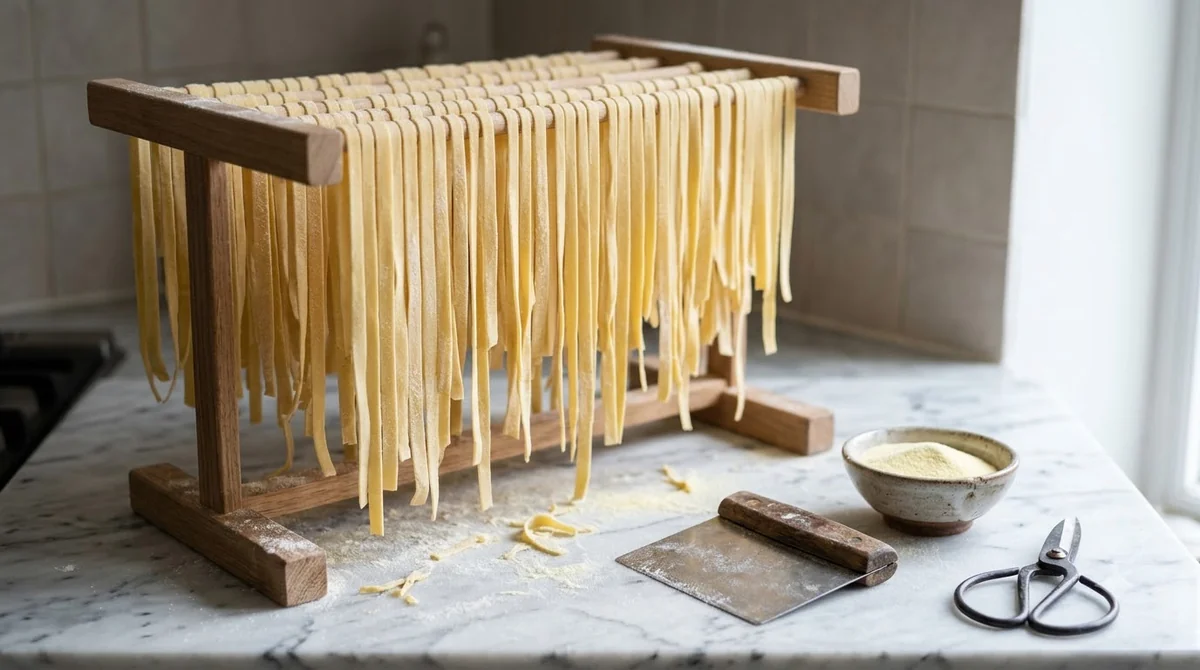
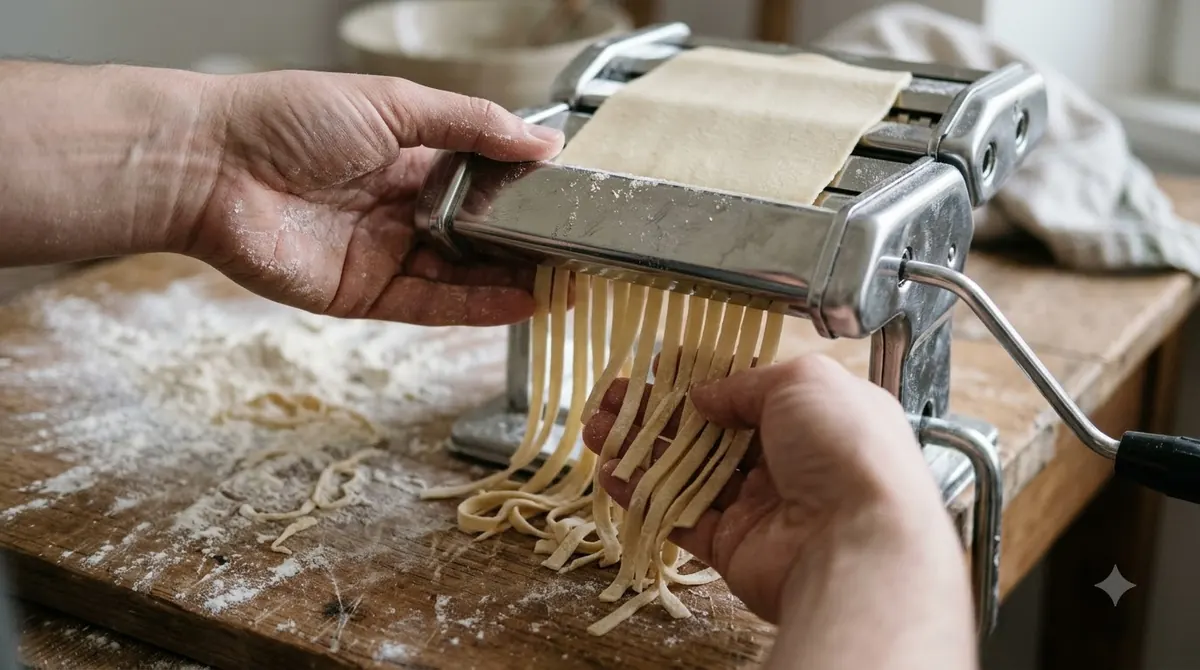
A pasta machine speeds up the rolling, but a rolling pin works well if you cut the sheet carefully. Unroll the ribbons immediately and dust them with semolina or flour so they do not clump on a drying rack.
How Should You Cook and Serve Homemade Tagliatelle?
Cook fresh tagliatelle in plenty of salted boiling water for a short time, then check a strand for a tender, slightly firm bite before draining.
A flat ribbon suits a sauce that can cling to its surface, so a little pasta water in the sauce helps the strands coat evenly. Toss the drained homemade tagliatelle in the pan with the sauce for a short moment before serving.
Traditionally, tagliatelle is served with a meat sauce such as Bolognese. Creamy sauces and cheese also suit it, and lighter options like tomato and basil work well for a simpler plate.
| Step | What to Look For |
|---|---|
| Dough | Smooth, elastic and not sticky |
| Sheet | Thin enough to see the work surface through it |
| Ribbons | About 6 to 8 mm wide and evenly cut |
Common Mistakes When Making Homemade Tagliatelle
The most common mistake with homemade tagliatelle is adding too much flour to a dough that already feels right. Eggs vary in size, and flour absorbs moisture differently depending on the brand and the weather. Add flour a teaspoon at a time, and stop when the dough feels smooth and springs back when you press it.
Rolling the sheet too thick is the second problem. A thick sheet gives chewy ribbons that do not match the delicate texture of a classic tagliatelle. Roll until the sheet is thin enough that you can see the shape of your hand through it, then cut.
Cutting ribbons of uneven width is another issue. Fold the sheet loosely, keep the knife straight, and cut in one smooth motion. Ribbons close to 6 to 8 mm wide cook evenly, while a mix of widths leaves thin strands overcooked and thick ones still firm in the center.
Finally, do not leave the cut ribbons in a damp pile. Separate them on a rack or a floured tray right away. Homemade tagliatelle that clumps together is hard to portion and often tears when you lift it into the pot.
A short rest for the cut ribbons, uncovered on a clean surface, also helps the surface dry slightly so the strands separate easily. Keep an eye on the weather as well, since a humid kitchen can make the dough feel softer than usual and may call for a little more flour or a shorter rolling session. If the sheet tears while you roll, patch it with a small piece of dough, let it rest for a few minutes, and keep going, since the finished ribbons will hide the repair once they are cut.
Frequently Asked Questions
What flour is best for homemade tagliatelle?
Soft wheat “00” flour is the traditional choice and gives a smooth, tender dough. All-purpose flour is a reasonable substitute, though it can produce a slightly firmer result.
Do I need a pasta machine?
No. A rolling pin and a sharp knife are enough. A machine makes the sheet more even and faster to roll, which is helpful if you cook pasta often. Whichever tool you use, work in small batches so the dough you are not rolling stays covered and does not dry out on the counter.
How long should I rest the dough?
Rest the dough wrapped and covered until it is easy to roll without snapping back. Recipes vary, so follow the rest time in the recipe you are using.
Can I dry homemade tagliatelle?
Yes. Lay the ribbons loosely on a rack or a clean towel until they feel firm and leathery. Store dried pasta in a sealed container away from moisture, and check the storage guidance from your flour or pasta maker.
Homemade tagliatelle rewards a little patience. Measure the flour and eggs carefully, give the dough time to rest, and cut the ribbons evenly. Once you have the dough right, the rest of the process is simply practice.
 6 min readLearnHomemade Mafaldine: 2 Methods With Egg or Semolina DoughUpdated Nov 13, 2026
 6 min readLearnHow to Make Tagliatelle: Egg Ratio, Rolling and CuttingUpdated Nov 13, 2026
 9 min readLearnTagliolini vs Tagliatelle: Width, Eggs and Sauces ComparedUpdated Nov 6, 2026
 6 min readLearnHomemade Capellini: Egg Dough, Cutting and Cooking GuideUpdated Nov 13, 2026
 6 min readLearnHomemade Garganelli: Egg Dough and Shaping StepsUpdated Nov 13, 2026
 8 min readLearnHomemade Ravioli: Easy 3-Egg Dough Recipe and TipsUpdated Nov 10, 2026