
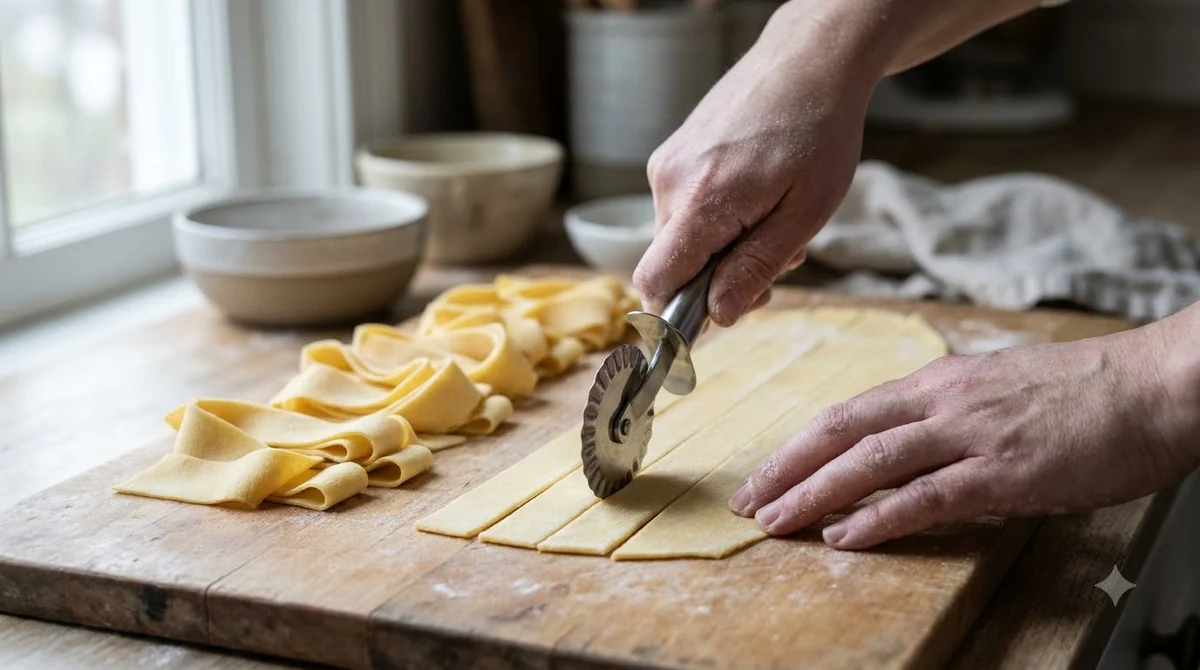

How to make pappardelle by hand comes down to rolling an egg dough into a thin sheet with a rolling pin, then cut it into wide ribbons with a sharp knife. No pasta machine is needed. The Clever Carrot recipe rolls the sheet to about 1/16 inch and cuts it into strips 1 to 1 1/2 inches wide, while Domino suggests strips about 3/4 inch wide for a pappardelle-style ribbon. This guide covers the dough, the hand rolling, the wide cut, and how to dry the ribbons before cooking.
What Goes Into the Dough
One home recipe, from The Clever Carrot, uses 300 g of Tipo 00 flour, 3 large eggs and 1 large egg yolk, with a little olive oil and semolina for dusting. The article says the eggs and yolk should total about 185 g once cracked, and that you can add an extra yolk or a little olive oil if the dough feels too dry or too stiff. Measure by weight where you can, because egg sizes vary.
| Stage | Guideline from the sources |
|---|---|
| Rest before kneading | 10 to 15 minutes for hand-mixed dough (The Clever Carrot) |
| Knead by hand | 5 to 7 minutes (The Clever Carrot) |
| Rest after kneading | About 30 minutes (The Clever Carrot) |
| Sheet thickness | About 1/16 inch, or 1 to 2 mm (The Clever Carrot) |
Roll Pappardelle Dough Thin by Hand
Pappardelle is wide, so the sheet has to be even from edge to edge. Divide the rested dough into portions and roll one at a time, keeping the rest covered. Domino divides the dough into 4 pieces and rolls each one “as thin as you can,” aiming for a long rectangular sheet, which makes the cut easier. Use a long rolling pin and roll away from you, then turn the sheet a quarter turn and keep the shape even. For the shape’s background and sauces, see our pappardelle shape and sauce pairings.
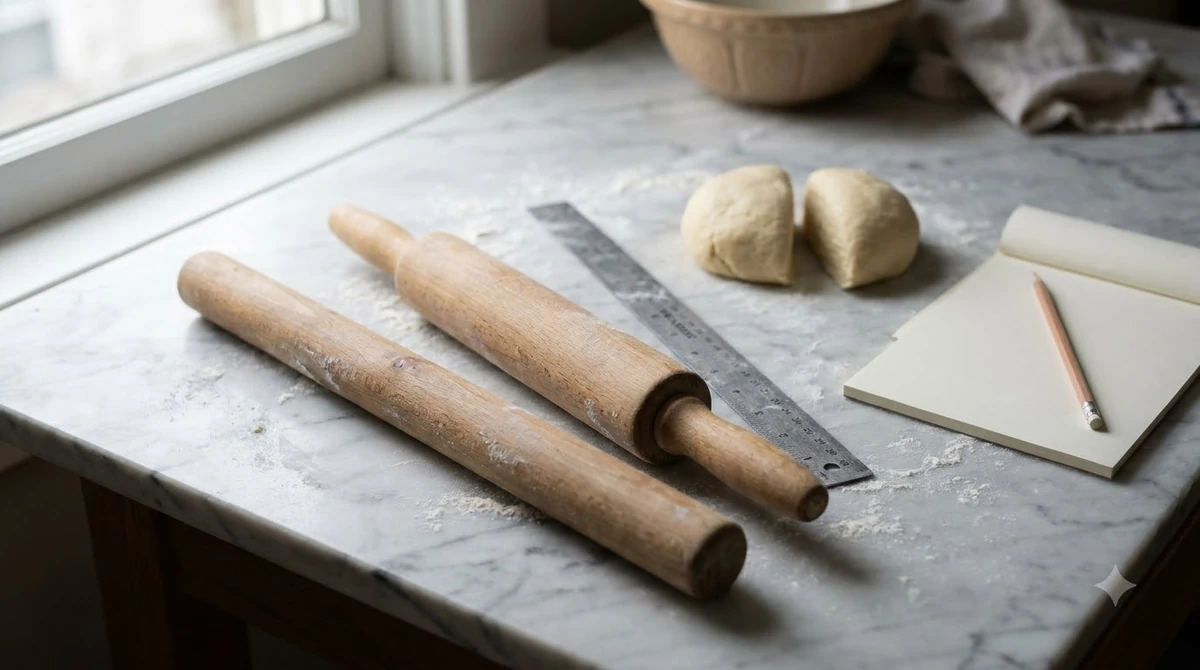
Use flour so the sheet does not stick
Wide sheets stick to a counter more than narrow ones. Dust the counter and the top of the sheet lightly with flour, and lift the dough often to check that it is not sticking. Too much flour can make the surface dry and the ribbons brittle, so use only what keeps the sheet moving.
Test the thickness by eye
Aim for a sheet that is nearly translucent and thin enough to see the shape of your hand beneath it. Clever Carrot describes the target as about 1/16 inch. Domino gives no measurement and says exact numbers matter less than an even sheet, so judge by the light and the feel of the dough.
Cut the Sheet Into Wide Ribbons
Pappardelle is cut with a knife, a pizza cutter or a dedicated cutter, and no machine is needed. The width is the main choice you make. Clever Carrot cuts the sheet into sections 1 to 1 1/2 inches (2.5 to 3.8 cm) wide, while Domino cuts strips about 3/4 inch wide for a pappardelle-style ribbon. Pick a width that suits the sauce, and keep the ribbons the same width so they cook at the same rate. The difference in width is explained in tagliatelle versus pappardelle.
Cut and separate
Lay the sheet on a floured board and cut straight lines with a sharp knife or pizza cutter. Lift the ribbons gently and separate them with your fingers. Ribbons that are left in a pile will stick, so loosen them as soon as you cut.
About the edges
Traditional pappardelle has straight, cut edges. The sources I read describe straight cuts only, so a fluted or pinked edge from a pastry wheel should be treated as a style choice rather than a standard step. If you try it, cut a test strip first to see how the wheel affects the dough.
Dry Pappardelle Before Cooking
Drying firms the ribbons so they hold their shape and do not clump in the pot. Clever Carrot suggests draping the sheets over the back of a chair for 10 to 15 minutes before cutting, so they firm up without drying out. After cutting, Domino suggests hanging the strips on a pasta rack if you have one, or dusting them with flour and laying them flat on a baking sheet while the rest of the dough is rolled. Rippled ribbons are a close cousin, as shown in pappardelle and mafaldine compared.
Keep the ribbons away from draughts and damp air while they dry. A flat tray with a light dusting of semolina is an easy option if you do not have a rack. Do not leave them in a sealed bag while they are still damp, because they will stick together.
How to Make Pappardelle: Common Problems and Fixes
Wide ribbons show every flaw in the sheet, so most problems come from uneven rolling, dough that is too dry, or ribbons that stick. Eggless wide ribbons are the subject of flour-and-water lagane ribbons.
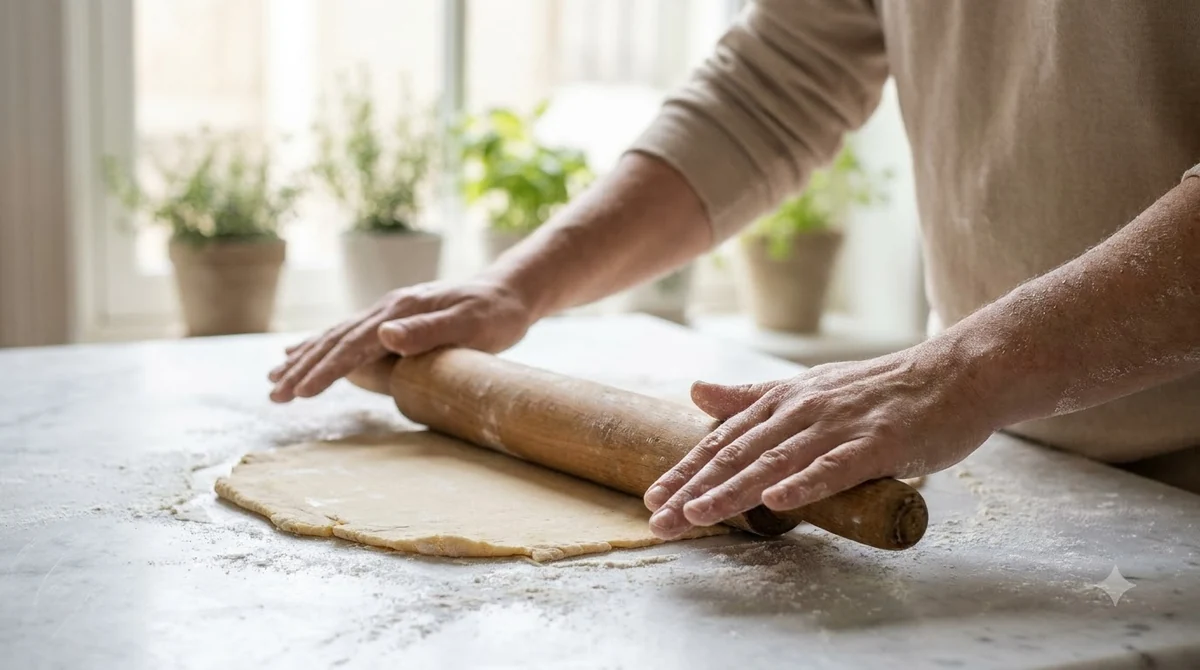
If the sheet is thick at the edges and thin in the middle, you are pressing too hard at the ends of the pin. Roll with lighter pressure on the outer edges and turn the sheet often. If the dough cracks along the edges, it is usually too dry. Brush on a little water and let it rest before rolling again.
If the ribbons clump in the pot, they were either not dusted enough or not dried long enough. Lay them out in a single layer, toss them lightly with semolina, and cook them soon after drying.
Cooking Hand-Cut Pappardelle
Cook pappardelle in a large pot of well-salted boiling water. Clever Carrot suggests 5 to 7 minutes for al dente, but it also says to taste first, since wide fresh pasta can differ in thickness from batch to batch. Drain the ribbons when they are soft with a little bite, and toss them with a sauce while they are still warm so the wide ribbons pick it up.
Frequently Asked Questions
Can you make pappardelle without a pasta machine?
Yes. A rolling pin and a sharp knife are enough. Roll the dough as thin as you can without tearing, then cut it into wide strips.
How wide should pappardelle be?
The sources differ. Clever Carrot cuts 1 to 1 1/2 inches wide, and Domino cuts about 3/4 inch. Choose the width you want for your sauce, and keep all the ribbons the same width.
How thin should the dough be for pappardelle?
Clever Carrot aims for about 1/16 inch. The sheet should be thin enough to be nearly translucent but still strong enough to handle without tearing.
Why do my homemade pappardelle ribbons stick together?
Wide ribbons need flour or semolina on both sides and should be separated as soon as they are cut. Dry them in a single layer and cook them within a short time.
Hand-cut pappardelle takes practice, but the steps are simple: rest the dough, roll it thin and even, cut wide ribbons, and dry them briefly before cooking. Keep the sheet floured, cut every ribbon the same width, and taste early. The result is a wide, tender noodle that holds a rich sauce well.
 5 min readLearnHow to Make Pasta by Hand Without a MachineUpdated Nov 13, 2026
 6 min readLearnHomemade Fettuccine by Hand: Rolling and Cutting Without a MachineUpdated Nov 13, 2026
 9 min readLearnHow to Make Pasta Without a MachineUpdated Nov 10, 2026
 5 min readLearnHomemade Pappardelle: Dough, Rolling and Cutting by HandUpdated Nov 13, 2026
 7 min readLearnPappardelle Pasta: What It Is, How to Make It and What to Serve With ItUpdated Nov 6, 2026
 6 min readLearnHow to Make Pici: Hand-Rolled Tuscan Pasta GuideUpdated Nov 13, 2026