
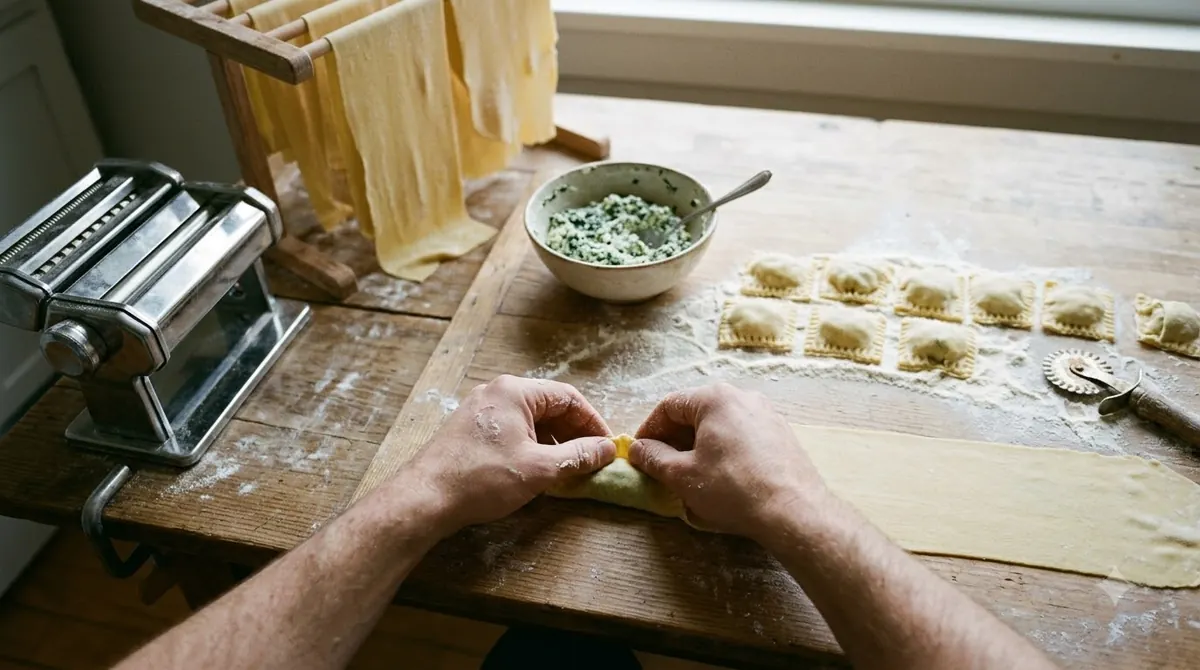

Homemade tortelloni are the larger cousin of tortellini: a thin egg pasta cut into bigger squares, filled with a soft ricotta mixture, and folded into the same ring shape. Sources describe the method as the same as tortellini, with a bigger square and a larger amount of filling. The traditional filling is ricotta with parsley, Parmigiano Reggiano and a pinch of nutmeg, and the ricotta should be fresh and well drained. This guide explains how tortelloni differ, what to prepare, and how to shape them by hand.
How Tortelloni Differ From Tortellini
Tortelloni are the bigger version of tortellini. One Bologna guide says tortelloni are typically four or five times the size of a tortellino, and tortellini are roughly the size of a thumbnail. The bigger shape also changes how much filling fits inside, which is the main practical difference when you cook at home.
Size and shape
Both pastas use the same ring shape. The difference is the square you start with. Pasta Evangelists notes that the method for tortellini is the same for tortelloni, and that the only real change is how large you cut the square. A larger square gives a larger triangle and a wider ring.
Filling
Traditional tortellini are often filled with pork, mortadella and Parmigiano Reggiano. Traditional tortelloni have no meat. Their classic filling is ricotta with parsley, Parmigiano Reggiano and nutmeg. Because ricotta holds more water than meat, drain it well before you mix it, or the filling can make the dough split while it cooks.
What You Need to Make Homemade Tortelloni
The dough is the same as for tortellini: flour and eggs, rolled thin by hand. One widely used recipe uses 400 g of “00” flour and 4 eggs, then asks you to roll the sheet until it is “fairly thin but not about to tear” (Pasta Evangelists). Rest the dough, cover it, and work with one part at a time. For a short definition and typical fillings, read about what tortelloni pasta is.
| Component | What to prepare |
|---|---|
| Dough | Flour and eggs, rolled thin and kept covered while you work |
| Filling | Fresh, well-drained ricotta with parsley, grated Parmigiano Reggiano and a pinch of nutmeg |
| Square | Larger than a tortellini square; cut evenly with a pasta cutter or sharp knife |
Shaping Homemade Tortelloni by Hand
Shaping tortelloni follows the same order as tortellini. Cut the squares, place a small amount of filling in the centre, fold to a triangle, and bring the two outer corners together. The bigger square gives you more room, so the main risk is putting in too much filling. The size difference is covered in how tortelloni differs from tortellini.

Cut larger squares
Cut the sheet into squares that are clearly bigger than a tortellini square. Keep every square the same size so the tortelloni cook evenly. Keep the uncut dough covered with a damp towel so it does not dry out while you work.
Spoon in the filling
Place a small spoonful of ricotta mixture in the centre of each square. Leave a clear border of pasta around the filling so you have something to seal. Keep the filling soft but not wet, and roll small pieces of it into balls before placing them if the mixture is loose.
Fold and press out the air
Fold the square corner to corner into a triangle. Press along the edges with your fingertips, pushing out any air around the filling. Trapped air expands in boiling water and can split the seal, so press firmly along the whole edge.
Bring the corners together
Wrap the long edge of the triangle around your index finger, bring the two outer corners together, and pinch them. Slide the piece off your finger and lay it on a floured tray in a single layer. If the edges do not stick, dampen them with a little water and press again.
Common Problems When Making Tortelloni
Tortelloni problems usually come down to filling moisture, dough thickness and air. Each one can be fixed before you cook the whole batch. The folds are close to the smaller shape, so shaping tortellini by hand is a useful companion.
If the filling is wet, the dough will soften and tear. Drain fresh ricotta in a sieve for a while before mixing, and add the herbs and cheese at the end so the mixture stays firm. If the dough is too thick, the pasta will be chewy and the seal will not hold well, so roll it thinner than you think you need, but stop before it tears.
Another common issue is pieces that open in the pot. This is almost always too much filling or air left inside. Use a smaller spoonful, press out air along all three edges, and check each seal before moving the piece to the tray.
Cooking and Serving Tortelloni
Cook tortelloni in gently boiling, salted water. They are done when they float and the pasta is tender when you bite into one. Because they are bigger than tortellini, they take a little longer, so test one piece first. Lift them out with a slotted spoon and toss them gently with a simple sauce such as butter and sage, so the delicate ricotta filling is not overwhelmed. If you prefer flat pockets, try making ravioli at home.
Keep leftover shaped tortelloni in a single layer on a floured tray and cook them soon after shaping. Follow the storage guidance from the USDA for fresh pasta and cheese, and do not leave the ricotta filling out at room temperature for long.
Frequently Asked Questions
What is the difference between tortelloni and tortellini?
Tortelloni are larger, typically several times the size of tortellini. Traditional tortelloni are filled with ricotta and herbs, while traditional tortellini are often filled with meat. Both are folded into the same ring shape.
What goes in a traditional tortelloni filling?
The classic filling is fresh ricotta with parsley, Parmigiano Reggiano and a pinch of nutmeg. The ricotta should be well drained so the filling stays firm and does not wet the dough.
How do you shape tortelloni without a special tool?
Your hands are enough. Fold the square into a triangle, press out the air, wrap the long edge around your index finger, and bring the two outer corners together. Press firmly so the ring stays closed in the water.
Why do homemade tortelloni split while cooking?
The usual causes are a wet filling, too much filling, air trapped inside, or a dough that is too thick to seal. Drain the ricotta, use a small spoonful, press out the air, and roll the dough thin enough to fold cleanly.
Once you know that tortelloni are simply larger tortellini, the rest falls into place. Keep the ricotta drained, cut generous squares, and press out every bit of air. A carefully sealed tortelloni holds its ring shape in the pot and gives you the full flavour of the filling.
 6 min readLearnHomemade Tortellini: How to Shape Them Step by StepUpdated Nov 13, 2026
 8 min readLearnNew York Style vs Detroit Style Pizza: How They DifferUpdated Nov 14, 2026
 8 min readLearnNeapolitan vs New York Style Pizza: How They DifferUpdated Nov 14, 2026
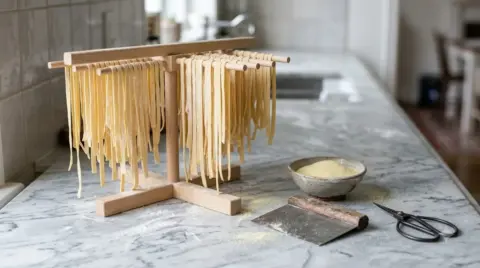 9 min readLearnFresh Pasta vs Dried Pasta: How They Differ in Cooking, Storage and SauceUpdated Nov 12, 2026
 7 min readLearnJumbo Shells Pasta: What They Are and How to Cook ThemUpdated Nov 10, 2026
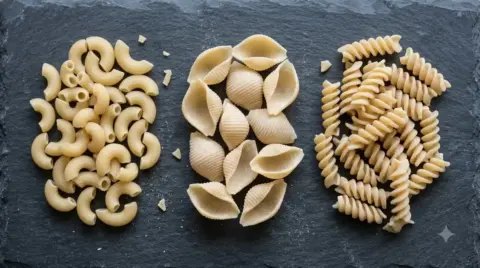 8 min readLearnShells Pasta: What They Are and How to Cook ThemUpdated Nov 7, 2026