
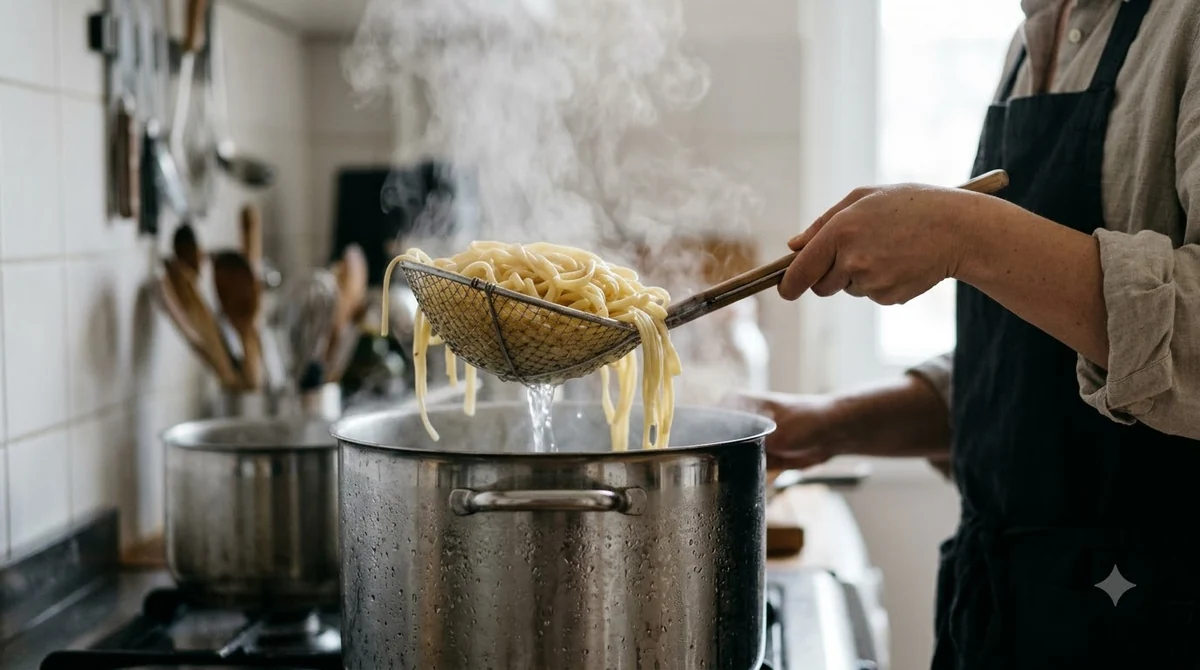

How long to cook cappelletti depends on whether they are fresh or dried. Fresh cappelletti usually cook in about 3 to 4 minutes, and you should start checking when they float to the top. Dried cappelletti take longer, often a couple of minutes more than fresh. Because the filling is small, the pasta can turn mushy quickly, so taste one piece before you drain the rest.
What Cappelletti Are and Why Their Cook Time Is Short
Cappelletti are small stuffed pasta pieces, folded into a plump pouch. Tastebologna notes that their name means “little hats,” and that they are folded rather than pinched into a ring like tortellini.
The filling is usually cheese-based, with ricotta and Parmigiano in the recipe Tastebologna gives. A small pouch with a soft filling cooks through quickly, which is why the timing is short compared with larger stuffed pasta.
How Long to Cook Cappelletti When Fresh
For fresh cappelletti, Tastebologna’s recipe says to cook them until they float, which takes about 3 to 4 minutes in boiling water or broth. Start checking at the lower end of that range, because the pieces are small and a minute can make a difference.
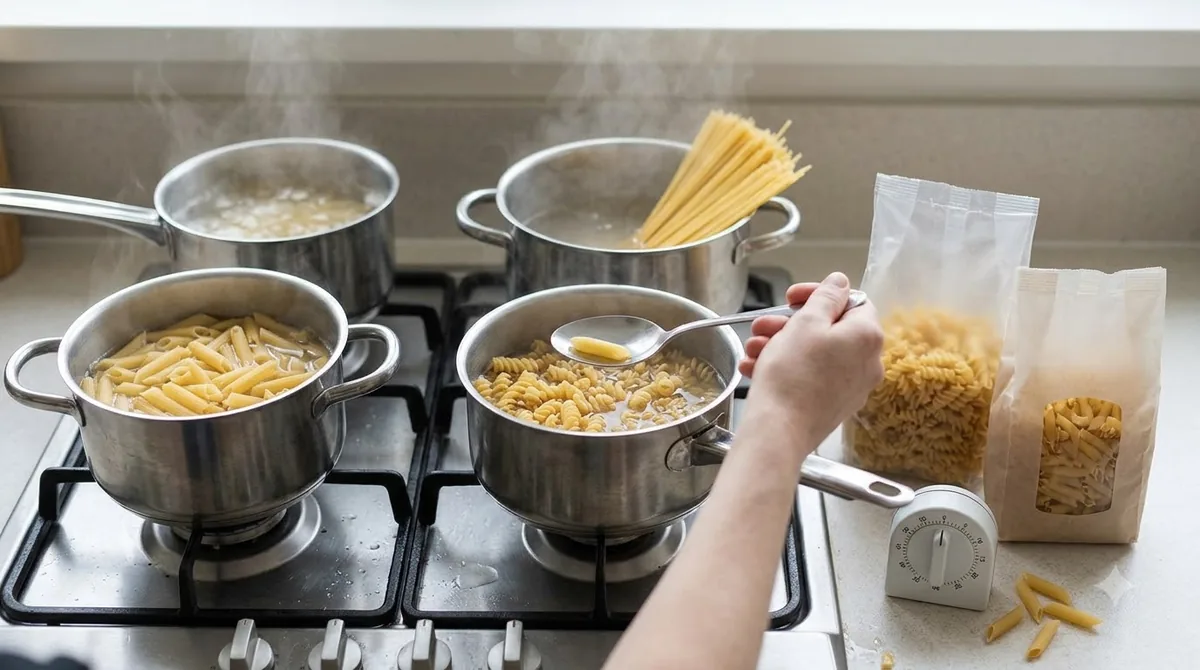
Recipe Tips gives a general rule for stuffed pasta: fresh pieces should be watched closely once they float, and checked often to prevent them from becoming mushy. The cook time depends on the thickness of the sheet, so thin homemade pasta will finish sooner than a thicker shop-bought one.
- Bring a large pot of salted water, or broth, to a steady boil.
- Add the cappelletti in a single layer and stir gently so they do not stick.
- Watch for them to float, then start tasting one piece after about 3 minutes.
- Drain as soon as the pasta is tender and the filling is hot.
Cooking Dried or Frozen Cappelletti
Dried or frozen stuffed pasta needs longer. Recipe Tips says that frozen or dried stuffed pasta takes approximately 2 to 4 additional minutes compared with fresh. For cappelletti, that puts the total at roughly 5 to 8 minutes, but this is an estimate from the general rule rather than a figure from a cappelletti recipe.
For dried cappelletti, check the package first, since the manufacturer’s time is the most reliable starting point. Taste a piece near the end of the suggested range, and avoid cooking past the point where the pouch starts to split.
How to Tell When Cappelletti Are Done
Doneness is a matter of texture as well as time. The pasta should be tender all the way through, with no hard, chalky center, and the filling should be warm. If the pasta is soft and falling apart, it has been cooked too long.
Tastebologna serves cappelletti hot in broth with grated Parmigiano, and it lists ragù, butter and sage, and tomato sauce as other options. If you plan to finish them in a sauce, cook them a little short so they do not overcook while they warm through.
| Type | Typical time | Signs it is done |
|---|---|---|
| Fresh cappelletti | About 3 to 4 minutes | Floats, tender, filling hot |
| Frozen fresh cappelletti | Fresh time plus about 2 to 4 minutes | Tender all the way through |
| Dried cappelletti | Follow the package; usually longer than fresh | No chalky center, pouch intact |
Broth or Sauce: Choosing How to Serve Cappelletti
Tastebologna says broth is the traditional way to serve cappelletti, mainly in winter and especially on Christmas Eve. The pasta is cooked in the broth itself, so the cooking water and the serving liquid are the same, and the filling stays warm without any extra step.
If you prefer a sauce, the same article lists ragù, butter and sage, tomato sauce and white truffle sauce as other options. Butter and sage is the quickest to finish: cook the cappelletti, drain them, then toss them in melted butter with a few crisp sage leaves.
When you finish cappelletti in a sauce, lift them out a moment before they are fully tender. They will keep cooking slightly in the warm sauce, so drain them while they still have a firm bite.
Making Sure Cappelletti Cook Evenly
Cook cappelletti in a large pot so they have room to move. A crowded pot drops the water temperature and makes the pieces cook unevenly, with some pouches still firm while others split. Add them gradually if you are cooking a large batch, and give the water a moment to return to a simmer.
Stir gently in the first minute, so the pieces do not stick to the bottom or to each other. After that, let them float and check them as the timer runs down. Lifting a single piece out with a slotted spoon and cutting it open is the most reliable check for the filling.
Handle the cooked pieces carefully. The pouches are thin, so tip the pot into a colander over the sink or use a slotted spoon to lift them out, rather than pouring them through a sieve where they can tear.
Timing also depends on whether the pasta was made at home. Homemade cappelletti from a thin sheet cooks faster than a thick shop-bought pouch, so the first batch is a useful test. Note the time that works for your dough, and use it as the starting point for the next batch.
Frequently Asked Questions
How long do fresh cappelletti take to cook?
Fresh cappelletti usually take about 3 to 4 minutes, starting to check once they float.
Do dried cappelletti take longer?
Yes. Recipe Tips says dried or frozen stuffed pasta needs about 2 to 4 more minutes than fresh, but the package time is the best guide.
How do you know cappelletti are cooked?
They should float, feel tender all the way through, and have a hot filling. A chalky center means they need more time.
Can you cook cappelletti in broth?
Yes. Tastebologna cooks them in broth for 3 to 4 minutes and serves them hot with grated Parmigiano.
For cappelletti, start checking at about 3 minutes, and drain once they float and the pasta is tender. Dried pasta needs the package time, and frozen pieces need a little longer. A quick taste is the surest way to get them right.
 9 min readLearnHow to Store Dried Pasta So It Stays Fresh and Pest-FreeUpdated Nov 11, 2026
 7 min readLearnFresh Basil vs Dried Basil: When Each Works BestUpdated Nov 10, 2026
 9 min readLearnFresh Pasta vs Dried Pasta: How They Differ in Cooking, Storage and SauceUpdated Nov 12, 2026
 8 min readLearnFresh Pasta Dough Recipe: Ingredients, Kneading and Resting TimesUpdated Nov 6, 2026
 6 min readLearnHow to Make Cappelletti: Folding Little Hats at HomeUpdated Nov 13, 2026
 8 min readLearnCappelletti vs Tortellini: Shape, Filling and How They Are ServedUpdated Nov 6, 2026