
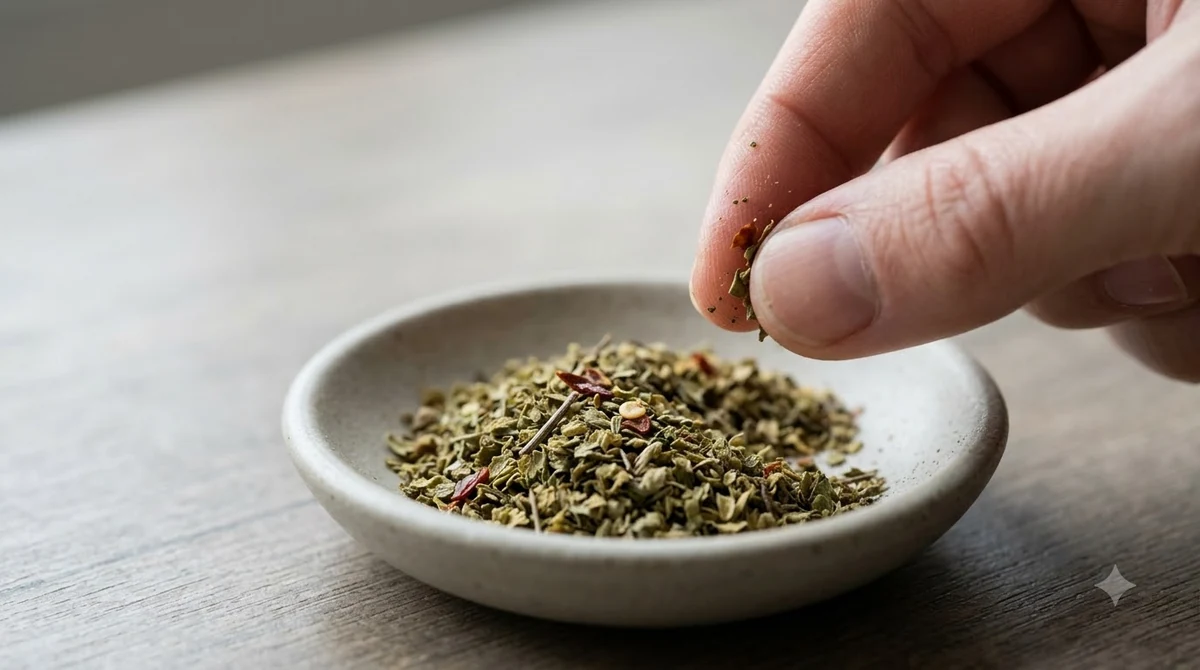

When you compare fresh basil vs dried basil, the choice depends mostly on heat and timing. Fresh leaves suit dishes where basil goes in at the end, while dried basil fits long-cooked dishes such as soups and sauces.
In any fresh basil vs dried basil decision, fresh leaves are the default because basil is most commonly used fresh in recipes. Dried basil has its own role, and the sections below show where each one fits.
Fresh Basil vs Dried Basil: What Changes
Drying changes how basil behaves in heat, because cooking quickly destroys the flavour of basil, according to Wikipedia’s article on basil. That is why fresh basil is usually added last.
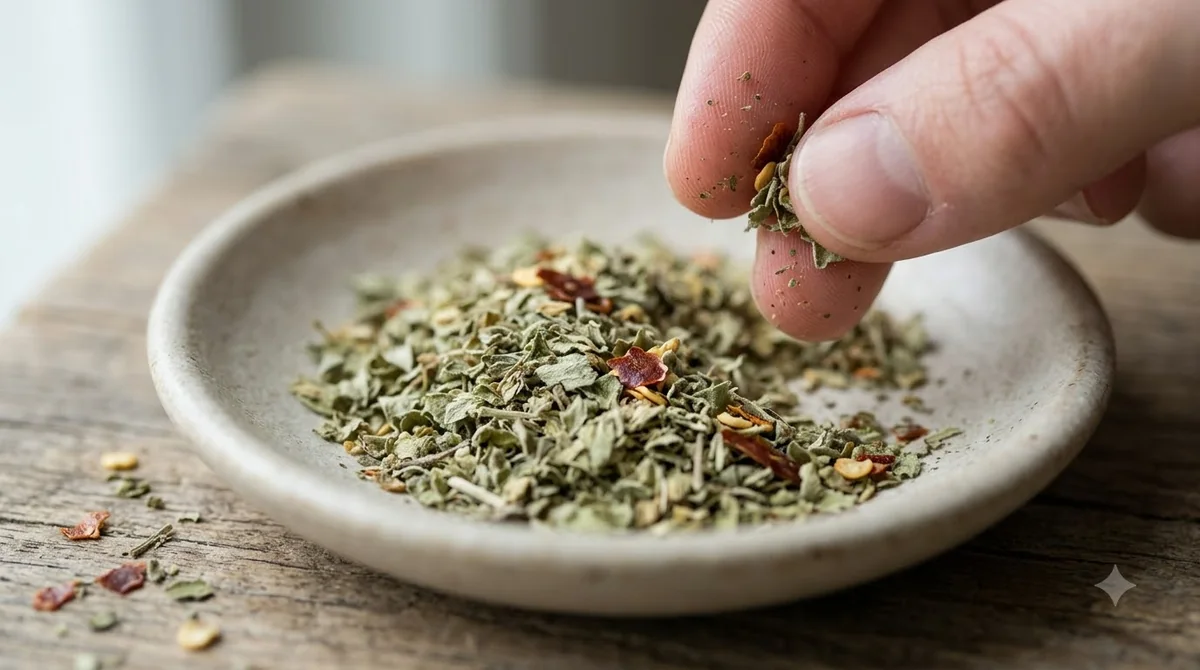
Basil’s flavour is often described as resembling liquorice. Wikipedia’s basil entry describes the herb in general terms and does not measure how much flavour is lost when the leaves are dried, so a quick taste test is the most reliable check in your own kitchen.
The scent comes from volatile aromatic compounds, which the same article says vary with the cultivar. The essential oil of European basil is high in linalool, followed by methyl chavicol (estragole), and the clove scent of sweet basil comes from eugenol. In Western cooking, the generic word basil usually means Genovese or sweet basil, so that is the leaf most recipes assume.
On potency, Fine Dining Lovers says dried basil is more potent than fresh basil, so it should be used sparingly. That is why the choice between fresh basil vs dried basil is as much about amount as about timing.
Many recipes treat dried basil as a separate ingredient with its own uses, so fresh basil vs dried basil is rarely a one-to-one swap. The next sections explain those uses.
When Fresh Basil Is the Better Choice
For fresh basil vs dried basil, the fresh leaf is the better choice for dishes where the leaves go in at the end of cooking or form the main ingredient.
The basil article on Wikipedia lists pesto, other sauces and salad dressings among common uses of fresh basil. It also describes basil steeped in cream or milk, which is used for ice cream and chocolate truffles. In Indonesia, lemon basil (kemangi) is served raw as an accompaniment to meat or fish.
Pesto shows why fresh leaves matter most. The Wikipedia pesto article says traditional pesto is made with Genovese basil, with the garlic and pine nuts ground first, then the washed and dried basil leaves added with coarse salt, and the cheese and a little olive oil last. A full pesto Genovese recipe walks through the steps. The same article says pesto can be kept in the refrigerator for up to a week when it is covered by a layer of extra-virgin olive oil.
- Pesto, where the leaves are the main ingredient.
- Other sauces, added near the end of cooking.
- Salad dressings, where the fresh leaf adds brightness.
- Cream or milk steeped with basil for desserts such as ice cream and chocolate truffles.
When Dried Basil Makes More Sense
Dried basil suits long-cooked dishes such as soups, where the herb has time to spread through the liquid.
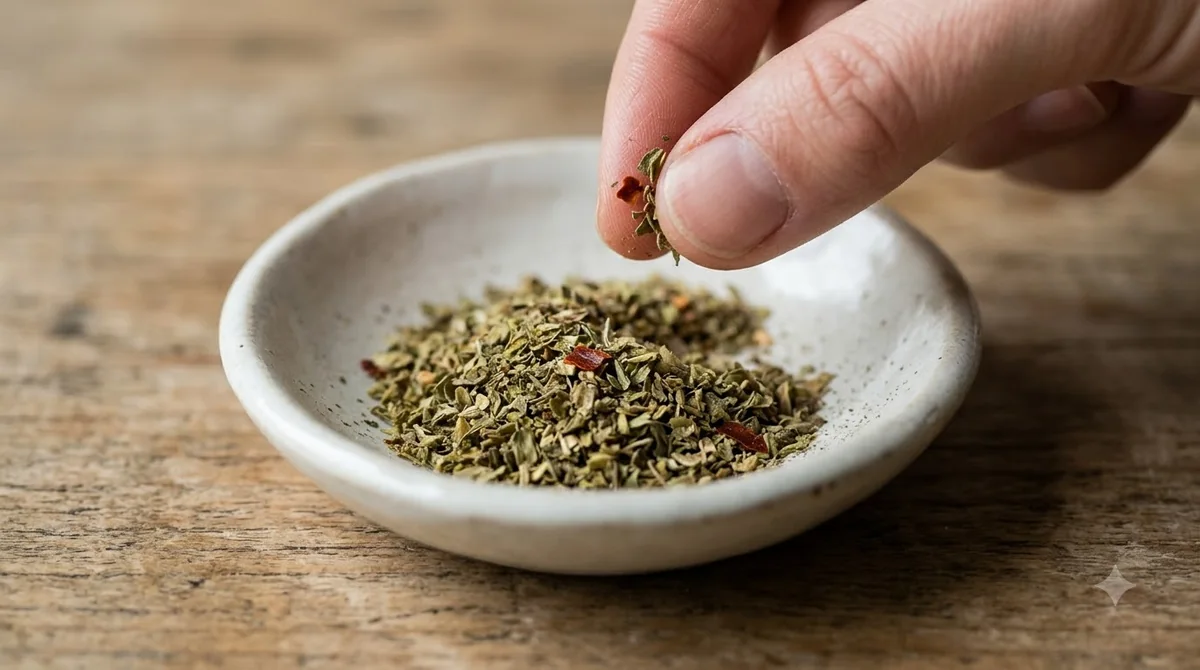
Wikipedia notes that many national cuisines use fresh or dried basil in soups and other foods. The same article says basil is sometimes used to infuse oils and vinegars. It gives no steeping times and does not say whether fresh or dried leaves work better for that job, so follow a tested recipe.
Fine Dining Lovers says dried basil works well in pizza sauces and marinades and can be mixed with other herbs. That fits a homemade pizza sauce or a pot of marinara sauce that simmers for a while, where the herb has time to spread through the liquid.
If a recipe cooks basil for a long time, the fresh basil vs dried basil difference in flavour matters less than it does in a dish finished with raw leaves.
Fresh Basil vs Dried Basil: How to Swap
For fresh basil vs dried basil, Fine Dining Lovers gives one simple rule: one teaspoon of dried basil is equivalent to one tablespoon of fresh. It is a single-source rule of thumb, so still adjust by taste.
Use these steps when a recipe calls for one form and you have the other:
- Check when the recipe adds basil. Fresh basil belongs at the end, and dried basil suits the long cooking stage.
- Use about 1 teaspoon of dried basil for each tablespoon of fresh basil, then add more only after tasting.
- Add dried basil earlier in cooking so it has time to spread through the dish.
- Taste again before serving and adjust the seasoning with the herb, not with more salt.
Check the recipe first, since its amounts for fresh basil vs dried basil were chosen for that dish and are a safer starting point than a guessed swap.
Storage and Shelf Life Differences
In fresh basil vs dried basil storage, fresh basil keeps only a short time in the refrigerator, even when it is wrapped in a plastic bag, so buy it close to the day you cook.
Wikipedia also says basil can be kept longer in the freezer after being blanched quickly in boiling water. Fine Dining Lovers gives the detail: blanch the leaves in boiling water for 2 seconds, move them to an ice bath, and freeze them. They keep for 3 to 4 months but lose texture, so use frozen basil in cooked dishes or pesto, not in salads or as a garnish. For jar-of-water and paper-towel methods, see this guide on how to store fresh basil.
Fine Dining Lovers says dried basil can keep for up to a year. Check the date on the jar, and if the aroma is weak, replace the herb rather than adding more of it.
Common Mistakes When Swapping Basil
The most common mistake in a fresh basil vs dried basil swap is adding basil at the wrong stage of cooking, since heat quickly destroys the flavour of fresh basil.
- Adding fresh basil at the start of a long simmer, where most of its flavour is lost.
- Using dried basil in pesto, where the leaves are the main ingredient.
- Expecting the same result in fresh basil vs dried basil without tasting first.
- Keeping fresh basil in the refrigerator longer than the short time it stays good.
Frequently Asked Questions
Can I use dried basil instead of fresh basil in pesto?
Pesto is built around fresh leaves, so dried basil changes the dish a lot. Use fresh basil for pesto, and keep dried basil for recipes that cook the herb for longer.
Is dried basil weaker than fresh basil?
No. Fine Dining Lovers says dried basil is more potent than fresh, so use it sparingly. Its rule of thumb is one teaspoon of dried basil for one tablespoon of fresh. When comparing fresh basil vs dried basil, taste a small amount of each, then adjust the amount in your recipe.
Do cooks use dried basil in soups?
Yes. Wikipedia notes that many national cuisines use fresh or dried basil in soups and other foods, so dried basil has an established place in soup cooking.
Can basil flavour oil or vinegar?
Basil is sometimes used to infuse oils and vinegars, according to Wikipedia. It gives no steeping times, so follow a tested recipe for timing.
Should I freeze fresh basil?
You can, but expect a texture change. Fine Dining Lovers says basil blanched for 2 seconds, cooled in an ice bath and frozen keeps for 3 to 4 months, and that it suits cooked dishes and pesto better than salads.
How long does fresh basil keep?
Wikipedia says fresh basil keeps a short time in plastic bags in the refrigerator, and it gives no exact number. Fine Dining Lovers says basil in a jar of water may keep for up to a week, and 2 to 3 days with the paper towel method. Buy it close to the day you cook.
For fresh basil vs dried basil, use fresh basil for dishes where the leaves go in at the end, and dried basil for longer-cooked soups and sauces. When you are unsure, start with about one teaspoon of dried basil for each tablespoon of fresh, taste, and adjust before serving.
 9 min readLearnHow to Store Fresh Basil: 4 Easy Methods That WorkUpdated Nov 10, 2026
 10 min readLearnTomato Paste vs Tomato Puree: Key Differences and When to Use EachUpdated Nov 10, 2026
 8 min readLearnPomodoro vs Marinara: Texture, Simmer Time and When to Use EachUpdated Nov 10, 2026
 9 min readLearnHow to Store Dried Pasta So It Stays Fresh and Pest-FreeUpdated Nov 11, 2026
 6 min readLearnHow Long to Cook Cappelletti: Fresh and Dried TimesUpdated Nov 13, 2026
 9 min readLearnFresh Pasta vs Dried Pasta: How They Differ in Cooking, Storage and SauceUpdated Nov 12, 2026