
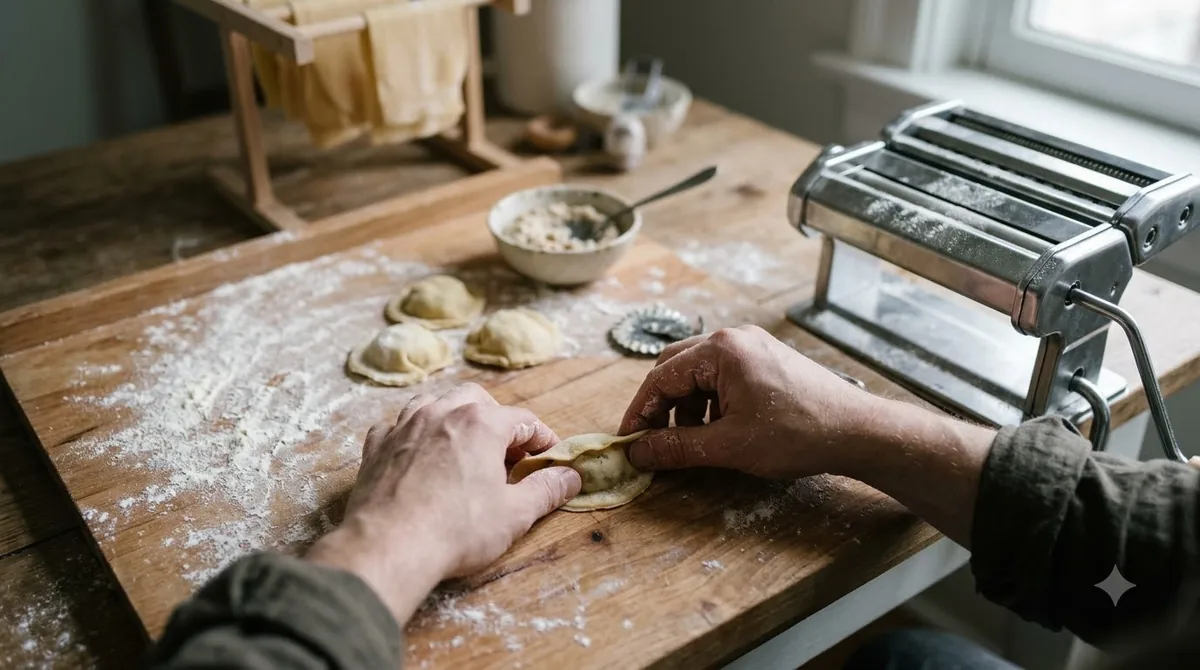

To make cappelletti, cut the pasta into squares, place a small amount of filling in the center, fold the square into a triangle and wrap the two corners around your finger. The result is a little peaked “hat,” which is where the name comes from, and it is a different fold from the round ring of tortellini.
Learning how to make cappelletti is mostly about the fold, not the filling. This guide focuses on the folding technique and explains how it differs from tortellini, so you can make homemade cappelletti with a shape that holds its peak when it cooks.
Where Cappelletti Comes From
Cappelletti are a stuffed pasta from Emilia-Romagna and the Marche, and the name means “little hats” in Italian.
The Wikipedia entry on cappelletti traces the name to cappello, the word for hat, and places the pasta in Emilia-Romagna and the Marche. The earliest possible reference it gives is a 1556 Ferrara source by Cristoforo di Messisbugo, though the sources here do not settle the exact origin.
How to Fold Cappelletti Step by Step
To fold cappelletti, start with a square, fold it corner to corner into a triangle, and bring the two long corners together around your finger so the tip rises into a peak. For the shape’s background, read our cappelletti pasta guide.
A common description from a Parma pasta guide is that the square is folded into a peaked shape, which is the key feature. Keep the filling small, because a large mound makes the peak hard to form and the seal hard to close.
- Cut the rolled sheet into squares, about two inches on each side.
- Place a small amount of filling in the center of each square.
- Fold the square corner to corner into a triangle and press the edges to seal.
- Wrap the two long corners around your finger and pinch them together at the back.
- Lift the tip into a peak and set the piece on a floured tray.
How Cappelletti Differs From Tortellini
Cappelletti are folded into a peaked triangle, while tortellini are shaped into a small ring, so the two are easy to tell apart once you know the fold. The folding difference is explained in cappelletti versus tortellini. If you want a bigger parcel from the same dough, see larger filled tortelloni.
The Wikipedia entry on tortellini describes the small ring shape and the Bologna and Modena origin. Cappelletti start from a square and end with a peak, which gives a shorter, pointed shape. The fold is the main difference, and it changes how the piece holds sauce.
Dough and Filling for Homemade Cappelletti
An egg pasta dough is the usual base, and the filling can be meat or cheese depending on the style you want. If you want the ring-shaped version, see step-by-step tortellini folds.
The America’s Test Kitchen fresh egg pasta recipe uses about 10 ounces (283 grams) of unbleached all-purpose flour, 3 large beaten eggs, and 1 to 2 minutes of kneading by hand after the food processor step. Roll the dough thin enough to see the pattern of your hand through it, then cut the squares. Cutter sets that nest in several sizes are helpful when you want uniform squares, according to a King Arthur Baking guide that lists cappelletti among the shapes it covers. The filling amounts are not given in these sources, so check your recipe.
Common Mistakes When You Fold Cappelletti
The most common problems are overfilling, a loose seal and squares of uneven size.
Too much filling makes the peak collapse and can split the seal in the pot. Cut the squares evenly so each piece cooks at the same rate, and keep the unused dough covered so it stays pliable while you fold.
How to Make Cappelletti Ahead of Time
Homemade cappelletti can be made in a batch and kept on a floured tray while you work. Keep the squares covered with a clean cloth so the edges do not dry and crack during folding. Plan the batch so the filling is ready before you cut the dough, since a sheet left out too long becomes stiff and harder to fold into a clean peak. Work in small groups of ten to twelve squares, fold each group, and cover the finished pieces before you start the next.
If you are learning how to make cappelletti for the first time, start with a small group of squares and practice the peak. Each fold takes only a few seconds once your fingers know the motion, and the shapes get more even with every tray.
Cappelletti are also a good match for a light broth, since the small peaked shape holds a little liquid in its folds. Pick a filling that is not too wet, because extra moisture makes the seal harder to close and can split the peak in the pot. When you serve them, keep the broth warm but not at a hard boil, so the little hats stay whole and the filling stays tender. A spoon of the cooking liquid stirred through the pasta at the end also helps the broth cling to the folds without making the dish watery.
Frequently Asked Questions
Why are cappelletti called little hats?
The name comes from cappello, the Italian word for hat, and the folded shape has a peak that looks like a small hat.
How do you make homemade cappelletti without a mold?
A mold is not needed. Cut the dough into squares by hand or with a cutter, then fold each square corner to corner and wrap the two long corners around your finger.
Are cappelletti and tortellini the same pasta?
No. Cappelletti are folded into a peaked hat shape, while tortellini are shaped into a small ring, so the fold and the final form are different.
Is cappelletti always filled with meat?
No. The sources here describe both meat and cheese fillings, so the choice depends on the recipe you follow.
Cappelletti reward a careful fold more than a complicated filling. Keep the portions small, seal each peak firmly and cut the squares evenly. Once the fold feels familiar, the same dough can take other stuffed shapes, and the little hats will hold their shape in the pot.
 8 min readLearnCappelletti Pasta: What It Is and How to Make It at HomeUpdated Nov 7, 2026
 7 min readLearnRicciolini Pasta: What the Little Curls Are and How to Cook ThemUpdated Nov 11, 2026
 8 min readLearnCappellacci Pasta: The Hat-Shaped Stuffed Pasta From FerraraUpdated Nov 6, 2026
 6 min readLearnHow Long to Cook Cappelletti: Fresh and Dried TimesUpdated Nov 13, 2026
 8 min readLearnCappelletti vs Tortellini: Shape, Filling and How They Are ServedUpdated Nov 6, 2026
 6 min readLearnHow to Make Tagliatelle: Egg Ratio, Rolling and CuttingUpdated Nov 13, 2026