
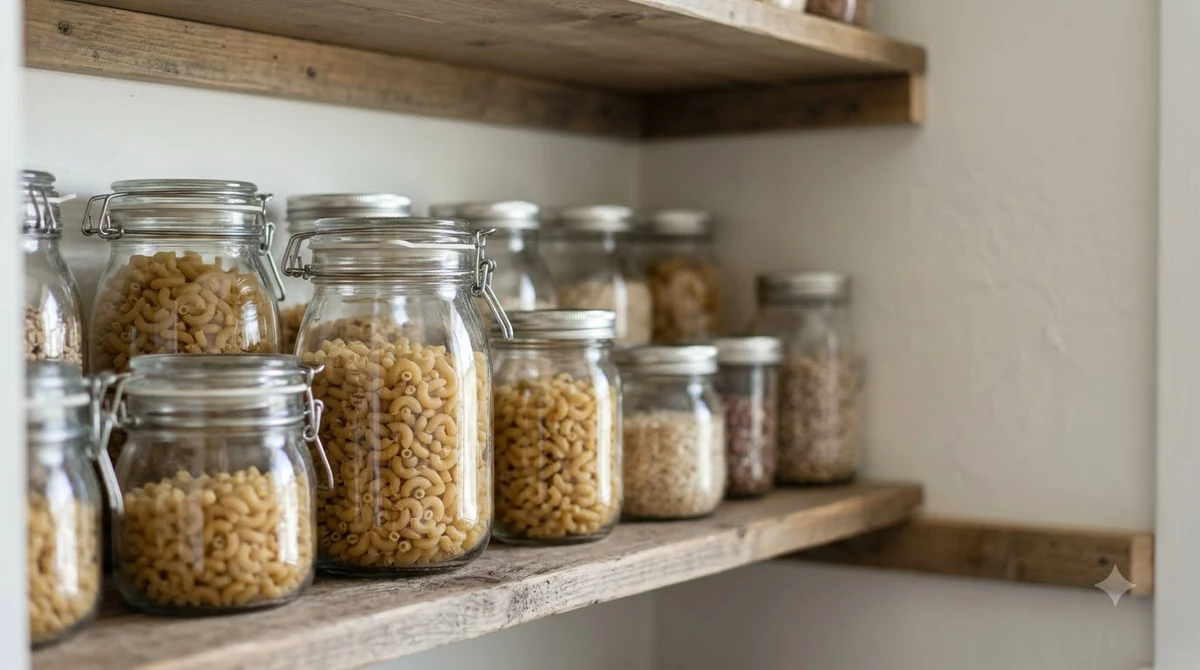

Knowing how to store dried pasta comes down to one rule: keep it in a cool, dark pantry inside an airtight container. Heat, sunlight and moisture shorten its life, and pests can get into thin packaging. The box it came in works at first, but it does not reseal well after opening.
Where to keep dried pasta at home
Keep dried pasta in a cool, dark pantry or cupboard, away from heat, sunlight and moisture. Those three conditions do most of the work when you want to know how to store dried pasta well.
A spot next to the stove or oven is warm, even when the door stays closed, so it is a poor choice for a long-term shelf. Sunny windowsills and steamy corners cause similar trouble. Choose a shelf that stays at a steady room temperature and stays dry, since that setting matters most.
A good pantry spot for dried pasta usually has three features:
- A cupboard or shelf that stays cool and does not warm up from appliances.
- Protection from direct sunlight, which TheTakeout lists as one of the three conditions to avoid.
- Low humidity, away from the dishwasher, sink and steam from the stove.
The same logic applies to any pantry shelf you choose, because a stable spot protects dried pasta from swings in heat and moisture. Humid kitchens need one extra step. TheTakeout suggests tossing a silica gel packet into the storage container to keep things drier. The packet is an optional extra, and a sealed container matters more than the packet itself.
Why the box is not enough
The original cardboard box is floppy, spills easily and does not reseal well once you have opened it. Pantry pests can also chew through paper, cardboard and thin plastic. Many people ask whether the box is enough, and once the package is open, the answer is usually no.
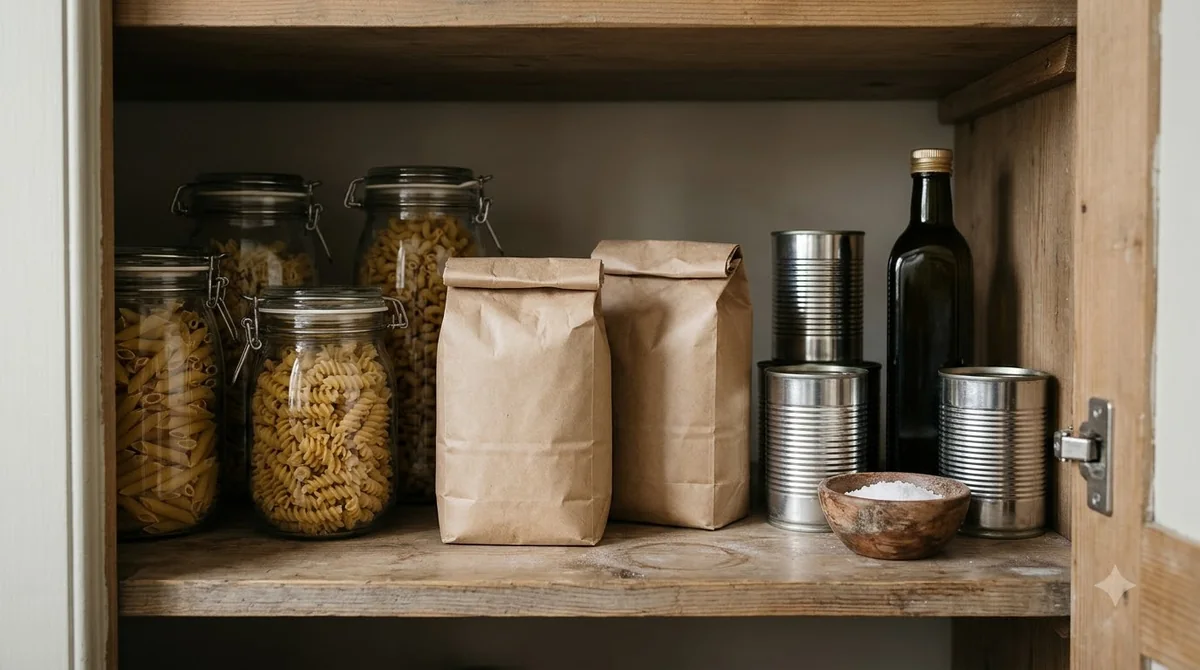
Once you open the box, the top rarely closes tightly again, so the storage question changes at that point. Air and moisture can reach the pasta, and loose pieces can spill across the shelf. The University of Illinois Extension notes that pests can chew through paper, cardboard and thin plastic packaging, and it recommends tightly closed glass, metal or heavy plastic containers instead.
The table below compares the three common options. A sealed container gives the best protection of the three, while a thin bag is only a short-term fix.
| Container | How it holds up | Main limit |
|---|---|---|
| Original cardboard box | Keeps pasta in its packaging | Floppy, spills, does not reseal, and cardboard can be chewed |
| Airtight glass, metal or heavy plastic | Tightly closed and insect-proof | Takes some shelf space and needs cleaning before refilling |
| Zip-top bag or thin plastic bag | Reseals more than the box | Pests can chew through thin plastic |
How to store dried pasta after opening
Knowing how to store dried pasta after opening starts with moving it into a clean, completely dry, tightly closed container soon after you open the package. Then keep the container in the pantry, away from heat and light.
The process takes only a few minutes and works with any sealed container you already own. Use this order each time you open a new package, since this routine is the core of storing opened pasta.
- Choose a container with a tight lid, such as glass, metal or heavy plastic (our roundup of the best pasta storage containers can help you pick).
- Wash and dry the container thoroughly if it has held food before, so no old crumbs remain.
- Pour the pasta in, then sweep up any loose pieces from the shelf or the bottom of the box.
- Write the date you opened the package on the container, so you know how long it has been stored.
- Press the lid firmly, and put the container back on the cool, dark shelf.
Check the seal from time to time. A lid that no longer closes firmly lets air and pests in, so replace the lid or the container when the seal fails.
Protect pasta from pantry pests
Pantry pests can infest dry pasta, and the best defense is a sealed container on a clean shelf. Pasta belongs to the group of foods these pests attack, so storage also matters for pest control.
The Illinois Extension lists pasta among the grain products that pests infest, noting that all life stages can be found in these products, often at the same time. Clemson notes that an infestation can occur when the factory seal on a box or bag is not adequate, so even unopened packages can be affected, and the Illinois Extension advises inspecting packages before you buy, since they should be sealed and unbroken. Clemson Extension advises storing all foodstuffs in airtight, insect-proof containers.
Storing dried pasta safely means planning for pests from the start. Three habits lower the risk:
- Keep every container tightly closed between uses, including small leftover amounts.
- Clean up spilled pasta and crumbs from the shelf, the corners and the back of the cupboard.
- Buy only what you will use in about two months, since pests thrive in large volumes stored for long periods.
Buying in smaller amounts is the simplest fix, and a good dried pasta brand in a small package often beats a bulk bag that sits for months. Choose a package you can finish within about two months, which is the window the Clemson guide recommends, so the pasta does not sit long enough to attract pests.
How long dried pasta keeps
Store-bought dried pasta can last up to two years when it is stored well, so the brand you start with matters less than the shelf it sits on (see the best Italian pasta brand picks if you are choosing). Texture can suffer and flavor can fade as it ages, although older pasta may still be safe to cook.
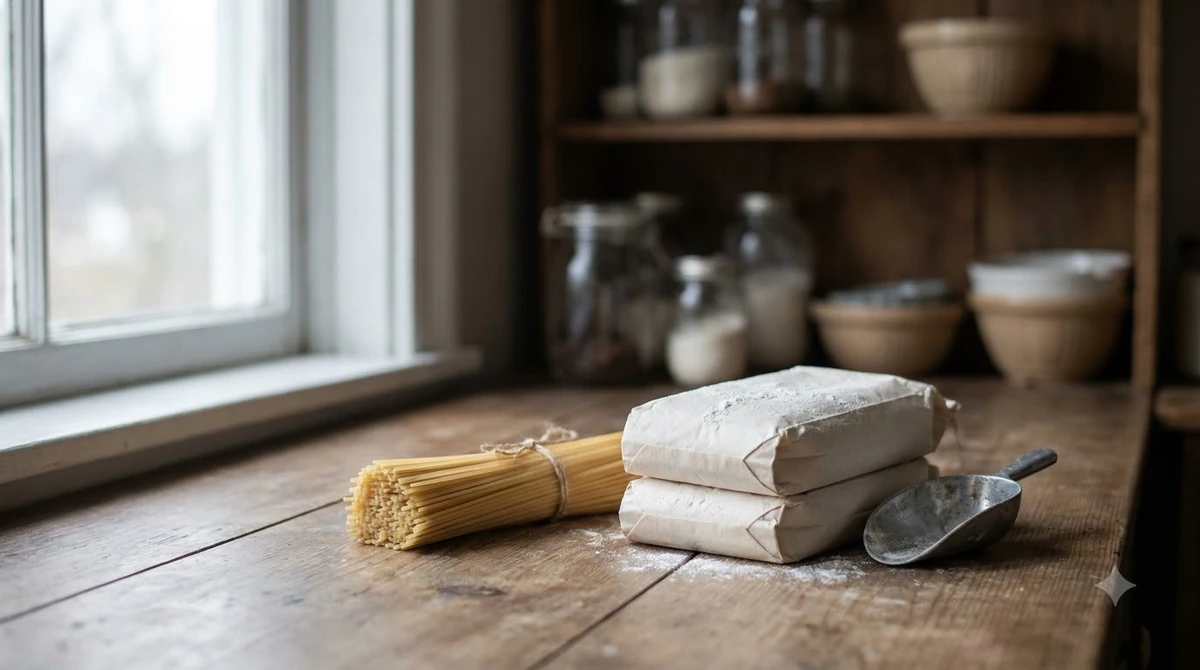
Shelf life depends mostly on storage conditions, and a sealed container on a cool shelf is the best way to store dried pasta for the longest time. A sealed container on a cool, dark shelf gives the pasta the full range, while a warm or open package shortens it. TheTakeout describes the same conditions: store the pasta away from moisture, heat and sunlight.
| Pasta type | Where to keep it | How long it keeps |
|---|---|---|
| Store-bought dried pasta | Airtight container in a cool, dark pantry | Up to two years |
| Homemade dried pasta | Airtight container at room temperature | One to two months, once completely dry |
Homemade pasta needs a different plan, and our guide on how to dry fresh pasta shows how to get it fully dry first. King Arthur Baking advises that the pasta must be completely dry before storage, because otherwise it may become moldy. Stored in airtight containers at room temperature, it keeps for one to two months.
Mistakes that shorten pasta’s life
Three habits shorten the life of dried pasta, and each one lets heat, moisture or pests in. Avoid all three in your own kitchen. Once the pasta is stored, cook it properly: how to cook pasta al dente has the method.
- Storing it next to the stove, oven or a sunny window.
- Leaving the package open or folding the top of the box back down.
- Buying large quantities that sit on the shelf for months.
If you do find pests, the Illinois Extension describes freezing at 27 degrees Fahrenheit or colder for at least 3 to 7 days as a way to treat infested food. The same page does not suggest freezing pasta before storing it, so treat freezing as a fix for a problem, not as a storage method. For a heavy infestation, check your local extension service before you decide what to keep.
Frequently Asked Questions
Does dried pasta go bad?
Dried pasta does not spoil quickly when it is stored well. It can last up to two years, although its texture can suffer and its flavor may fade. Check the package for insects before you cook it, and use up older pasta first. Knowing how to store dried pasta properly is the best way to slow that decline.
Can you store dried pasta in its box?
You can keep it in the box for a short time, but the box is floppy, spills easily and does not reseal well. A sealed container protects the pasta better once the package is open, which is why it is the standard answer to how to store dried pasta after opening.
What should you do if you find bugs in dried pasta?
For lightly infested food, the Illinois Extension describes freezing at 27 degrees Fahrenheit or colder for at least 3 to 7 days. For a heavy infestation, check your local extension service before deciding what to keep. Wash and dry the container before you refill it.
Do you need a silica gel packet?
Not always. TheTakeout suggests adding one to the container in humid kitchens to keep things drier. A tightly sealed container matters more than the packet, so start there.
How do you know if dried pasta is still good?
Texture and flavor are the main signs of age, according to TheTakeout. Older pasta may still be safe to eat, but it can cook up softer and taste flatter. If you have followed the steps above on how to store dried pasta, the pasta should stay in good condition until you cook it.
How do you store homemade dried pasta?
Let it dry completely first, because moisture can cause mold during storage. Then keep it in an airtight container at room temperature, where King Arthur Baking says it keeps for one to two months.
Buy pasta in amounts you can finish within a few months, and move every opened package into a sealed container the same day. Those two habits do more to keep dried pasta fresh than any special shelf, and they are the core of how to store dried pasta at home.
 8 min readLearnHow to Store Prosciutto So It Stays FreshUpdated Nov 11, 2026
 9 min readLearnHow to Store Olive Oil So It Stays FreshUpdated Nov 11, 2026
 9 min readLearnHow to Store Parmesan Cheese So It Stays FreshUpdated Nov 11, 2026
 9 min readLearnFresh Pasta vs Dried Pasta: How They Differ in Cooking, Storage and SauceUpdated Nov 12, 2026
 7 min readLearnHow to Reheat Pizza So the Crust Stays CrispUpdated Nov 10, 2026
 8 min readLearnHow to Store Fresh Pasta: Fridge, Freezer and Drying MethodsUpdated Nov 10, 2026