
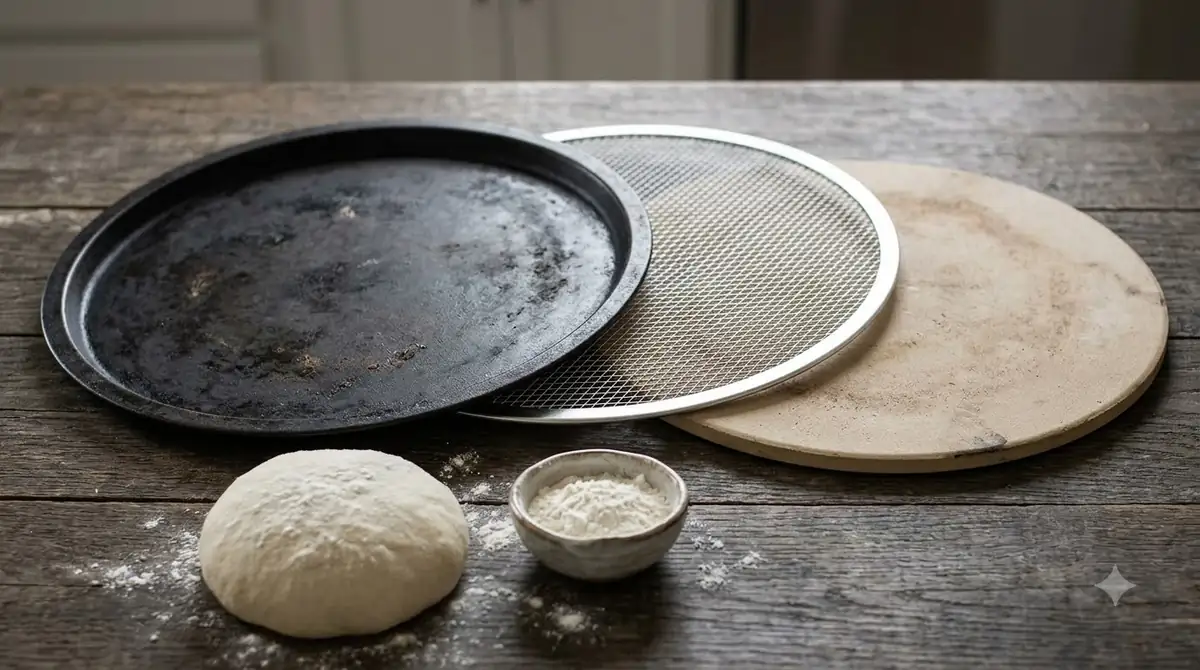

Learning how to bake pizza on a baking sheet takes a hot oven, plenty of oil and a short parbake before the sauce goes on. America’s Test Kitchen bakes its sheet pan version at 450 degrees on the lowest rack.
A sheet pan will not match a pizza stone or steel, but knowing how to bake pizza on a baking sheet well closes much of the gap for weeknight dinners.
What a Baking Sheet Can and Cannot Do
A rimmed baking sheet can hold a full pizza, but it gives a paler and softer bottom than a stone or steel. A baking sheet is a flat, rectangular metal pan placed in an oven, and it is used for cookies as well as pizzas. Wikipedia’s baking sheet entry notes that modern trays are made of aluminum or coated sheet steel, and that the raised lip adds rigidity.
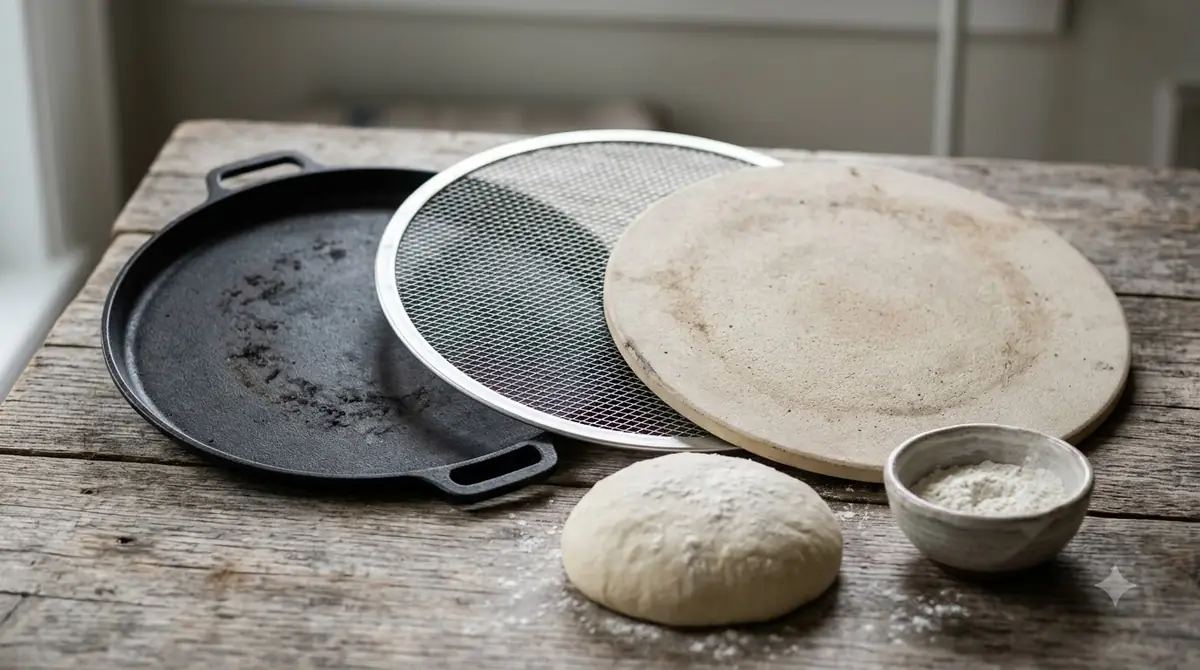
The thin metal is the main limit. King Arthur Baking calls a sheet pan a poor substitute for steel or stone because it is too thin to produce a good crust. In King Arthur’s video comparison, a sheet tray lacked the thermal mass to transfer much stored heat into the dough, so the bottom came out pale, floppy and short on texture.
That does not mean the pan is useless. The steps below close much of the gap in the bottom crust, and a few of them cost nothing extra. Once you understand the limits, the process becomes a predictable routine instead of a gamble.
Choose the Right Dough and Pan Size
A standard dough made for a rimmed sheet pan fits a rectangle, not a round. The America’s Test Kitchen recipe uses the amounts below, and it rolls the dough to a 16 by 12 inch rectangle, then stretches it to fit the pan. The source does not list the sheet’s dimensions, so measure your own pan before you shape the dough. Getting that size right is the first practical step, since the stretched dough should reach the rim without spilling over it.
| Ingredient | Amount |
|---|---|
| All-purpose flour | 5 cups (25 oz / 709 g) |
| Warm water | 1 3/4 cups at 110 F |
| Extra-virgin olive oil in dough | 1/2 cup plus 1 tablespoon |
| Instant or rapid-rise yeast | 4 1/2 teaspoons |
| Salt and sugar | 2 teaspoons salt, 1 tablespoon sugar |
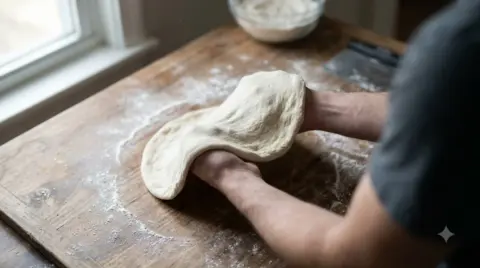
Let the dough rise at room temperature for 1 to 1 1/2 hours, until doubled. Then give it a second rise of about 20 minutes in a warm spot away from the oven, until it looks slightly puffed. Patience at this stage pays off later. If the dough fights you, see how to stretch pizza dough.
Preheat the Oven and Oil the Pan
Heat the oven to 450 degrees with the rack in the lowest position, which places the pan closest to the oven’s heat source. The same recipe coats the sheet with 1/4 cup of oil and brushes the dough with the remaining tablespoon. The recipe says that more oil on the pan produces a crisp, browned bottom, and the oven setting is the first thing to get right when you learn how to bake pizza on a baking sheet.
- Set the rack to the lowest position and heat the oven to 450 degrees.
- Pour 1/4 cup of oil onto the rimmed sheet and spread it to the edges.
- Stretch the dough to the corners, then brush the top with the remaining tablespoon of oil.
- Check the manufacturer’s maximum temperature for your pan before you preheat it.
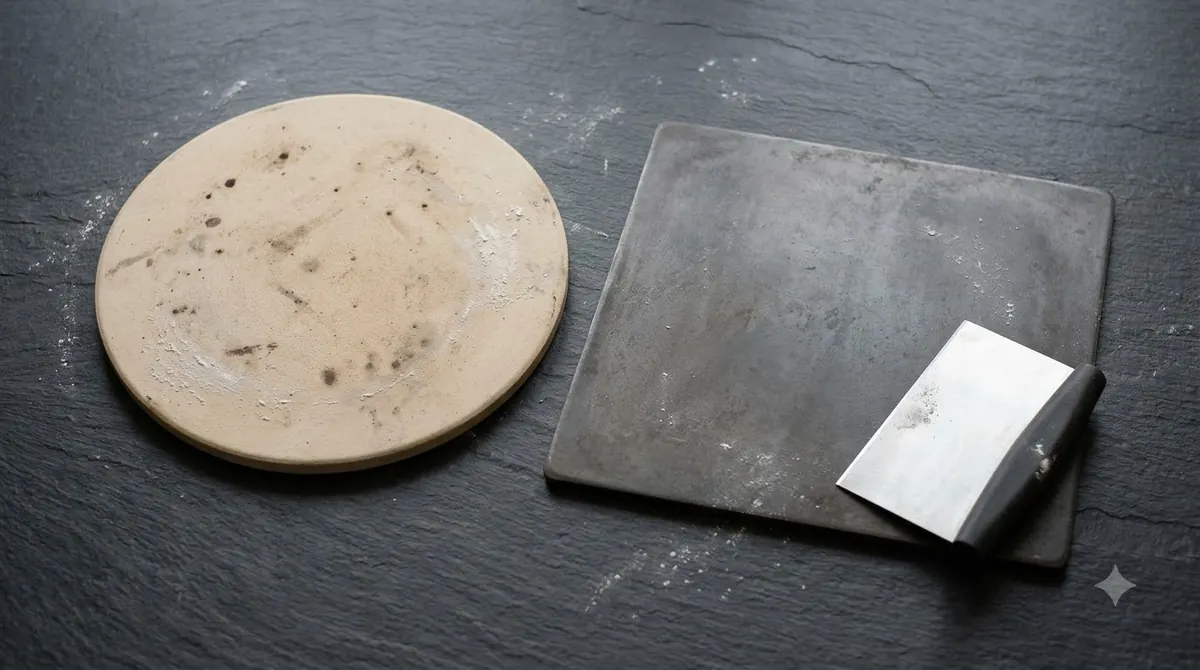
Before you follow the 450 degree setting, run an oven thermometer to confirm that the oven actually holds that temperature. Some cooks preheat an inverted sheet on a rack, then slide the pizza onto the hot metal. King Arthur’s test notes that the pan may warp during this step, so check your pan before you try it. A stone or steel needs much more time, at least an hour in the oven, and King Arthur suggests a surface reading of at least 500 degrees on an infrared thermometer.
How to Bake Pizza on a Baking Sheet: Shape, Top and Parbake
A parbake sets the bottom before the wet toppings arrive, which is the simplest defense against a soggy center. Our guide to how to par-bake pizza crust covers the general method. It is the step most worth keeping even when you skip the others. The America’s Test Kitchen method sprinkles 1 cup of Parmesan over the dough and bakes it for 7 to 10 minutes, until the cheese begins to melt. The recipe describes this layer as a barrier that keeps the crust from getting soggy.
- Spread the sauce over the parbaked crust, leaving a 1-inch border, and bake for 7 to 10 minutes until the sauce is deep red and steaming.
- Add 12 ounces of shredded mozzarella and the remaining 1/2 cup of Parmesan, then bake for about 12 minutes until golden brown.
- Rest the pizza for 5 minutes, then top it with fresh basil before slicing.
Across the three bake steps, the recipe’s bake times add up to about 26 to 32 minutes. Those bake times are the core timing. Watch the color as well as the clock, and pull the pizza when the cheese is golden.
Baking Sheet vs Stone vs Steel
A baking sheet is the easiest tool to get started with, but it is the weakest for the bottom crust. A stone or steel stores heat and pushes it into the dough, which gives a crisper and better-colored base. King Arthur’s video test ran all three surfaces at 550 degrees with convection, in a studio oven, so home results will differ. That gap is why a sheet pan needs the extra steps covered earlier.
| Surface | Heat storage | Preheat | Bottom crust in King Arthur’s test |
|---|---|---|---|
| Rimmed baking sheet | Low, thin metal | Not required; inverted preheat is optional | Pale, floppy, lacks texture |
| Pizza stone | High | At least 1 hour in the oven | Much better than a sheet pan, per King Arthur |
| Baking steel | High, conducts heat fast | At least 1 hour in the oven | Very crisp, browned bottom |
Anyone choosing between these surfaces should match the tool to the goal, since the best base comes from a stone or steel while the sheet pan wins on convenience. For the stone method, see how to cook pizza on a pizza stone in the oven. If you own a stone or steel, use it for the best base and keep a sheet pan for trays and sheet-style slices. If you only own a sheet pan, the parbake and oil steps above are the most effective upgrades you can make without new equipment. For the stone or steel route, see how to make crispy bottom pizza in a home oven.
Common Mistakes That Cause a Soggy Bottom
Most soggy bottoms come from too little oil, too much sauce or skipping the parbake. Avoiding these three errors is the quickest way to improve a sheet pan pizza. If the bottom is still wet, read how to fix soggy pizza. The recipe’s parbake is the step that creates a barrier against moisture, so skipping it leaves the dough exposed to the sauce.
- Skipping the Parmesan parbake when you learn how to bake pizza on a baking sheet, which leaves the dough exposed to wet toppings.
- Spreading sauce to the edge, which removes the 1-inch border the recipe leaves bare.
- Using too little oil on the pan, when the recipe calls for a full 1/4 cup to coat the sheet.
- Stopping the bake early, before the cheese is golden and the sauce is steaming.
Frequently Asked Questions
Can you bake pizza on a baking sheet instead of a pizza stone?
Yes, but expect a paler and softer bottom. King Arthur Baking calls a sheet pan a poor substitute for steel or stone because it is too thin to produce a good crust. Learning how to bake pizza on a baking sheet with the parbake and oil steps in this guide narrows the gap.
What temperature should you use for pizza on a baking sheet?
America’s Test Kitchen bakes its sheet pan pizza at 450 degrees on the lowest rack. Use 450 degrees as the starting point for how to bake pizza on a baking sheet, and check your pan’s maximum temperature before you go higher, since the source does not list one for the sheet it used.
Is it hard to learn how to bake pizza on a baking sheet?
No, the method has only three core parts: enough oil on the pan, a parbake with Parmesan and a hot oven setting. The America’s Test Kitchen recipe lays out each step with the times listed above, so you can follow it without guessing.
Should you preheat the baking sheet?
Preheating is optional. King Arthur’s test describes an inverted half sheet preheated on a rack, then the pizza slid onto it. That approach may warp the pan, so check the pan before you try it.
How much dough do you need for a baking sheet?
The America’s Test Kitchen recipe uses 5 cups of flour, or 25 ounces, and rolls the dough to a 16 by 12 inch rectangle. Stretch it to the corners of your rimmed sheet, and let it rise until doubled before you shape it.
Why is my sheet pan pizza soggy on the bottom?
The most common causes are too little oil, too much sauce and skipping the parbake. The fix for how to bake pizza on a baking sheet without sogginess is a Parmesan parbake first, a 1-inch border of bare dough around the sauce, and a bake until the cheese is golden.
Keep the sheet pan for weeknight pizzas where speed matters more than a perfect base, and move to a stone or steel once you want a crisper, bakery-style crust. Either way, the oil, the high oven and the parbake do most of the work when you learn how to bake pizza on a baking sheet.
 10 min readLearnSheet Pan Pizza Recipe: Three Doughs, Exact Amounts and Bake TimesUpdated Nov 11, 2026
 8 min readLearnHow to Make Pizza Without a Peel: Parchment and Sheet Pan MethodsUpdated Nov 11, 2026
 8 min readLearnPizza Al Taglio Recipe: Roman Sheet-Pan Pizza You Can Make at HomeUpdated Nov 10, 2026
 8 min readLearnPizza Pockets Recipe: Homemade Dough, Filling and Baking TimesUpdated Nov 11, 2026
 9 min readLearnCauliflower Pizza Crust Recipe: Ingredients, Steps and Baking TipsUpdated Nov 12, 2026
 9 min readLearnPizza Dough Without Yeast: A Baking Powder Recipe for One 12-Inch CrustUpdated Nov 10, 2026