
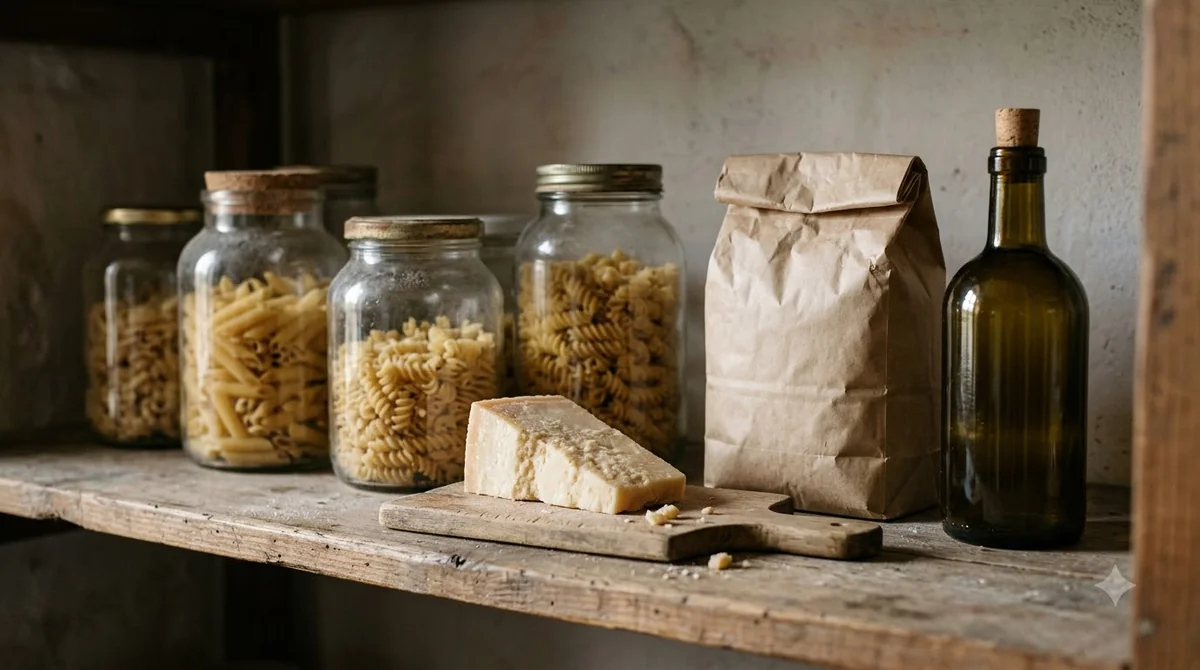

Semolina pasta vs egg pasta comes down to one ingredient: semolina pasta is made from durum wheat and water, while egg pasta adds eggs to the dough. That single change affects protein, texture, cooking behavior and which sauces suit each shape.
Eggs make pasta more tender and add protein, while durum semolina pasta follows a simpler recipe. Choose by sauce and by the cooking time on the package, because the two do not behave the same in every dish.
| Pick | Best for | Key fact |
|---|---|---|
| Semolina pasta (dried) | Hearty ragù, soups and baked dishes | Italian rules define it as durum semolina and water |
| Egg pasta (fresh or dried) | Delicate sauces, ribbons and filled shapes | At least 4 eggs (200 g) per kg of semolina |
Semolina Pasta vs Egg Pasta at a Glance
Semolina pasta is made from durum wheat semolina and water, while egg pasta is made from semolina plus eggs, so the ingredient list is the first thing to check. Under the Italian definition summarized in Wikipedia’s pasta article, egg pasta must be made with durum wheat semolina, so the real difference is the eggs.
- Dried semolina pasta: durum wheat semolina or wholemeal semolina and water, with up to 3% soft wheat flour allowed.
- Egg pasta: at least four hen’s eggs, weighing at least 200 g without shells, for each kilogram of semolina.
- Brand practice: Granoro, an Italian producer, uses four eggs per kilogram and says its egg pasta and standard pasta are two different products.
Pasta Class Florence, a specialist site, shows egg recipes that mix 00 flour with durum semolina. So the label alone does not settle semolina pasta vs egg pasta, and the eggs per kilogram are the number to check.
How Eggs Change the Dough and the Bite
Eggs change how the dough sets, and a 2019 peer-reviewed study found that adding eggs to wheat pasta made it firmer and less sticky after cooking, a key point in any semolina pasta vs egg pasta comparison. The study tested pasta made from common wheat flour rather than durum, so its results show the effect of eggs, not a direct durum comparison.
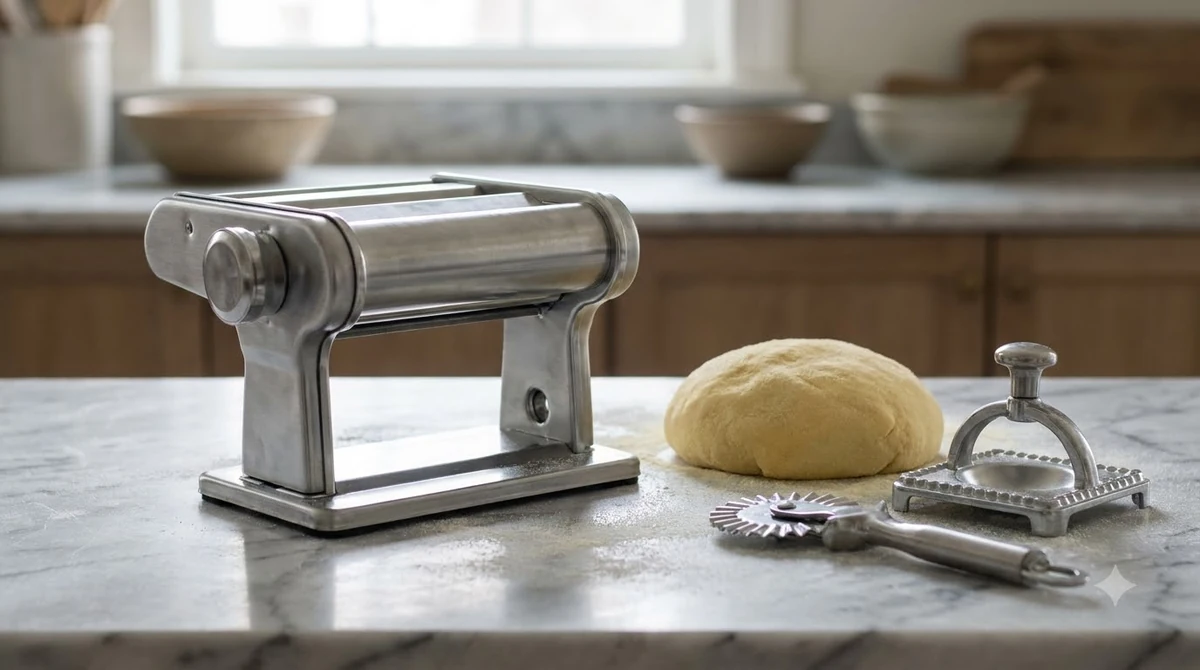
For semolina pasta vs egg pasta, the study explains that the egg white forms a compact protein network that gives a firmer product. Its authors also describe egg lipids that interact with starch during cooking, which limits how much starch dissolves into the water. The result is a smaller loss of dry matter and a less sticky cooked pasta. For a deeper look at the methods, read the 2019 Acta Scientiarum Polonorum study directly.
The same study tested how much common wheat flour a recipe can take before quality drops. Eggless pasta held up with up to 50% wheat flour, one-egg pasta with up to 60%, and two-egg pasta could replace all durum semolina with wheat flour without a significant loss in quality. Those limits matter when you shop semolina pasta vs egg pasta, because a cheap recipe with eggs may behave very differently from a durum-only one.
How Cooking Time and Expansion Differ
Cooking time depends on the product, so in any semolina pasta vs egg pasta comparison, read the time printed on the package instead of assuming one type always cooks faster. Dried pasta roughly doubles in size as it cooks, while fresh egg pasta barely expands.
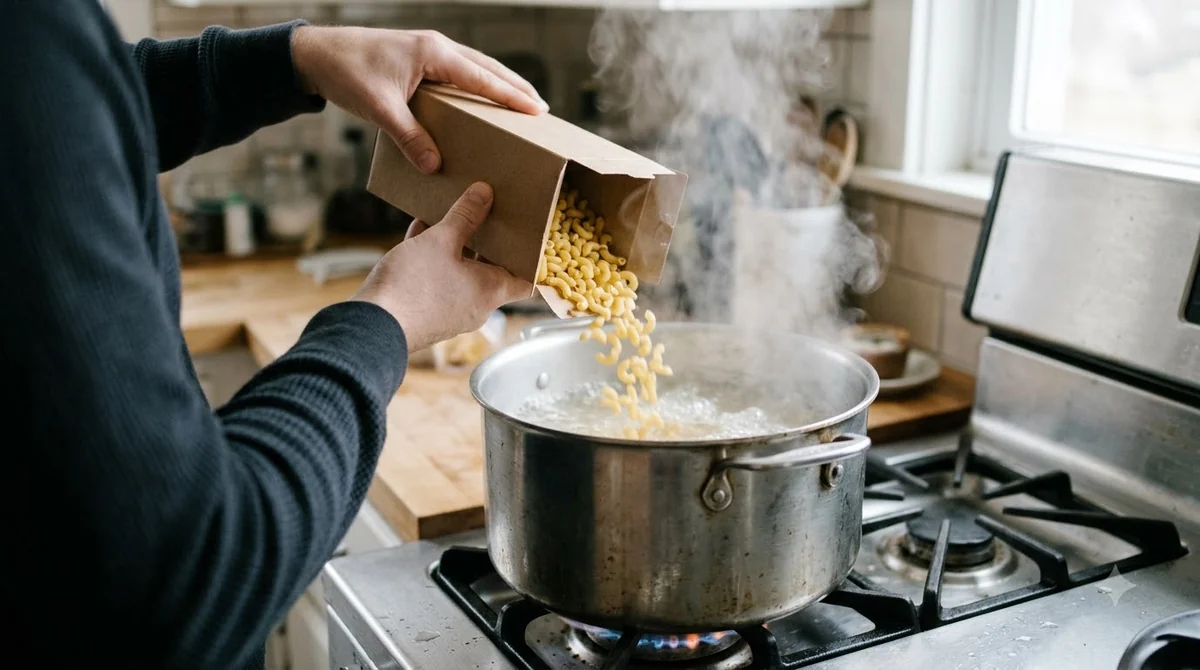
Wikipedia’s pasta article states that dried pasta remains a brittle solid until it is cooked, and that eggs are not needed to make dried pasta. It also says fresh egg pasta is more tender and takes about half the time to cook as dried pasta, while dried pasta roughly doubles in size. For serving, it gives about 0.5 kg of dried pasta for four people, compared with about 0.7 kg of fresh pasta.
The study adds a useful warning. In its wheat flour samples, each egg lengthened the minimum cooking time, by about 1 minute for one egg and about 2 minutes for two eggs. Pasta Class Florence says egg pasta has the shortest cooking time within a dish, which is why it recommends pre-cooking sauce ingredients that take longer. The two sources measure different things, so the package time is the safest guide.
| Factor | Dried semolina pasta | Fresh egg pasta |
|---|---|---|
| Base | Durum semolina and water | Durum semolina plus eggs |
| Before cooking | Brittle solid | Soft and tender |
| Size after cooking | Roughly doubles | Does not expand much |
| Guide for four people | About 0.5 kg | About 0.7 kg |
Protein, Iron and Fiber on the Label
When you compare semolina pasta vs egg pasta on protein, egg pasta generally comes out ahead, and eggs add a complete protein profile. Granoro states that adding eggs raises the biological protein value of its egg pasta, and that eggs provide a considerable amount of good quality complete protein.
Pasta Class Florence adds that egg pasta contains more iron and slightly more fiber than semolina pasta, while also providing cholesterol, which semolina pasta does not. Dried egg pasta has an energy content similar to, and slightly higher than, dried semolina pasta. Nutrition varies by brand, so compare the protein and fiber per 100 g on each package rather than relying on the type alone.
Wheat flour can lower the protein content of pasta, which is one reason the semolina pasta vs egg pasta question often comes down to the eggs. The 2019 study found that adding common wheat flour reduced both protein and dietary fiber, which is one reason the study recommends eggs when wheat flour is part of the recipe.
Which Sauces and Shapes Suit Each Pasta
For semolina pasta vs egg pasta at the table, delicate sauces suit fresh egg pasta, while dried semolina pasta holds up to hearty ragù, soups and casseroles, according to Wikipedia’s pasta article. Pair the sauce with the pasta’s weight and surface, not only with the ingredient list.
Pasta Class Florence groups egg pasta shapes by use:
- Brothy dishes: maltagliati pasta and tagliolini.
- Sautéed sauces: tagliatelle pasta, pappardelle and spaghetti alla chitarra.
- Stuffed pasta: ravioli, tortellini pasta and cappelletti.
Dried semolina shapes such as spaghetti and rigatoni are common choices for long-simmered tomato sauces. The page does not list semolina shapes, so treat this as a practical pairing rule rather than a published standard.
How to Choose Between Them at the Store
Start with the ingredient list when you weigh semolina pasta vs egg pasta: if eggs appear, you are buying egg pasta, and if the list shows only durum semolina and water, you are buying semolina pasta. Then match the package to the dish you plan to cook, since semolina pasta vs egg pasta is mostly a sauce decision.
- Read the ingredient list and look for eggs or the words egg pasta.
- Choose egg pasta for delicate butter, cream or light seafood sauces.
- Choose dried semolina pasta for ragù, soups and baked dishes.
- Check the cooking time on the package before you start the sauce.
- For fresh egg pasta, plan to eat it within 3 to 4 days when kept in the fridge, according to Pasta Class Florence; see how to store fresh pasta for more.
Because labels differ, the brand’s own specifications are the most reliable check for semolina pasta vs egg pasta. Granoro’s FAQ notes that special egg pasta and standard pasta are two different products with their own quality markers, so do not treat them as interchangeable.
Frequently Asked Questions
Is semolina pasta healthier than egg pasta?
Neither is automatically healthier in a semolina pasta vs egg pasta choice. Egg pasta generally contains more protein and iron, while semolina pasta has no cholesterol from eggs. Compare the nutrition panel on each package, since brands differ.
Does egg pasta cook faster than semolina pasta?
Not reliably. Pasta Class Florence says egg pasta has the shortest cooking time within a dish, while the 2019 study found that each egg lengthened the minimum cooking time of its wheat flour pasta. Follow the time printed on the package.
Does adding eggs make pasta firmer?
In the 2019 study, yes, which matters for semolina pasta vs egg pasta. Eggs added to common wheat flour pasta gave a firmer, less sticky product after cooking. That study did not test durum-only pasta against egg pasta head to head.
Are fresh egg pasta and dried egg pasta the same?
No. Pasta Class Florence gives separate figures: dried egg pasta has an energy content similar to, and slightly higher than, dried semolina pasta, while fresh egg pasta is closer to cooked semolina pasta. Storage also differs, so check whether your package is fresh or dried.
Can you make semolina pasta without eggs at home?
Yes. Wikipedia’s pasta article says eggs can be added for flavor and richness but are not needed to make dried pasta. Durum semolina and water is the base for dried semolina pasta.
Is egg pasta always made with semolina?
Under the Italian definition summarized on Wikipedia, egg pasta must be made with durum wheat semolina. Some recipes from Pasta Class Florence also mix 00 flour with durum semolina, so check the ingredient list before you judge semolina pasta vs egg pasta on its base.
How many eggs go into egg pasta?
At least four hen’s eggs, weighing at least 200 g without shells, for each kilogram of semolina under the Italian definition. Granoro uses four eggs per kilogram in its egg pasta dough.
In the semolina pasta vs egg pasta decision, choose egg pasta when the sauce is light or the shape is ribbon-style or filled, and choose dried semolina pasta for hearty sauces and long-simmered dishes. Check the package time and the ingredient list before you buy (and if you roll your own, see how thin to roll pasta), because brands vary and the two types are not interchangeable in every recipe.
 8 min readLearnAgnolotti vs Ravioli: 5 Easy Differences ExplainedUpdated Nov 10, 2026
 6 min readLearnHomemade Mafaldine: 2 Methods With Egg or Semolina DoughUpdated Nov 13, 2026
 8 min readLearnReginette Pasta: Shape, Origin and 5 Best SaucesUpdated Nov 11, 2026
 7 min readLearnFarfalloni Pasta: 5 Simple Facts and the Best SaucesUpdated Nov 11, 2026
 6 min readLearnPenne Substitute: 5 Pasta Shapes That Work WellUpdated Nov 13, 2026
 7 min readLearnWhat Is Durum Wheat? The Hard Wheat Behind Pasta and SemolinaUpdated Nov 10, 2026