
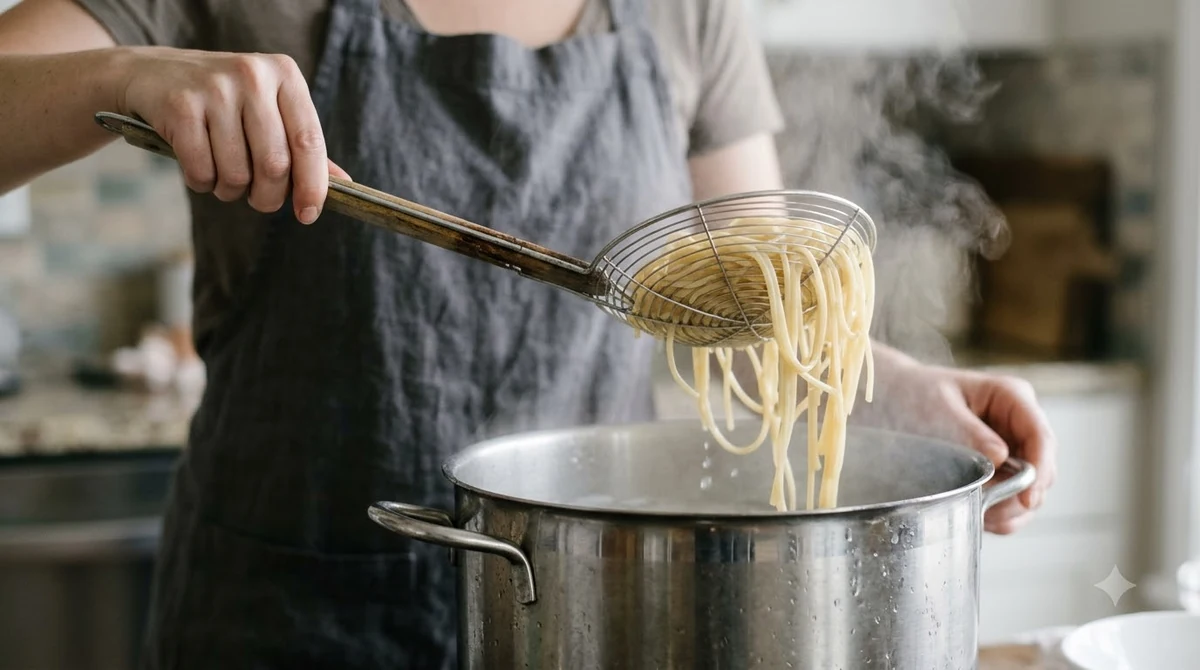

Knowing how to cook fresh pasta comes down to one rule: boil it briefly in a large pot of generously salted water. Most fresh pasta is ready in 2 to 5 minutes, which is much faster than dried pasta, so it needs your attention from the first minute.
Taste a piece to check doneness, drain it as soon as it is tender, and finish it in the sauce. The sections below cover how to cook fresh pasta from start to finish, including the equipment, cook times by shape, a step-by-step method, frozen pasta, sauce pairing and the mistakes that cause sticking and tearing.
What You Need to Cook Fresh Pasta
To learn how to cook fresh pasta, you need a large pot of boiling water, plenty of salt, and a colander for pasta or slotted spoon for lifting the pasta out. King Arthur Baking advises seasoning the cooking water generously, because fresh pasta cooks only briefly and the water is where it picks up its flavor.
A large pot matters more than many people expect when they start learning how to cook fresh pasta. When there is enough water, the pasta can move freely and the water is more likely to stay at a steady boil after the pasta goes in.
The guidance does not give a set amount of salt, so season the water until it tastes clearly salty. Do this before the pasta goes in, not after, so the salt is evenly spread through the water when the pasta hits it.
How Long to Cook Fresh Pasta
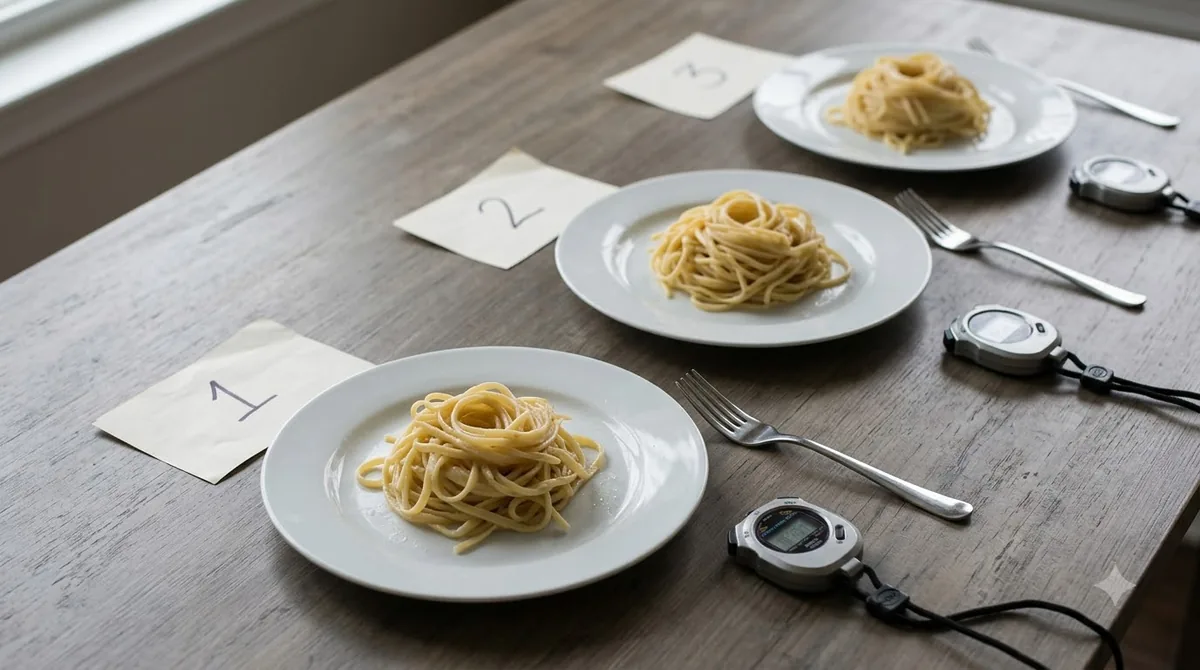
Fresh pasta usually cooks in 2 to 5 minutes, and shape and thickness decide where it lands in that range. Flat ribbons like tagliatelle take about 2 minutes, while chubby shapes like cavatelli take 3 to 5 minutes.
| Pasta type | Typical cook time | What to check |
|---|---|---|
| Flat ribbons, such as tagliatelle | About 2 minutes | Tender with a slight chew |
| Chubby shapes, such as cavatelli | 3 to 5 minutes | Tender all the way through |
| Stuffed pasta | 2.5 to 4 minutes at a gentle boil | Tender, start checking at the low end |
| Dried pasta, for comparison | At least 8 minutes | Follow the package and taste |
Treat these numbers as starting points for how to cook fresh pasta, not fixed rules. Use the low end of the range for thin strands and the high end for thick or chubby shapes. King Arthur’s guide to fresh pasta gives the 2 to 5 minute range and says to taste as the pasta cooks, which is the only reliable check.
Do not use dried-pasta timing when you learn how to cook fresh pasta. If you plan to keep some for later, our guide on how to dry fresh pasta covers that option. Dried pasta needs at least 8 minutes, so a fresh batch cooked on that schedule will be overcooked before you notice it. Set a timer for the low end of the range and check early.
How to Cook Fresh Pasta Step by Step
Bring the water to a full boil first, salt it, then add the pasta in one batch and stir gently at the start. Begin tasting at the low end of the time range and drain as soon as the pasta is tender with a slight chew.
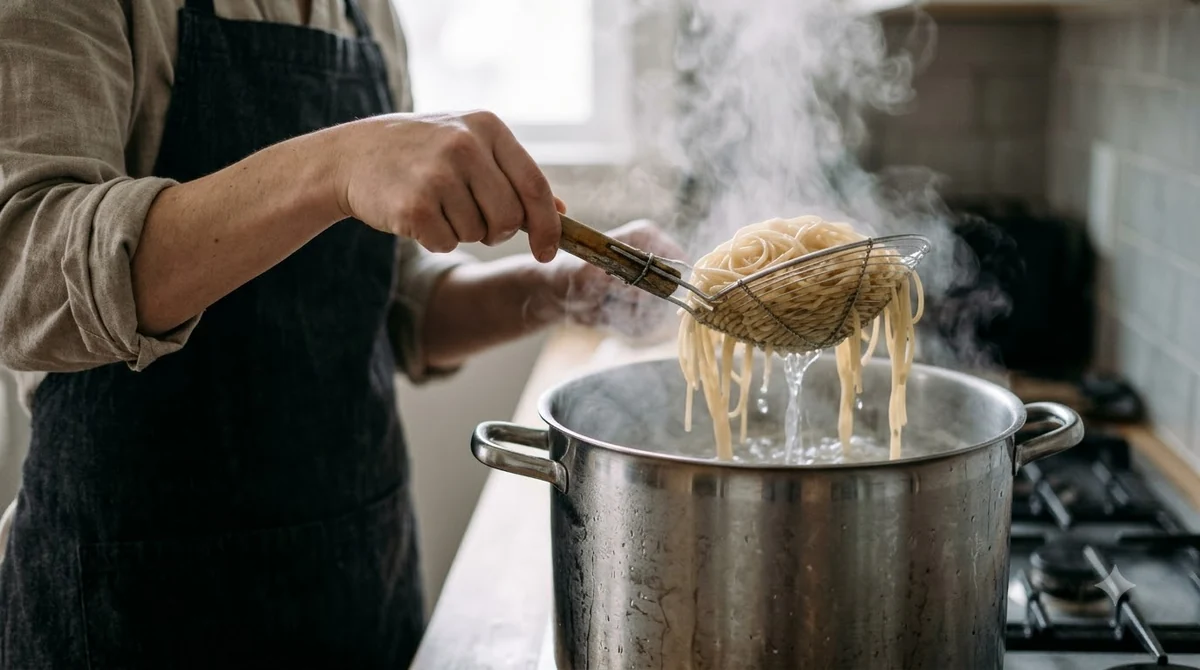
- Fill a large pot with water and bring it to a full rolling boil before adding anything, since a steady boil is the start of how to cook fresh pasta well.
- Season the water generously with salt until it tastes clearly salty.
- Add the pasta in one batch, not in handfuls, and stir gently for the first few seconds so the strands do not clump.
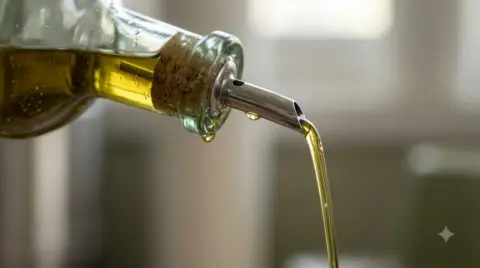
- If you like, add a drizzle of olive oil to the water. Dolceterra’s step-by-step guide suggests it helps reduce sticking without changing the shape, but it does not replace stirring.
- Taste a piece at the low end of the time range. When it is tender with a slight chew, drain it right away.
Knowing how to cook fresh pasta also means knowing when to stop, because it keeps cooking in the heat of the pot and the colander, so do not leave it sitting while you finish the sauce. Drain it promptly and move it straight into the pan or bowl.
Cooking Fresh Pasta from Frozen
Yes, how to cook fresh pasta from frozen is straightforward, and you can skip thawing it first. King Arthur says to add about one minute to the usual cook time, while a reader reply on Pasta Evangelists reported 30 seconds to a minute of extra time. Those are user reports, so start at the low end and taste.
Freezing methods also differ between sources. King Arthur freezes the pasta uncovered on a parchment-lined sheet for about 25 minutes until it is set, then bags it, and says it keeps for up to 3 months. Pasta Evangelists’ storage guide lays cut pasta on a baking sheet for 15 minutes before moving it to airtight containers, and says it keeps for up to one month.
Fresh pasta made at home with a pasta machine for fresh pasta freezes well too. Whichever method you choose, the key step in how to cook fresh pasta from frozen is to drop the frozen portion straight into salted water at a rolling boil. Both guides describe cooking from frozen rather than thawing first, so there is no need to thaw it in advance.
Matching Sauce to Fresh Pasta
Smooth sauces suit fresh pasta best because it tears more easily than dried pasta, so plan the sauce before you learn how to cook fresh pasta for a meal. Pull cooked-sauce pasta a minute early so it finishes in the pan, and cook uncooked sauces, gnocchi and stuffed pasta fully before saucing.
| Sauce type | How to handle the pasta |
|---|---|
| Cooked sauces, such as meat, cream and most tomato or vegetable sauces | Pull the pasta a little early, since it cooks about another minute in the sauce |
| Uncooked sauces, such as pesto and raw tomato | Cook the pasta fully before adding the sauce |
| Pasta salads, gnocchi and stuffed pasta | Fully cooked before saucing |
Potato dumplings need their own timing, so see how to cook gnocchi. Dolceterra also notes that fresh pasta is more likely to tear than dry pasta, so it suits smooth sauces better than dishes with large meat or vegetable chunks. Toss gently with a little pasta water to loosen the sauce and coat each strand without breaking it.
Common Mistakes to Avoid
The most common mistakes in how to cook fresh pasta are crowding the pot, skipping the salt and leaving the pasta in the water too long. Each one leads to sticking, tearing or mushy pasta, even when the cook time is right.
- Crowding the pot. Too much pasta at once cools the water and makes strands stick together.
- Under-salting the water. The cooking water is the main chance for fresh pasta to take on seasoning.
- Overcooking. The pasta keeps cooking after you lift it out, so drain it as soon as it is tender.
- Using dried-pasta timing. Fresh pasta is usually ready in minutes, while dried pasta needs at least 8.
Most problems with how to cook fresh pasta come from timing rather than technique. Watch the pot from the first minute, taste early and keep the sauce ready so the pasta goes straight from the colander into it.
Frequently Asked Questions
How long does it take to cook fresh pasta?
Learning how to cook fresh pasta starts with timing. It usually takes 2 to 5 minutes, depending on shape and thickness. Flat ribbons sit at the short end of that range, while chubby shapes and stuffed pasta take longer. Taste early and drain as soon as it is tender.
Is the cook time different from dried pasta?
Yes. Fresh pasta usually cooks in 2 to 5 minutes, while dried pasta takes at least 8 minutes. Dolceterra describes fresh pasta as ready in 3 to 5 minutes, when it starts to float. Check fresh pasta early so you do not overcook it.
Can you cook fresh pasta from frozen?
Yes. Cook it straight from frozen without thawing and add about 1 minute to the usual time. King Arthur says frozen fresh pasta keeps for up to 3 months, while Pasta Evangelists says up to one month.
Should you add oil to the water?
Olive oil can help reduce sticking when you cook fresh pasta, according to Dolceterra, but it is optional. Stirring gently at the start is still the main way to keep the strands separate. The same habits apply to dried noodles, as shown in how to keep pasta from sticking.
How do you know when fresh pasta is done?
Taste a piece when you cook fresh pasta at home. It should be tender with a slight chew. Dolceterra also notes that fresh pasta floats when it is ready, but the taste test is the more reliable check.
What sauce goes best with fresh pasta?
Smooth sauces suit fresh pasta best, since it tears more easily than dried pasta. Uncooked sauces such as pesto need fully cooked pasta first, so cook the pasta completely before you mix them.
Mastering how to cook fresh pasta comes down to three habits: start tasting at the low end of the time range, drain as soon as the pasta is tender, and finish it in the sauce. Fresh pasta rewards attention, so stay near the pot for the first few minutes.
 8 min readLearnLemon Pasta Recipe: Quantities, Steps and Common MistakesUpdated Nov 10, 2026
 9 min readLearnAglio e Olio Recipe: 4 Steps, Oil Tips and Common MistakesUpdated Nov 10, 2026
 8 min readLearnHow to Dry Fresh Pasta at Home: Timing, Storage and TipsUpdated Nov 10, 2026
 8 min readLearnHow to Store Fresh Pasta: Fridge, Freezer and Drying MethodsUpdated Nov 10, 2026
 8 min readLearnGrandma Pizza Recipe: Ingredients by Weight, Timing and MethodUpdated Nov 10, 2026
 9 min readLearnHow to Store Fresh Basil: 4 Easy Methods That WorkUpdated Nov 10, 2026