

An aglio e olio recipe is spaghetti tossed with thinly sliced garlic and extra virgin olive oil, a Neapolitan dish made from a few pantry ingredients. The name means spaghetti with garlic and oil, and traditional versions leave out cheese. The method in any aglio e olio recipe is short, so most of the result depends on heat and timing.
What Is Aglio e Olio?
Aglio e olio is a classic pasta dish from Naples, listed under the Campania region of southern Italy. The name translates as spaghetti with garlic and oil, and the dish was once also called vermicelli alla Borbonica. According to the Wikipedia entry on spaghetti aglio e olio, it stays popular because it is simple to prepare and uses inexpensive ingredients that keep well on the shelf.
That pantry logic explains why an aglio e olio recipe shows up on so many home tables. Once you have dried pasta, a bulb of garlic, a bottle of olive oil and a bunch of parsley, you can cook a full plate in one pan and one pot. There is little to hide behind, so each ingredient has to be handled with care.
What You Need for an Aglio e Olio Recipe
The core ingredients for any aglio e olio recipe are spaghetti, thinly sliced garlic, extra virgin olive oil and finely chopped Italian parsley. Optional additions change the dish’s name and flavor, while the base stays the same.
| Ingredient | Role | Notes |
|---|---|---|
| Spaghetti | Base pasta | Dried spaghetti is the classic choice for an aglio e olio recipe; about 0.5 kg serves up to four people. |
| Garlic | Main flavor | Slice it thinly so it cooks evenly in the oil. |
| Extra virgin olive oil | Sauce base | Acts as both the cooking fat and the sauce. |
| Italian parsley | Garnish | Chop finely and add at the end. |
| Red pepper flakes | Optional heat | Turns the dish into aglio, olio e peperoncino. |
| Mushrooms | Optional add-in | Turns the dish into aglio, olio e funghi. |
| Parmesan or pecorino | Optional cheese | Most traditional recipes leave cheese out. |
How to Cook Aglio e Olio Step by Step
Sauté thinly sliced garlic in olive oil, cook the spaghetti in salted water, then toss the two together. The Wikipedia entry describes this order without quantities, so for scale the Wikibooks spaghetti aglio e olio recipe uses 100 to 150 g of spaghetti and 1 to 2 garlic cloves for 1 to 2 servings, with about 2 to 3 mm of olive oil in the pan. Use the package time for your pasta, because neither source gives a cooking time.
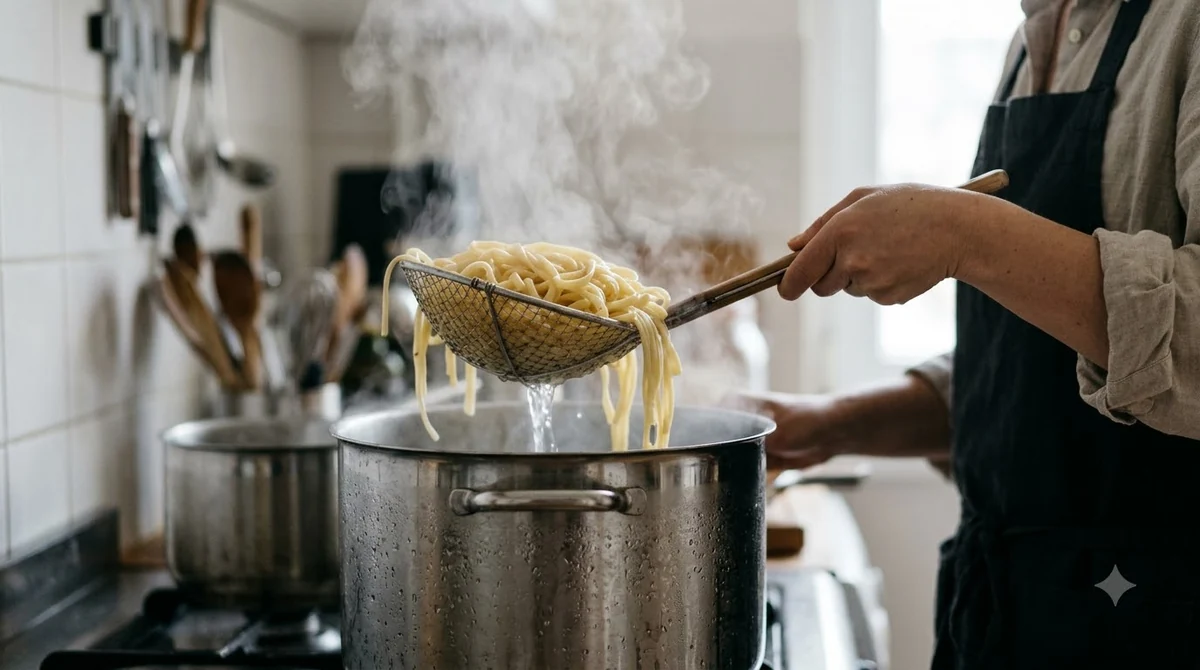
- Slice the garlic thinly and warm the olive oil in a wide pan over moderate heat.
- Add the sliced garlic, plus chili flakes or mushrooms if you want them, and cook until the garlic softens and the oil smells fragrant.
- Cook the spaghetti in water that has been salted (should you salt pasta water), following the package time for the shape you bought and stopping at al dente (how to cook pasta al dente).
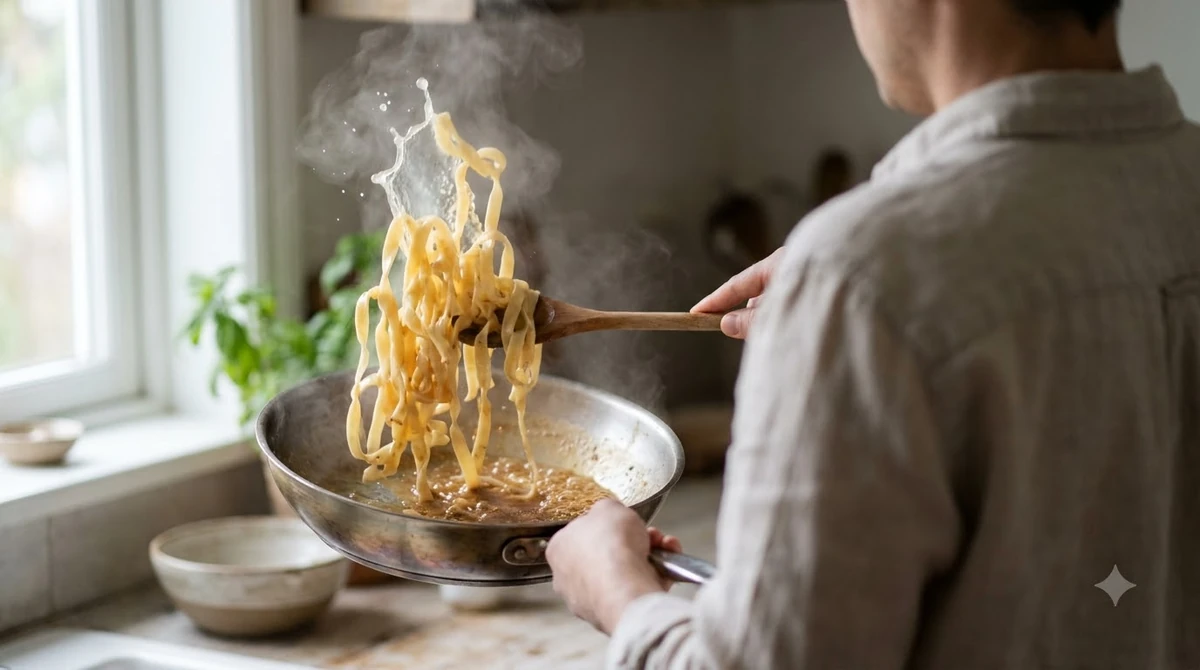
- Drain the pasta and toss it with the garlic oil, then garnish with chopped parsley.
Salt matters more than many home cooks expect. Italian dried pasta is typically cooked unsalted, so salt goes into the cooking water. According to the Wikipedia entry on pasta, the timing of the salt does not matter, and the amount of salt does not change cooking speed.
Timing is the part of an aglio e olio recipe that changes most with the pasta you choose. Fresh pasta cooks faster than dried pasta, taking about half the time, so check the package or the maker’s guidance before you start. Dried pasta roughly doubles in size once cooked, which is why the serving size matters when you measure.

Why the Pasta Water Matters
Some cooks add a little pasta cooking water to the oil to make a looser sauce, while others simply stir the oil into the drained pasta. Both approaches appear in recipes, so the choice comes down to how saucy you want the plate.
In most versions of an aglio e olio recipe the pasta water is optional, so keep a cup of the cooking water before you drain (see starchy pasta water for sauce). If the pasta looks dry when you toss it with the oil, add a splash at a time. If you want a dry, glossy plate, skip it. Published sources on this dish do not say how much starch the pasta water adds, so judge the texture in the pan. The tossing step is explained in more detail in finishing pasta in the sauce.
Choosing the Right Olive Oil
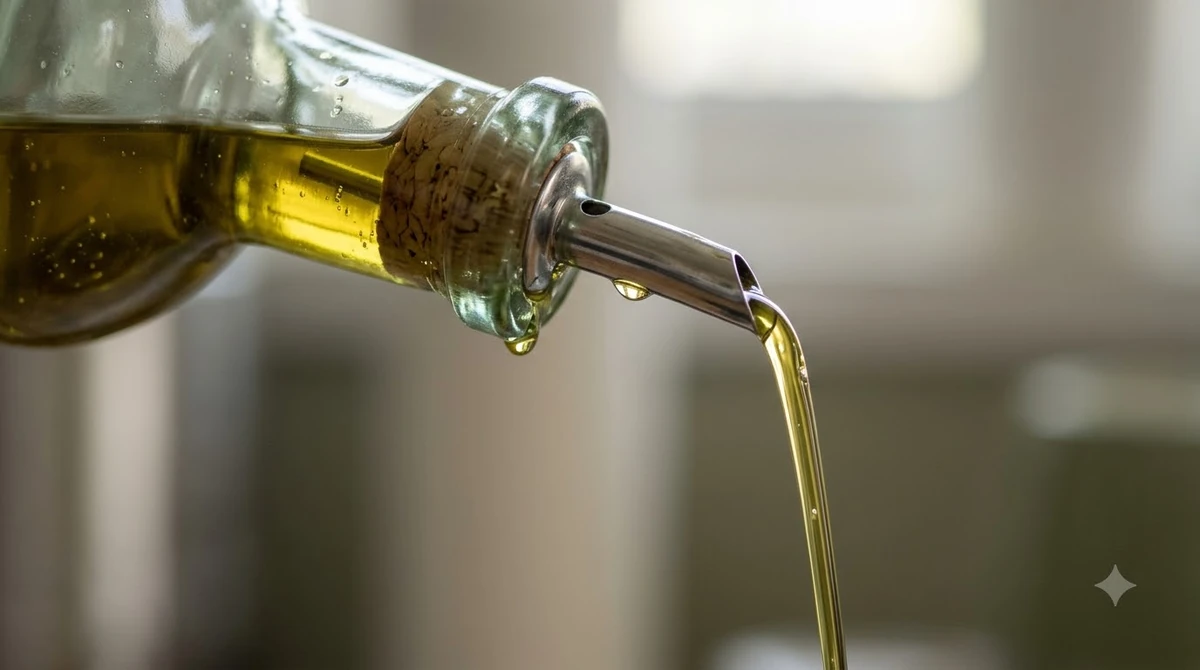
Extra virgin olive oil (what extra virgin olive oil is) is mostly used raw, but it can also be used for sautéing, and its flavor is stronger when it is not heated. The Wikipedia entry on olive oil lists extra virgin smoke points at 190 to 215 °C in its infobox, and gives 180 to 215 °C in the uses section, so treat the upper limit as the real ceiling. The olive oil smoke point guide goes into this in more detail.
- Extra virgin oil can be overheated. Past roughly 210 to 216 °C, its unrefined particles burn and the taste deteriorates.
- Its polyphenols break down with heat and drop significantly at 150 °C during cooking.
- Extra virgin grade allows no more than 0.8 percent free acidity under the International Olive Council standard.
- A bottle labeled simply “olive oil” is mainly refined, with some virgin oil added for flavor.
For an aglio e olio recipe, an extra virgin oil you enjoy tasting works well, because the garlic cooks in it and the oil is also the sauce. Keep the pan at moderate heat so the oil stays well below its burning point.
How Garlic Changes in the Pan
Garlic turns milder and sweeter as it cooks, because heat removes allicin, the main source of the sharp heat in raw garlic. The Wikipedia entry on garlic describes the flavor as pungent and spicy in its raw form, and says it mellows considerably with cooking.
Flavor forms when garlic cells are broken, which is why chopping and slicing release sharp compounds. In an aglio e olio recipe, thin slices cook faster and more evenly than chunks. Slicing gives you more surface area in the oil, so keep a close eye on the pan.
The sources on garlic do not cover how it looks or tastes when it browns. Check a tested recipe for color cues, and stop cooking as soon as the slices turn golden if you want a mild result.
Common Mistakes With Aglio e Olio
The most common mistakes in an aglio e olio recipe are unsalted cooking water, overheated oil and skipping the pasta water when the dish looks dry. Each one is easy to avoid once you know what to watch for.
- Cooking the pasta in unsalted water, which leaves the noodles flat.
- Frying the garlic on high heat, which pushes the oil past its safe range.
- Adding cheese by default, when most traditional recipes leave it out.
- Draining all the cooking water away before tossing the pasta.
Working in a pan that is big enough for the pasta also helps. A crowded pan makes it harder to coat each strand evenly with the oil and garlic.
Frequently Asked Questions
What does aglio e olio mean?
Aglio e olio means garlic and oil in Italian, and an aglio e olio recipe is the spaghetti version with garlic and oil. It is a Neapolitan pasta built from a few pantry ingredients, and the name tells you the two main flavors. Some sources also note an older name, vermicelli alla Borbonica.
Should I add cheese to an aglio e olio recipe?
Traditional recipes usually leave cheese out, according to the Wikipedia summary of the dish. Grated Parmesan or pecorino is an optional addition that some cooks use. If you add it, use a small amount so the garlic and oil stay the main flavor.
Can I use plain olive oil instead of extra virgin?
You can, but the flavor will be milder. Plain olive oil is mainly refined with some virgin oil added, so it has less of the fruity taste that extra virgin brings. Extra virgin is the usual choice because the oil is also the sauce.
How much pasta do I need?
According to the Wikipedia pasta entry, about 0.5 kg of dried pasta serves up to four people. Dried pasta roughly doubles in size when cooked. Fresh pasta cooks faster, so check its package or maker’s guidance before you start. The Wikibooks recipe is smaller, at 100 to 150 g of spaghetti for 1 to 2 servings.
Why does my garlic taste bitter?
The Wikibooks recipe warns not to let the garlic get too dark, because it becomes bitter. Cooking usually makes garlic milder, which points to heat being too high or the garlic being left too long, so lower the heat and lift the pan once the slices turn golden.
Is aglio e olio a good dish for beginners?
Yes, because an aglio e olio recipe uses four basic steps and a short ingredient list. The main skills are slicing garlic thinly, keeping the oil from overheating and tossing the pasta well. Practice those three things and the dish becomes reliable quickly.
Why does the oil matter so much in an aglio e olio recipe?
In an aglio e olio recipe the oil is both the cooking fat and the sauce, so its quality shows in every bite. Extra virgin oil is mostly used raw, and its flavor is stronger when it is not heated. Past roughly 210 to 216 °C its unrefined particles burn, so keep the pan at moderate heat.
If you cook an aglio e olio recipe often, buy a bottle of extra virgin oil you enjoy tasting raw, because the dish shows its flavor. Keep the garlic gentle, save a little pasta water and check the package time for your pasta shape before you start.
 8 min readLearnLemon Pasta Recipe: Quantities, Steps and Common MistakesUpdated Nov 10, 2026
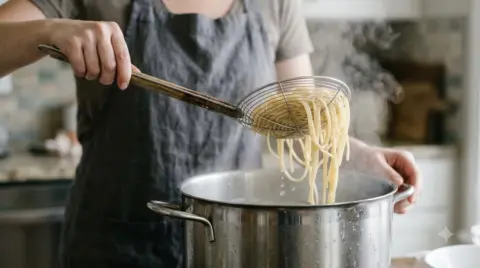 8 min readLearnHow to Cook Fresh Pasta: Timing, Method and Common MistakesUpdated Nov 10, 2026
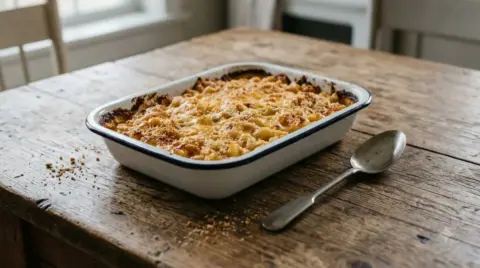 10 min readLearnEggplant Parmesan Recipe: Simple Steps and Mistakes to AvoidUpdated Nov 10, 2026
 8 min readLearnTortellini Soup Recipe: Ingredients, Steps and Leftover TipsUpdated Nov 11, 2026
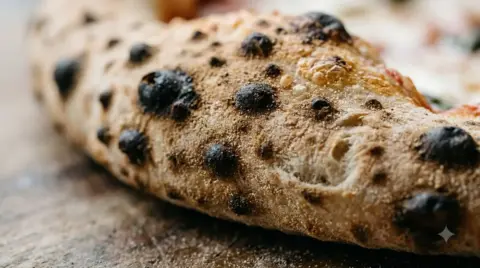 9 min readLearnCauliflower Pizza Crust Recipe: Ingredients, Steps and Baking TipsUpdated Nov 12, 2026
 8 min readLearnCaprese Salad Recipe: Ingredients, Steps and TipsUpdated Nov 12, 2026