
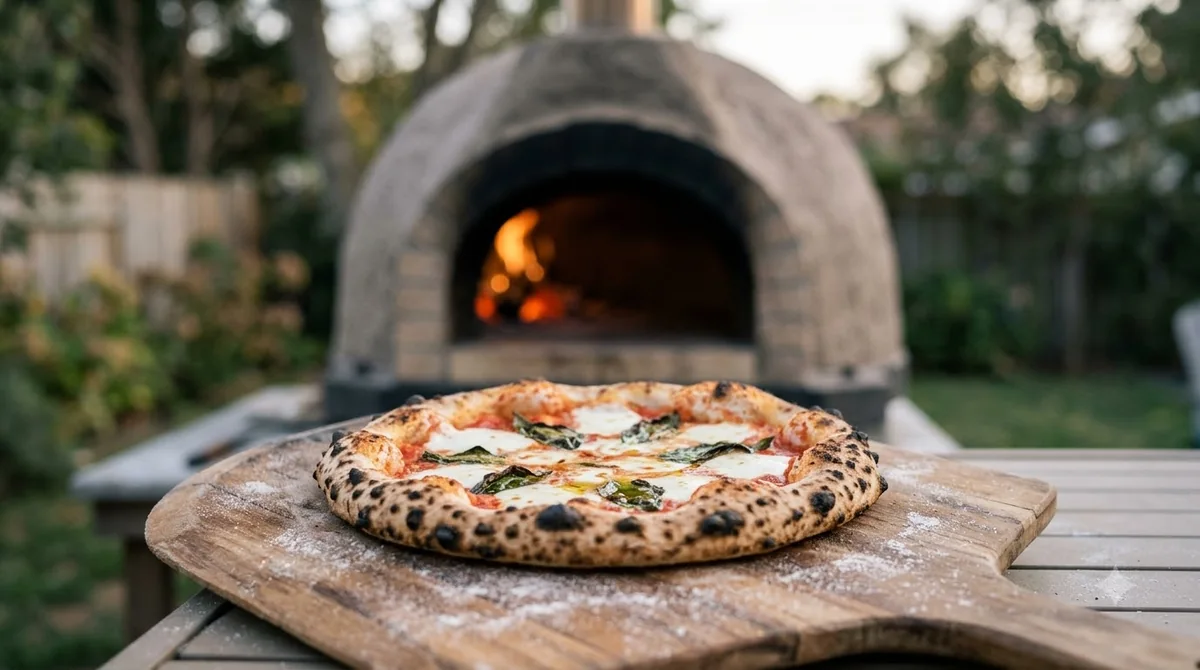

Learning how to use a pizza peel comes down to four moves: dust it, build the pizza on it, test that it slides, then launch it onto a hot stone with a quick pull back. A pizza peel is a flat paddle that carries a raw pizza into the oven and takes it out again. Most failed launches trace back to a peel that was not dusted or tested first. The steps below cover how to use a pizza peel from start to finish, from dusting to pulling the peel back.
Before you start: what your peel needs
Before you learn how to use a pizza peel, make sure yours is clean, dry and dusted before every pizza, whether it is wood or metal. Leftover crumbs and damp spots give dough something to grip, and that is where sticking starts.
Gozney, a maker of pizza ovens, asks owners to keep its placement peel clean, dry and free of debris before each use. The same habit matters for every peel when you learn how to use a pizza peel, so check the surface before you lay down a new dough round.
Preheat the stone or steel according to your oven manual before you start shaping. Plan your toppings in advance, since the pizza will sit on the peel while you add them. A dough that waits on the peel for a long time has more time to stick.
- Clean and dry the peel before each pizza.
- Dust it with a thin, even layer of semolina or cornmeal.
- Have the oven hot and the stone in place before the pizza goes on the peel.
Choosing a dusting material: semolina, cornmeal or flour
Semolina is the best default dust for a pizza peel because its coarse grind does not char as easily as flour. Cornmeal and breadcrumbs also release dough, but they leave a gritty layer behind. Our comparison of semolina vs cornmeal for a pizza peel goes further.
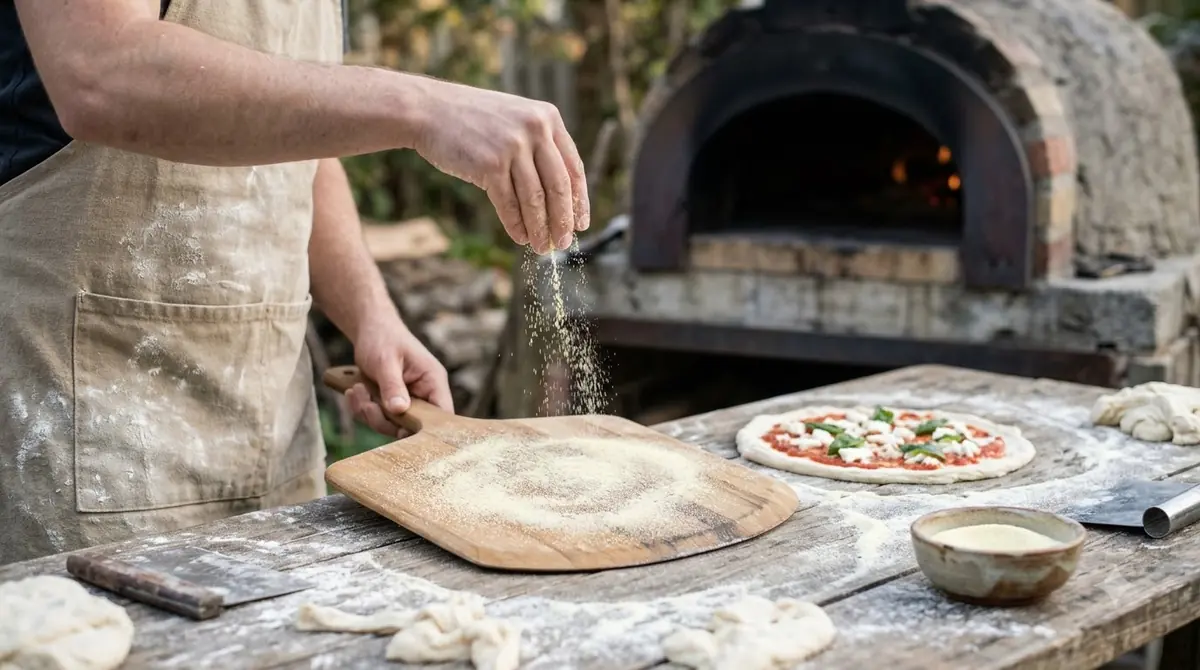
America’s Test Kitchen recommends semolina for this job when it explains how to use a pizza peel. Its coarse texture means almost any amount lets pizza release easily, and you can bake two pies in a row without brushing the stone clean between them. The semolina dusting advice from America’s Test Kitchen explains the trade-off in more detail.
| Dust | What it does | Drawback |
|---|---|---|
| Semolina | Coarse grind that releases dough and chars less | Needs its own bag, so keep one on hand |
| Cornmeal | Releases dough well | Leaves a gritty, crunchy residue on the bottom |
| Breadcrumbs | Works as a release layer | Leaves a similar gritty residue |
| All-purpose flour | The usual default in most kitchens | Too much gives a dusty, raw-flour taste; too little lets dough stick. It chars more easily than semolina. |
Spread the dust evenly. King Arthur Baking advises a layer that is not too heavy and not too light, covering every spot where the dough will rest. If the dough sticks, parchment is a fallback, not the first choice.
Step by step: how to use a pizza peel to load the dough
Stretch the dough on a well-floured surface, lay it on the dusted peel, then top it quickly and shake the peel to check the pizza still moves. Work in this order every time you practice how to use a pizza peel.
- Stretch the dough on a well-floured surface to the size you want.
- Sprinkle the peel with semolina or cornmeal and spread it evenly with your hand.
- Lay the stretched dough on the peel and give the handle a short forward and backward shake.
- Add sauce and toppings, then repeat the shake.
- Carry the peel to the oven and shake once more on the way.
Keep the topping step short. The longer the pizza sits on the dusted peel, the more chance it has to stick, so add sauce and toppings in one smooth pass.
The jiggle test: a key step in how to use a pizza peel
A pizza that is free to slide moves on its own when you shake the peel. If it stays put, stop and fix it before the pizza goes near the oven.
King Arthur Baking’s rule is simple: if the pie does not free itself and move independently of the peel, do not launch it. Sauce and toppings can pin the dough down, so repeat the shake after saucing, after topping and on the way to the oven.
To fix a stuck spot, slide a bench knife under the area and lift it gently, then add more semolina underneath. Test the shake again before you move on. A pizza that moves freely at the counter is much more likely to slide off the peel in the oven.
Sliding the pizza onto the stone
The launch is the hardest part of how to use a pizza peel. Set the tip of the peel where the pizza should land, angle it down slightly, and keep it moving as you pull back slowly. The pizza should slide off as the peel comes out.
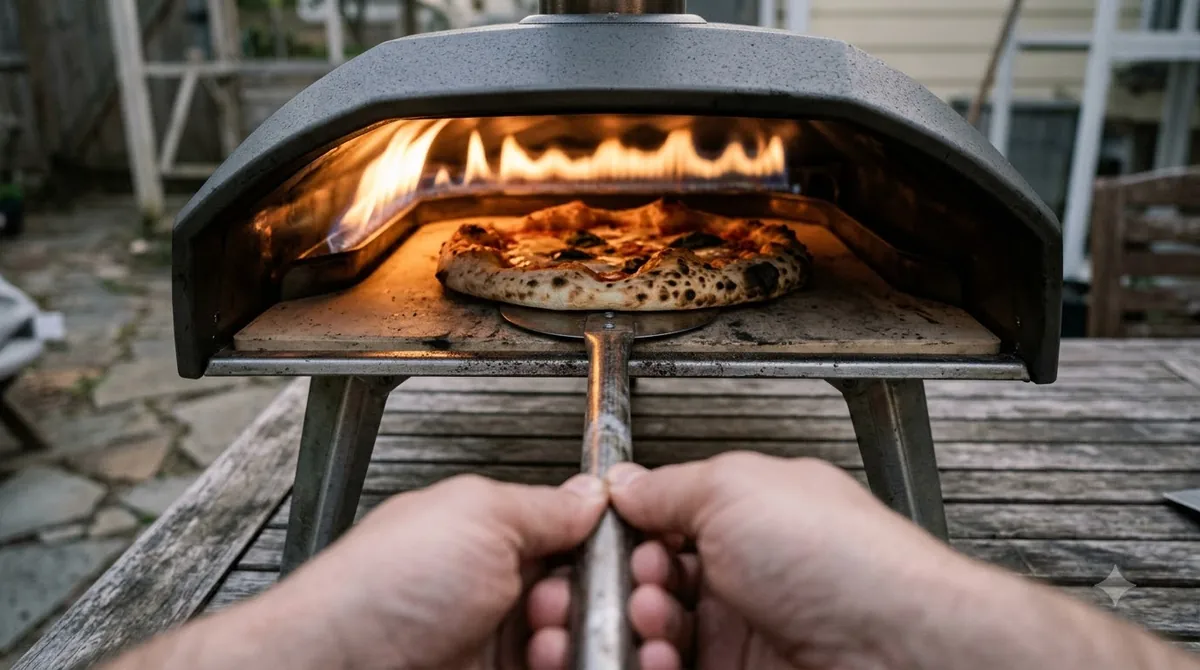
King Arthur Baking describes the slide step in how to use a pizza peel: the pie slides down the ramp of the peel as you jiggle and slowly scoot the peel backward out of the oven. The King Arthur guide to loading pizza with a peel covers the full motion.
- Set the tip of the peel at the spot where the pizza should land, at a downward angle.
- Jiggle the handle while you slowly pull the peel back.
- Finish with a quick snap backward to release the pizza cleanly.
If the pizza is not moving, do not force it. Pull back and reset the pizza before trying again.
Using parchment on the peel
If you slide the pizza on parchment, cut the round slightly smaller than the dough so its edges do not burn. King Arthur notes that parchment edges begin to char between 450°F and 500°F, so watch closely near the top of a hot oven.
With parchment, use a slow forward motion and a quick backward pull instead of a snap. For very high heat, skip the parchment and load the pizza directly on the peel. The sources used for this guide give no bake times, so follow your oven manual and recipe for those.
Common mistakes and quick fixes
Knowing how to use a pizza peel also means knowing what goes wrong. Most sticking problems come from too little dust, too much flour, or a pizza that sat on the peel too long before launch. If it keeps happening, see how to stop pizza sticking to the peel.
| Problem | Likely cause | Fix |
|---|---|---|
| Pizza sticks to the peel | Too little dust under the dough | Lift the spot with a bench knife, add semolina underneath, and test again |
| Pizza stuck halfway to the oven | Sticking happened after topping | Fold the dough like a letter and bake it as it is |
| Dusty, raw taste on the crust | Too much all-purpose flour on the peel | Switch to a thin layer of semolina |
| Gritty bottom crust | Cornmeal or breadcrumbs left as residue | Use semolina and brush off loose dust |
Cleaning and storing your peel
Caring for the peel is part of how to use a pizza peel well. Keep it clean, dry and free of debris, and never leave it in the oven for long periods. Gozney’s guidance on its placement peel is the clearest on this point. For wood, see how to clean a wooden pizza peel.
- Brush off loose semolina or cornmeal after each pizza.
- Dry the peel fully before you store it.
- Do not wash it in the dishwasher, since the placement peel is not dishwasher safe.
- Let the peel cool to the touch before you use it to launch another pizza.
The Gozney Academy guide on how to use a pizza peel lists these care points for its own placement peel. Check your maker’s instructions for any other peel you own, since how to use a pizza peel can vary a little by material.
Frequently Asked Questions
Should I use a wooden or metal peel as a beginner?
The sources used for this guide do not compare the two materials. Choose the peel you can handle comfortably and follow its maker’s care guidance, since both types need dusting before every pizza. If you are still shopping, compare options in best pizza peels.
Is parchment paper okay to use with a pizza peel?
Yes. When you learn how to use a pizza peel with parchment, cut it a little smaller than the dough so the edges do not burn. King Arthur Baking notes that parchment edges begin to char between 450°F and 500°F, so watch it closely in a very hot oven.
Why is my pizza sticking to the peel?
If you are still learning how to use a pizza peel, the usual cause is too little dust under the dough, or a surface that is damp. Lift the stuck area with a bench knife, add more semolina underneath, and run the shake test again before launch.
What temperature should the stone be before I slide a pizza on?
The sources used for this guide do not give a figure. Preheat the stone or steel following your oven manual and the recipe you are using.
What if the pizza gets stuck halfway into the oven?
Fold the dough like a letter and bake it as it is, much like a calzone. This is a rescue method, so expect a different shape than a classic round pizza.
Once you know how to use a pizza peel, practice the shake test on the counter before you fire up a hot oven, so the first launch feels routine. Once you have dusted, tested and launched a few pizzas, the motion becomes much easier.
 9 min readGear & PantryHow to Use a Metal Pizza Peel Without StickingUpdated Nov 10, 2026
 8 min readGear & PantryHow to Use a Pizza Turning Peel Without Tearing Your PizzaUpdated Nov 10, 2026
 8 min readGear & PantryHow to Use a Wooden Pizza Peel: Step-by-Step GuideUpdated Nov 10, 2026
 8 min readGear & PantryHow to Clean Pizza Stone (Safely, Without Soap)Updated Nov 10, 2026
 8 min readGear & PantryBest Pizza Peel for Ooni Koda 12: 4 Types ComparedUpdated Nov 17, 2026
 9 min readGear & PantryBest Pizza Peel for Ooni Karu 12: How to Choose the Right Size and MaterialUpdated Nov 10, 2026