
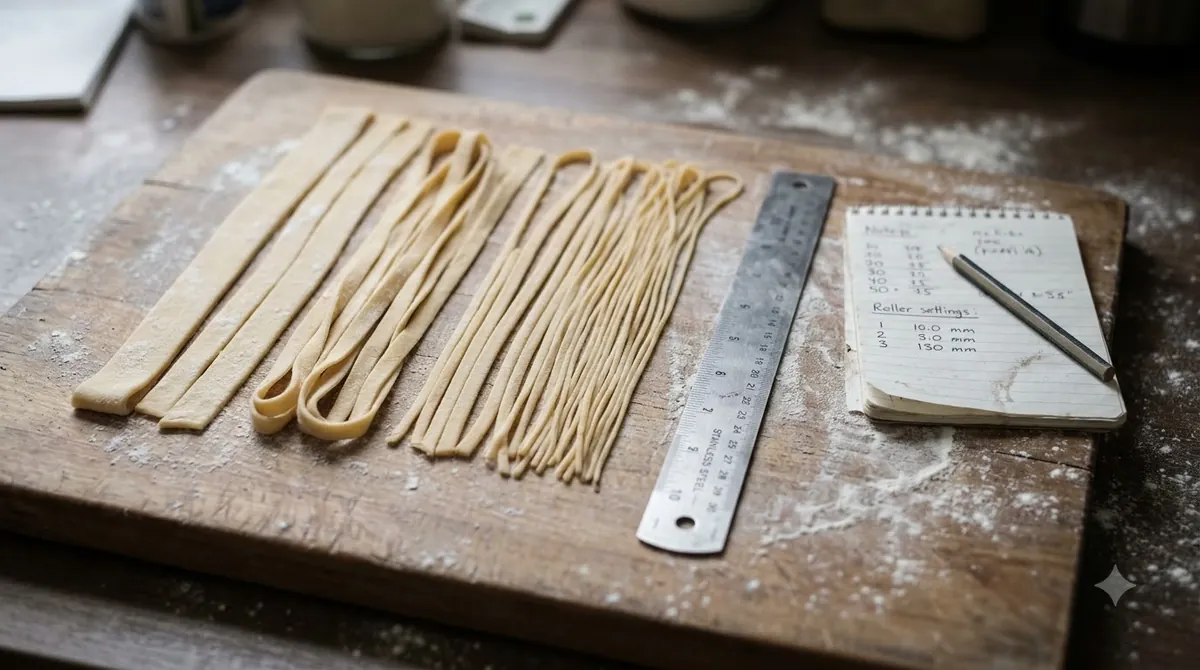

Pizzoccheri pasta is a short, flat ribbon pasta made mainly from buckwheat flour in the Valtellina valley of northern Lombardy, Italy. Its gray-brown color and earthy taste come from the buckwheat, and it is traditionally served with potatoes, greens, cheese and garlic butter.
The dish is hearty and suits cold weather, and most of its ingredients are easy to find. The one decision that changes the taste most is the buckwheat share on the label.
What Are Pizzoccheri Pasta?
Pizzoccheri pasta is a flat ribbon noodle that comes from the Valtellina, an Alpine valley in northern Lombardy. According to the Wikipedia entry on pizzoccheri, the pasta is also popular in Val Poschiavo, in the Swiss canton of Grisons.
The noodles are short and flat rather than long and round. Each piece is cut from a rolled sheet of dough.
You will also see the name written as pizzoccheri della Valtellina, which points to the same valley origin.
Most traditional recipes use a dough made mostly of buckwheat. The buckwheat gives the pasta its color and a strong, earthy flavor that stands out next to mild wheat pasta.
Ingredients and Flour Ratio
Traditional pizzoccheri pasta is made with about two-thirds buckwheat flour and one-third durum wheat flour, mixed with water.
- Buckwheat flour, the main ingredient of the traditional dough and the source of its gray-brown color.
- Durum wheat flour, which makes up about one-third of the traditional mix.
- Water, added slowly until the dough is smooth and firm.
A home recipe from eccoLecco uses 250 g buckwheat flour, 75 g white flour and 165 ml water for four servings. The Pasta Project publishes a smaller author recipe with 200 g buckwheat flour, 50 g plain flour and about 125 ml water, which is closer to 80% buckwheat by weight.
Not every product follows that ratio. eccoLecco notes that industrial versions may contain only about 25% buckwheat, with up to 75% refined durum semolina, so the ingredient list is the best guide to what you are buying.
Historic buckwheat doughs in the Wikipedia entry included egg, but the modern recipes listed here use water only. For a standard egg dough instead, see a fresh pasta dough recipe.
How to Make Pizzoccheri Pasta at Home
To make pizzoccheri pasta at home, knead 250 g buckwheat flour, 75 g white flour and about 165 ml water for at least 15 minutes, then roll the dough into sheets about 2 mm thick.
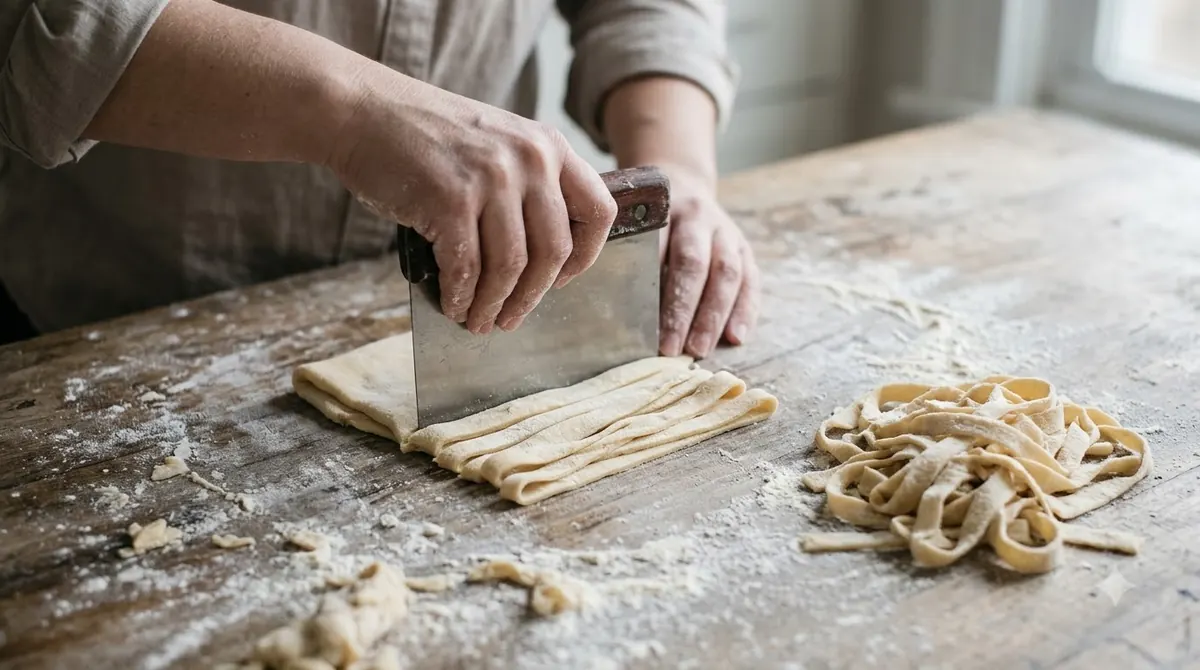
- Mix the two flours on a clean work surface and make a well in the middle.
- Add the water gradually and knead until the dough is smooth and compact. Add a little more water if it feels dry.
- Rest the dough for at least 30 minutes, wrapped so it does not dry out, as The Pasta Project recommends in its author recipe.
- Roll the dough into sheets about 2 mm thick, dusting the surface with flour so the sheets do not stick. See how thin to roll pasta for other shapes.
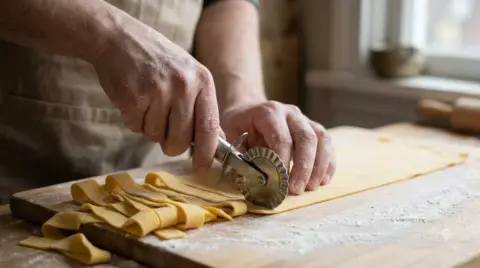
- Stack the sheets and cut them into noodles about 5 mm wide and 7 to 8 cm long.
- Lay the noodles on a floured surface until you are ready to cook them.
Kneading by hand takes about 15 minutes, but the dough is stiff enough that you do not need a pasta machine, and how to make pasta without a machine has more hand-rolling tips. Let the cut noodles rest on a floured surface until you cook them, as the eccoLecco method suggests, so the strips do not clump. Keep the strips dusted with flour, because the buckwheat dough is more fragile than plain wheat dough and can stick together.

Traditional Pizzoccheri alla Valtellinese
The classic dish, pizzoccheri alla Valtellinese, layers cooked pasta with potatoes and Savoy cabbage or Swiss chard, then finishes with cheese and garlic butter.
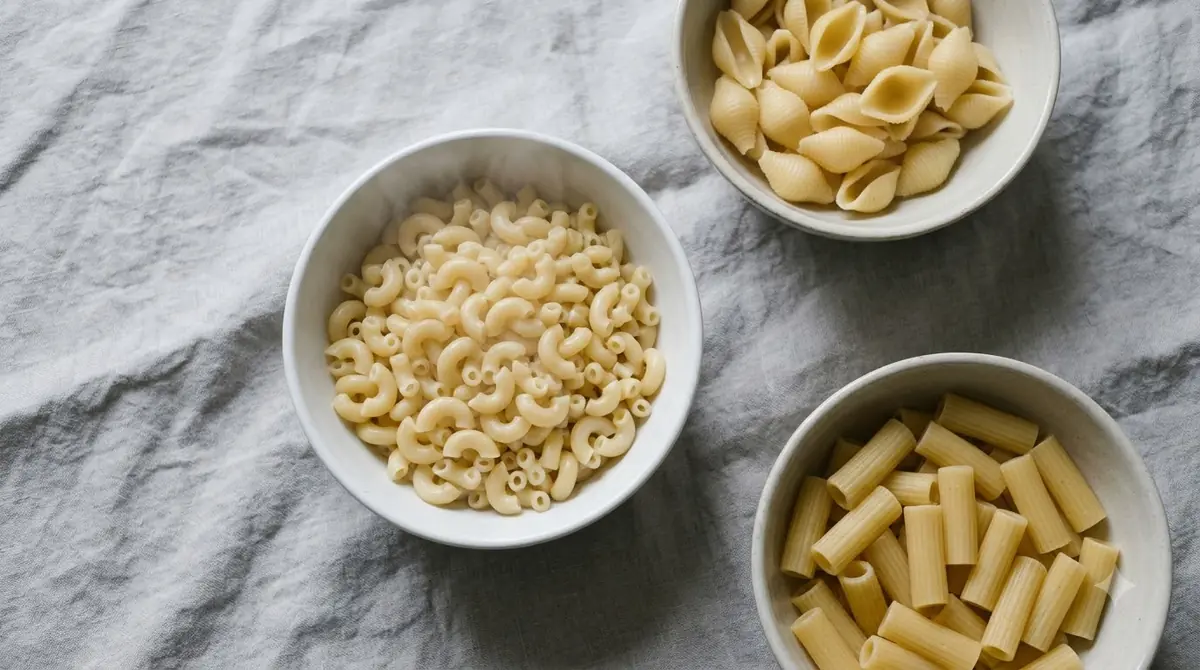
The Wikipedia entry on pizzoccheri describes the traditional dressing as cubed potatoes and greens, layered with Valtellina Casera cheese and ground Grana Padano or Parmesan, then dressed with garlic lightly fried in butter.
Savoy cabbage is the green used in the eccoLecco recipe, while Swiss chard is the other traditional option named by Wikipedia. Both give the dish a soft vegetable base, so the rich cheese and butter are not the only flavor on the plate. Spoon the layered dish onto plates directly from the dish so each portion keeps its layers.
The eccoLecco recipe for four servings uses about 300 g potatoes, 350 g cabbage, 250 g Casera or Bitto cheese, 60 g butter, 100 g grated Grana Padano and two garlic cloves.
Cooking and Serving Pizzoccheri Pasta
Cook pizzoccheri pasta with the potatoes and cabbage for 8 to 10 minutes, and check for an al dente bite before you drain them.
- Boil the cubed potatoes in salted water for about 5 minutes.
- Add the pasta and the cabbage, and cook for 8 to 10 minutes, tasting a noodle to check it is al dente.
- Drain, then layer the pasta, vegetables, Casera or Bitto cheese and grated Grana Padano in a dish or warm bowl.
- Melt the butter over low heat with the garlic, remove the garlic, and pour the butter over the layers.
- Serve at once, or bake for under 10 minutes at 180°C if you want the cheese to melt further.
Because the cabbage and pasta share the same pot for the same 8 to 10 minutes, time the potatoes first so that everything finishes together.
Serving straight from the pot keeps the noodles soft and the cheese stringy. Baking gives a firmer, more gratinated top, which many cooks prefer when serving a larger group.
Traditional and Industrial Pizzoccheri Pasta Compared
Traditional pizzoccheri pasta contains about two-thirds buckwheat, while some industrial versions contain as little as 25% buckwheat, so the two can taste noticeably different.
| Feature | Traditional dough | Industrial dough (eccoLecco) |
|---|---|---|
| Buckwheat share | About two-thirds | As little as about 25% |
| Other flour | About one-third durum wheat | Up to 75% refined durum semolina |
| Home example | 250 g buckwheat, 75 g white flour, 165 ml water | Not listed in the source |
| Cooking time | 8 to 10 minutes with cabbage | Check the package |
Use the table as a shopping check rather than a fixed rule. Read the ingredient list, and look for a high buckwheat share if the color and earthy taste matter to you.
Frequently Asked Questions
What is pizzoccheri pasta made of?
Traditional pizzoccheri pasta is made from buckwheat flour mixed with durum wheat flour and water, usually about two-thirds buckwheat and one-third durum wheat. Industrial versions can contain much less buckwheat, so read the ingredient list before you buy.
Is pizzoccheri pasta gluten free?
No. Traditional pizzoccheri pasta contains wheat flour, so it is not gluten free. Check the ingredient list and any allergen statement on the package, especially if you need a strict gluten free diet.
How long does pizzoccheri pasta take to cook?
Cook the pasta with the cabbage for 8 to 10 minutes, after boiling the cubed potatoes for about 5 minutes, according to the eccoLecco recipe. Taste a noodle to check that it is al dente before you drain it.
Can I buy pizzoccheri pasta ready made?
Yes, ready-made versions are sold. eccoLecco notes that some industrial pizzoccheri contain only about 25% buckwheat, so compare the buckwheat share on the label with the traditional two-thirds before you choose.
Which cheese goes with pizzoccheri pasta?
Traditional recipes use Valtellina Casera or Bitto, together with Grana Padano or Parmesan. Wikipedia describes the layers as Valtellina Casera and ground Grana Padano or Parmesan, and eccoLecco lists Casera or Bitto with grated Grana Padano.
Do I need a pasta machine to make pizzoccheri?
No. The eccoLecco method rolls the dough thin by hand and then cuts it into noodles. Dust the sheets with flour so they do not stick, and cut the strips as evenly as you can.
If you want the traditional taste, choose a pizzoccheri pasta with a high buckwheat share and cook it with cabbage and potatoes, as the classic dish does. Start with a careful look at the ingredient list, and the rest of the method is simple to follow at home.
 7 min readLearnPillus Pasta: A Sardinian Ribbon Pasta Served in BrothUpdated Nov 11, 2026
 5 min readLearnMafaldine Substitute: Ribbon Pastas to Use InsteadUpdated Nov 13, 2026
 7 min readLearnTagliolini Pasta: Thin Ribbons, Sauces and How to Cook ThemUpdated Nov 10, 2026
 6 min readLearnHow to Make Lagane: Wide Pasta Ribbons at HomeUpdated Nov 13, 2026
 8 min readLearnTagliatelle vs Pappardelle: Which Ribbon Fits Your SauceUpdated Nov 7, 2026
 6 min readLearnHow to Make Tagliolini: Thin Egg Ribbons at HomeUpdated Nov 13, 2026