
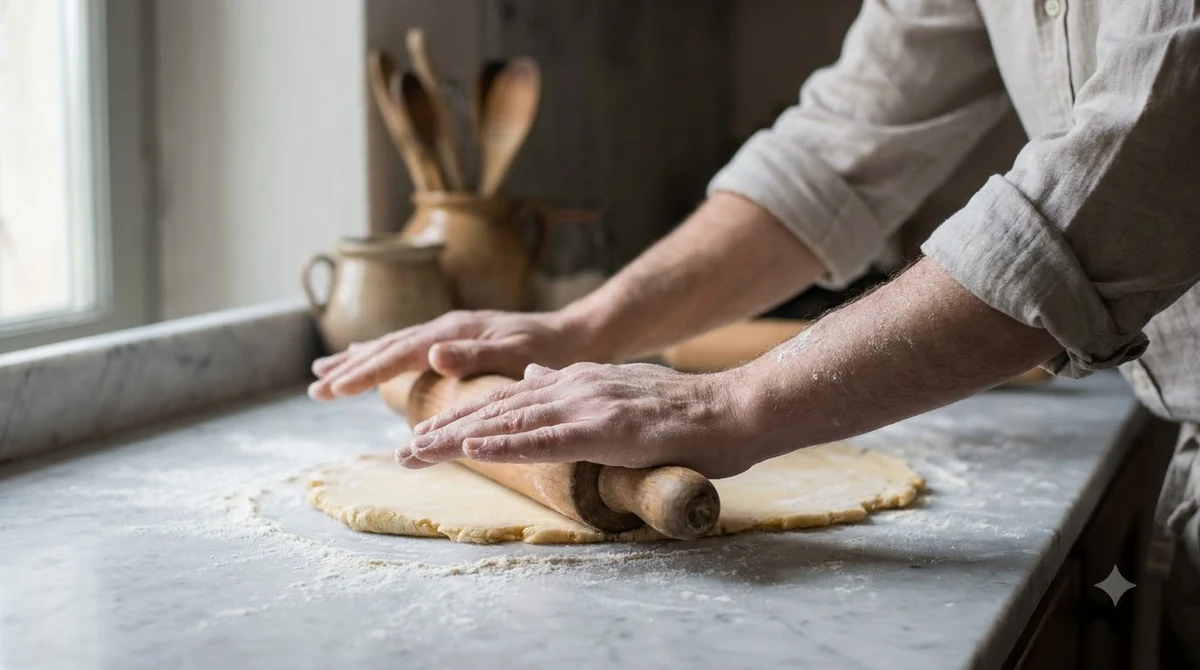

Learning how to make pasta by hand is simpler than it looks. Mix flour and eggs into a smooth dough, knead it, rest it for at least an hour, then roll it thin and cut it into strands with a sharp knife. You do not need a pasta machine, and the same dough works for ribbons, strands or shaped pasta.
Mix and Knead the Dough
Combine flour, eggs, a little oil and salt, then knead until the dough is smooth and firm. The exact amounts depend on the recipe, so use one with clear ratios.
PBS’s fresh egg pasta recipe uses 3 cups of all-purpose flour, 4 large eggs, 1 teaspoon of olive oil and a half teaspoon of salt, with warm water added as needed. It calls for “5 to 10 minutes of constant kneading” by hand, a little longer if you mix by hand. America’s Test Kitchen’s pasta without a machine recipe uses 2 cups, or 10 ounces, of flour with 2 whole eggs and 6 yolks, 2 tablespoons of olive oil and 1 tablespoon of salt.
The two recipes differ on the ratio of egg to flour. Either works, so pick the one that matches the shape you want to make.
The methods differ too. The America’s Test Kitchen version starts in a food processor for about 45 seconds, until the dough is “barely tacky to touch,” and then finishes by hand for 1 to 2 minutes. The PBS version is kneaded entirely by hand for 5 to 10 minutes, so plan for more arm work if you skip the processor.
Rest the Dough Before Rolling
Wrap the dough and let it rest before you roll it.
America’s Test Kitchen says to shape the kneaded dough into a 6-inch cylinder, wrap it and rest it at room temperature for at least one hour, or up to four hours. PBS says to rest the dough at room temperature for at least one hour, or refrigerate it for up to one day. If you refrigerate it, bring it out about an hour before rolling so it is pliable again.
Roll the Sheets Thin and Even
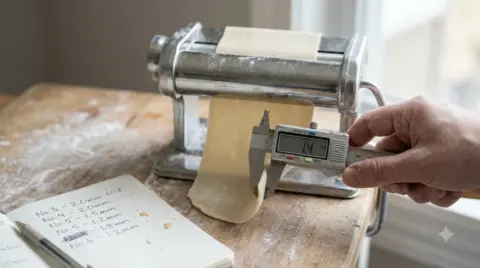
Roll each piece to an even thickness, checking the sheet as you go, rather than trying to reach a set number by eye.
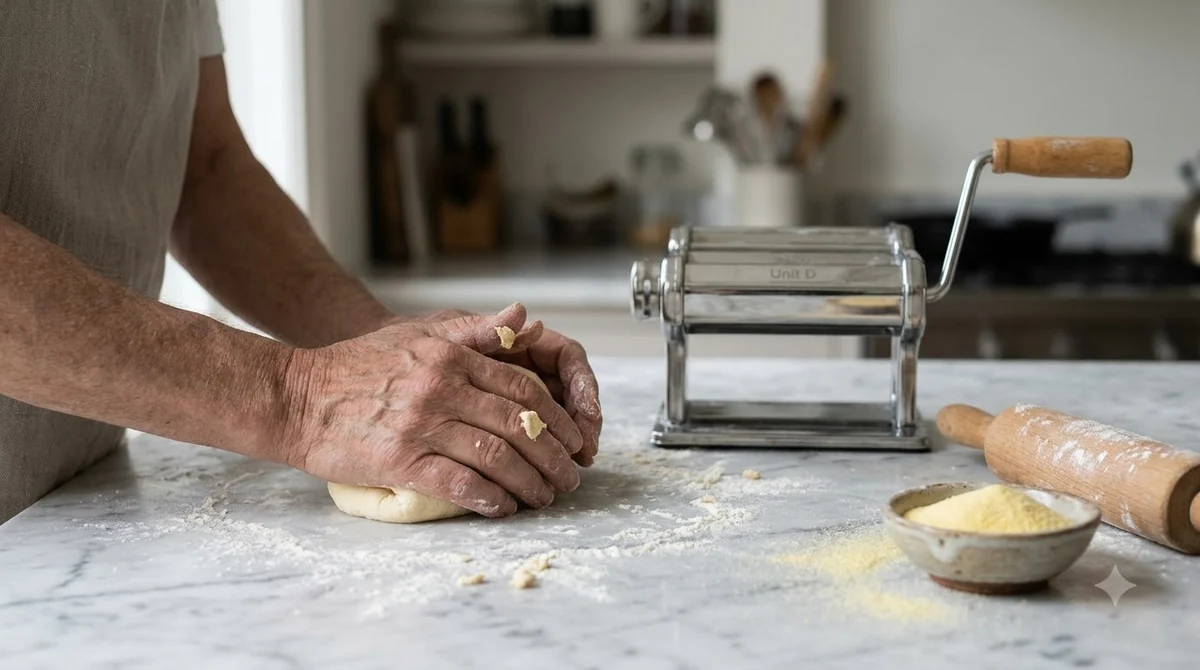
America’s Test Kitchen cuts the cylinder into 6 equal pieces, presses one into a 3-inch square and then rolls it into a 6-inch square. For strand pasta, it says to roll the sheet to about 20 inches long and 6 inches wide. The guide does not give a thickness in millimeters. Instead, it uses a visual test: you should be able to see the outline of your fingers through the dough.
Dust both sides of each piece with flour before rolling. If the dough sticks and wrinkles, dust it lightly again. Avoid adding too much flour, since the guide warns that it can cause the sheet to snap back when you roll it.
The guide gives different sheet sizes for each shape. For strand pasta, roll the sheet to about 20 inches long and 6 inches wide. For garganelli, roll it to about 15 inches long and 6 inches wide before cutting the 1½-inch squares.
Cut the Strands by Hand
Knowing how to make pasta by hand also means cutting cleanly: let the rolled sheets rest briefly, then cut them with a sharp chef’s knife.
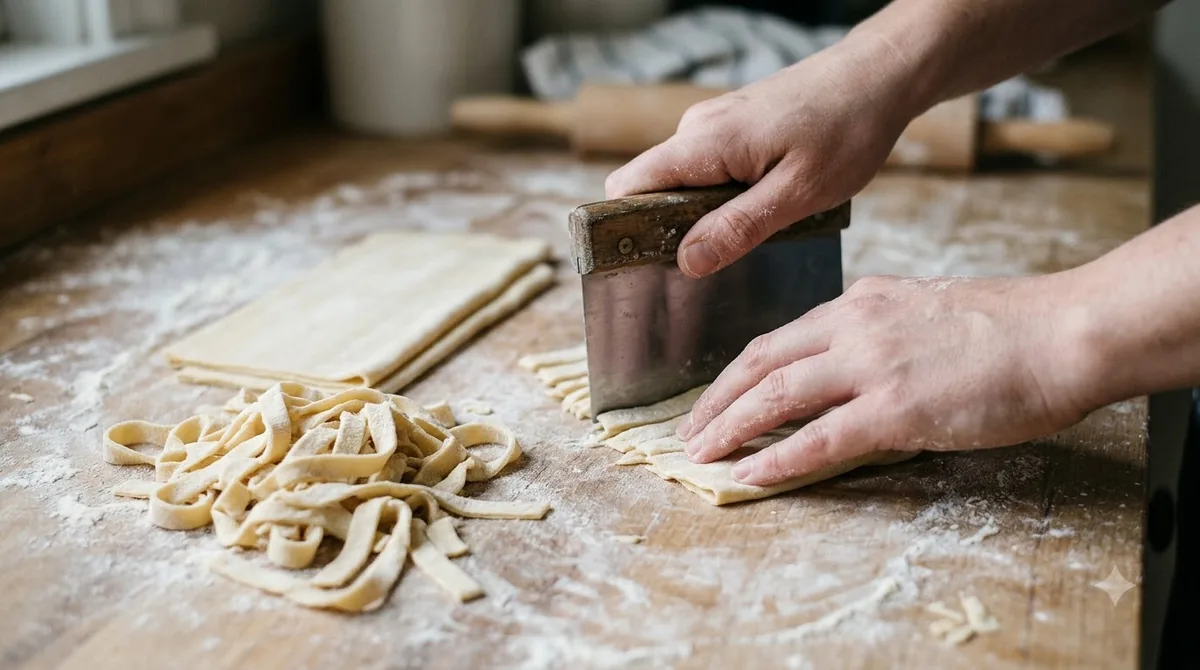
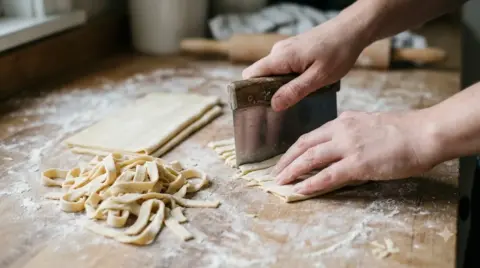
America’s Test Kitchen says to let each sheet sit uncovered for about 15 minutes, until the edges feel firm. Then fold the sheet at 2-inch intervals into a flat, rectangular roll and slice across it into strands about 3/16 inch wide. For a shaped pasta such as garganelli, it cuts 1½-inch squares and rolls each one around a 3/8-inch dowel.
- If the dough sticks to your fingers while mixing, add up to 1/4 cup of flour, one tablespoon at a time.
Pasta by Hand at a Glance
Learning how to make pasta by hand is easier when you know the time for each stage. The two recipes differ on some times, so the table below gives both where they apply.
| Step | What to do | Time from the sources |
|---|---|---|
| Mix | Combine flour, eggs, oil and salt | 45 seconds in a food processor (America’s Test Kitchen) |
| Knead | Knead until smooth and firm | 1 to 2 minutes by hand (America’s Test Kitchen); 5 to 10 minutes (PBS) |
| Rest | Wrap the dough and rest it | At least 1 hour, up to 4 (America’s Test Kitchen); at least 1 hour (PBS) |
| Rest the sheets | Let the rolled sheets sit uncovered before cutting | About 15 minutes until the edges feel firm (America’s Test Kitchen) |
| Cut | Fold at 2-inch intervals and slice | Cut strands about 3/16 inch wide (America’s Test Kitchen) |
Keep the dough wrapped while you work, and cut only the sheets you can use in one sitting.
Frequently Asked Questions
How to make pasta by hand: do you need a pasta machine?
No. The America’s Test Kitchen recipe is written for pasta without a machine, with the dough rolled by hand and cut with a knife.
How thin should hand-rolled pasta be?
Neither guide gives a millimeter target. America’s Test Kitchen uses the finger test: roll until you can see the outline of your fingers through the dough.
Can you make the dough the day before?
Yes. PBS says the dough can rest in the refrigerator for up to one day. Let it sit at room temperature for about an hour before rolling, so it becomes flexible again.
What should you do if the dough is too sticky or too dry?
For sticky dough, add flour a tablespoon at a time, up to about 1/4 cup, as America’s Test Kitchen advises. For dry dough, add a little warm water as needed, following PBS’s guidance.
Mix the dough, knead it, rest it, roll it to a thin, even sheet and cut it with a sharp knife. Learning how to make pasta by hand takes a little practice, but each batch gets easier, and the result is fresh pasta with no machine required.
 6 min readLearnHow to Make Pappardelle by Hand Without a Pasta MachineUpdated Nov 13, 2026
 6 min readLearnHomemade Fettuccine by Hand: Rolling and Cutting Without a MachineUpdated Nov 13, 2026
 9 min readLearnHow to Make Pasta Without a MachineUpdated Nov 10, 2026
 6 min readLearnHow to Make Pici: Hand-Rolled Tuscan Pasta GuideUpdated Nov 13, 2026
 6 min readLearnHow to Make Farfalle by Hand: Shaping Bow-Tie Pasta at HomeUpdated Nov 13, 2026
 8 min readLearnHow Thin to Roll Pasta by Shape and Machine SettingUpdated Nov 7, 2026