
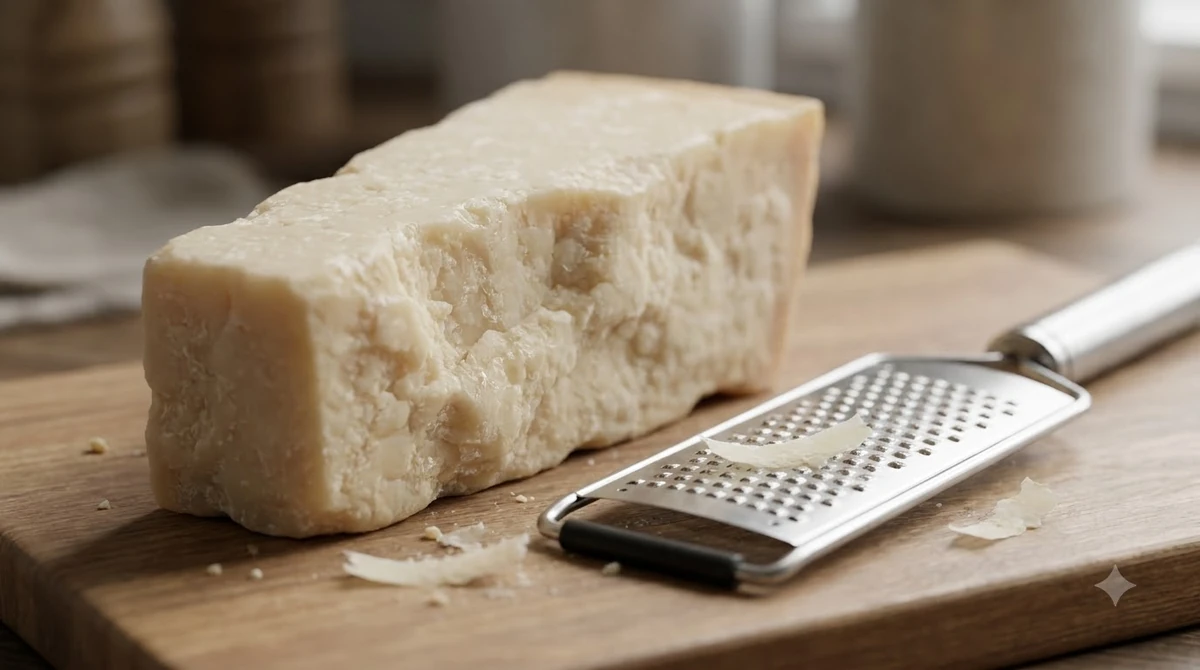

Learning how to store parmesan cheese starts with wrapping a wedge in parchment or wax paper, then adding a layer of foil. Keep the wrapped wedge in the vegetable crisper of the fridge. Grated Parmesan belongs in an airtight container and is best used within about one week.
Grated cheese has far less shelf time than a block, so the form you buy sets the timeline. The sections below cover wedges, grated cheese, freezing and the signs of spoilage.
How to store parmesan cheese as a wedge
Wrap a wedge in parchment or wax paper first, then add a layer of foil, because America’s Test Kitchen found that this combination gave the best flavor and texture in its storage tests.
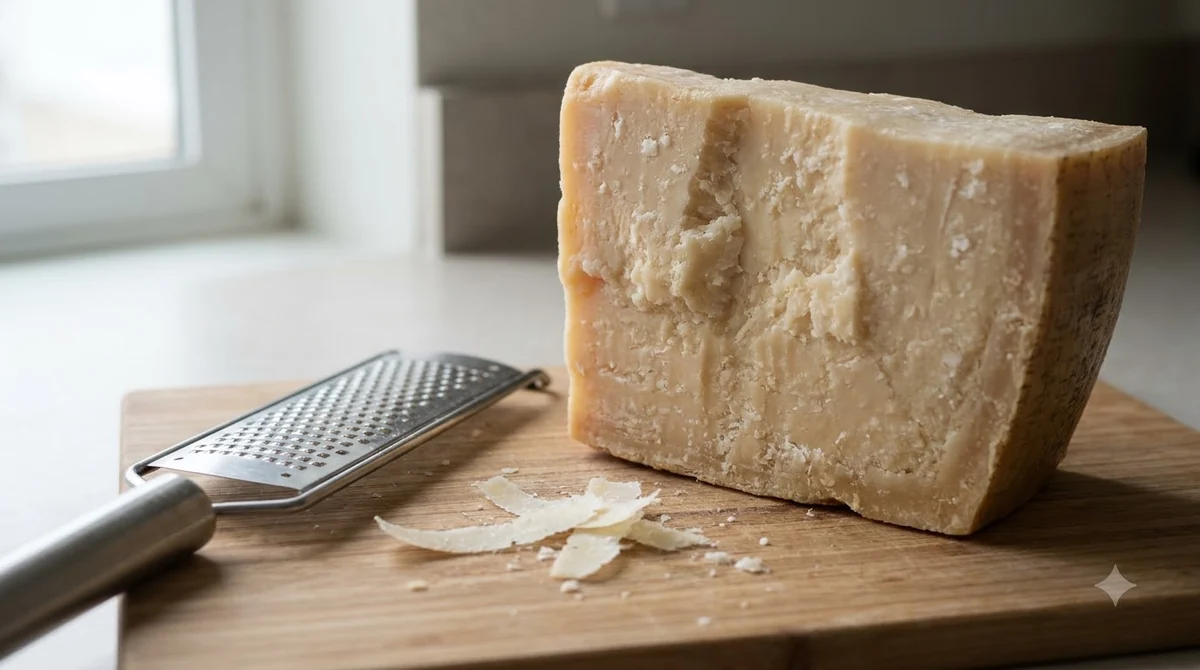
The tests ran for six weeks on five wrapping methods. Flavor and texture began to change around the one-week mark, and the best samples were still fine at six weeks. Plastic wrap alone tasted distinctly sour and astringent by the fourth week, so the paper layer under the foil is the step to get right. A zipper-lock bag with the air squeezed out came in a close second, and America’s Test Kitchen’s own conclusion was to stick with the easiest method for a small piece.
Follow these steps for a wedge you have already opened:
- Press parchment or wax paper against the cut face so it covers the whole surface.
- Add a layer of aluminum foil over the paper, which the test results support as the better combination.
- Place the wrapped wedge in the vegetable crisper, not on an open shelf.
- Some experts suggested a slightly moistened paper towel under the foil for large chunks of two to three pounds or more, but in the test that method left a smaller piece mushy by week four, so check large pieces often.
America’s Test Kitchen also suggests buying small pieces that will be used up within one or two meals, which cuts down on how much cheese you need to store at all. Knowing how to store parmesan cheese is easier when the piece you bring home is small enough to finish.
The Takeout makes the same point in its own guidance: parchment or wax paper is more breathable than plastic wrap, so it lets the cheese rest without trapping moisture. Covering it with foil or an airtight container adds protection after that first layer.
Where to keep it in the fridge
Keep a wedge in the relatively humid vegetable crisper, which tested as the best spot in the refrigerator for Parmesan. Picking the right shelf is a core part of how to store parmesan cheese well.
The Takeout suggests the bottom shelf, the coldest part of the fridge, while America’s Test Kitchen’s experts agreed on the crisper. The crisper is the spot with a test behind it, and either beats the door, which the FDA notes is warmer than the rest of the refrigerator.
Parmesan also absorbs smells, so when you learn how to store parmesan cheese, the smell rule matters as much as the temperature. Keep it away from pungent foods such as onion, and keep it covered so its flavor does not pick up what is nearby.
How long Parmesan lasts after opening
An opened wedge lasts about one to two months in the fridge, according to The Takeout, while grated cheese lasts about one week. The table below puts each form side by side, so you can match the timing to how to store parmesan cheese for your own pack.
| Form | Fridge time after opening | Source |
|---|---|---|
| Opened wedge, wrapped | About 1 to 2 months | The Takeout |
| Grated at home | Up to 1 week | The Takeout |
| Pre-shredded, opened | About 3 to 4 weeks | The Takeout |
| Wedge in the wrap tests | Flavor changes about 1 week in; best samples still fine at 6 weeks | America’s Test Kitchen |
In how to store parmesan cheese, the clock starts when you open the pack or cut the wedge, not when you bought it, so write the open date on the wrap. These figures are estimates for cheese kept cold and wrapped as described. The date on the package and the smell and look of the cheese are the simplest checks before you use it.
Pre-shredded packs follow their own timing once opened, so the label date still applies.
How to store parmesan cheese once grated
For how to store parmesan cheese once it is grated, use an airtight container and plan to use it within about one week in the fridge. Grated cheese has more exposed surface than a wedge, so it deteriorates faster, according to The Takeout.
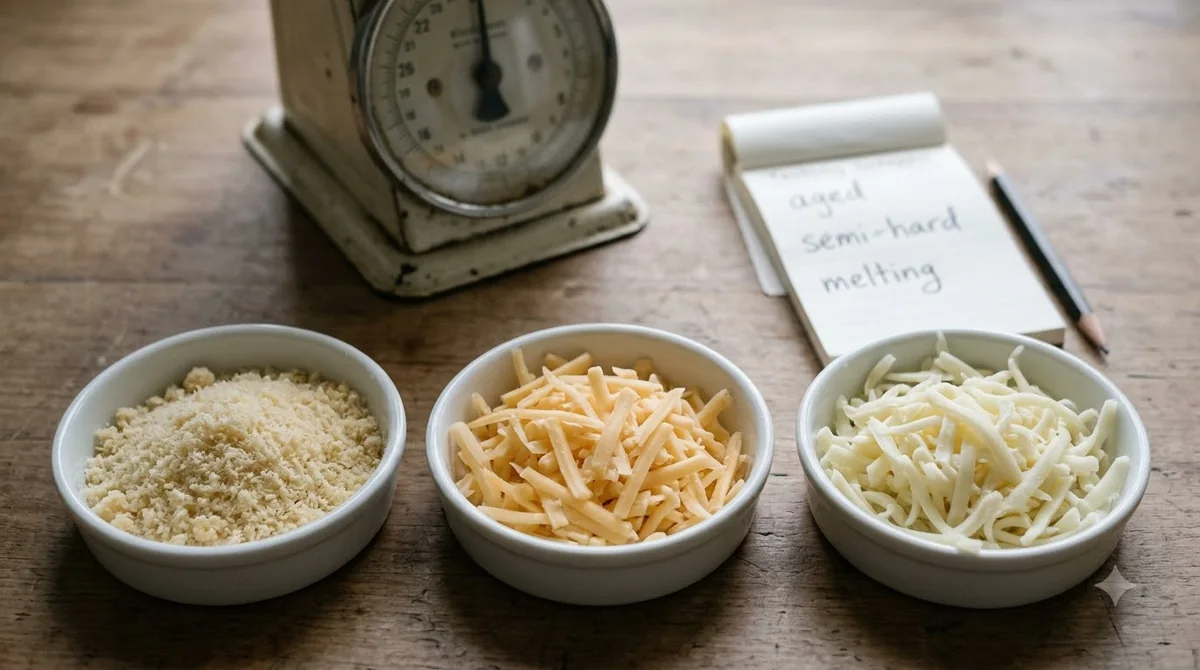
The Takeout advises keeping Parmesan as dry as possible, and says a whole piece holds up better than pre-shredded cheese because the larger exposed surface of shredded cheese deteriorates faster. Once you know how to store parmesan cheese in grated form, the routine is simple and fast.
- Move the grated cheese into an airtight container once the pack is open.
- Keep it in the fridge and away from strong-smelling foods.
- Use a dry spoon each time, so no water gets into the container.
- Grate only what you need, because grated cheese has the shortest window of any form.
A good grater makes grating on demand easy, and our best Parmesan cheese graters guide covers the options.
Freezing Parmesan
Shredded Parmesan can stay fresh in the freezer for three to six months, and an intact piece can last longer than a year, according to The Takeout. Put the cheese in an airtight container or bag before it goes in the freezer. Freezing is the right answer for how to store parmesan cheese only when you cannot finish it within the fridge window.
The Takeout treats freezing as a way to make Parmesan last longer, and adds that shredded frozen cheese can go straight into a dish while a larger frozen piece needs around 10 minutes of thawing at room temperature. The sources reviewed here do not test how freezing changes the texture, so portion the cheese and thaw only what you will use in one go.
- Portion the cheese before freezing.
- Seal it in an airtight container or bag.
- Check the texture and smell after thawing before you use it.
Signs that Parmesan has gone bad
Mold is a sign that Parmesan has spoiled, and the FDA says mold can grow even under refrigeration. Check for these signs before every use, especially with grated cheese, since spoilage is the final check in how to store parmesan cheese.
- Visible mold on the surface or in the grated pile.
- A sour or off smell.
- Clumps or a damp feel in grated cheese.
When in doubt, throw it out, since the FDA says anything that looks or smells suspicious should be thrown out. Follow the package label first, because the storage method cannot restore cheese that has already spoiled.
What kind of Parmesan you are storing
Parmigiano-Reggiano is aged at least 12 months, according to Wikipedia’s entry on the cheese. The label is the quickest way to confirm what you are buying. For the difference between the names, see Parmigiano-Reggiano vs Parmesan, and for what the protected label means, see what DOP means.
The names Parmigiano Reggiano and Parmesan are protected designations of origin for cheese made in the designated Italian provinces under Italian and European law. Outside the EU, Parmesan is used for imitations, so the label is worth reading.
Knowing the form you bought helps with how to store parmesan cheese at home. Parmesan is commonly grated over pasta, and it is also stirred into soups and risotto. Many home cooks buy a wedge and grate only as needed, so the grated portion stays small.
Frequently Asked Questions
Can Parmesan be stored at room temperature?
The sources reviewed do not give a pantry time for opened Parmesan, so the tested advice on how to store parmesan cheese is to keep it in the refrigerator. Wrap a wedge in parchment and foil and place it in the vegetable crisper. Grated cheese should also stay in the fridge in an airtight container.
How long does an opened Parmesan wedge last?
Wrapping it well is the first part of how to store parmesan cheese. An opened wedge lasts about one to two months in the fridge, according to The Takeout. America’s Test Kitchen found that flavor and texture began to change around the one-week mark, so wrapping it well matters from the first day.
Should I wrap Parmesan in plastic wrap?
Plastic wrap alone is not the best choice for how to store parmesan cheese. In the America’s Test Kitchen tests, cheese wrapped only in plastic tasted distinctly sour and astringent by the fourth week. Parchment or wax paper followed by foil gave the best results.
Can you freeze grated Parmesan?
Shredded Parmesan can stay fresh in the freezer for three to six months, according to The Takeout. Put it in an airtight container or bag first. Sources disagree on freezing, so check the texture and smell after thawing before you use it.
Why did my Parmesan grow mold?
Mold can grow even in the fridge, so check the wrap, keep the cheese dry, and watch the date. Check the wrap, make sure the container seals, and keep the cheese cold. If mold appears on grated cheese, discard it rather than picking the mold out.
Is pre-shredded Parmesan stored the same way?
Pre-shredded Parmesan follows a shorter timeline once opened, so the rules for how to store parmesan cheese in grated form apply to it too. The Takeout gives about three to four weeks in the fridge. Keep the pack sealed, store it cold, and check the label date before use.
Buy a size you will finish within a month or two, wrap the wedge in parchment and foil, and grate only what you need. More kitchen explainers are in our Learn guides. Those three habits cover most of how to store parmesan cheese well at home. Check the package date often, and discard grated cheese that shows mold or an off smell.
 9 min readLearnHow to Store Olive Oil So It Stays FreshUpdated Nov 11, 2026
 9 min readLearnHow to Store Dried Pasta So It Stays Fresh and Pest-FreeUpdated Nov 11, 2026
 8 min readLearnHow to Store Prosciutto So It Stays FreshUpdated Nov 11, 2026
 7 min readLearnHow to Reheat Pizza So the Crust Stays CrispUpdated Nov 10, 2026
 9 min readLearnHow to Store Fresh Mozzarella at HomeUpdated Nov 11, 2026
 9 min readLearnHow to Store Fresh Basil: 4 Easy Methods That WorkUpdated Nov 10, 2026